Table of Contents
Get rid of chinch bugs before your Bradenton lawn looks like it survived a small wildfire instead of a Florida summer. If your once-soft, green St. Augustine has random yellow and brown patches that keep spreading, you’re not “bad at lawn care” — you probably have chinch bugs, and they are petty, hungry little monsters.
You’re not alone. Bradenton’s heat, sandy soil, and love for St. Augustinegrass might as well be a chinch bug all-inclusive resort. The good news? You can take your yard back.
Key takeaways
- Those random yellow/brown patches in sunny spots? Could be chinch bugs, not drought or fungus.
- They love St. Augustinegrass, especially dry, hot, sunny areas along driveways, sidewalks, and shells/sandy soil.
- They spread fast. A tiny patch can turn into several feet of dead turf in just a few weeks.
- You need to treat the bugs and fix the lawn stress (watering, mowing, thatch), or they’ll keep coming back.
- Lawn pest control in Bradenton works best as a combo: smart lawn care + targeted treatments (DIY or pro).
- Waves Pest Control can handle the heavy lifting if you’re tired of guessing what’s killing your grass.
What exactly are chinch bugs doing to your Bradenton lawn?
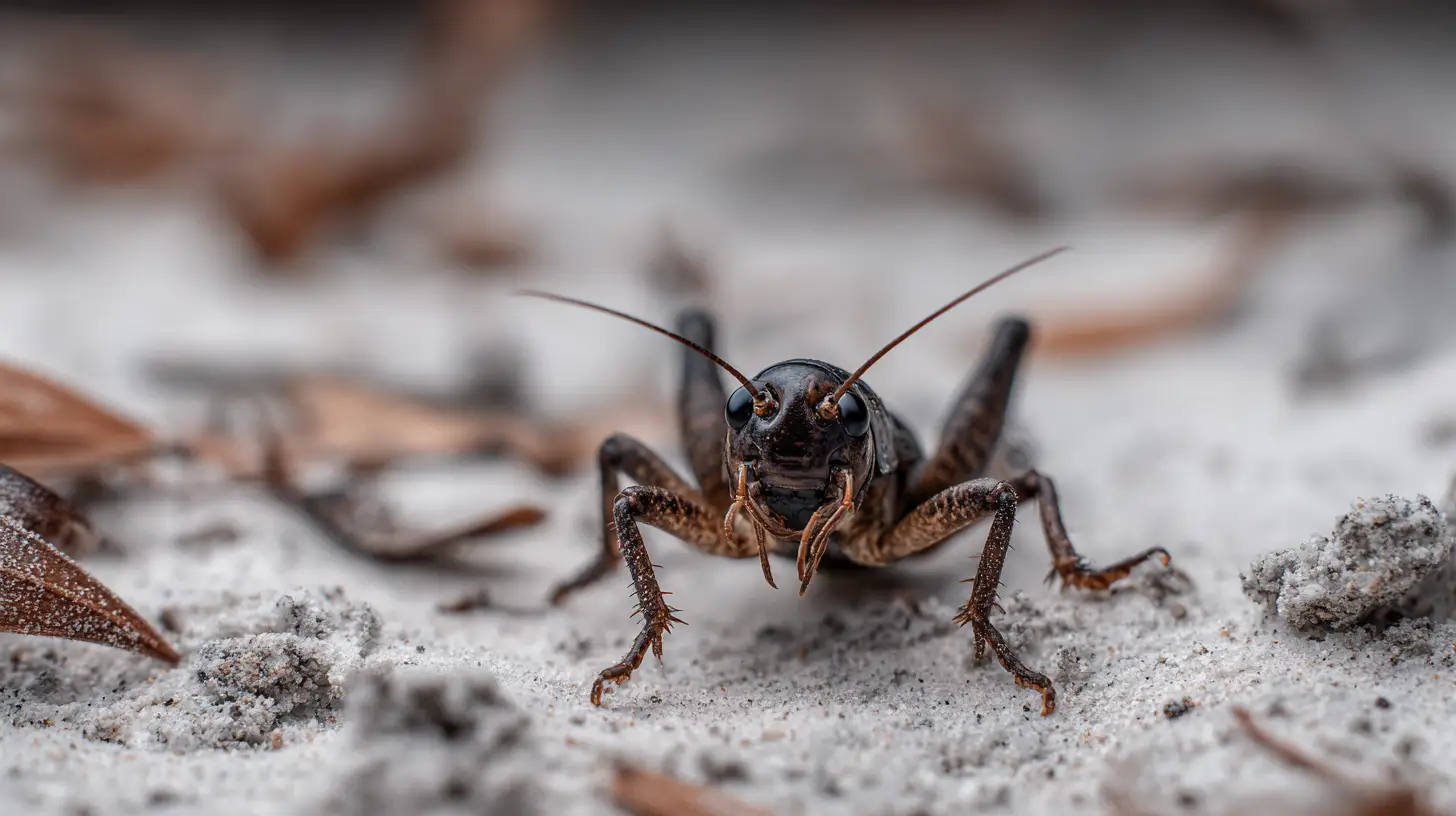
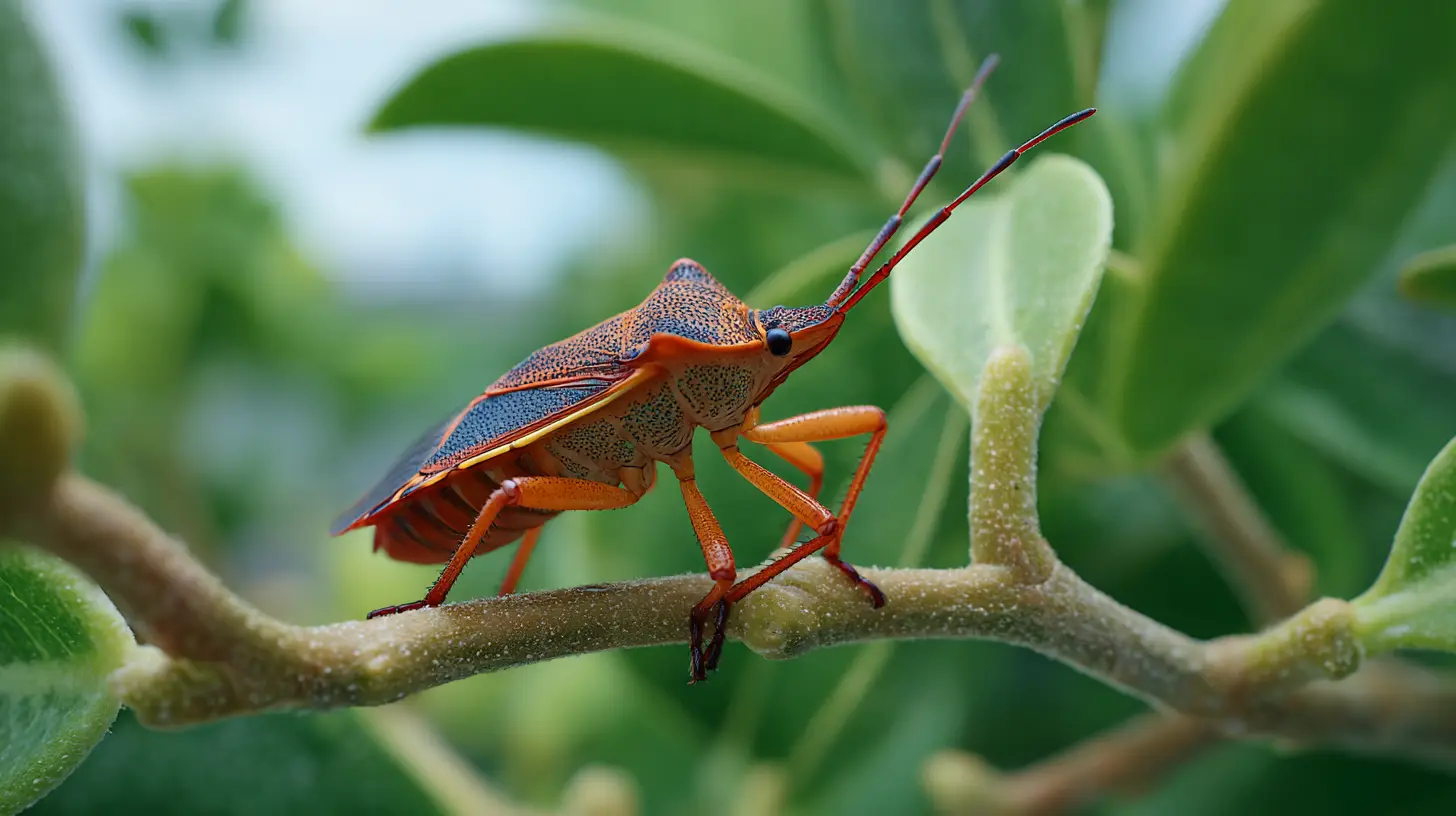
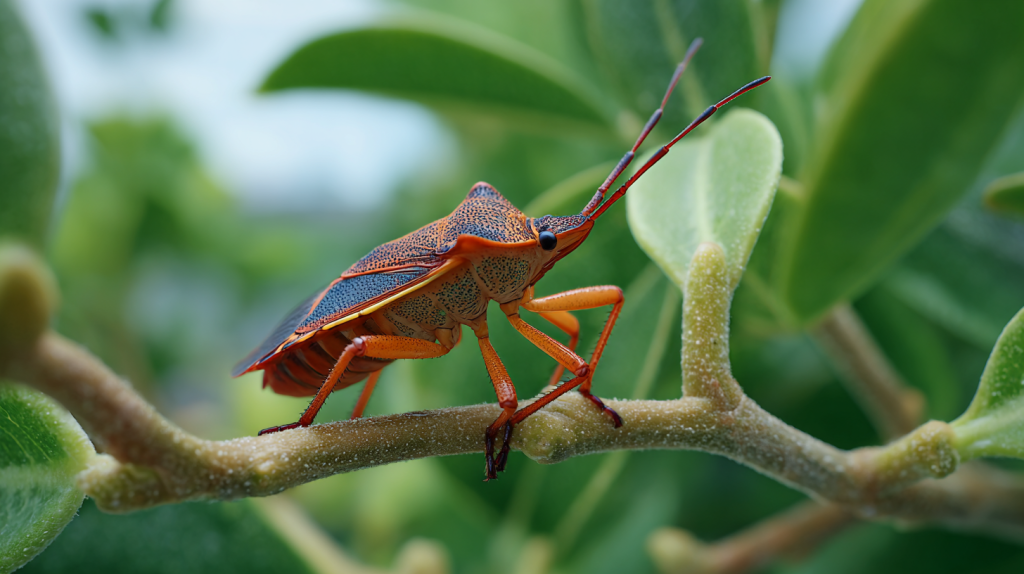
Southern chinch bugs are tiny, sap-sucking insects that hang out in the thatch and at the base of your grass. Adult bugs are about 1/5 inch long, with black bodies and white wings that have a little black spot. Nymphs start out tiny and pale, then turn red with a white band, and finally darken as they grow up.
One female can lay a couple hundred eggs, and in Florida’s warmth they can go from egg to adult in about a month. Bradenton doesn’t really give them a “winter break,” so you get overlapping generations pretty much most of the year.
Short version: they’re small, they breed fast, and they’re very good at staying where you can’t see them.
What chinch bug damage looks like in Bradenton yards
Here’s how the drama usually starts:
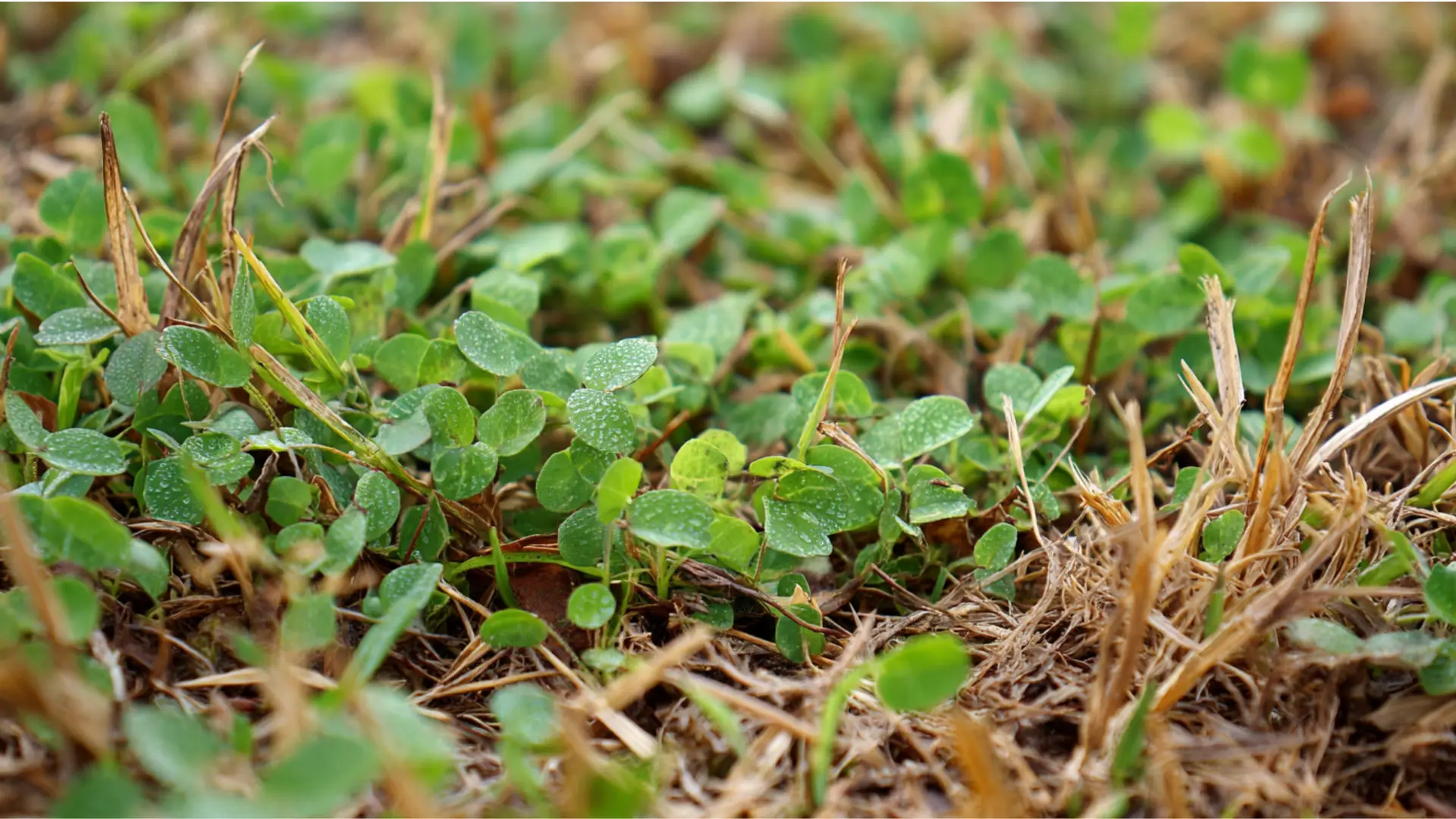
- Small yellow patches show up in full sun — along sidewalks, driveways, or dry high spots.
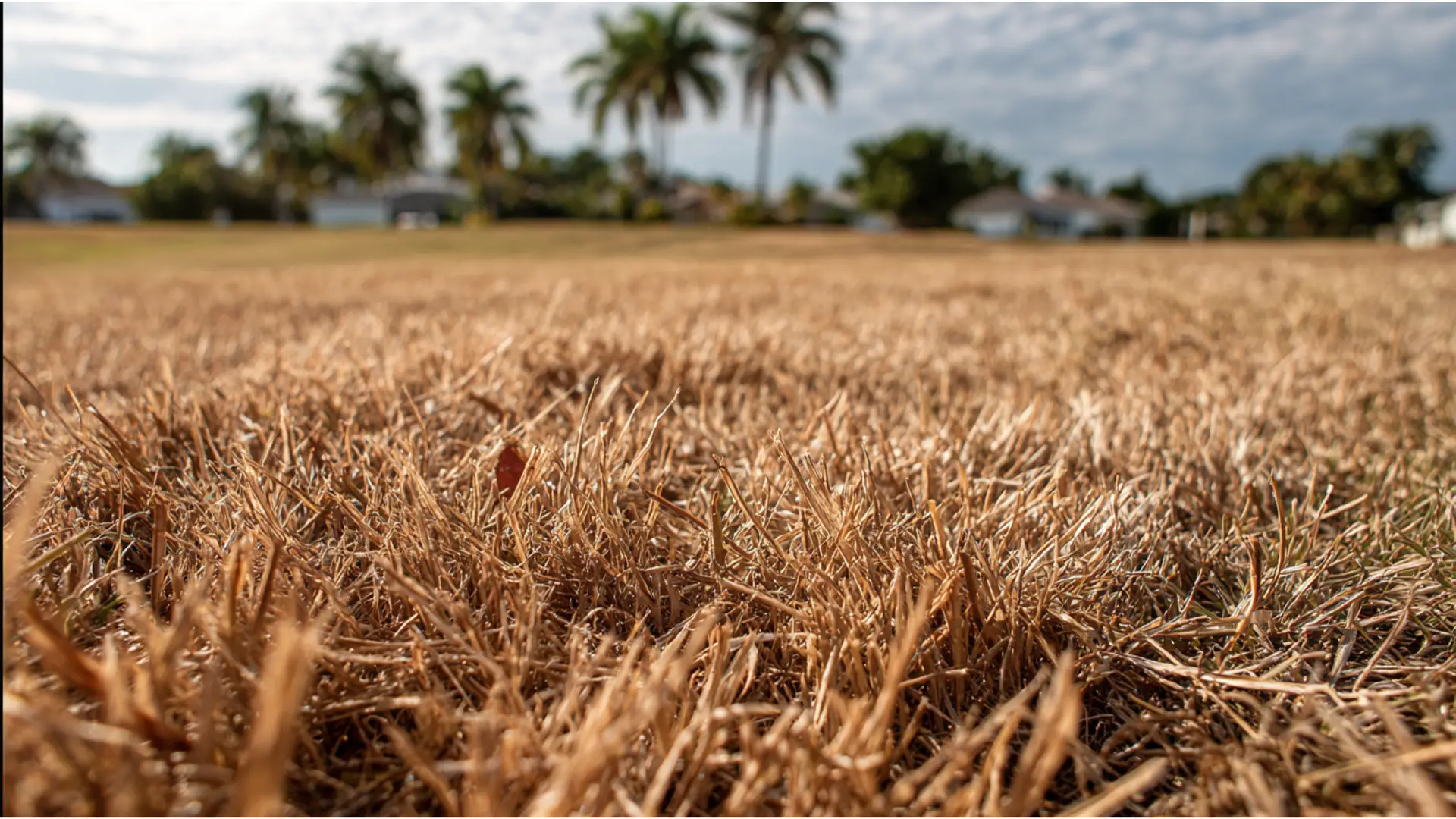
- The spots turn yellow → straw-colored → brown and dead if feeding continues.
- The patches grow outward, with a ring or edge of yellow grass between healthy green and dead brown.
Chinch bugs pierce grass stems with needle-like mouths, suck out the juices, and inject saliva that blocks the plant’s internal plumbing. The grass wilts like it’s thirsty… even when you’re watering.
To make it extra fun, the damage is easy to confuse with:
- Drought stress
- Fungus
- Fertilizer burn
So a lot of Bradenton homeowners dump more water or fungicide on the lawn, while the chinch bugs sit in the thatch like, “Thanks for the shade, keep feeding us.”
Protect Your Lawn Today!
Count on Waves Pest Control for reliable lawn pest control in Bradenton, FL. Keep your lawn healthy and pest-free—call now or request your free quote online!
Request a QuoteHow to check if chinch bugs are the problem
If you’re seeing spreading yellow or brown patches in sunny areas, do these two checks:
1. Get down in the grass (yes, really)
At the edge where green meets yellow/brown:
- Part the grass with your fingers.
- Look close in the thatch and top inch of soil.
- Watch for:
- Tiny red nymphs with a white band.
- Black-and-white adults scurrying around when disturbed.
See even a few? That’s a strong sign chinch bugs are involved.
2. The coffee can “float test”
This one’s weird but works:
- Cut both ends off a metal coffee can or large cylinder.
- Press it a couple inches into the turf on the edge of a damaged area.
- Fill it with water.
- Wait a few minutes and watch the surface.
Chinch bugs will float up like tiny, guilty specks. If you see them, you’ve found your culprit.
Step-by-step: How to get rid of chinch bugs right now
Once you’re sure chinch bugs are behind the damage, you need two things:
- A treatment that actually reaches them.
- Yard habits that don’t invite them back for brunch.
1. Prep the lawn so treatments actually hit the bugs
- Water the lawn the day before treatment.
Slightly moist turf pulls chinch bugs closer to the surface. Dry, crunchy grass lets them hide deeper in the thatch. - Focus on the active edge, not just the dead center.
They feed where green meets yellow/brown, then move outward. That’s where you want your treatment.
2. DIY chemical options (careful beats “more”)
At most Bradenton stores you’ll see “lawn insect killer” products with actives like:
- Bifenthrin, permethrin, lambda-cyhalothrin (pyrethroids)
- Imidacloprid, clothianidin, dinotefuran (systemic/neonicotinoids)
Read the label, follow it exactly, and keep these tips in mind:
- Spot treat the affected zone plus a 10–15 ft buffer.
Spraying the entire yard over and over is rough on beneficial insects and doesn’t magically fix resistance. - Spread or spray evenly.
Granules need to be spread uniformly; liquids should be applied with a consistent sweeping pattern. - Water lightly after treatment if the label says so.
Just enough to rinse product into the thatch, not flood the yard. - Plan for a second round.
Most products don’t kill eggs. New nymphs can show up in 2–4 weeks, so you may need a follow-up if you still see live bugs.
If you’ve used the same pyrethroid over and over and the bugs shrug it off, they may be resistant. That’s when rotating to a different class or calling a pro for more advanced options makes a lot of sense.
3. Organic and “softer” options
For mild to moderate chinch bug activity, or if you’re trying to go lighter on synthetics:
- Beneficial nematodes (like Steinernema carpocapsae):
Applied with water, they hunt chinch bugs in the soil. Need moist, warm soil and evening or cloudy applications. - Fungal bio-insecticides (Beauveria bassiana, Metarhizium anisopliae):
These fungi infect chinch bugs but work more slowly than conventional insecticides. - Insecticidal soap or horticultural oil:
Can help on small hot spots, especially on younger nymphs. Needs very thorough coverage and repeat treatments. - Neem/azadirachtin:
Can reduce feeding and slow development, often used as part of a larger rotation.
These tend to work best when chinch bug numbers are still on the lower side and you’re pairing them with good lawn care.
Long-term game plan: Make your lawn less chinch-bug-friendly
Killing the current batch is only half the story. To keep your Bradenton lawn out of the chinch bug danger zone, focus on these habits:
Mow like you mean it (but not too low)
- For St. Augustinegrass, keep it around 3–4 inches tall.
- Never chop off more than a third of the blade at once.
- Sharpen your mower blade so cuts are clean, not shredded.
Short, scalped grass is stressed grass — exactly what chinch bugs love.
Don’t over-fertilize
- Heavy doses of quick-release nitrogen = soft, juicy growth chinch bugs go crazy for.
- Use slow-release fertilizer and moderate amounts.
- Follow local fertilizer rules for Manatee County, especially in rainy season.
More fertilizer doesn’t equal “more healthy”; it often just equals “more problems.”
Water smarter, not constantly
Bradenton’s sandy soils dry out fast, but daily sprinkles aren’t doing your lawn any favors.
- Water deeply but infrequently — about 3/4″ to 1″ when the grass starts to fold or shows footprints.
- Then let it dry a bit before you water again.
- Fix sprinkler coverage issues so you don’t have dry hot spots (prime chinch bug zones).
Tackle thatch
Thatch is that spongy layer of old stems and roots that builds up above the soil. A little is normal; a lot is chinch bug heaven.
- Avoid habits that build thatch: constant high nitrogen, shallow watering, mowing too low.
- If you already have a thick layer, look at:
- Dethatching/vertical mowing
- Core aeration
Both help break up thatchin and make treatments more effective.
Keep an eye out during chinch bug season
In Bradenton, chinch bugs can show up March through November, with big spikes from May through September.
- Every couple of weeks in warm months, walk your lawn.
- Pay extra attention to sunny, dry-looking patches.
- Do a quick knee-down check or float test if something looks off.
Spotting them early can be the difference between a small fix and having to resod half the yard.
Why chinch bugs love Bradenton, FL (and how to work around that)
Bradenton checks a lot of boxes for chinch bugs:
- St. Augustine-heavy neighborhoods
- Hot weather, long warm season
- Sandy or shell-based soils that dry out fast
- Lots of full-sun lawns in newer communities
That combo means:
- Activity can start in early spring and keep going into late fall.
- Dry spells in spring and early summer are prime times for outbreaks.
- Even in rainy season, high spots and edges along pavement dry quickly and become flare-up zones.
Treat Bradenton like “year-round chinch bug watch,” with extra attention from April through September.
DIY vs. hiring a pro for lawn pest control in Bradenton
So, should you hit the big box store or call someone like Waves Pest Control?
When DIY can work
DIY can be a good fit if:
- The damage is still in a limited area.
- You’ve confirmed chinch bugs with a test.
- You’re able to follow the label closely and repeat treatments if needed.
You’ll want to:
- Treat the active edge and surrounding green turf, not just the dead spot.
- Use enough water to get product into the thatch.
- Re-check for live bugs in the following weeks.
- Switch products if one doesn’t seem to touch them.
The tricky part for a lot of homeowners is getting coverage into that thatch layer and not missing the moving edge of the infestation.
When a professional makes life easier
Calling a pro for lawn pest control in Bradenton is a smart move when:
- More than a big chunk of your lawn is affected.
- You’ve tried store products and the grass keeps going downhill.
- You’re done guessing whether it’s fungus, drought, chinch bugs, or all three.
- You’d rather not handle insecticides yourself.
A good local company:
- Confirms it’s really chinch bugs.
- Knows which products are working on resistant populations in this area.
- Uses pro-grade equipment to get treatment deep into the turf.
- Builds a plan that includes spot treatments, product rotation, and lawn care advice (mowing, watering, thatch, etc.).
Waves Pest Control is local to the Bradenton area, which means we see chinch bug seasons come and go every year. We know how fast they can move from “small patch” to “I think my lawn is dead,” and we design treatments to hit both the bugs and the reasons they chose your yard in the first place.
Frequently Asked Questions (FAQs)
How do I know if it’s chinch bugs and not fungus?
Fungus often shows up as more irregular, sometimes spotty patterns, and may improve with fungicide. Chinch bugs usually create expanding patches that start in hot, sunny, dry areas and move outward. If you part the grass at the edge of damaged areas and see small red nymphs or black-and-white adults running around, that points strongly to chinch bugs. A coffee-can float test is another solid way to confirm.
When are chinch bugs worst in Bradenton?
They’re most active from late spring through late summer, usually peaking in July and August. That said, Bradenton’s mild winters mean they can stay active much longer than in cooler states. Any stretch of warm, dry weather between March and November is fair game.
Will my lawn grow back after chinch bugs?
If the grass is just stressed and yellowed, it can bounce back once the bugs are gone and the lawn gets proper care. If the turf is completely brown, crunchy, and pulling up easily because the stolons are dead, those spots usually need resodding or plugging. Before replacing anything, make sure the chinch bugs are actually under control, or they’ll just move into your fresh new grass.
Can I get rid of chinch bugs without chemicals?
You can reduce populations with beneficial nematodes, fungal bio-insecticides, and insecticidal soaps or oils, especially when you catch the problem early. Pair that with healthy mowing, watering, and thatch management. For heavy, fast-moving infestations, many homeowners still choose at least one round of traditional treatment to stop the damage quickly, then shift to softer options and lawn care for long-term management.
How fast can chinch bugs destroy a lawn?
Pretty fast. Once a population explodes, a small dry-looking area can expand into several feet of dead turf over a few weeks. That’s why early detection and quick action matter so much. If you see suspicious yellow patches spreading, don’t wait to “see what happens.”