

You did everything right.
You bought the fertilizer. You spread it evenly. You watered it in. You even timed it before the afternoon storm rolled through — just like the bag said.
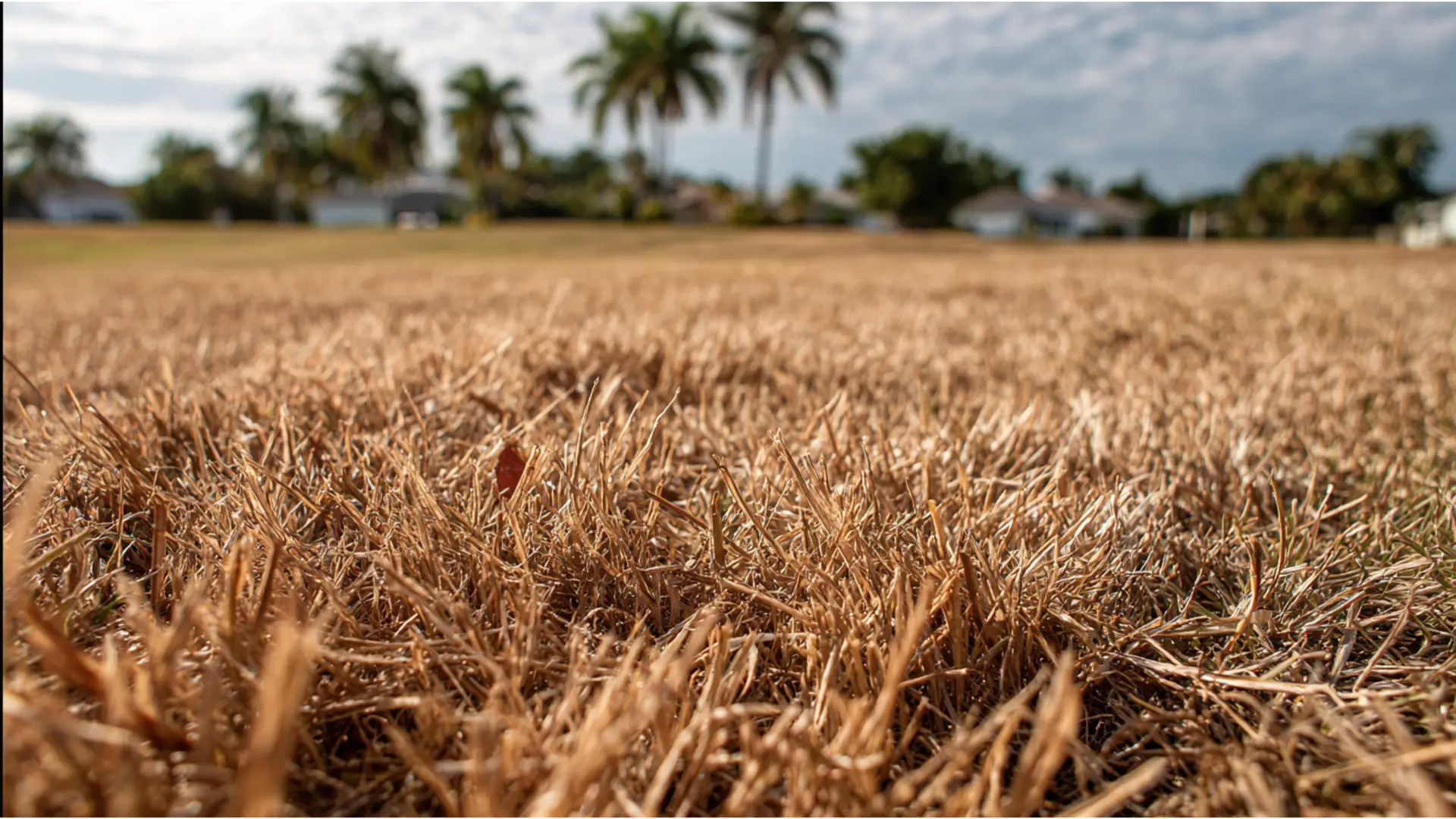
And now your Sarasota lawn looks… yellow. Not the deep green you were promised. Not even the “meh” green it was before. Actual, pale, sickly yellow.
So what gives?
Here’s the uncomfortable truth: you don’t have a nitrogen problem. You have a micronutrient deficiency in your Sarasota lawn — and no amount of nitrogen is going to fix it. In fact, dumping more nitrogen on it might be making things worse.
Let’s talk about what’s actually happening under those yellow blades.
Your Sarasota Soil Is a Leaky Bucket
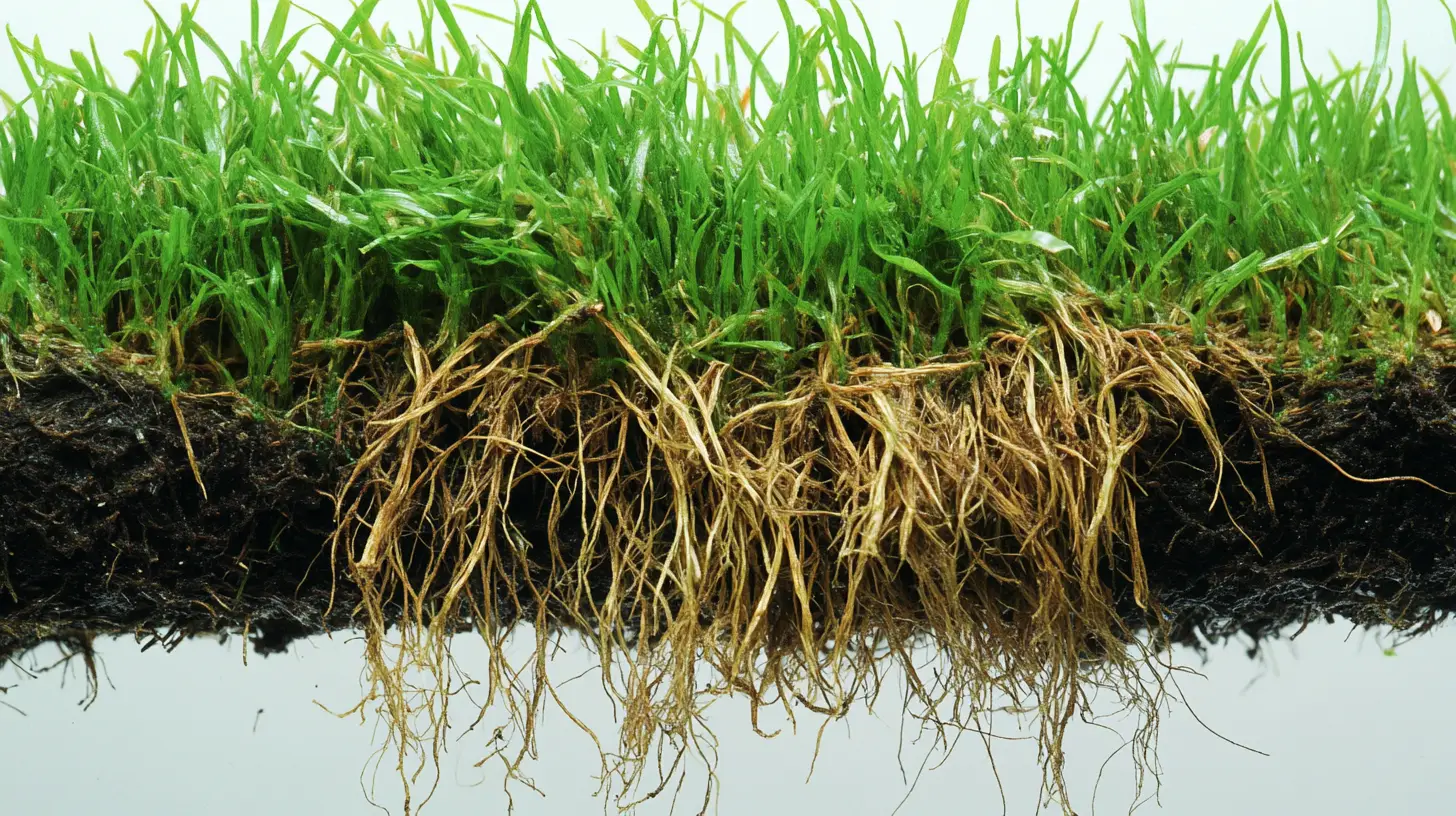
Sarasota sits on sandy soil. You already know this because you’ve tried to grow literally anything in your flower beds.
Sandy soil has one big problem: it doesn’t hold onto nutrients. Water flushes through it like a colander. Every time it rains — and from June through September, it rains daily — nutrients get pushed past the root zone and straight into the aquifer.
Nitrogen? Gone. Potassium? Gone. And the micronutrients your grass desperately needs — iron, manganese, magnesium? Long gone.
So when you throw down a bag of 15-0-15 and expect it to fix everything, you’re solving for the wrong problem. Your grass isn’t starving for the big three macros. It’s starving for the trace minerals that make those macros actually work.
How to Tell Nitrogen Deficiency from Micronutrient Deficiency
This is where most Sarasota homeowners go wrong. Yellow grass looks like yellow grass — but the pattern tells you everything.
Nitrogen deficiency: The older, lower blades yellow first. The whole lawn looks uniformly pale. Growth slows down.
Iron deficiency: The newest growth yellows first. Tips and younger blades go pale green, then yellow, while the older grass still looks okay. You’ll see it worst in high-pH areas near concrete driveways and sidewalks.
Manganese deficiency: Yellow blades with green veins — a weird striped look. Common in St. Augustine and shows up fast after heavy rain.
Magnesium deficiency: Older blades turn yellow around the edges while the center stays green. Looks like the grass is being eaten from the outside in.
If you’re seeing any of the last three — congratulations, you’ve diagnosed your micronutrient deficiency. Sarasota lawn chemistry is a pain, but at least now you know what you’re dealing with.
Pro tip: Grab a blade of grass and look at it up close. Is the yellowing on new growth or old growth? That single question tells you 80% of what you need to know.
Why Your Fertilizer Didn’t Fix It
Here’s the other kicker. Sarasota County’s fertilizer restricted season runs June 1 through September 30. During that window, you legally cannot apply fertilizer containing nitrogen or phosphorus.
So if your lawn started yellowing in July and you panicked and threw down nitrogen anyway — not only did you not solve the problem, you possibly racked up a fine and fed the weeds while your grass got nothing.
Micronutrients, though? Iron, manganese, magnesium — those are fair game during blackout. Because they’re not causing algae blooms in the bay. They’re fixing chlorosis in your yard.
This is literally the window where a micronutrient application shines the brightest. And most homeowners don’t even know it’s an option.
The pH Problem Nobody Talks About
Southwest Florida soil tends to run alkaline. Not because of the sand itself, but because of all the limestone, shell fragments, and construction fill that got dumped into your subdivision 20 years ago.
When soil pH creeps above 7.0, iron gets chemically locked up. It’s in the soil — your grass just can’t absorb it. Same with manganese.
So you could have plenty of iron sitting down there and your St. Augustine would still yellow out because the chemistry won’t let it in.
The fix isn’t more iron in the soil. It’s chelated iron applied as a foliar spray — meaning the grass absorbs it through the blades, skipping the pH lockout entirely. Usually an iron sulfate or chelated iron (EDDHA or DTPA) does the trick, applied at 2-4 oz per 1,000 sq ft.
Results? You’ll see green returning in 48-72 hours. Yes, that fast.
What About Magnesium?
Magnesium is the central atom in every chlorophyll molecule. No magnesium = no green. Period.
Sandy Sarasota soil leaches magnesium constantly. And unlike iron, magnesium deficiency isn’t a pH problem — it’s a “it literally washed away in the last thunderstorm” problem.
Epsom salt (magnesium sulfate) at around 3 lbs per 1,000 sq ft can help in a pinch. But if you’re chasing magnesium every month, you need a slow-release approach built into your fertility program — not a bag of bath salts from the grocery store.
Pro tip: Before you spend money on any amendment, get a soil test through UF/IFAS Extension Sarasota County or another qualified lab. Testing tells you what is missing, what is locked up, and whether pH is part of the problem. Guessing is how you end up with a lawn that’s yellow and a garage full of half-used bags.
Stop Treating Symptoms, Start Treating Causes
Here’s what most Sarasota homeowners don’t realize: micronutrient deficiency isn’t a one-time fix. Your sandy soil will keep leaching. Your pH will keep locking things up. The summer storms will keep flushing everything out.
A real fertility program for a Sarasota lawn includes:
- Slow-release macros outside blackout season
- Chelated iron applications 3-4 times a year
- Manganese sulfate for St. Augustine specifically
- Magnesium supplementation, ongoing
- Soil testing once a year to adjust pH and chase actual problems
Not a single bag of Scotts from the big box store and a prayer.
The Takeaway
If your Sarasota lawn is yellow despite your best fertilizing efforts, stop assuming it’s nitrogen. Look at where the yellowing is happening — new growth vs. old growth, veins vs. edges — and you’ll almost always find a micronutrient story.
Iron, manganese, magnesium. The boring stuff nobody talks about. The stuff that actually turns your lawn green.
Fixing a micronutrient deficiency in your Sarasota lawn isn’t complicated — but it does require actually knowing what’s wrong before you treat it. If you’ve been throwing product at your yard and watching it stay yellow, it’s probably worth getting a professional eye on it before you waste another weekend and another $60 bag.
We handle that kind of thing through our lawn care program in Sarasota. Soil tests, chelated iron, the whole boring-but-effective playbook.
Frequently Asked Questions
Why is my Sarasota lawn yellow after I already fertilized?
Yellow grass after fertilizer usually means the issue is not just nitrogen. In Sarasota’s sandy soil, iron, manganese, and magnesium can leach out or become unavailable, especially during rainy season. If new grass blades are yellowing first, micronutrients are a likely suspect.
Can micronutrients be applied during Sarasota County’s fertilizer restricted season?
Yes, micronutrients like iron, manganese, and magnesium are different from nitrogen and phosphorus fertilizers. Sarasota County’s June 1 through September 30 restriction targets nitrogen and phosphorus, so a properly selected micronutrient treatment can still be part of a legal summer lawn correction plan.
How fast does chelated iron green up St. Augustine grass?
When iron deficiency is the main problem, chelated iron applied to the leaf blade can improve color in about 48 to 72 hours. If the yellowing comes from pH, irrigation, disease, or root stress, iron may help color but will not fix the underlying cause by itself.