Jump to a section (8)
- 01The Science: Playing Dead vs. Getting Knocked Down
- 02Cockroach on Its Back But Alive: What It Means and What to Do
- 03Why This Trick Shows Up So Often in Southwest Florida
- 04Playing Dead vs. Actually Dead: How to Tell
- 05Safe Checks You Can Do at Home
- 06How Waves Handles Roaches in SWFL
- 07Frequently Asked Questions
- 08Bottom line
You flip on the kitchen light at 2 a.m., spot a cockroach on its back with its legs curled in the air, and think: nice, one less problem. You turn to grab a paper towel, look back, and the “dead” roach has vanished.
Welcome to one of the more annoying tricks in Southwest Florida pest ownership. So, do cockroaches play dead? Not the way an opossum does. A roach lying belly-up is almost always stunned by insecticide, stuck on its back, or dying. A stunned roach can recover and walk off, and that’s what makes it look like it was faking. Live anywhere in Southwest Florida and you’ll see this eventually, so it pays to know a roach that’s done for from one that’s only down for the moment.
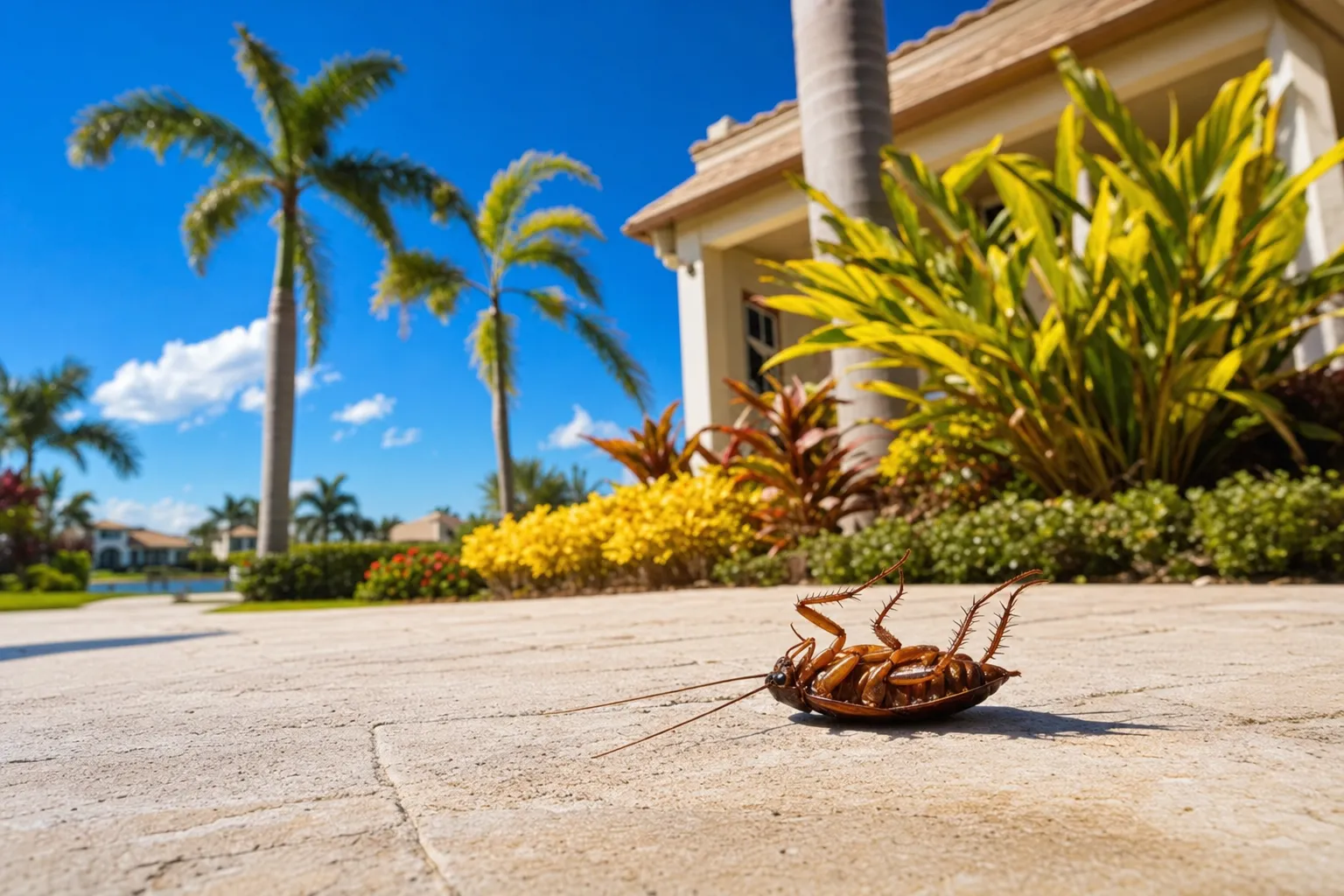
If you want the wider SWFL pest cheat sheet, our pest library has ID pages for the roaches you’ll actually meet here: the American cockroach (the classic palmetto bug), the smokybrown cockroach, and the German cockroach.
Not in the mood to play detective with a belly-up bug? Book a pest inspection and we’ll figure out what’s crawling around your baseboards so you don’t have to.
The Science: Playing Dead vs. Getting Knocked Down
The technical name for playing dead is thanatosis, or death-feigning. Biologists define it as a reflex set off by a predator’s touch: the animal goes still and stays still, sometimes long after the predator lets go (Humphreys & Ruxton, 2018). Opossums are the famous example. Among insects, some beetles are the champions.
Pest cockroaches mostly don’t work that way. Their main defense is speed. Sensory hairs on two small prongs at the tail end feel the puff of air from an approaching threat, and the roach bolts. When you find one motionless on its back, one of three things usually happened:
- It got a dose of insecticide. Most grocery-store roach sprays are pyrethroids, which scramble the nerves that run the legs. The roach flips, its legs curl in, and it can’t right itself. Pest pros call this knockdown. If the dose was light, the roach can break the chemical down and get back on its feet. German cockroaches often carry pyrethroid resistance (DeVries et al., 2019), so knockdown without death is common with them.
- It’s stranded. Roaches are top-heavy, and smooth tile gives a flipped one nothing to grab. A healthy roach can lie there kicking for a while.
- It’s dying. Bait it ate hours ago, an injury, or plain old age. A dying roach loses coordination and usually ends up on its back.
So the roach that “came back to life” wasn’t running a con. It was down, and then it recovered. From across the kitchen the two look identical, which is why the myth sticks.
Cockroach on Its Back But Alive: What It Means and What to Do
If the roach is belly-up but its legs are still moving, you’re watching one of two things: an insecticide knockdown (it walked through spray residue and can’t coordinate its legs) or a stranding (smooth tile and hardwood give a flipped roach nothing to grab). Either way, a moving belly-up roach is alive right now, and a surprising number of them recover if you walk away.
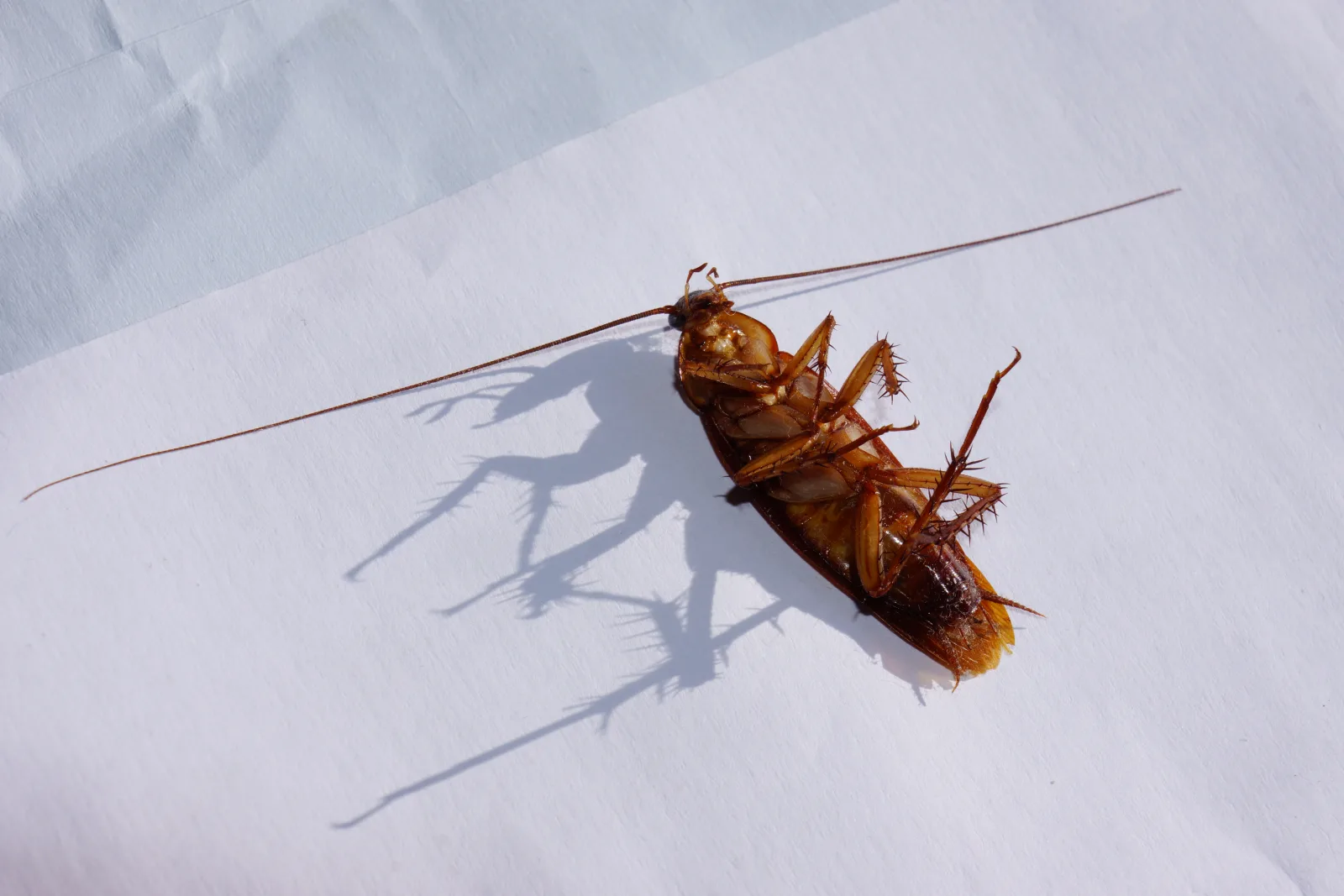
An American cockroach lying on its back after being killed by insecticide, legs curled tight and antennae still. Photo: Tecchese via Wikimedia Commons, CC BY-SA 4.0, resized.
What to do: don’t wait to find out. Vacuum it or flush it (not the shoe; see below), and note where you found it. A knocked-down roach usually touched a treated surface or ate bait recently, so the treatment is reaching it. Several in the same room means you’ve found a traffic lane worth baiting properly.
| What you're seeing | Stunned (alive) | Actually dead |
|---|---|---|
| Legs | Loosely curled or slowly moving | Tightly curled against the body |
| Antennae | Twitch within 20–30 seconds | No movement at all |
| Body | Glossy, hydrated-looking abdomen | Dulls and dries out over time |
| Poke test | Leg twitch or 'running' in place | Nothing |
| Ten minutes later | Moved — or gone entirely | Exactly where you left it |
Thirty seconds of watching beats a premature victory lap. When in doubt, vacuum it anyway.
Why This Trick Shows Up So Often in Southwest Florida
Two reasons: we have a lot of roaches, and our homes give them a lot of reasons to end up stunned.
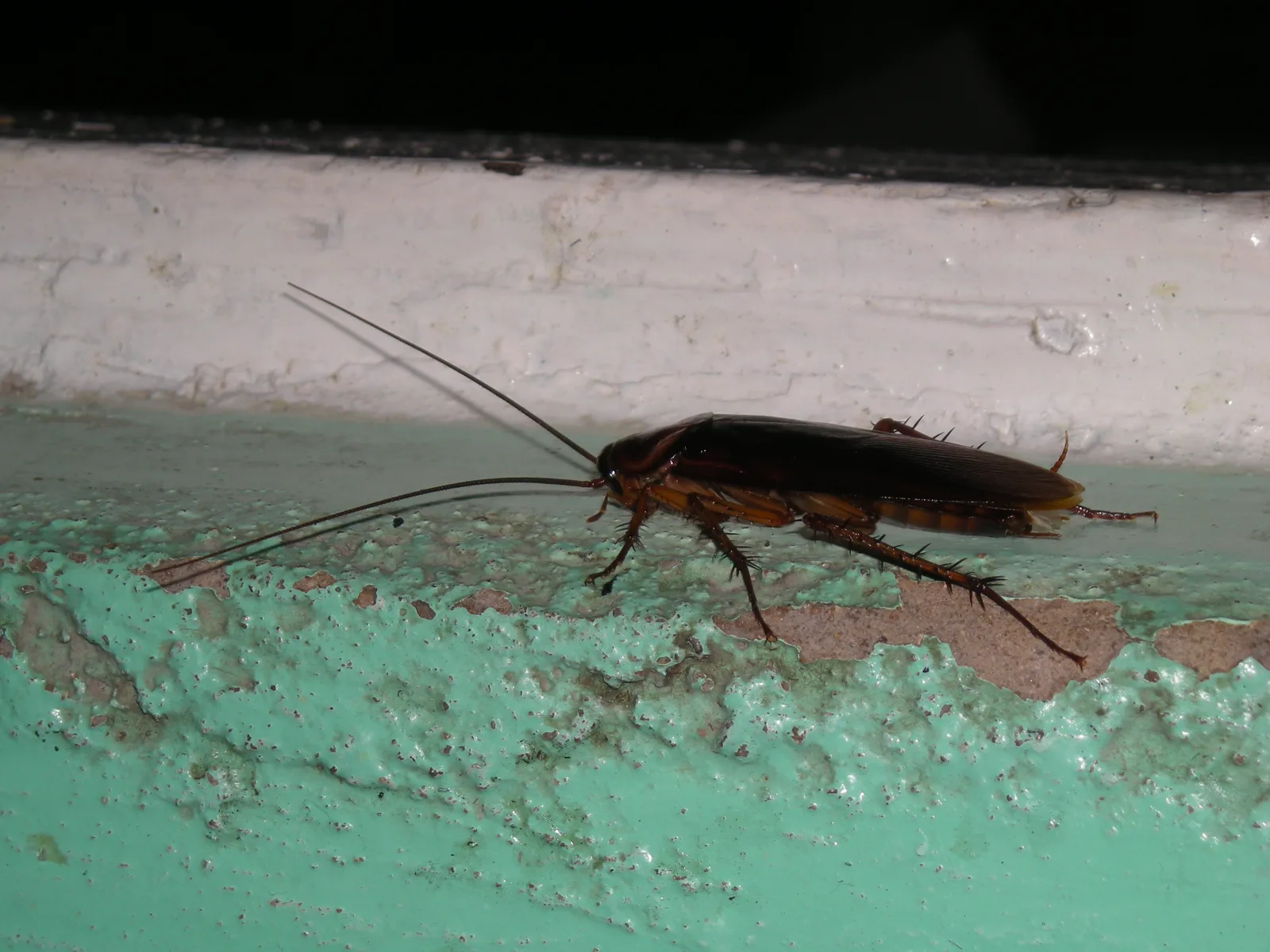
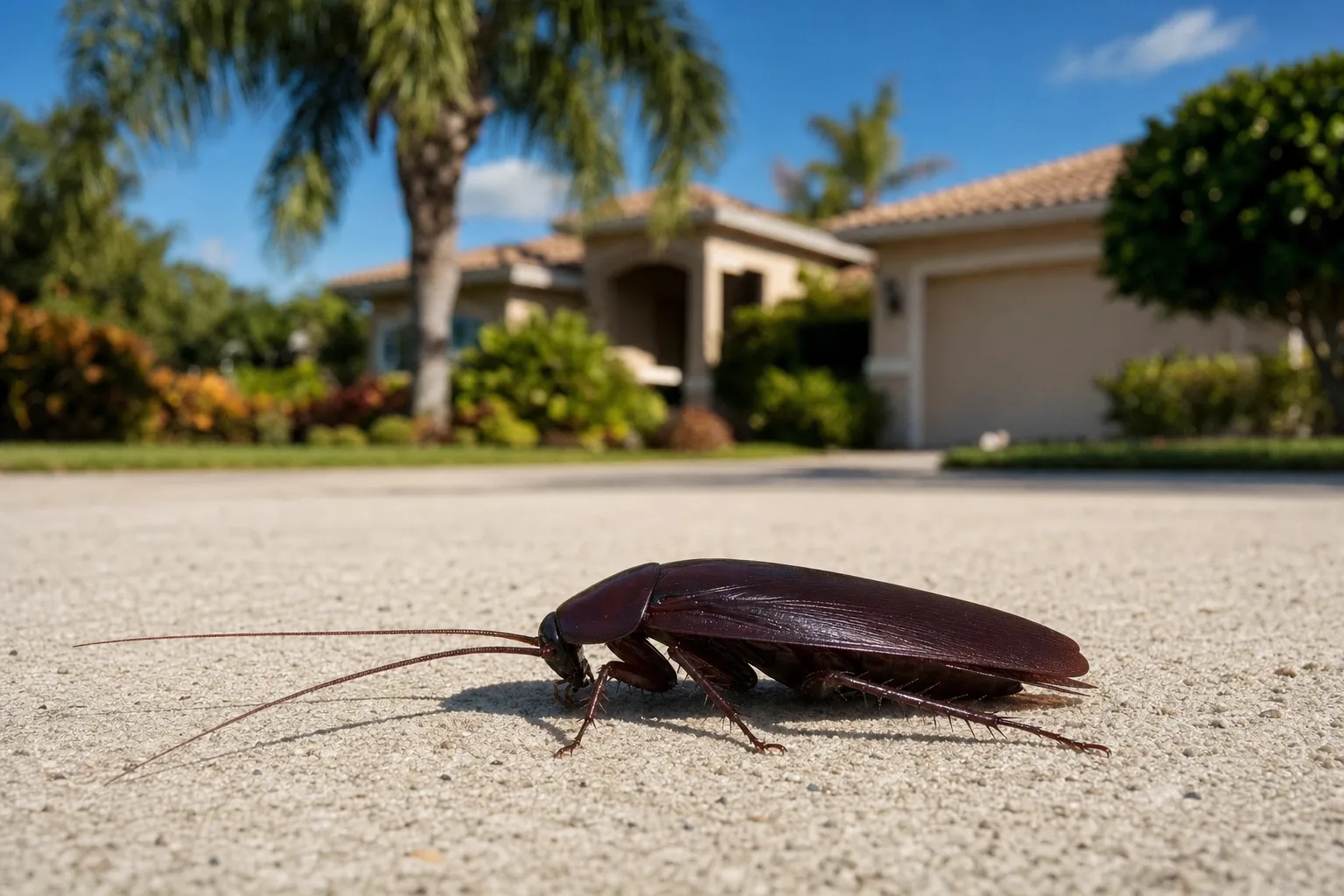
An adult American cockroach — the large reddish-brown “palmetto bug” that flies onto SWFL lanais. Photo: Muhammad Mahdi Karim via Wikimedia Commons, CC BY-SA 2.5, resized.
- Humidity and afternoon storms keep our slabs, soffits, and mulch beds damp. That’s prime shelter for smokybrown and American roaches (the palmetto bugs you meet on the lanai).
- Slab-on-grade construction means plumbing penetrations, weep holes, and door thresholds are constant entry points from mulch beds and irrigation zones.
- Roach pressure in SWFL peaks in July and August, when hiding spots stay wet and populations surge.
- Over-the-counter sprays are the go-to for most homeowners, and a light dose of spray is exactly what produces the “flipped over, back up twenty minutes later” scene.
Seasonal pressure
Southwest Florida pest pressure through the year
- Spring Mar–MayBuilding
Warming weather wakes colonies up — activity climbs week over week.
- Summer / rainy season Jun–AugPeak
Heat + humidity + standing water = the year’s heaviest pressure.
- Hurricane season Sep–OctSurge
Storms and flooding push pests indoors looking for dry shelter.
- Fall NovActive
Cooler nights slow things down, but activity stays well above zero.
- Winter Dec–FebLower (not zero)
Our mild winters keep many pests going year-round indoors.
Summer / rainy season & Hurricane season run hottest. Palmetto bug and German roach pressure across the SWFL calendar — callbacks peak when harborage stays damp.
Playing Dead vs. Actually Dead: How to Tell
Before you sweep that roach into the trash and go about your day, run through this quick check.
On every inspection
Signs the roach is still alive
- Loosely curled legs A truly dead roach curls its legs tight against the body. Loose or slightly splayed legs usually mean nervous-system knockdown, not death.
- Antenna twitch Watch the antennae for 20–30 seconds. Even faint movement means the bug is stunned, not gone.
- Glossy abdomen Dead roaches dry out and lose their shine. A wet-looking abdomen usually means it went down recently and could still recover.
- Poke-test response A gentle nudge with a paper towel or broom tip will usually make a stunned roach twitch a leg or 'run' in place.
- Position changes Check back in 10 minutes. If the roach shifted at all, it's alive — or was alive long enough to move before dying.
Five quick tells for whether that belly-up cockroach is actually done.
Pro tip: Skip the shoe. A crushed roach smears whatever it was carrying across your floor. And a female German roach carries her egg case (ootheca) until the eggs are nearly ready to hatch. If she dies close to that point, the eggs can still hatch (Rutgers NJAES). Vacuum the bug (bag it and toss the contents outside) or flush it. One myth to drop while you’re at it: a squashed roach does not call in a crowd. Researchers found that dead and crushed roaches give off fatty acids that make other roaches steer away (Rollo et al., 1994).
Safe Checks You Can Do at Home
Want to confirm what you’re dealing with before you spend money on treatment? Here’s the homeowner-safe playbook.
What to look for
- Identify the species. German roaches are small (½ to ⅝ inch), light brown, with two dark stripes behind the head. You’ll find them in kitchens and bathrooms. American roaches (aka palmetto bugs) are the big reddish-brown ones, about 1.5–2 inches, that fly at your face on the lanai. Different species need different treatment plans — if yours doesn’t match either description, check our Which Florida cockroach is this? guide. Our Florida cockroach ID guide walks through each.
- Check the hiding spots. Under the fridge, behind the dishwasher, inside the toe kick of cabinets, and behind the water heater are the usual roach hideouts in Florida homes. A flashlight and a small mirror will tell you a lot.
- Look for droppings and smear marks. German roach droppings look like coarse black pepper; American roach droppings look like small ridged cylinders. Smear marks along baseboards mean an active runway.
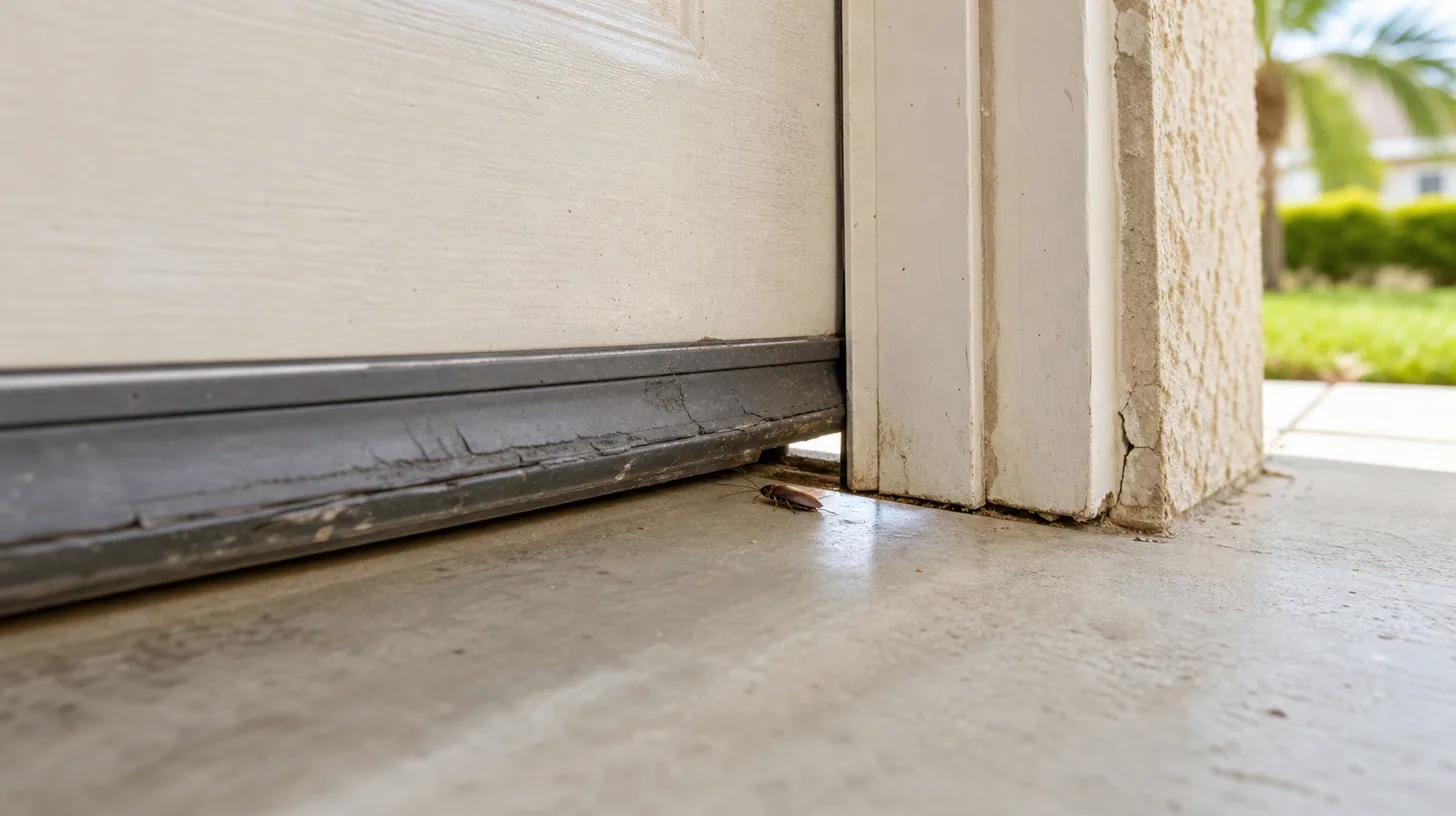
- Check exterior entry points. Weep holes, gaps around AC line penetrations, garage door thresholds, and torn window screens are the usual suspects.
What NOT to do
- Don’t bomb the house with foggers. When NC State researchers tested bug bombs in infested apartments, roach numbers didn’t drop at all, and kitchen counters were left with far more pesticide residue (NC State, 2019). The fog never reaches the cracks where roaches hide. Gel baits in the same study did clear the infestations.
- Don’t spray over gel bait. Repellent sprays make roaches avoid the exact spots where bait would kill them.
- Don’t assume it’s dead just because it’s on its back. You already know why.
- Don’t ignore the outside. The big roaches (American and smokybrown) live outdoors and wander in. Mulch pushed up against the foundation, palm frond piles, and clogged gutters keep them fed and sheltered.
When to call a professional
You’ve got a real problem — not a one-off — if any of these are true:
- You see roaches during the day (they’re nocturnal; daytime sightings usually mean the harborage is overcrowded).
- You find droppings or egg cases in more than one room.
- Over-the-counter sprays and bait stations haven’t put a dent in it after two weeks.
- You’ve got a small striped roach (German) in the kitchen — those breed fast and are notoriously hard to knock out with retail products.
How Waves Handles Roaches in SWFL
We treat roaches as the shelter-and-moisture problem they actually are, not just something to spray. A typical service visit includes:
- Inspection first. We find where they’re hiding (usually damp, dark, and near food or plumbing) before we treat anything.
- Targeted gel baiting in cracks, hinges, and voids where roaches actually travel, instead of broadcast spraying that pushes them into your walls.
- Exterior perimeter and entry-point work, because Florida’s big roaches start outside.
- Recurring service through the WaveGuard program so we stay ahead of the July–August surge instead of reacting to it. WaveGuard membership covers roaches, ants, and the other usual SWFL suspects year-round.
Not sure what tier you need? Our pest control calculator gives a straight quote based on square footage and pest pressure — no phone tag.
Frequently Asked Questions
How do I know if a roach is playing dead?
Watch it for 30 seconds. If the antennae twitch, the legs are loosely splayed (not tightly curled against the body), or the abdomen still looks glossy and hydrated, it’s stunned — not dead. A gentle poke will usually pull a leg twitch out of a stunned roach. Check again in 10 minutes; if it moved at all, it’s alive.
Why should you not squish a roach?
Mostly because it’s messy: a crushed roach smears whatever it picked up in the drain or the garbage onto your floor. There’s also an egg issue. A female German roach carries her egg case until the eggs are nearly ready to hatch, and if she’s killed close to that point, the eggs can still hatch. Vacuuming or flushing is cleaner. (The old claim that a squashed roach attracts more roaches is backwards: chemicals from dead roaches actually repel other roaches.)
Why do cockroaches always end up on their backs?
Physics, mostly. A roach’s body is top-heavy with a rounded back and long legs, so when its nervous system misfires — from insecticide, injury, or dying — the legs spasm, push the body over, and curl inward. On rough outdoor ground a struggling roach can usually hook a claw on something and flip back; on your smooth tile or laminate there’s nothing to grab. That’s why you find them belly-up indoors far more often than outside.
Can cockroaches actually pretend to die on purpose?
Not really. True death-feigning is a reflex some animals use when a predator grabs them, and it’s well documented in certain beetles. The pest roaches in Florida homes rely on running instead. The “playing dead” roach in your kitchen is almost always knocked down by insecticide, stranded on its back, or dying. When a knocked-down roach recovers and walks off, it looks like a con, but nothing was planned.
Bottom line
Do cockroaches play dead? Not on purpose. A belly-up roach is usually stunned, stuck, or dying, and a stunned one can get back up. In Southwest Florida, where humidity, mulch, and slab construction give palmetto bugs and German roaches endless hiding spots, you’re going to run into this eventually. Now you know how to spot the difference, and what to do (and not do) when the “dead” roach in your kitchen turns out to be only stunned.
If it’s more than a one-off, get on the schedule for a pest inspection and we’ll find the harborage, close the entry points, and put an end to most of those 2 a.m. surprises.