Jump to a section (8)
- 01What actually makes a “beetle-type insect” a beetle
- 02The beetle types that actually show up in SWFL homes
- 03Why Southwest Florida keeps producing beetles
- 04What you can safely do (and what to skip)
- 05When to call a professional
- 06How Waves handles a beetle call
- 07Frequently Asked Questions
- 08Ready to stop guessing?
You spotted something small, hard-shelled, and skittering across the tile — and now you’re typing “beetle type insect” into Google at 10 p.m. Been there. Southwest Florida is basically a beetle theme park: warm nights, sandy soil that stays soft after every afternoon storm, and enough St. Augustine turf and softwood framing to keep a couple dozen species happy year-round.
Good news first: most beetle-type insects you find in a SWFL home are nuisance-level, not house-destroying. Bad news: “most” isn’t “all,” and the ones that actually cause damage — powderpost beetles, drugstore beetles, carpet beetles — are quiet about it. This guide walks through the beetle families you’ll actually run into around Sarasota, Bradenton, and Venice, what they look like, why they’re in your house, and when it stops being a “sweep it outside” situation.
If you’d rather skip the ID and just have a tech look at whatever you’ve got in a Ziploc bag, our pest control services cover general beetle inspections as part of any interior/exterior visit. Longer species rundowns live in the pest library if you want to browse.
What actually makes a “beetle-type insect” a beetle
Beetles (order Coleoptera) are the largest insect order on the planet, so calling something “beetle-type” is a little like calling something “car-shaped.” The tell:
- Hardened front wings (elytra) that meet in a straight line down the back — that’s the signature “shield” look.
- Chewing mouthparts, not the piercing stylet you’d see on a stink bug or the sponging mouth of a fly.
- Complete metamorphosis — egg, grub-like larva, pupa, adult. The larvae are often the destructive stage, not the adult you’re looking at.
If the wings overlap instead of meeting in a seam, or the “beetle” folds up like a tank when you touch it, you’re probably looking at something else. Roaches — especially palmetto bugs — get called beetles by folks new to Florida all the time, and the treatment plan is very different.
The beetle types that actually show up in SWFL homes
On every inspection
What techs look for during a beetle inspection
- Fresh frass piles Fine, flour-like sawdust under wood trim or antique furniture points to active powderpost beetles.
- Shed larval skins Bristly, tan cast skins in closets or under rugs are a carpet beetle signature.
- Weevils in flour Tiny snout-nosed adults walking on pantry shelves usually mean an infested bag of grain, rice, or pet food.
- Pinhole exit holes 1/16-inch round holes in hardwood floors or door frames — classic powderpost exit points; larger oval holes point to old house borers in softwood.
- Porch-light piles June beetles and click beetles collecting at exterior lights aren't a home infestation, just an attraction problem.
- Live larvae in cabinets Small, C-shaped grubs in cereal, spices, or dog food mean stored-product beetles are established in the pantry.
Not every sign means every beetle — but if two or more show up in the same room, it's worth a professional look.
Pantry and stored-product beetles
These are the most common “why is there a beetle in my kitchen” culprits: rice weevils, sawtooth grain beetles, cigarette beetles, drugstore beetles, and merchant grain beetles. They ride into your house inside a bag of flour, birdseed, dog food, or spices — often already infested at the store — then breed inside the package.
- Adults are 1/8 inch or smaller, reddish-brown to nearly black.
- You’ll usually see the adults walking on the counter or inside the cabinet, not in the food itself. The larvae are the ones eating.
- Cigarette and drugstore beetles are particularly fond of pet food, dried peppers, and — yes — the pantry corners nobody has opened since last hurricane season.
Wood-boring beetles
The ones that actually damage a house. In SWFL, the players are powderpost beetles (Lyctids and Anobiids) and, less commonly, old house borers. The wood they target isn’t the same across the board, so don’t rule a group out based on what species of lumber you have:
- Lyctid (true) powderpost beetles attack unfinished hardwoods — bamboo furniture, oak flooring, antique frames.
- Anobiid powderpost beetles commonly infest softwood structural timbers, so pine framing and trusses are fair game.
- Bostrichid beetles will use both softwood and hardwood.
- Old house borers attack softwood/conifer lumber such as pine, fir, and spruce — not hardwoods like oak.
Powderpost beetles leave tiny round exit holes; old house borers leave larger, more oval emergence holes. So if you have pine framing or you’re seeing oval holes, that doesn’t clear the wood — it just points at a different beetle group.
Fresh, powdery frass under a hole is the giveaway. Old holes with no frass are usually inactive damage from a previous infestation, but “usually” isn’t a diagnosis — a wood-destroying organism (WDO) inspection can tell you which. Florida’s humidity keeps wood moisture content high enough that powderpost beetle activity is basically a year-round risk here, not a seasonal one.
Carpet and fabric beetles
Varied carpet beetles and black carpet beetles are tiny (about 1/8 inch), oval, and often mistaken for bed bugs at a glance — until you flip one over and see the beetle body plan. The adults are harmless and eat pollen outside. The larvae are the problem: bristly little “woolly bear” grubs that chew wool, silk, feathers, taxidermy, dead insects trapped in wall voids, and pet dander in carpet fibers.
Sarasota and Naples homes with heavy AC use and low interior humidity are actually more attractive to carpet beetles than damper homes — dust bunnies under a bed are a full buffet.
Outdoor and occasional invaders
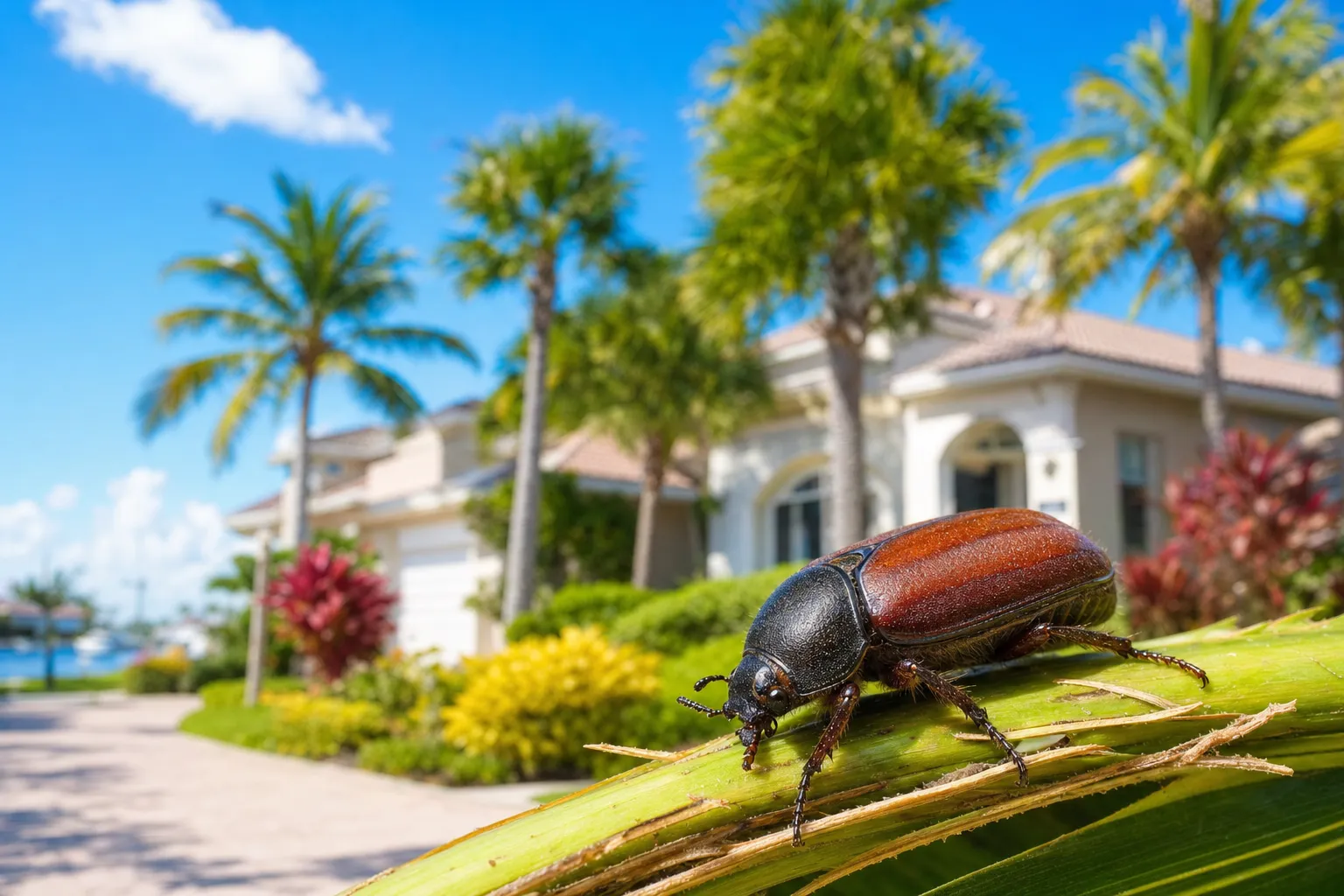
- June beetles / May beetles — big, clumsy, brown scarabs that pile up at porch lights May through July. They eat grass roots as grubs, so a heavy June-bug year can foreshadow lawn damage, but the adults inside your house are just lost.
- Click beetles — the ones that snap and flip when you flick them over. Harmless indoors. Their larvae (“wireworms”) live in soil.
- Palmetto weevils — one of the largest weevils in North America. You’ll see them near stressed cabbage and Bismarck palms in landscaped yards.
- Ground beetles — shiny, fast, black or bronze. They’re actually predators of other pests, so a couple on the lanai is a good sign, not a bad one.
Seasonal pressure
Southwest Florida pest pressure through the year
- Spring Mar–MayBuilding
Warming weather wakes colonies up — activity climbs week over week.
- Summer / rainy season Jun–AugPeak
Heat + humidity + standing water = the year’s heaviest pressure.
- Hurricane season Sep–OctSurge
Storms and flooding push pests indoors looking for dry shelter.
- Fall NovActive
Cooler nights slow things down, but activity stays well above zero.
- Winter Dec–FebLower (not zero)
Our mild winters keep many pests going year-round indoors.
Summer / rainy season & Hurricane season run hottest. Beetle activity leans heavy in summer, but wood borers and pantry pests don't take a winter off in SWFL.
Why Southwest Florida keeps producing beetles
A few things compound:
- Sandy soil drains fast between afternoon storms, which is exactly what scarab and ground beetle larvae want — moist but never waterlogged.
- Warm, humid attics and wall voids keep wood moisture around 12–15% year-round, which is powderpost beetle heaven.
- St. Augustine and bahia turf feed white grubs (beetle larvae), which then feed the adult beetles you see swarming lights.
- Storm-blown debris — after a big blow, downed limbs and stacked pallets in the yard become breeding sites within weeks.
None of this means you did something wrong. It means you live in Florida.
Pro tip from the truck: Before you spray anything in the pantry, empty every open bag and box into a clear plastic bin and check the bottom corners. The large majority of “sudden pantry beetle outbreaks” trace back to one contaminated bag — usually birdseed, cornmeal, or the flour you forgot you owned. Toss the source, vacuum the shelf, wipe with warm soapy water, and most of the problem walks out with the trash. No pesticide needed on food surfaces, ever.
What you can safely do (and what to skip)
Safe DIY moves:
- Vacuum along baseboards, under furniture, and inside pantry corners. Empty the canister outside, not into the kitchen trash.
- Freeze suspect dry goods for 4–7 days to kill eggs and larvae before storing in sealed glass or heavy plastic.
- Swap porch bulbs for warm/yellow LED — cuts the June beetle porch-light pileup significantly.
- Keep wood moisture low and control leaks/condensation where you can — dry structural wood is far less attractive to wood-boring beetles.
- Store firewood off the ground and away from the house siding.
Skip these:
- Fogging the whole kitchen with a bug bomb. Pantry beetles hide inside packaging; the aerosol doesn’t reach them, and you’ve just coated your food surfaces for no gain.
- Spraying an unknown “beetle spray” on hardwood floors to stop suspected borers. Surface sprays don’t reach larvae tunneling inside the wood. The right product depends on species, whether the wood is finished, and whether the infestation is active — this is a WDO inspection call, not a Home Depot aisle decision.
- Assuming one beetle equals an infestation. Ground beetles, click beetles, and June beetles wander in through door sweeps and leave on their own.
When to call a professional
Time to pick up the phone at (941) 297-5749 if:
- You’re seeing fresh frass under wood trim, furniture, or flooring.
- Pantry beetles keep coming back after you’ve cleaned out and sealed containers.
- You find carpet beetle larvae in more than one room (they’re establishing).
- A home inspection flagged wood-boring beetle exit holes and you need a formal WDO report.
- You’re buying, selling, or refinancing in Sarasota or Manatee and need a Wood-Destroying Insect Report.
How Waves handles a beetle call
| What you get | One-time beetle service | WaveGuard quarterly |
|---|---|---|
| Interior inspection | Initial visit only | Every quarter |
| Exterior perimeter treatment | Once | Every quarter, weather-timed |
| Wood-borer exit-hole review | Included if visible | Included + tracked over time |
| Pantry / stored-product follow-up | Optional recheck | On request or when interior access is scheduled |
| Retreat warranty | 30 days | Free between visits |
| Covers pantry + carpet + occasional invaders | Depends on scope | Yes — same plan covers all three |
For most SWFL homes, quarterly wins because beetle pressure isn't a one-and-done problem.
A typical beetle call starts with ID — half the job is knowing whether we’re chasing pantry pests, wood borers, carpet beetles, or something that walked in and doesn’t matter. From there we treat the harborage (pantry crack-and-crevice, wall voids, closet baseboards, exterior perimeter) with products labeled for the specific species. For confirmed active wood-boring beetles, that may include a borate treatment on accessible bare wood or, for extensive infestations, a referral to a licensed fumigation partner.
If you want ongoing coverage instead of chasing one bug at a time, WaveGuard memberships roll interior + exterior + attic checks into a quarterly cadence, which is genuinely how you keep beetle pressure down long-term in this climate. Pricing depends on home size and scope — plug your address into the pest control calculator to get a real number without a phone call.
Frequently Asked Questions
Is a beetle-type insect always actually a beetle?
Not always. Roaches (especially palmetto bugs), true bugs like leaf-footed and stink bugs, and even some larger ants get called beetles by folks who didn’t grow up with them. The elytra test — hard front wings that meet in a straight seam down the back — is the fastest ID. If the wings overlap and there’s a triangular scutellum between them, you’re probably looking at a true bug, not a beetle.
Are the beetles in my house dangerous?
For most SWFL beetles the bigger risks are property damage (wood borers, carpet beetles) and food contamination (pantry beetles) rather than a direct threat to people or pets. There’s one important exception: blister beetles. Florida blister beetles release a defensive fluid (hemolymph) that can blister human skin on contact — especially if the beetle is pressed, crushed, or rubbed against you. So as a rule, don’t handle or crush an unfamiliar beetle with bare hands; scoop it into a container instead. For related reading, our pest library covers the wood-destroyers people most often confuse with powderpost beetles, and helps rule out the other big “small dark bug in the kitchen” suspects like ants.
Why do I only see beetles at certain times of year?
Adult beetles are timed to breeding weather — May through August is peak for scarabs, June beetles, and click beetles at your porch light. Indoor beetles (pantry, carpet, wood-boring) are year-round in SWFL because your AC keeps interior conditions stable. If you’re seeing indoor beetles in only one season, it’s usually tied to when a new bag of pet food, birdseed, or holiday decor came into the house.
Ready to stop guessing?
If you’ve reached the “why is there another one on the counter” stage, you’re past the DIY-Google phase. Book a beetle inspection through our pest control services page and we’ll come identify what you’re actually dealing with — no charge for the ID, and no upsell to a treatment you don’t need. Or call us directly at (941) 297-5749 and we’ll get someone out this week.