You opened the garbage can. Something moved. You closed it very fast, made a noise you’re not proud of, and now you’re here — trying to figure out what those pale, wriggly, rice-looking things actually are before you deal with them.
Short answer: maggots are baby flies. Specifically, they’re the larval stage of true flies (order Diptera) — most often the common house fly, blow fly, or flesh fly here in Southwest Florida. They hatch from eggs a fly laid on something wet and organic (rotting food, pet waste, a forgotten shrimp shell, a dead lizard behind the AC unit), eat like their lives depend on it (they do), and turn into adult flies in as little as a week when it’s 90°F and humid — which, around Sarasota and Bradenton, is roughly nine months out of the year.
If you’re already past the “what are they” stage and just want them gone, jump to our pest control services page or check out the Pest Library for related fly and sanitation-pest topics. If you’d rather understand the “why” first so this doesn’t happen again next month, keep reading.
What Maggots Actually Are (and What They Aren’t)
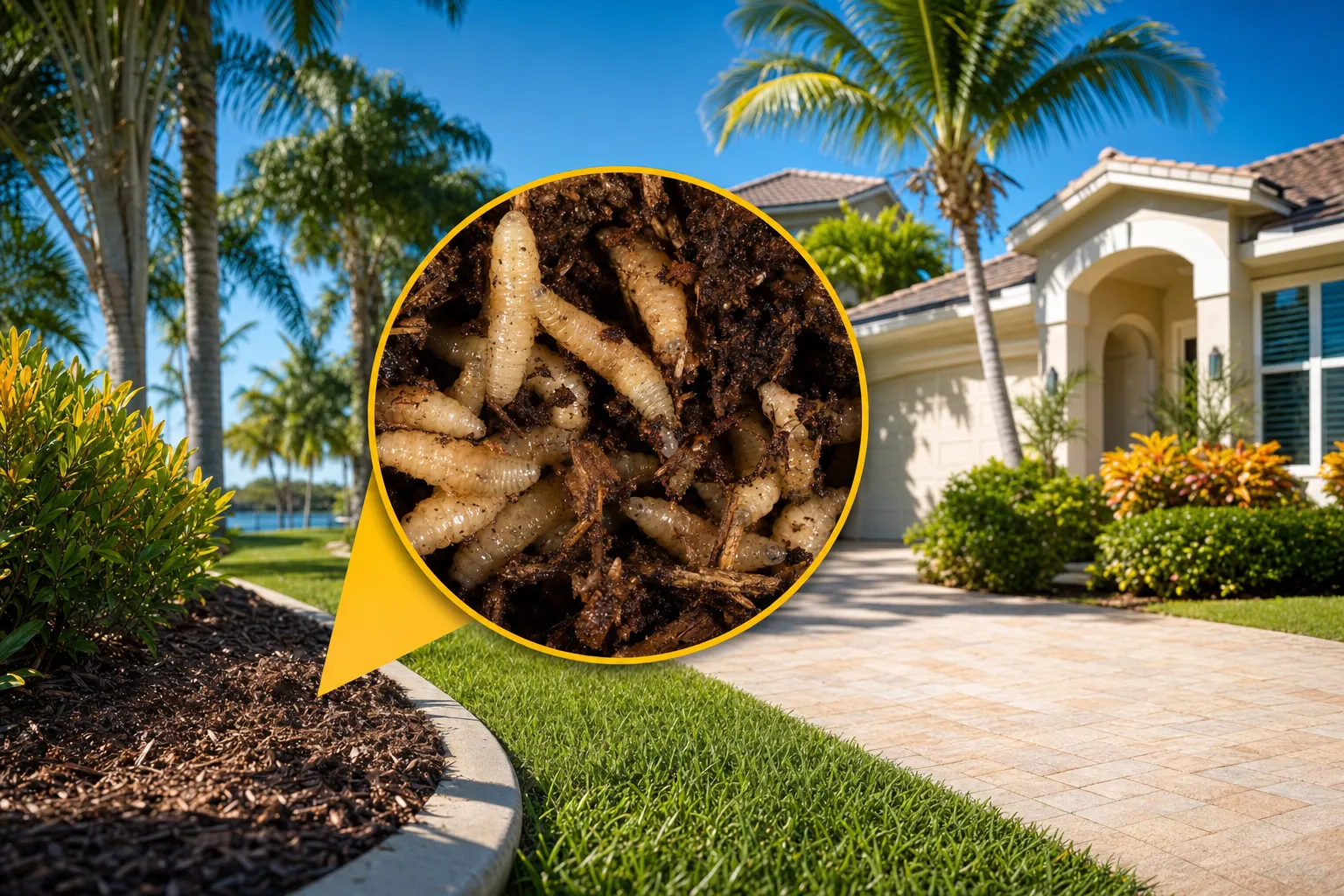
A maggot is a legless, soft-bodied fly larva. Most of the ones you’ll see in and around a Florida home fall into three groups:
- House fly larvae (Musca domestica) — creamy white, tapered at the head, blunt at the rear, about 1/4 to 1/2 inch long when mature. The classic garbage-can maggot.
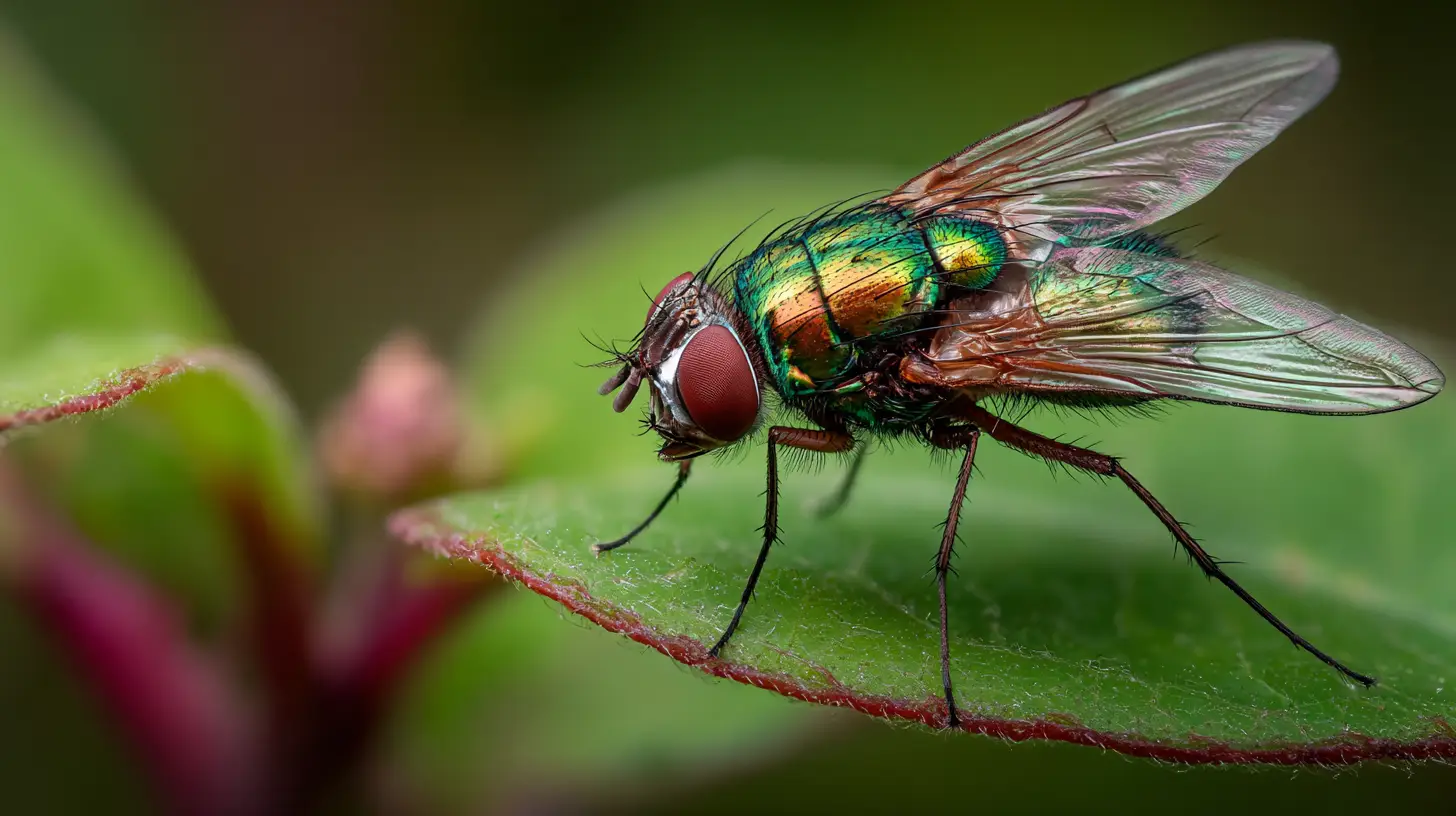
- Blow fly larvae (Calliphoridae) — similar size and shape, often found on dead animals or meat scraps. If you’re seeing metallic green or blue flies buzzing nearby, these are their kids.
- Flesh fly larvae (Sarcophagidae) — a little chunkier, sometimes deposited alive (yes, live birth — flesh flies skip the egg stage). Common where there’s decaying protein.
What they’re not: worms, grubs, or termite larvae. Earthworms are segmented and live in soil. Grubs (beetle larvae) have a distinct hardened head capsule and legs. Termite larvae stay hidden inside the colony and you’ll never find them in your trash. If it’s pale, legless, and squirming on something rotten, it’s a fly larva.
Adult flies find your house because they can smell fermenting organic material from a shocking distance. Once a female lands on something suitable — wet, protein-rich, and undisturbed — she can lay 100 to 150 eggs at a time. Those eggs hatch in 8 to 20 hours in Florida summer temperatures. By day three you have visible maggots. By day seven to ten you have new adult flies looking for the next spot to lay eggs. That’s the loop you’re trying to break.
On every inspection
What a tech looks for when maggots show up
- Source material Rotten food, pet waste, dead rodent, standing organic slurry in a can — the maggots are the symptom, the source is the fix.
- Adult fly activity House flies, blow flies (metallic green/blue), or fruit flies clustering near windows, drains, or trash.
- Drain film Slimy biofilm inside kitchen/utility drains — drain flies breed there and their larvae look maggot-adjacent.
- Outdoor harborage Trash bin lids that don't seal, pet waste piles, compost near the house, standing water in bin bottoms after afternoon storms.
- Entry points Torn screens, gaps around garage doors, propped-open sliders — how the adults got in to lay eggs in the first place.
- Repeat pattern Same spot, same week each month? That points to a recurring sanitation gap, not bad luck.
Maggots are a downstream problem. Every treatment plan starts by finding what they're eating.
Why Southwest Florida Homes See Them More Than You’d Expect
A few things stack the deck against us down here:
Heat and humidity accelerate everything. Fly eggs that would take 24+ hours to hatch up north hatch in half a day here. The whole egg-to-adult cycle that takes two-plus weeks in a temperate climate can run in 7 to 10 days from June through September in Bradenton, Sarasota, and North Port.
Afternoon storms create wet organic pockets. That daily 3 p.m. downpour fills the bottom of your outdoor trash can with an inch of rainwater, which mixes with whatever’s leaking out of the bags, and by Thursday you’ve got a soup that a female blow fly finds irresistible.
Sandy soil doesn’t help either way. It drains fast, which is good, but it also means pet waste and yard debris break down slowly on the surface — plenty of time for flies to find it. If your St. Augustine lawn has a dog run in the corner, that corner is a fly nursery in July.
Screened lanais give a false sense of security. One torn screen panel behind the pool equipment is all it takes. Flies are small, motivated, and they only need to find your kitchen once.
None of this means your house is dirty. Maggots aren’t a moral judgment — they’re a biology problem, and the biology is aggressive in this climate.
Pro tip: If you find maggots in an outdoor trash can, don’t just hose them into the driveway. You’re spreading the problem and feeding the next cycle. Bag them (double-bag), tie it off, put it in a sealed can for pickup, then scrub the bin with hot soapy water and a splash of white vinegar. Let it dry in direct sun for a few hours before the next bag goes in. Sun + dry = dead breeding site.
Safe Checks You Can Do Today
Before you call anyone (including us), walk through this list. Most maggot situations resolve once the source is found and removed.
- Follow your nose. Maggots are almost always within a few feet of something rotting. Check under the sink, behind the fridge, inside the pantry, in the garage trash, around pet food bowls, and along the baseboard where the kitchen meets the utility room.
- Check pet waste stations. A single overlooked pile in the side yard after a rainy week is a legitimate maggot factory.
- Look up. Attic access hatches, soffits, and screened-lanai ceiling corners occasionally hide a dead rodent or bird. The maggots come down before the smell fully arrives.
- Inspect drains. Pour a cup of hot (not boiling) water down each kitchen and bathroom drain. If tiny flies pop out, you’ve got drain fly larvae in the biofilm — a different fly family with its own treatment, but the same find-the-source logic.
- Scan the garage. Recycling bins with soda residue, forgotten grocery bags, second freezers that lost power during a storm — all classic sources.
What Not to Do
- Don’t dump bleach on them and walk away. Bleach kills the visible larvae but doesn’t remove the food source or the eggs you can’t see. They’re back in 48 hours.
- Don’t spray a broad-label insecticide inside food-prep areas. It’s the wrong tool and it’s a label violation for most consumer products. Physical removal + sanitation does 90% of the work.
- Don’t ignore adult flies. For every maggot you see, there’s an adult female somewhere looking for the next spot. If you don’t reduce adult pressure, you’ll be doing this again in ten days.
- Don’t move an infested bin next to the house. Sounds obvious. People do it anyway.
When It’s Time to Call a Pro
Call someone if:
- You’ve cleaned the obvious sources and maggots keep reappearing — that usually means there’s a hidden source (dead animal in a wall void, sewer line issue, or a chronic exterior harborage).
- You’re finding them inside the house away from any obvious food source.
- You’ve got a serious adult fly problem alongside the larvae — that’s a breeding population, not a one-off.
- There’s a medical or food-safety concern (elderly relative, infant, home-based food business).
| What you get | DIY cleanup | Waves service visit |
|---|---|---|
| Finds the source | If it's obvious | Full interior + exterior inspection, including attic and voids |
| Treats adult flies | Fly swatter / spray can | Targeted residual + fly-specific baiting where labeled |
| Addresses breeding sites | Manual cleanup | IPM-based sanitation recommendations + exterior treatment of harborage zones |
| Prevents the next cycle | Depends on habits | Recurring exterior service plus free re-treats between visits if flies return |
| Backed by a guarantee | No | Yes — free re-treats between visits if pressure returns |
DIY handles the easy 80%. A pro is worth it for the stubborn 20% that keeps coming back.
Here’s how we approach it at Waves: a tech does a full walk-through (kitchen, garage, exterior bins, pet areas, lanai, attic access) to find every possible breeding site. We treat adult fly pressure on the exterior where they’re staging, recommend sanitation fixes for the sources we found, and — if you’re on a recurring program — keep that exterior barrier maintained visit after visit, with free re-treats in between if fly pressure comes back before we’re due. No guessing, no fogging the whole house, no “spray and pray.”
If you’d rather just have it handled year-round, WaveGuard memberships cover flies, ants, roaches, spiders, and the rest of the usual SWFL cast under one recurring plan. Pricing depends on home size and property — you can ballpark it with the calculator in about a minute.
Frequently Asked Questions
What causes maggots to suddenly appear?
An adult female fly laid eggs on something organic, and it’s warm and humid enough for them to hatch. That’s it. There’s no spontaneous generation, no “the trash created them” — a fly got in (or into your outdoor bin), found protein or decaying food, and left babies behind. In Florida summer, that whole sequence can happen in under 24 hours.
Are maggots dangerous to humans or pets?
Common house-fly maggots aren’t directly dangerous — they don’t bite, sting, or burrow into healthy tissue. The real risk is what they’ve been eating. Flies and their larvae carry Salmonella, E. coli, and other bacteria from the rotting material they feed on. Keep them away from food-prep surfaces, wash any exposed dishes/utensils, and don’t let pets snack on the source material. If you find maggots in a pet’s wound or coat, that’s myiasis and you need a vet, not a pest company.
How do I keep maggots from coming back?
Break the life cycle. That means: take trash out before it ferments (especially in summer), rinse recyclables, use bins with tight-sealing lids, pick up pet waste every day or two, keep drains clean, and address any adult fly population before it lays the next batch of eggs. If you’ve done all of that and they still show up, there’s a hidden source — time to get help from Waves or check the broader Pest Library for related sanitation-pest guides.
The Bottom Line
Maggots are the visible, gross-out symptom of a boring underlying problem: something organic, wet, and undisturbed. Fix the source, break the fly life cycle, and they don’t come back. If you’d rather not think about it again, that’s what we’re here for — Waves techs cover Sarasota, Bradenton, Venice, Parrish, Palmetto, and North Port with recurring service that keeps fly pressure (and the rest of the SWFL pest lineup) off your property before it becomes a story you tell your friends.
Ready to get on a schedule? Book a service visit or call us at (941) 297-5749. We’ll handle the wriggling part.