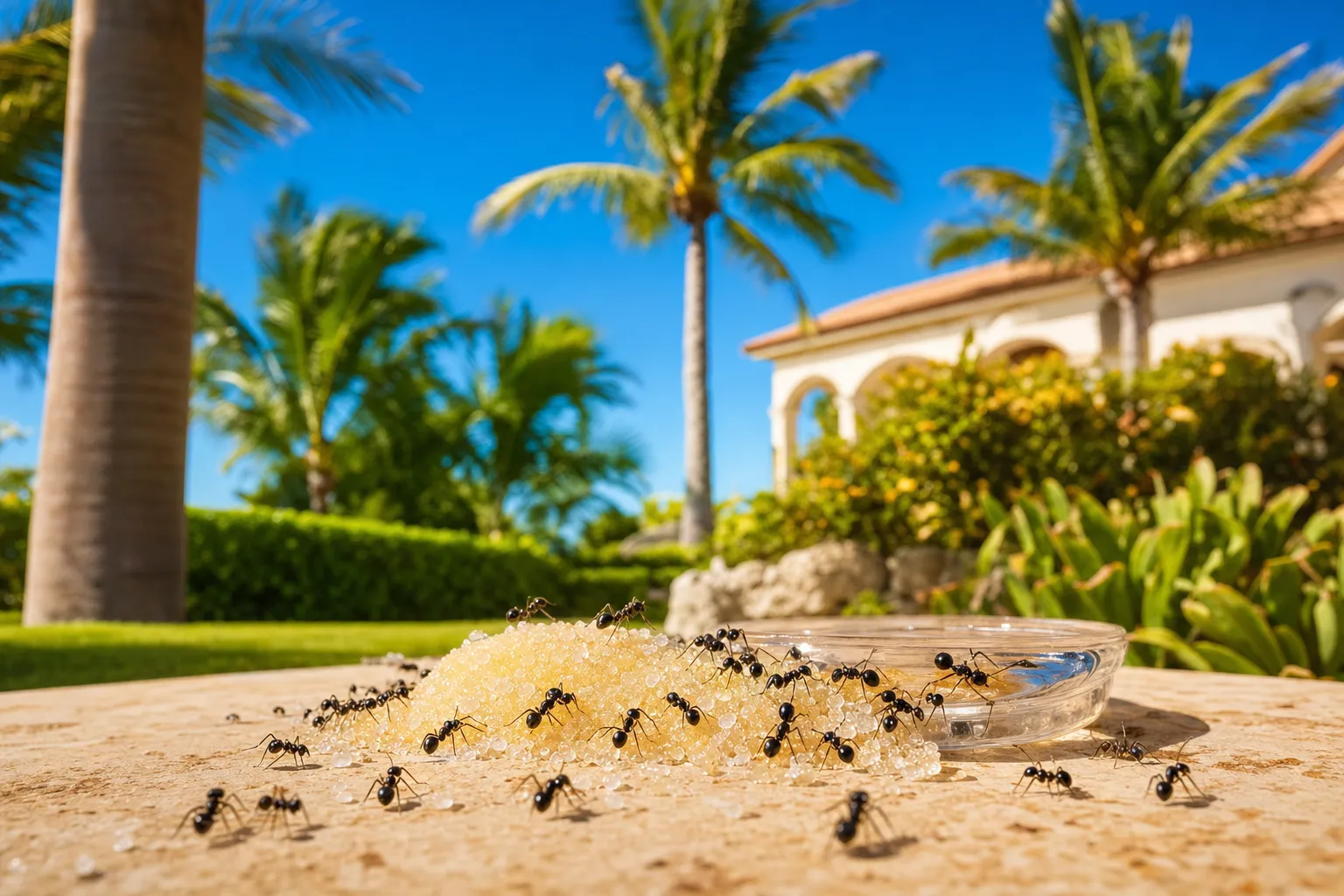
You typed “does baking soda kill ants” into Google at 10pm because there’s a wobbly line of ants marching across your counter and you don’t feel like driving to the hardware store. Fair. Short answer up front: baking soda by itself doesn’t reliably kill ants, and the popular “baking soda + powdered sugar” recipe kills a handful of foragers on a good day but almost never touches the queen. In Southwest Florida — where ghost ants, white-footed ants, and Caribbean crazy ants treat your kitchen like a year-round buffet — you need a strategy, not a pantry hack. If you want to skip the science and just get eyes on the trail, our pest control services page has the fast track.
Here’s the honest breakdown of what baking soda actually does, what it doesn’t, and what will genuinely clear a SWFL ant problem.
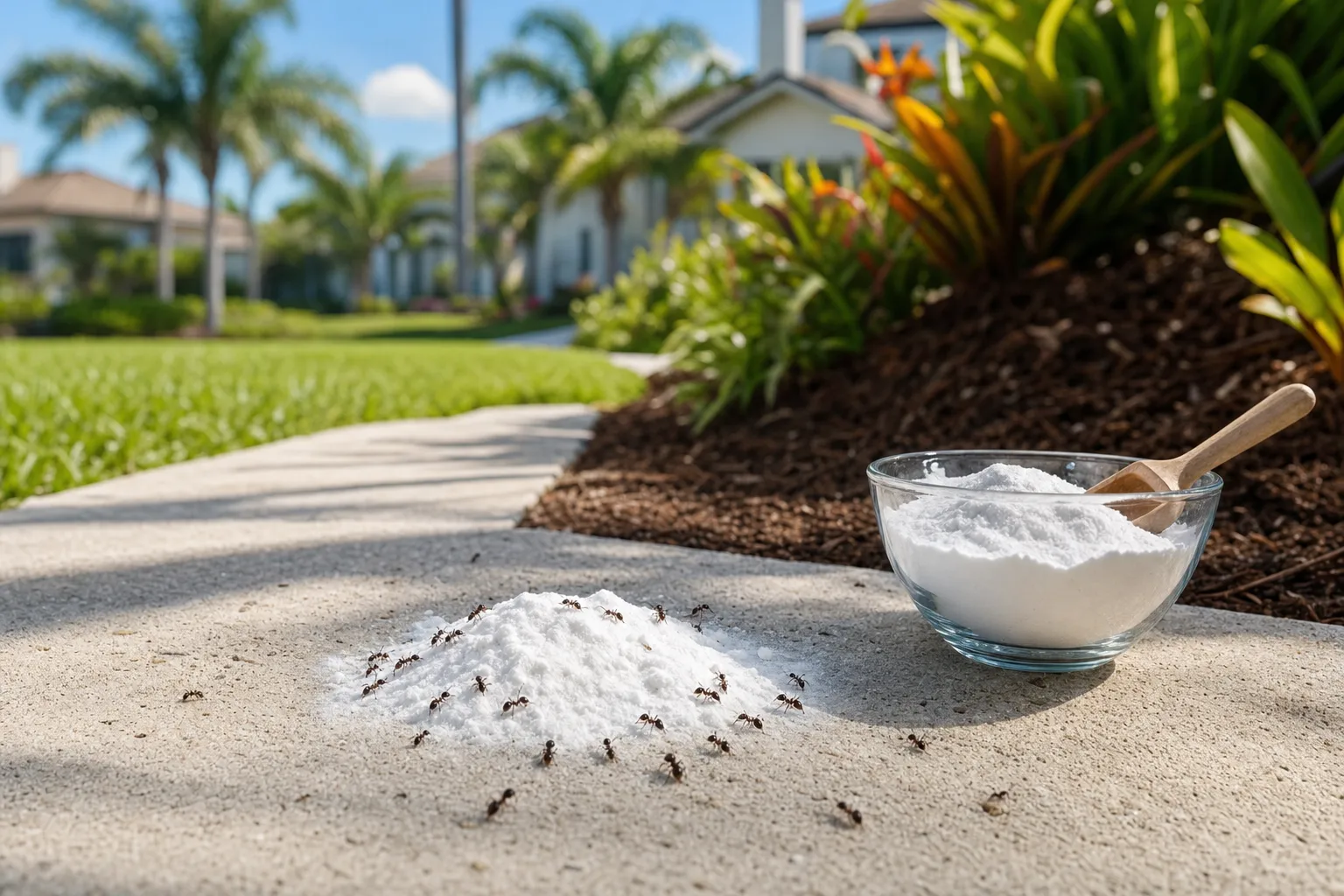
So, Does Baking Soda Kill Ants?
Not reliably, no. A few foragers that eat a baking-soda-and-sugar mix may die, but the mix never reaches the queen — so the colony, and tomorrow’s trail, are untouched. It’s a myth with a great origin story and a terrible success rate.
The Baking Soda + Sugar Myth — Where It Came From
The internet loves this one. The theory goes: mix equal parts baking soda (sodium bicarbonate) and powdered sugar, sprinkle it on a trail, and ants — attracted by the sugar — will eat the mix, the baking soda will react with the acid in their digestive system, produce carbon dioxide, and rupture them from the inside.
It’s a great story. The problem is ant physiology doesn’t cooperate.
- Ants don’t have a strongly acidic gut the way we do. Their crop pH sits closer to neutral, so the “explosive CO2 reaction” is nowhere near what happens in a middle-school volcano.
- Foraging ants — the ones you see on the counter — regurgitate food to feed nestmates and the queen back at the colony (a process called trophallaxis). But they filter what they share. Bitter or unfamiliar solids often get dropped before they ever reach the nest.
- Even in the best case, you kill a couple dozen visible workers. A mature ghost ant or white-footed ant colony in Southwest Florida can have tens of thousands of workers and multiple queens. Killing foragers without touching queens is like bailing water out of a boat with a hole in it.
That’s why UF/IFAS extension guidance, and every professional ant protocol worth trusting, focuses on slow-acting baits that get carried back to the colony — not contact killers dumped on a trail.
Not ready to trust the internet on this either? Fair. Grab a real quote through our pest control services and skip the pantry-chemistry phase entirely.
Why Baking Soda Alone Won’t Wipe Out an Ant Colony
Let’s get specific about SWFL ants, because “ants” isn’t one problem — it’s at least four common problems that all look kind of the same at 10pm on your counter.
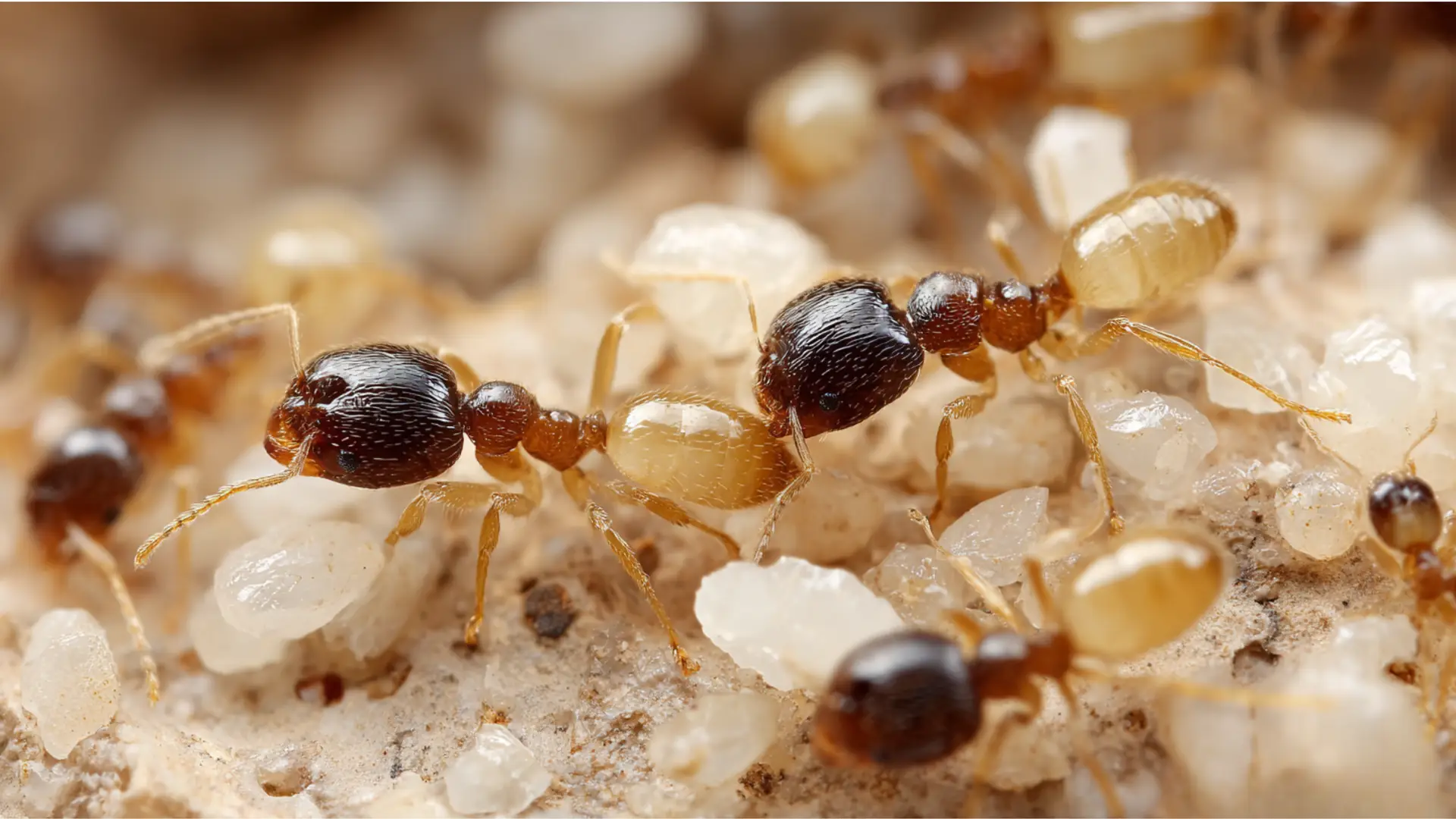
- Ghost ants (Tapinoma melanocephalum) — tiny, pale abdomens, love kitchens and bathrooms. Colonies bud, meaning they split when stressed. Spray them with the wrong thing and you get more trails, not fewer.
- White-footed ants (Technomyrmex) — slightly larger, pale “feet,” build huge super-colonies in landscape mulch and wall voids. They mostly feed on honeydew from scale insects on your ornamentals, then move indoors when it rains.
- Caribbean crazy ants — erratic, fast-moving, reddish-brown. Nest under debris, pavers, and in soggy soil. Our sandy soil and afternoon storm cycle is basically their ideal habitat.
- Big-headed ants — sandy-yard specialists. They push up little piles of soil around driveway cracks and slab edges, then send scouts inside looking for grease and protein.
Baking soda doesn’t discriminate between species, and none of them are meaningfully affected by it. What actually matters is the species ID + a bait matched to that species’ current food preference (sweet, greasy, or protein). That’s the piece a DIY blog can’t do for you from your countertop photo.
Pro tip: Before you treat anything, put a clean piece of paper on the trail with a tiny dab of honey on one side and a dab of peanut butter on the other. Whichever the ants hit first tells you their current craving — and which type of bait will actually get carried home. Colonies switch preferences seasonally, especially after big rain events.
Timing matters too: SWFL ant callbacks are lowest in January–February, ramp hard in March–April as ghost ants and white-footed ants wake up, and peak in May–June after the first heavy rains flush colonies out of the soil.
Seasonal pressure
SWFL ant pressure through the year
- Winter Jan–FebLower (not zero)
The quietest window of the year — colonies slow down but never go dormant.
- Spring wake-up Mar–AprBuilding
Ghost ants and white-footed ants ramp hard as the ground warms.
- First heavy rains May–JunPeak
Storms flush colonies out of the soil — the peak of kitchen-trail season.
- Rainy season Jul–SepActive
Sustained humidity keeps foraging pressure high, especially after downpours.
- Fall Oct–DecActive
Cooler nights slow things down, but indoor trails continue year-round.
First heavy rains runs hottest. Ant pressure in Southwest Florida tracks the rain, not the calendar — which is why a pantry hack in June is fighting the year's strongest tide.
What Actually Works (and What to Skip)
Here’s the honest DIY-to-pro ladder for kitchen ants in a Sarasota or Bradenton home.
Safe things you can do yourself, tonight
- Wipe the trail with plain soapy water. This isn’t a treatment — it’s cleanup. Ants leave pheromone trails; if you don’t erase the trail, new foragers just follow the same highway tomorrow. A cheap microfiber and dish soap does more than baking soda ever will.
- Deny food and water. Rinse the sink before bed, dry it with a towel, keep sugar and honey in gasketed containers, empty the pet bowl overnight, and check for a slow drip under the sink or fridge. In SWFL humidity, ants are chasing water as often as sugar.
- Seal the obvious entry points. Weep holes at the base of stucco, gaps around A/C line penetrations, and the seam where a lanai slab meets the house are the top three ant highways in Southwest Florida homes.
- Use a real bait, correctly. If you’re going to buy something at the store, look for a borax- or indoxacarb-based bait station and place it near the trail, not on it. Do not spray Windex, vinegar, or bleach on top of a bait — those repel ants and kill the whole point.
What to skip
- Baking soda + sugar (you already know why).
- Vinegar sprays as a “killer.” Vinegar is a decent trail disruptor — it erases pheromones — but it doesn’t kill the colony.
- Boiling water dumped in a mound. Works for a small exposed fire-ant mound in an open yard. Does nothing for ghost ants nesting in a wall void, and it will crack your slab or scald your St. Augustine.
- Foggers and total-release “bug bombs.” These scatter ghost ants and white-footed ants into more rooms, not fewer.
When to call a pro
Call for a professional inspection if you’re seeing any of these:
- Trails that reappear within 48 hours of a thorough clean-and-bait.
- Ants coming from multiple, unrelated spots (bathroom + kitchen + lanai).
- Winged ants (swarmers) indoors — that can mean carpenter ants or termites, and the treatment is completely different.
- Ants on ornamental plants outside plus ants inside — that’s usually a white-footed ant super-colony feeding on honeydew, and it needs an outside-in approach.
| What you're getting | DIY baking soda + sugar | Store-bought bait station | Waves professional service |
|---|---|---|---|
| Kills foraging workers | Sometimes | Yes | Yes |
| Reaches the queen | No | Sometimes | Yes |
| Correct species ID | No | No | Yes |
| Handles wall-void & soil nests | No | No | Yes |
| Written re-service guarantee | No | No | Yes |
| Pet & kid precautions built in | No — keep off the floor | With care | Yes — with re-entry guidance |
DIY has a place — mostly cleanup and prevention. Colony elimination is a different job. Keep any baking-soda-and-sugar mix away from pets and kids — sodium bicarbonate can upset a pet's stomach if they eat enough of it.
How Waves Approaches Ants in Southwest Florida
When one of our techs shows up in Sarasota, Bradenton, Venice, or Port Charlotte on an ant call, this is the actual sequence — because the “right” ant treatment depends entirely on which ant you have and where the colony is nesting.
- Identification first. Trail photos, foraging behavior, food preference, and where they enter the structure. Ghost ant vs. white-footed ant looks nearly identical to a homeowner and completely different to a technician — and the treatment plan splits from there.
- Non-repellent perimeter, not a knockdown spray. For most SWFL ant species we lean on non-repellent residual products and slow-acting baits so foragers carry active ingredient back to the queen before they die. Spraying a pyrethroid on top of a bait — a very common DIY mistake — makes the bait useless.
- Attack the outside source. For white-footed ants especially, that means treating ornamentals for scale and aphids (their honeydew supply) so the super-colony has less reason to be against your house in the first place.
- Follow-up on the ant clock, not the calendar. Callbacks are baked into a real service. Colonies bud, weather flips, and a good ant program comes back to check the trail lines, not just because 30 days passed.
If you’d rather see roughly what a program runs before you call, punch your home details into our pest control calculator — no salesperson, just a number.
Frequently Asked Questions
How quickly will baking soda kill ants?
For the small percentage of foragers that actually eat a sugar-and-baking-soda mix and don’t drop it before returning to the nest, death — if it happens at all — takes hours to a day. The trail you can see on your counter usually looks unchanged the next morning, because new foragers replace the dead ones from a colony you never touched. Real colony-elimination baits with indoxacarb or fipronil take 3 to 10 days on purpose, so foragers have time to feed the queen before the active ingredient shuts them down.
What kills ants the fastest?
If your goal is “dead ants on the counter in 30 seconds,” soapy water in a spray bottle wins. If your goal is “no more ants in the kitchen next week,” speed is the wrong metric — slow-acting bait beats fast-acting spray every time, because fast contact killers leave the queen and 90% of the colony alive and reproducing. A professional program combines a fast knockdown of visible workers and a colony bait so you get both wins.
Can I mix vinegar and baking soda to kill ants?
You can, but you’ll mostly get a fizzy mess. When vinegar (an acid) hits baking soda (a base), they neutralize each other and produce carbon dioxide and water. The residue on your counter is basically salty water — no meaningful insecticidal activity. Vinegar alone is a decent pheromone-trail wipe. Baking soda alone is a fine deodorizer. Mixed together, they cancel each other out.
Does Dawn dish soap kill ants?
Yes, on contact — soap breaks down the waxy cuticle that keeps ants from drying out, and they suffocate. A 1:1 Dawn-and-water spray will drop the ants it directly hits. It will not travel back to the colony, which is why your counter looks clear tonight and repopulated by breakfast. Treat Dawn like a fly swatter, not a treatment plan.
The Bottom Line
Baking soda is great for cookies, drains, and gym shoes. As an ant killer, it’s mostly folklore. In Southwest Florida — with our sandy soil, near-constant afternoon storms flushing colonies, and warm year-round ground temps that never really shut ant activity off — a serious ant problem needs species ID, the right bait, and a follow-up plan.
If your trail keeps coming back, or you just want the whole thing off your plate, our WaveGuard membership covers ants plus the other SWFL usual suspects (roaches, silverfish, spiders, the whole cast) on a schedule that actually matches when they’re active. And if you like to read before you buy, the pest library has homeowner-level breakdowns of every ant species on this page — including how to tell a white-footed ant from a ghost ant on your countertop without a hand lens.
Or if you just want a real person to look at the trail: (941) 297-5749 works too.