

Jump to a section (9)
- 01What Is a Florida Huntsman Spider?
- 02Does Florida Have Huntsman Spiders?
- 03Is the Florida Huntsman Spider Dangerous?
- 04Where Huntsmans Show Up in Southwest Florida Homes
- 05What Attracts Huntsman Spiders (and How to Make Your Place Less Appealing)
- 06What to Do (and Not Do) If You Find One Indoors
- 07When to Call Waves Pest Control
- 08Frequently Asked Questions
- 09Ready to Evict Your Eight-Legged Houseguest?
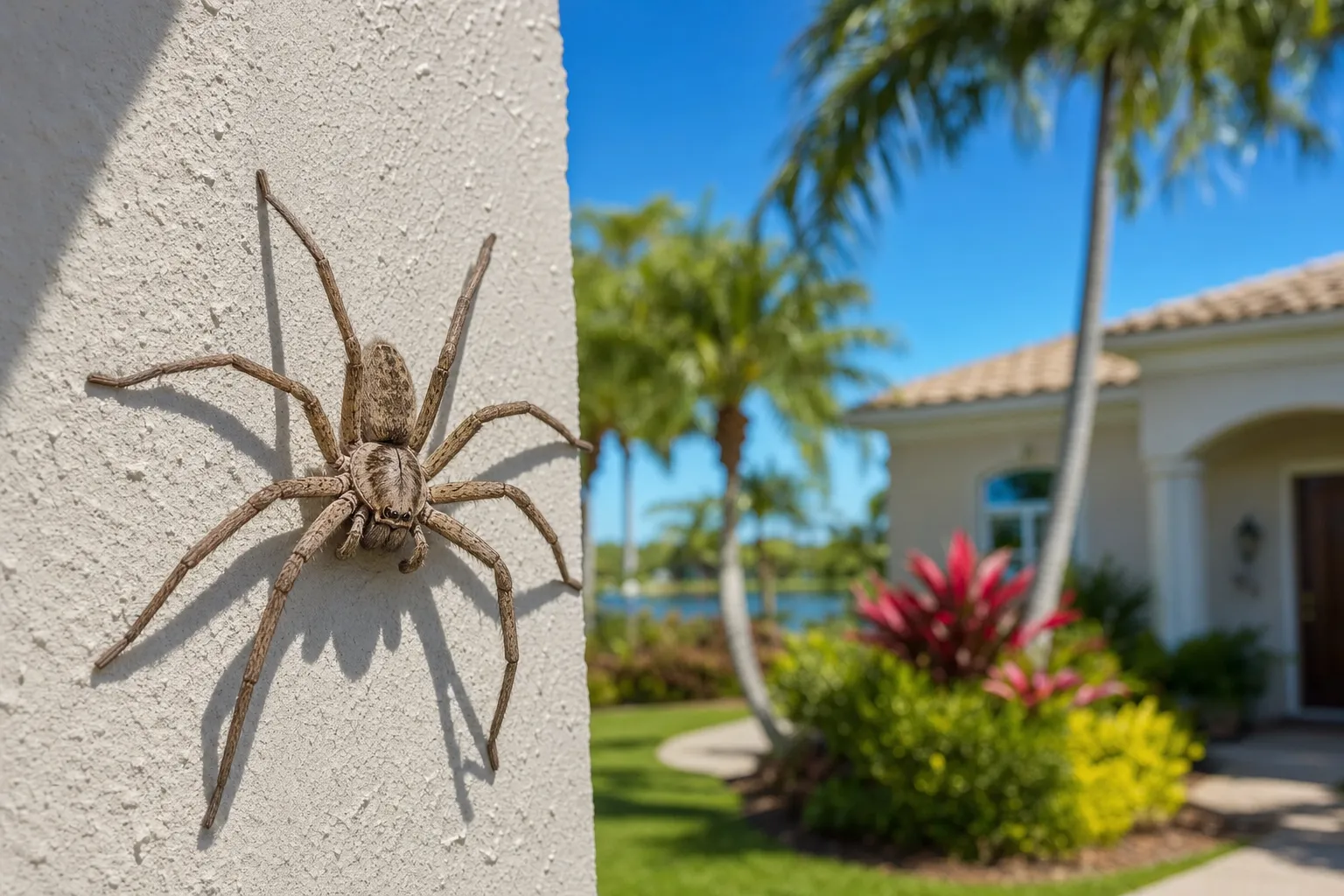
If you’ve ever flipped on the garage light and locked eyes with a spider the size of your palm — one that then bolted sideways across the wall like it was late for a meeting — congratulations. You’ve met a Florida huntsman spider. Big, fast, weirdly flat, and permanently vibing “I have business to attend to.” The good news: it’s mostly harmless. The awkward news: it probably wants to live with you.
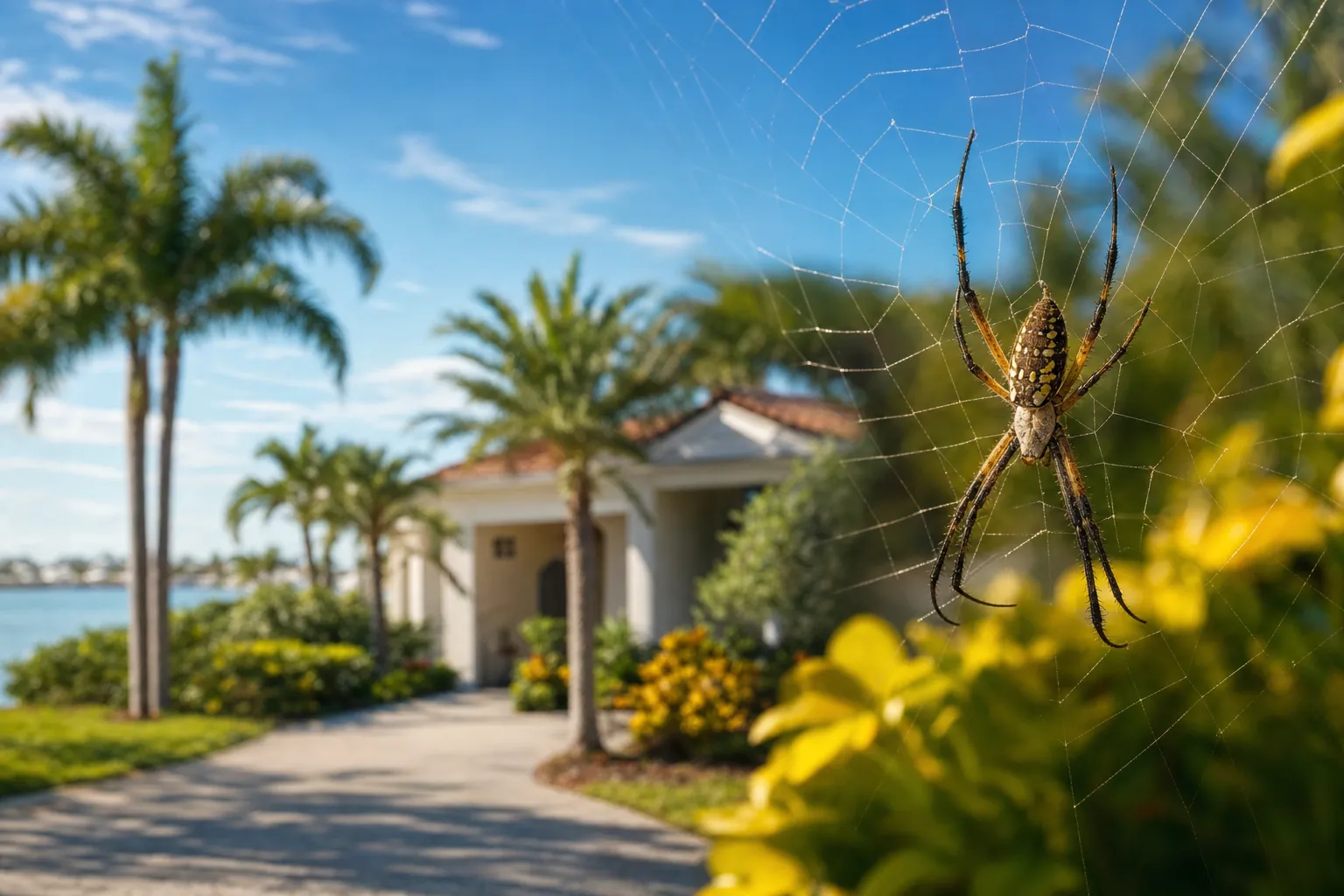
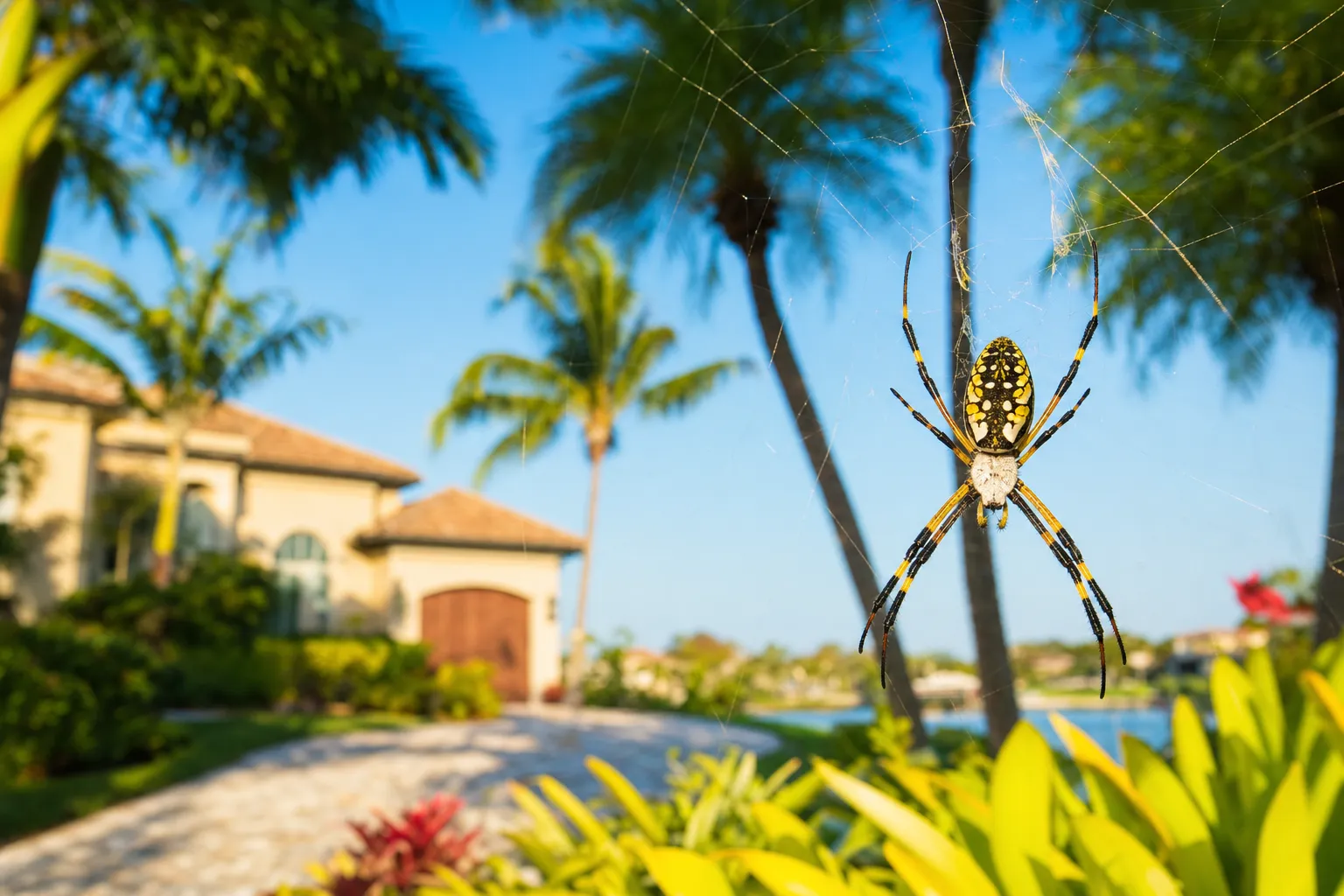
The huntsman (Heteropoda venatoria) is one of the largest spiders you’ll regularly see indoors in Southwest Florida. It’s sometimes called the pantropical huntsman or “banana spider,” not to be confused with the golden silk orb-weaver we also call a banana spider down here, because Florida. Below we’ll cover how to ID it, whether it’s actually dangerous, why it keeps showing up on your lanai after every afternoon storm, what to do about it, and when it’s worth calling a pro. If you’re already past “curious” and squarely in “please make it leave,” you can book a pest control visit with Waves and we’ll handle the eight-legged houseguest and the buffet it was chasing.
Want to see what else shares your zip code? This post is the huntsman deep-dive from our SWFL pest library, where the rest of the neighborhood’s arthropods are profiled.
What Is a Florida Huntsman Spider?
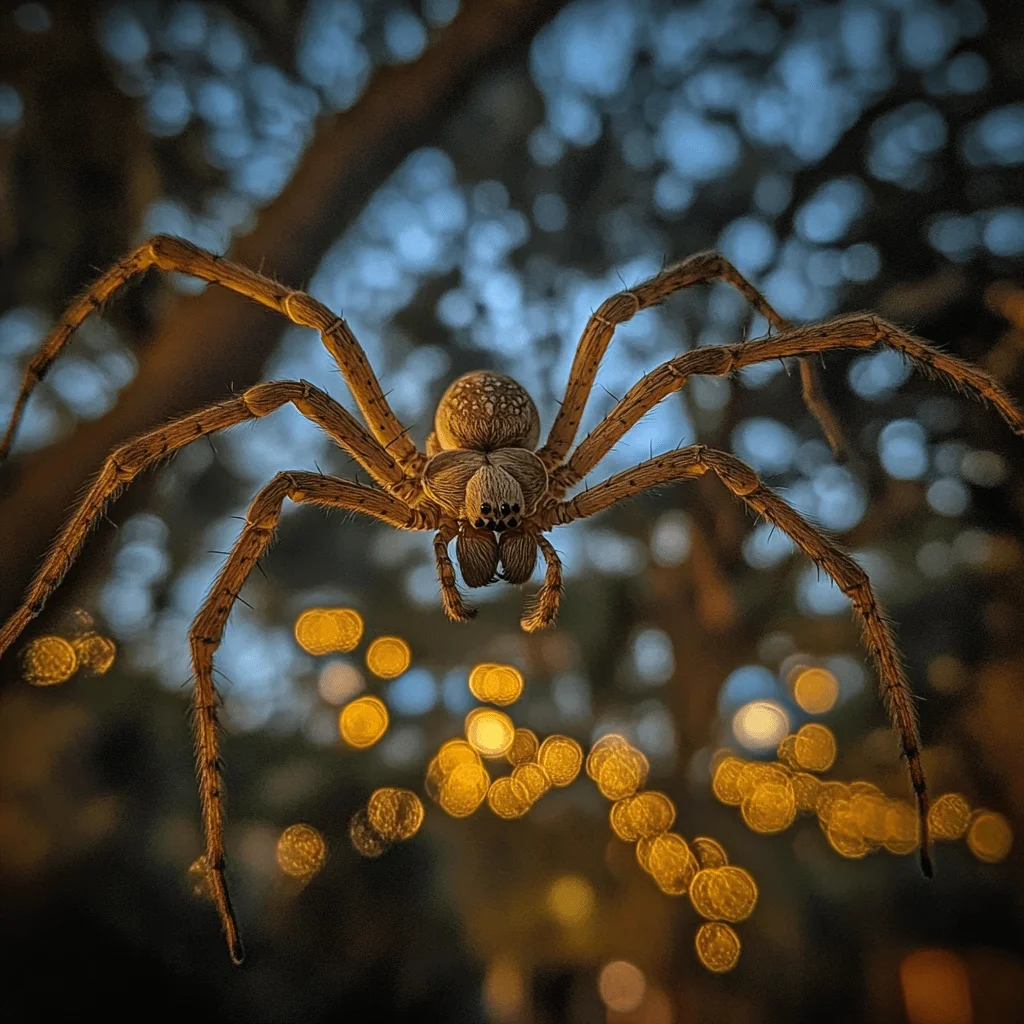
The Florida huntsman is Heteropoda venatoria, a tropical spider that was introduced to the U.S. and now lives in the subtropical parts of Florida, Texas, and California (UF/IFAS). It often travels in banana shipments, which is where the nickname comes from.
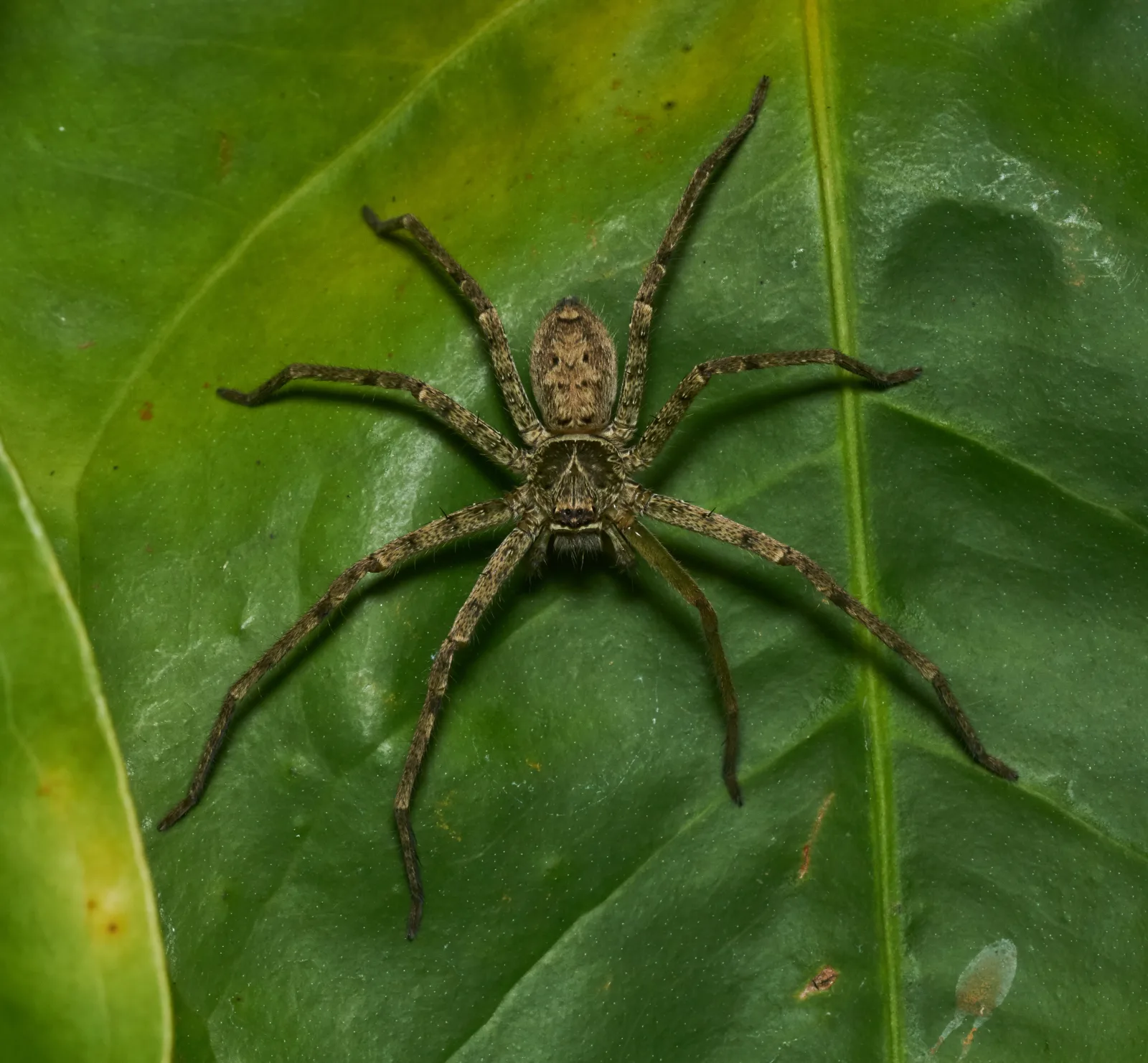
An adult huntsman spider (Heteropoda venatoria), legs spread flat and sideways in the crab-like posture that sets it apart from other big spiders. Photo: Jeevan Jose via Wikimedia Commons, CC BY-SA 4.0, resized.
A few quick ID cues:
- Size. Body about an inch long, with a leg span of roughly 3 to 4 inches. A big one easily covers a coaster.
- Body. Flat and low-slung, so it can wedge under bark, siding, and door trim that most spiders can’t get into.
- Legs. Sprawled sideways like a crab, not tucked underneath. They skitter sideways, which is what makes them look like they’re teleporting across your wall.
- Color. Tan to brown, often with a pale band across the front of the head.
- Behavior. No web. Huntsmans are hunters that run their prey down.
On a wall, moving fast, flattened like a crab, no web in sight? That’s almost certainly a huntsman. Wolf spiders are stockier and don’t lie flat, and widows sit in messy, tangled webs and are black or brown, not tan.
| What to check | Huntsman | Wolf spider | Golden silk orb-weaver (the other 'banana spider') |
|---|---|---|---|
| Where you'll see it | Walls, ceilings, behind wall art, garages | Ground level — turf, mulch, garage floors | Suspended in a big golden web outdoors |
| Posture | Flat, legs sprawled sideways like a crab | Stocky, legs tucked under, sprint-ready | Hanging in the web, long thin legs |
| Web | None — runs prey down | None — ambushes on the ground | Huge golden orb web between trees or across paths |
| Movement | Fast, skitters sideways | Fast, straight-line sprints | Barely moves — waits in the web |
| Bite concern | Not medically significant | Not medically significant | Not medically significant |
Two totally different spiders share the 'banana spider' nickname in Florida — the wall-runner is the huntsman; the web-hanger is the golden silk orb-weaver.
Does Florida Have Huntsman Spiders?
Yes. Heteropoda venatoria is an introduced tropical species that lives in the warmer, subtropical parts of Florida, and our area qualifies. If you found a palm-sized, flat, fast spider on a wall in Sarasota, Bradenton, Venice, or Port Charlotte, a huntsman is the most likely answer. You’ll tend to see more of them in the warm months, when the insects they hunt are most active.
Is the Florida Huntsman Spider Dangerous?
Short answer: no, not in a medically meaningful way.
Huntsman spiders are not on the short list of medically significant spiders in Florida. That list is the widow group: southern and northern black widows, the brown widow, and the red widow. (The brown recluse isn’t established in Florida at all, despite what the internet swears (UF/IFAS).)
So what is the “brown recluse” people swear they found? Almost always one of these two — neither one a recluse:
Look-alike check
Is this a brown recluse?
Brown Recluse
Loxosceles reclusa
Keep an eye on it
- Venomous — don't touch
Southern House Spider
Harmless
- Can bite
The tell: Wandering male southern house spiders are the most common recluse look-alike in Florida, with much longer thin legs and no violin marking on the head A photo can't confirm this one. These two can look nearly identical in pictures, so have a professional check the actual specimen before you rely on the ID.
Brown Recluse
Loxosceles reclusa
Keep an eye on it
- Venomous — don't touch
Yellow Sac Spider
Keep an eye on it
- Venomous — don't touch
The tell: Yellow sac spider is smaller, pale yellow-beige with darker leg tips and no violin marking; a genuine brown recluse has a distinct dark violin shape on the head A photo can't confirm this one. These two can look nearly identical in pictures, so have a professional check the actual specimen before you rely on the ID.
Huntsmans do have fangs big enough to break skin. In the largest study of confirmed huntsman bites, from Australia, every bite hurt, but the pain usually lasted only minutes; a few people had brief nausea or vomiting, and none had skin damage (Isbister & Hirst, 2003). If a bite brings significant swelling, spreading redness, persistent nausea or headache, dizziness, or any sign of an allergic reaction, get it checked by a doctor.
They’re also not aggressive. Their entire strategy is “run away really fast.” A huntsman only bites when it’s trapped — pinned inside clothing, cornered in a shoe, or grabbed with a bare hand. Don’t do those things and you’ll be fine.
Honestly, the bigger risk is falling off a step stool trying to swat one off the ceiling.
Where Huntsmans Show Up in Southwest Florida Homes
Huntsmans like warmth, humidity, and a steady supply of insects. So they concentrate in specific zones around your house, the same rooms and edges where the roaches they hunt tend to show up.
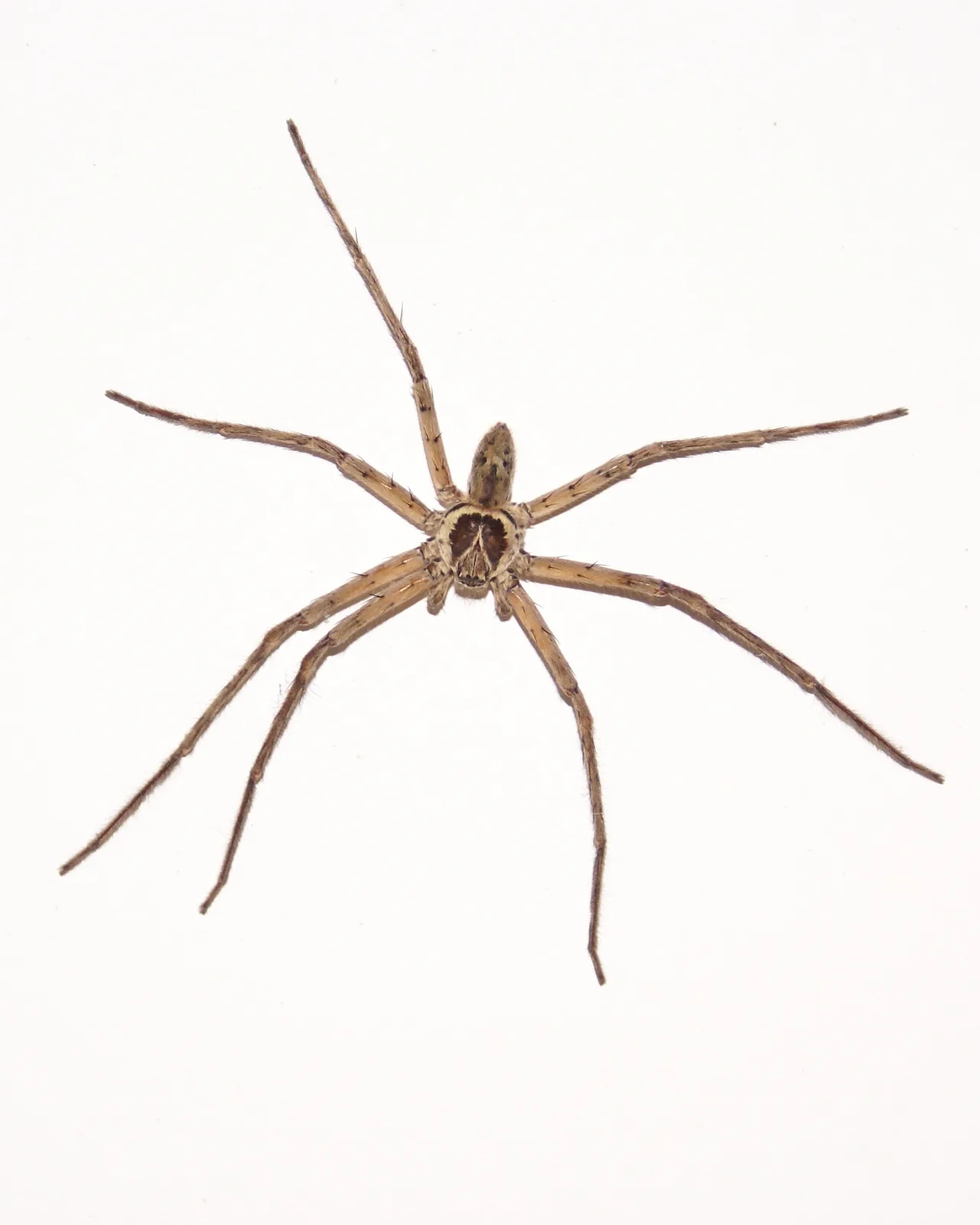
A male huntsman spider on an interior ceiling — a typical spot to find one working the night’s insect activity. Photo: B.navez via Wikimedia Commons, CC BY-SA 3.0, resized.
Typical hotspots:
- Garages and sheds. Dark, cluttered, and often full of cockroaches.
- Lanais and pool cages. Screens trap flying insects at dusk; huntsmans clean up the leftovers.
- Behind wall art, curtains, and headboards. Flat body, flat hiding spots.
- Bathrooms at night. They come in for moisture and to hunt drain flies and small roaches.
- Under siding, soffits, and shutters. Outdoor daytime hideouts before nightly hunts.
Huntsmans follow the food. On summer nights, the insects they hunt gather at lit doorways and windows, and the spiders come along.
What Attracts Huntsman Spiders (and How to Make Your Place Less Appealing)
Usually you don’t have a huntsman problem. You have a food problem, and the huntsman is just the eight-legged bill collector. Cut down the prey and the hiding spots, and they have less reason to stay.
- Kill the porch-light buffet. Swap cool-white bulbs for warm yellow LEDs or “bug light” bulbs. Fewer moths and midges means fewer spiders working the wall.
- Manage roaches. Huntsmans eat cockroaches, crickets, and other insects. If you keep seeing huntsmans indoors, there may be a roach problem you haven’t noticed yet.
- Seal the gaps. Weatherstrip garage doors, screen soffit vents, and caulk around plumbing penetrations. That flat body slips through surprisingly narrow gaps.
- Trim the lanai. Overgrown St. Augustine grass and shrubs pressed up against the house wall create a bug highway that ends at your slider.
- Declutter the garage. Cardboard boxes are roach condos, which are huntsman feeding stations. Swap for sealed plastic totes off the floor.
Pro tip: If you’re catching huntsmans in a hallway or bedroom at 2 a.m., stop focusing on the spider and focus on what it was chasing. Set out a couple of sticky monitors along baseboards. If they fill up with roaches, silverfish, or crickets within a week, that’s your real infestation. Handle the food source and the spiders have little reason to stick around.
What to Do (and Not Do) If You Find One Indoors
You’ve got three reasonable options, roughly in order of least drama:
- Cup-and-card it outside. Huntsmans are beneficial predators. If you can stomach it, drop a wide-mouth cup over the spider, slide a stiff piece of cardstock underneath, and release it in the yard well away from the house. They eat roaches for a living. Consider it a short-term contractor.
- Vacuum. If cup duty is not on the table, a shop vac or an upright with a long attachment works. Empty the canister or bag outside right away, since a spider can survive a short vacuum trip.
- Call for treatment. If you’re seeing them regularly, you’ve got kids or nervous roommates, or you’d just rather not deal, that’s what pros are for.
What not to do:
- Don’t try to smack a huntsman with a bare hand or foot. They are extremely fast, and this is exactly how the rare bite happens.
- Don’t blast a can of bug spray at it from six inches away. You’ll coat your kitchen counter with insecticide, and the spider will still make it under the fridge.
- Don’t ignore an egg sac. Females carry a flat, pale, disc-shaped sac, about half an inch across, tucked under the body, and it can hold more than 200 eggs (UF/IFAS). A female with a sac in a quiet corner (garage shelf, back of a closet) is a good reason to call.
When to Call Waves Pest Control
One huntsman on the lanai every few months is just Florida being Florida. A huntsman a week, or huntsmans plus visible roach activity, is a sign the perimeter isn’t holding. That’s where a recurring program earns its keep.
A quarterly pest plan treats the perimeter, knocks down the insects huntsmans feed on, and targets the foundation and garage where roach populations tend to start. Interior treatment is added when there’s activity inside, and WaveGuard members get free re-treats between visits. If spiders are your specific worry, our spider control service targets huntsmans and the spots they hide in. Not sure how much service you need? The pest control calculator will size it up in seconds, without anyone calling you back.
Spider sightings track the insects they eat, so expect more huntsmans in the warm months.
Frequently Asked Questions
Are Florida huntsman spiders poisonous?
Almost all spiders have venom; that’s how they subdue prey. But huntsmans are not medically significant to people. In a large study of confirmed huntsman bites, the pain usually passed within minutes, and a few people had brief nausea. No antivenom is needed. Wash the site, ice it, and see a doctor if you have unusual swelling, spreading redness, or any allergic reaction.
What’s the difference between a huntsman spider and a wolf spider?
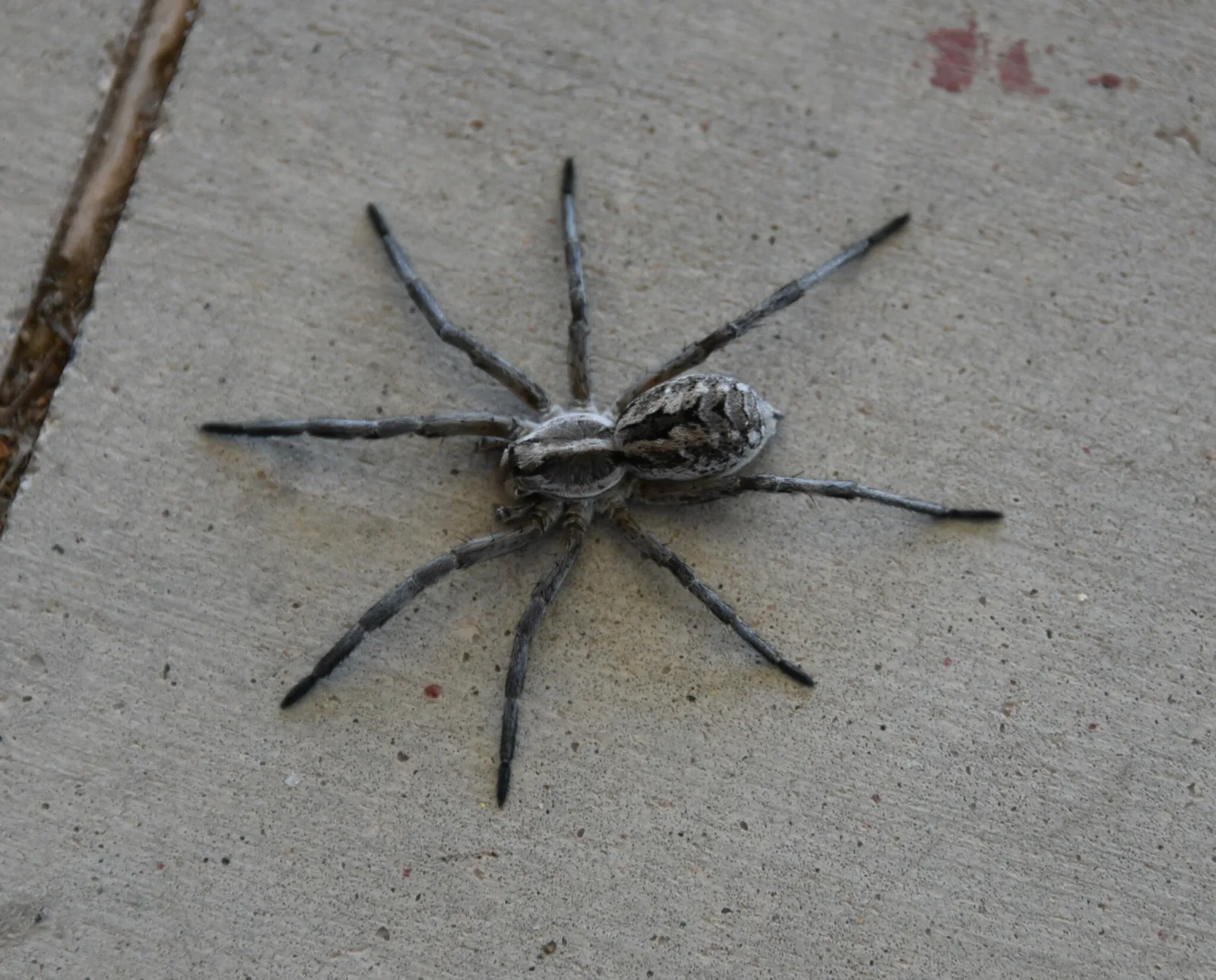
A female Carolina wolf spider (Hogna carolinensis) — stockier, with legs held under the body rather than sprawled sideways like a huntsman. Photo: codystricker via Wikimedia Commons, CC BY 4.0, resized.
Both are big, brown, and cause a lot of yelling. Huntsmans are flatter, with legs that sprawl sideways in a crab-like posture — they hug walls and door frames. Wolf spiders are stockier, with legs that tuck under the body, and they live closer to the ground in yards, mulch beds, and on garage floors. Skip the flashlight eyeshine test; the reliable tell is posture and location. Flat and sprawled sideways on a wall is a huntsman. Stocky and low to the ground is a wolf spider.
Side by side, verified against UF/IFAS:
Look-alike check
Is this a huntsman spider?
Heteropoda venatoria
Helpful — leave it
- Can bite
Photo: Jeevan Jose, Kerala, India via Wikimedia Commons , CC BY-SA 4.0, resized.
The tell: Huntsman spiders are flatter with crab-like forward legs; wolf spiders are stouter, hairier, and their eyes reflect flashlight light distinctly.
See the rest of Southwest Florida’s spiders, including the widows and orb-weavers, in the Which Florida Spider Is This? hub.
How do I keep huntsman spiders out of my house?
Cut off their food. Roaches, silverfish, crickets, and moths are the buffet, and the spiders are just following it inside. Seal garage door gaps, switch outdoor bulbs to yellow, trim shrubs back off the exterior wall, and stay on top of a quarterly pest program. Fewer insects means fewer huntsmans, with no spider-specific spray required.
Ready to Evict Your Eight-Legged Houseguest?
Got a huntsman staring back at you from the ceiling right now? Grab a cup, take a breath, and then schedule a Waves pest control visit so we can figure out what it was actually hunting.
.jpg)

