Jump to a section (7)
The spider hanging off your lanai screen is almost certainly not going to hurt you. That’s the short version. Florida has more than 250 species of spiders doing their thing — most of them eat mosquitoes, gnats, and roaches for a living and want absolutely nothing to do with you. But a small handful are worth learning to recognize, and a whole lot of harmless ones get mistaken for them.
This guide breaks down what actually lives in Southwest Florida homes, gardens, and lanais — which ones deserve caution, which ones are quietly eating your pest problems for free, and when it’s time to stop Googling and call a pro. If you’d rather skip the field guide and get someone out to your house, request a quote or browse our service areas — we cover Bradenton, Sarasota, Venice, North Port, Port Charlotte, and the communities in between.
Florida’s Actually-Venomous Spiders: The Widow Family
Only two groups of spiders in Florida have venom strong enough to regularly send people to a doctor: widows and recluses. And in practice, only the widows count — more on the recluse myth in a minute.
Florida is home to four widow species, all in the genus Latrodectus:
Southern black widow (Latrodectus mactans) — The classic. Shiny black body, bright red hourglass on the underside of the abdomen. This is the most widespread widow in Florida and shows up in pretty much every county. Outdoor habitat includes wood piles, rock piles, hollow tree stumps, water meter boxes, and the underside of patio furniture; indoors they’ll settle into garages, sheds, and storage closets — anywhere quiet, dark, and connected to a bug supply.
Northern black widow (L. variolus) — Similar-looking to the southern black widow, but more common in North Florida and the Panhandle than down here in SWFL.
Brown widow (L. geometricus) — Invasive, established throughout Florida since the mid-to-late 1990s, and honestly the widow you’re most likely to run into around a Southwest Florida home. Body ranges from light tan to dark brown or almost black, with variable markings on top and a distinctive orange or yellow-orange hourglass on the underside (not red). The dead giveaway is the egg sac: instead of the smooth, papery ball you get from a black widow, brown widow egg sacs are covered in little pointed projections — think tiny sandspur. If you see spiky egg sacs tucked under a windowsill, patio table, grill cover, or storage shelf, that’s a brown widow. Their venom is often described as drop-for-drop more potent than a black widow’s, but they inject less of it and are extremely shy, so verified bites tend to be milder than the reputation.
Red widow (L. bishopi) — Florida-only, and only in sand pine scrub habitat in central and southern Florida. Reddish-orange head and legs, black abdomen with red spots, and a soft-shelled egg sac hung inside a rolled-up palmetto frond. You’ll basically never see one unless you go bushwhacking through palmetto scrub.
On every inspection
What a widow spider infestation actually looks like
- Spiky, sandspur-textured egg sacs Brown widow — clustered under window frames, patio furniture, grill covers, and storage shelves.
- Smooth, papery tan egg sacs Southern black widow — hidden in water meter boxes, wood piles, and shed corners.
- Messy, low, tangled cobweb Widow webs aren't neat orbs — they're irregular, sticky, and built close to the ground or in tight corners.
- Spider hanging belly-up Widows sit inverted in their webs to display the hourglass — an easy ID from a safe distance.
If you spot any of these, don't try to sweep them out — disturbing an egg sac can release dozens to hundreds of spiderlings.
The Brown Recluse Question (Short Answer: No)
Every pest control company in SWFL gets the “I have a brown recluse” call. Almost none of them are actually brown recluses. UF/IFAS has been consistent about this for decades: no breeding population of any recluse species has been found in a natural Florida habitat. A few vouchered specimens have turned up over the years, but every one of them traced back to a moving truck, a shipping container, or luggage from somewhere in the Midwest or overseas. Even in single-building interceptions, recluse populations don’t spread and are easy to eradicate.
What you’re probably seeing instead:
- Southern house spider (Kukulcania hibernalis) — the fast, flat, brown one that comes shooting out of your car door frame or garage light fixture. Same rough size and color as a recluse, totally harmless.
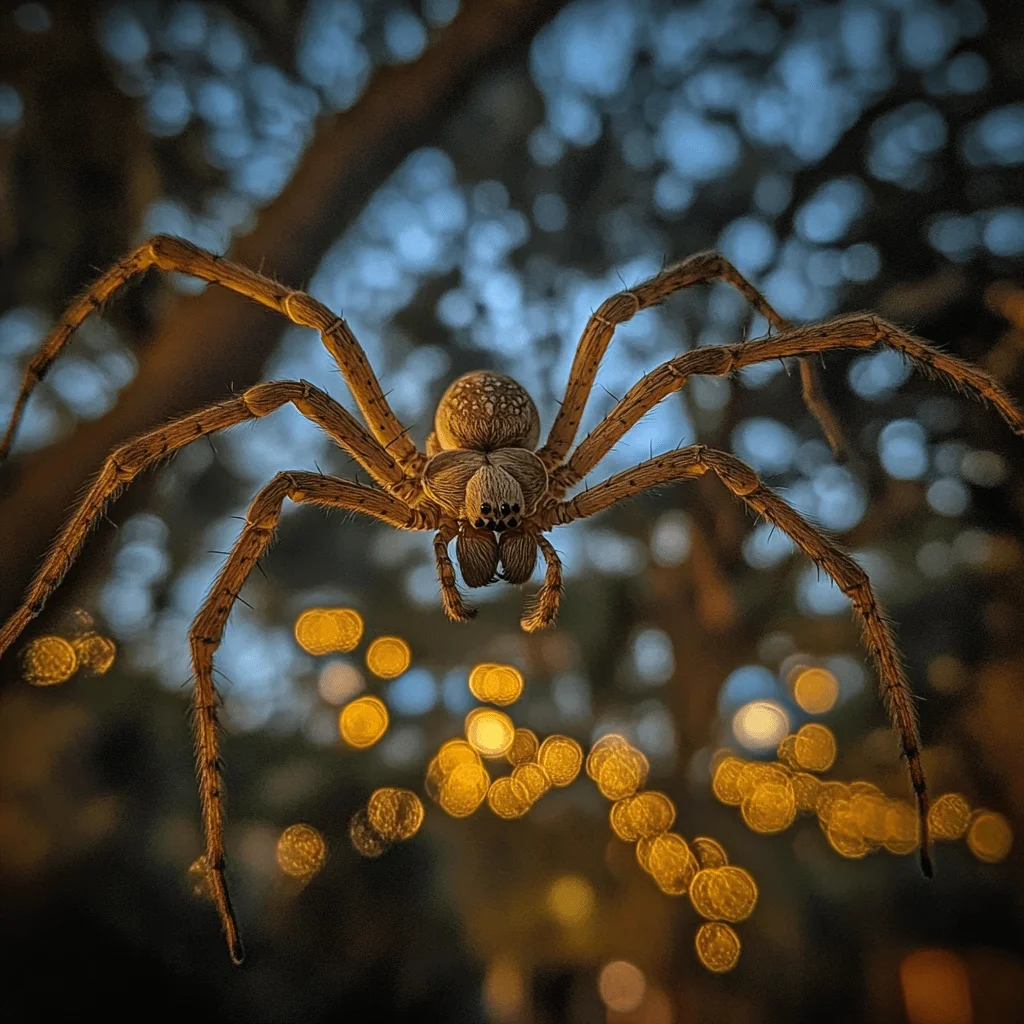
- Huntsman spider — big, flat, alarming the first time you meet one, and completely harmless.
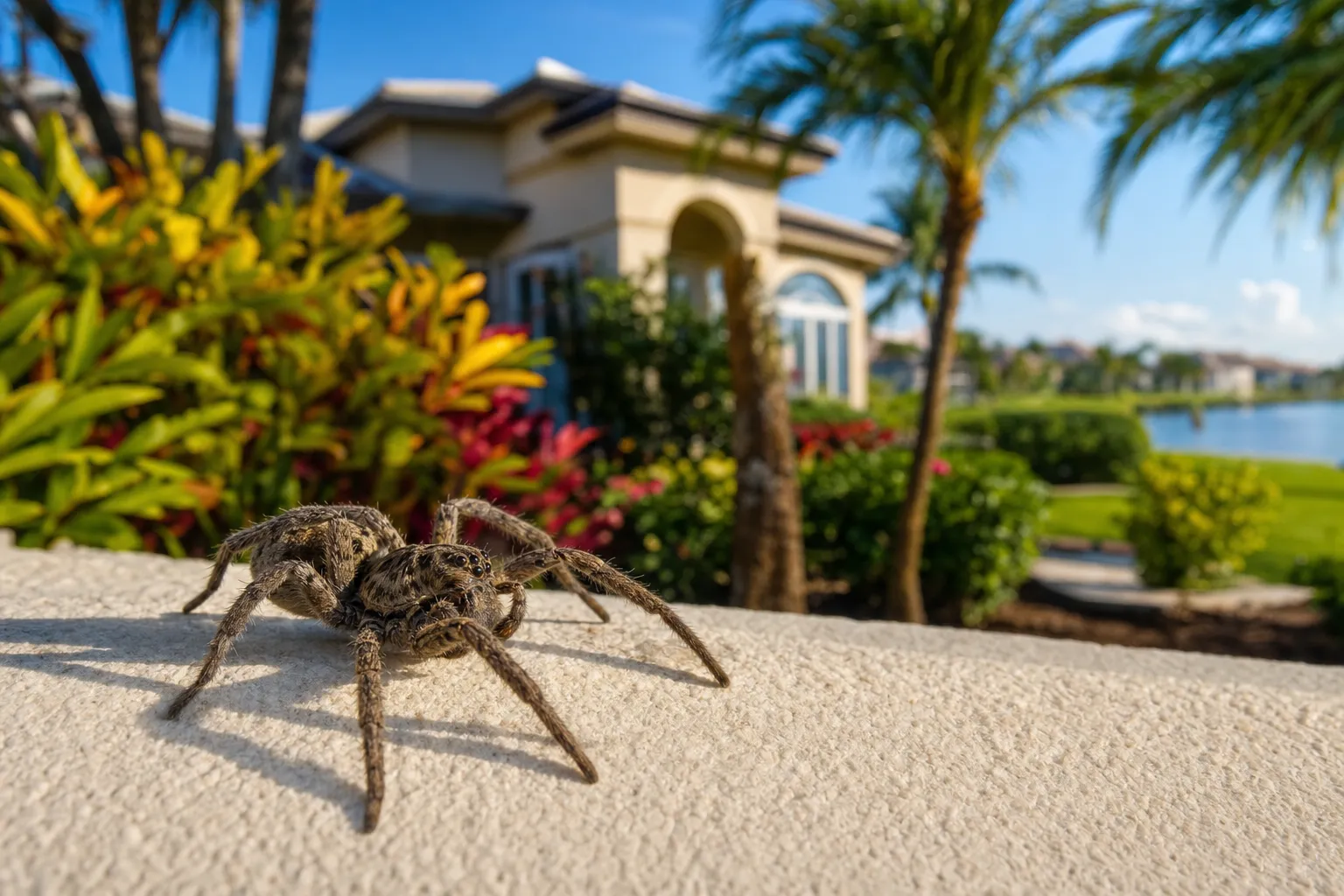
- Wolf spider — hairy, ground-hunting, harmless, and the reason motion-sensor porch lights exist.
None of these will hurt you. If you have a skin lesion you’re worried about, see a doctor — a lot of what gets diagnosed as “spider bites” in Florida turns out to be MRSA or another bacterial infection.
The Ones You Should Leave Alone (They’re Working for You)
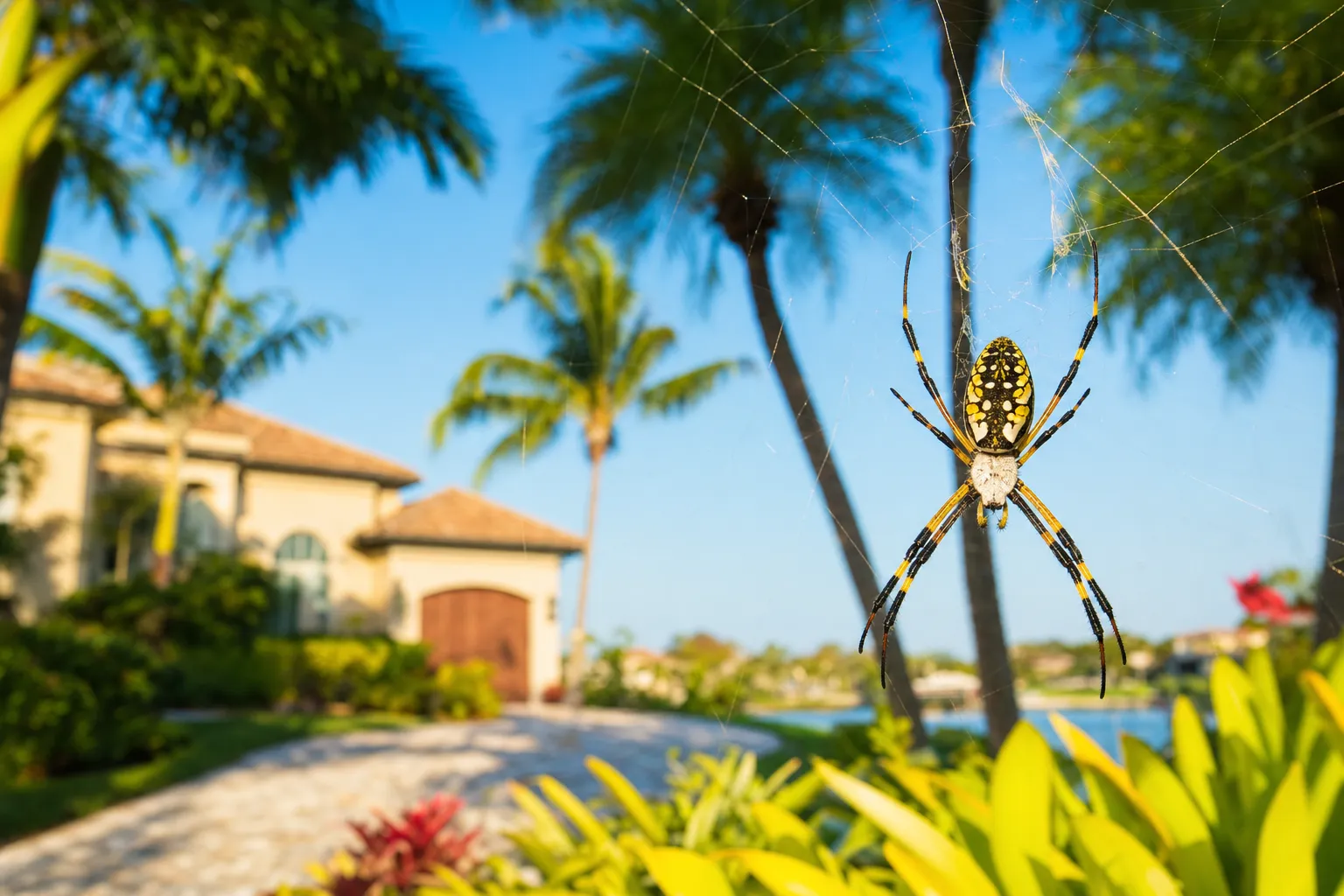
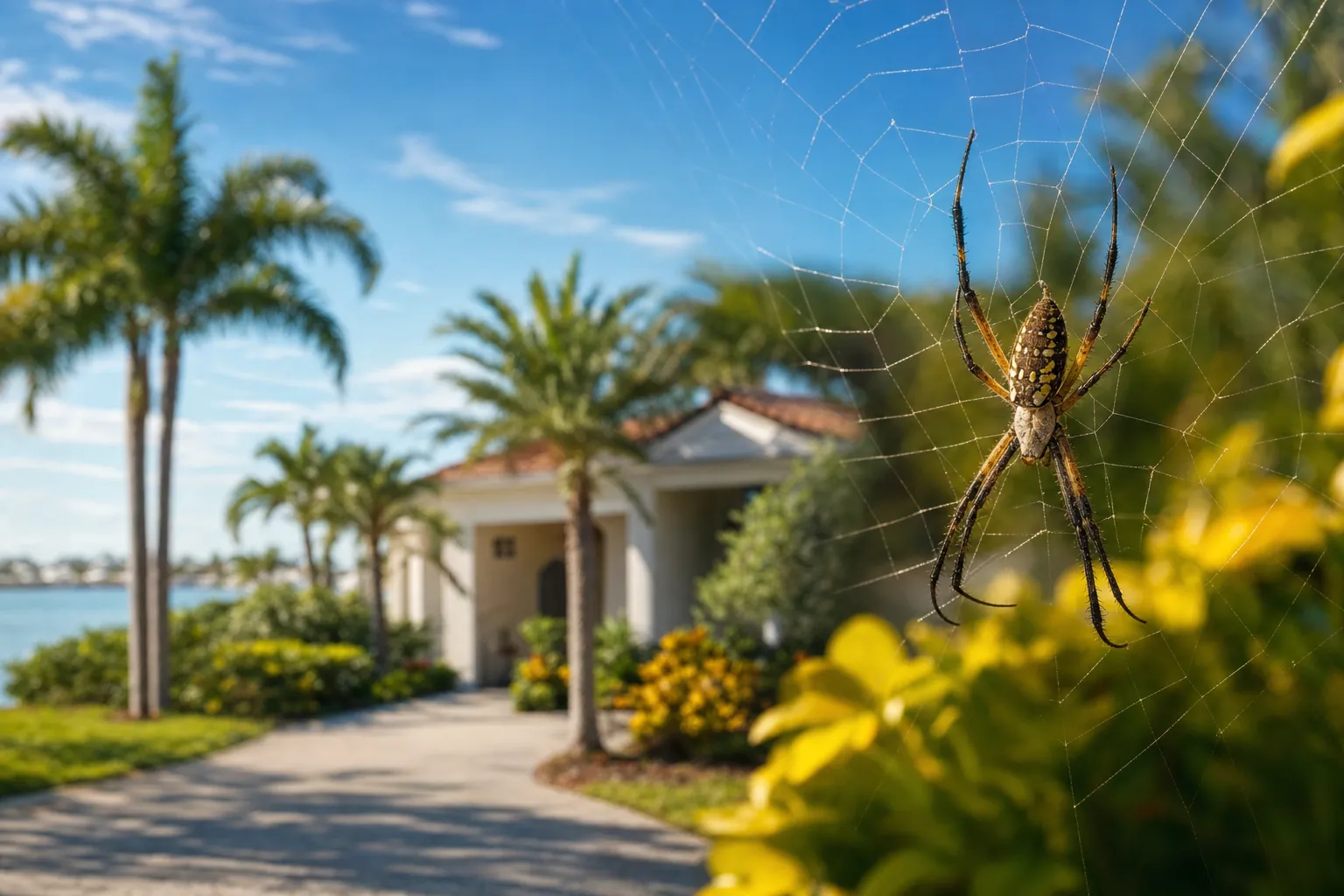
- Golden silk orb weaver (“banana spider”) — the giant yellow-and-black female in a golden web across your pool cage. Females run 24-40mm in body length with a leg span up to six inches. Only bites if you literally squeeze one, and the effect is localized and clears up quickly. Eats mosquitoes, flies, and moths by the dozen.
- Argiope spiders (yellow garden orb weavers) — the big striking one with the zigzag pattern woven into the center of its web. Harmless, eats garden pests, catches your eye every October.
- Green lynx spider — bright green, sits on shrubs, ambushes wasps and other pests. In Florida it’s the spider most often submitted to state entomologists for ID. Doesn’t bite people in any meaningful way.
- Jumping spiders (regal jumpers especially) — the tiny bold ones with the giant eyes that turn to look at you. Basically arachnid golden retrievers, minus the drooling.
- Wolf spiders — carry their egg sacs on their backs and then their babies on top of that. Ground hunters, not house-invaders by choice.
- Spiny orb weavers — the tiny crab-shaped one with red spikes on a white shell in a small web across your walkway.
Every one of these is quietly reducing your mosquito, fly, and roach load for free.
Pro tip: If you’ve got orb weavers on the exterior of your house, resist the urge to knock down the webs every morning. That web is a mosquito trap you didn’t have to buy. Reroute your walkway, not the spider.
Why SWFL Homes Are Spider Magnets
Southwest Florida basically never gets a hard freeze, so spiders that would die back up north keep breeding here year-round. The lanais, pool cages, and screened porches we all have are perfect spider real estate — protected from rain and wind, warm at night, and packed with bugs drawn to exterior lights and the humidity after every afternoon thunderstorm. Sandy soil and dense St. Augustine turf hold ground moisture, which supports the roaches, ants, and crickets that spiders eat. If your yard is buggy, your lanai will be webby. That’s the whole system.
Seasonal pressure
Southwest Florida pest pressure through the year
- Spring Mar–MayBuilding
Warming weather wakes colonies up — activity climbs week over week.
- Summer / rainy season Jun–AugPeak
Heat + humidity + standing water = the year’s heaviest pressure.
- Hurricane season Sep–OctSurge
Storms and flooding push pests indoors looking for dry shelter.
- Fall NovActive
Cooler nights slow things down, but activity stays well above zero.
- Winter Dec–FebLower (not zero)
Our mild winters keep many pests going year-round indoors.
Summer / rainy season & Hurricane season run hottest. Spider pressure follows prey pressure — and in SWFL, prey pressure never really goes away.
What You Can Do Yourself (Safely)
For 95% of Florida spiders, prevention is just good housekeeping:
- Knock down webs regularly around eaves, doorframes, lanais, and pool cages. Spiders won’t rebuild in the same spot forever if it keeps getting cleared.
- Reduce clutter in garages, sheds, and storage closets — that’s where widows actually build. Cracks around windows and doors should be sealed or weather-stripped.
- Wear gloves when moving wood piles, pots, patio furniture, or anything that’s been sitting undisturbed for a while. Most widow bites happen when someone accidentally presses a spider against skin by reaching into a spot they can’t see.
- Check clothing and shoes that have been stored for a while before you put them on — same reason.
- Vacuum, don’t spray, indoors. Vacuuming pulls up spiders, webs, and egg sacs cleanly; over-the-counter spider sprays mostly just make things look wet. Seal the vacuum bag in plastic before you trash it.
- Manage the bugs first. If your ant, roach, or cricket load drops, the spider load drops with it.
What not to do: don’t torch a nest with a lighter (please), don’t try to catch a widow to “verify” the species, and don’t ignore spiky egg sacs on high-traffic surfaces — the babies survive plenty of half-hearted sweep-outs.
If you’ve already been bitten, that’s a medical question first, not a pest control one. A suspected widow bite — or any bite with symptoms beyond a mild local welt, like spreading pain, muscle cramping, sweating, or nausea — means contacting your doctor or urgent care right away (call 911 for severe reactions like trouble breathing). Deal with the spider after the person is taken care of.
Call a pro when: you’re finding widow egg sacs on high-traffic surfaces (front door frame, patio furniture, kids’ toys, the grill), you have small children or pets who play in spots where widows hide, or you just want the lanai reset before hurricane season storms drive everything indoors.
How Waves Handles Spider Calls in SWFL
Our quarterly WaveGuard membership knocks down exterior webbing at every visit, treats the entry points and eaves where widows nest, and — because widows follow prey — keeps the underlying ant and roach populations down so the food supply dries up. For active widow infestations (spiky egg sacs on the patio, multiple black widows in the meter box), we do a targeted crack-and-crevice treatment along foundations, meter boxes, sheds, and utility rooms, then follow up on the next visit to catch anything that hatched after the first treatment. No fogging the whole house, no theatrics.
Want more identification help before you decide? Our pest library has photo IDs for the species you’re most likely to actually run into in a Sarasota or Bradenton yard, including deeper species pages on the black widow and brown widow, or see the full lineup in our Which Florida spider is this? hub. And if a widow (or a spider you think is a widow) already has an eviction notice pending, request a quote or call us at (941) 297-5749 and we’ll get someone out.
Frequently Asked Questions
What is the most common spider in Florida?
It depends on where you’re standing. Around the outside of a SWFL home, you’re most likely to see golden silk orb weavers (banana spiders), spiny orb weavers, and jumping spiders. In the garden, argiope and green lynx spiders — the green lynx is actually the spider most often received for identification by Florida state entomologists. Inside garages and sheds, southern house spiders and — unfortunately — brown widows are your two most common finds. The southern house spider is the one that gets misidentified as a brown recluse most often.
Are there poisonous spiders in Florida?
Technically almost all spiders are “venomous” (they use venom to digest prey), but only two Florida groups have venom strong enough to send a person to a doctor: widow spiders (southern black, northern black, red, and brown widows) and recluse spiders. Recluses don’t have established breeding populations in Florida, so in practice the widows are the only ones worth worrying about — and even they are shy, non-aggressive, and only bite when pressed against skin.
What’s Florida’s largest spider?
The golden silk orb weaver (“banana spider”) is the one you’ll actually see — female bodies run 24-40mm long with a leg span up to six inches, hanging in that unmistakable gold web. The Carolina wolf spider (Lycosa carolinensis) is technically the largest wolf spider in the United States at 25-35mm body length, but it’s ground-dwelling and much less visible. Both are harmless to people.