Nothing turns a nice Sarasota afternoon into a sprint quite like the buzz of a wasp cruising past your ear. Southwest Florida’s combo of mild winters, sandy soil, and afternoon storms means stinging wasps don’t really take a season off — they just shift where they build. This guide walks you through the wasps most likely to nail you around here, what you can safely do yourself, and when it’s time to tap a pro.
Already staring at a football-sized nest tucked under your soffit? Skip the DIY heroics and let a technician handle it — our pest control services cover wasp knockdowns, nest removal, and residual perimeter work on the same visit. Poke around the pest library if you want the full SWFL bug rundown while you’re at it.
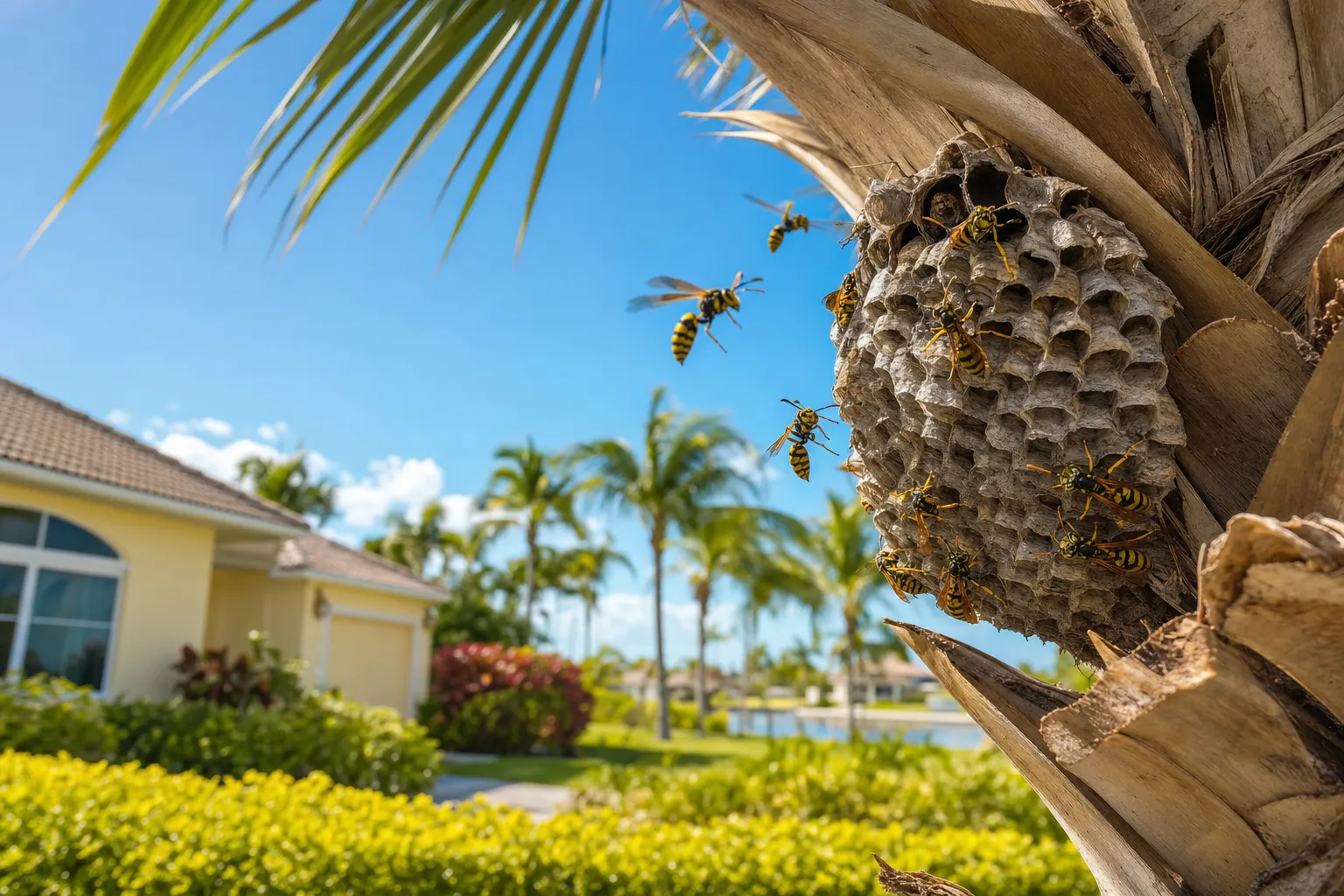
The SWFL Stinging Wasps You Actually Need to ID
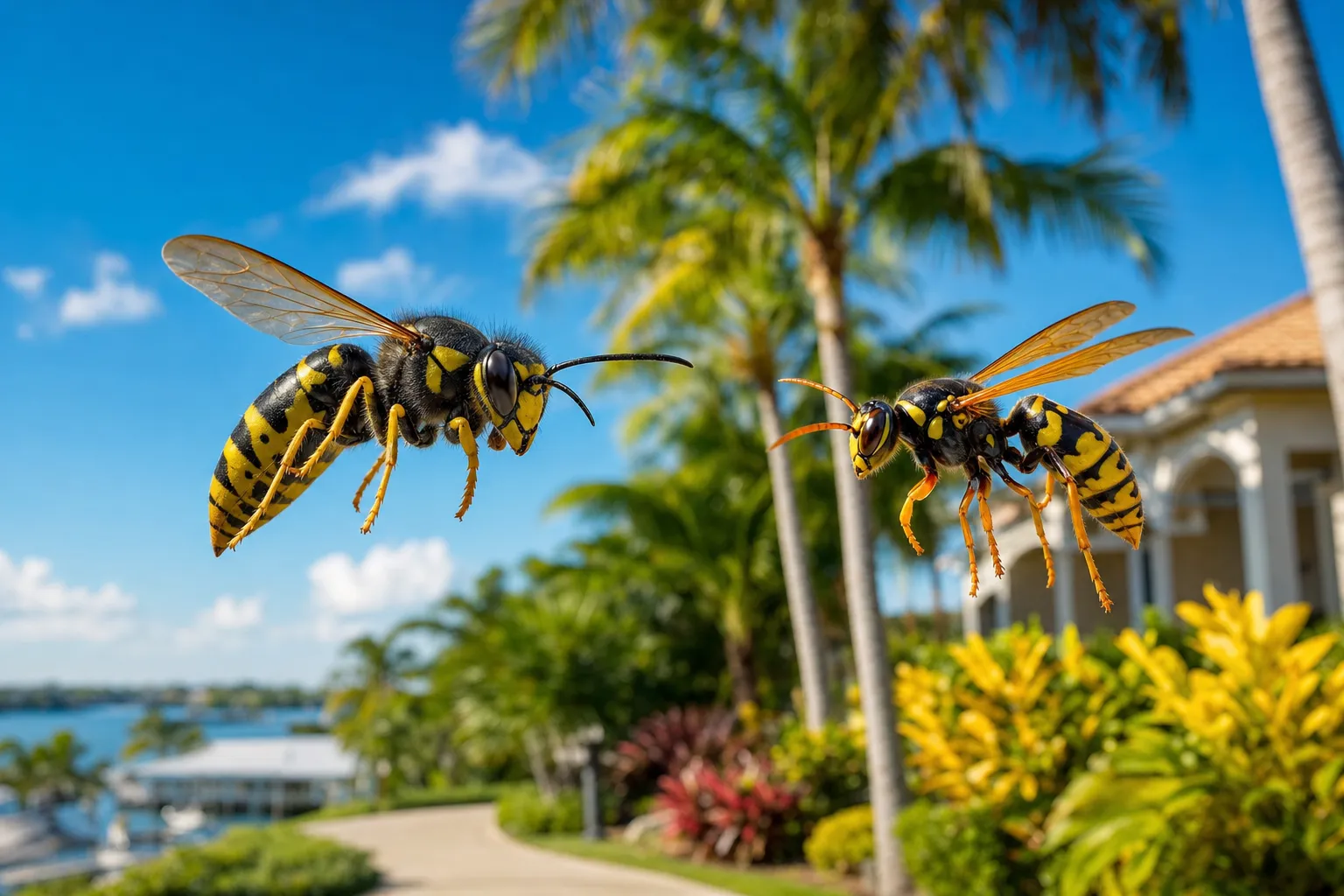
Not every buzzing thing in your yard wants to sting you. But a handful really do, and they’re the ones behind almost every wasp call we run in Southwest Florida.
Paper wasps (Polistes spp.)
The classic “umbrella nest under the eave” wasp. Long legs that dangle in flight, slender waist, reddish-brown to dark bodies. Their open, honeycomb-shaped nests hang from a single stalk under soffits, patio ceilings, gutters, grill covers, and porch furniture. They aren’t aggressive foragers — you can usually walk past a nest at a normal pace and be fine — but bump the nest, or pressure-wash near it, and they’ll defend it in a heartbeat.
Red wasps (Polistes carolina / perplexus)
A rusty-red paper wasp that’s especially common across the Southeast. Same nest style as their darker cousins, same defensive personality. Old-timers around here sometimes call them “guinea wasps.”
Yellowjackets
The ones that ruin cookouts. Short, chunky, unmistakably yellow-and-black, and — this is the important part — they nest in the ground, in wall voids, and inside old rodent burrows. You often don’t know a yellowjacket colony is there until the mower rolls over the entrance. A mature colony can hold thousands of workers by late summer.
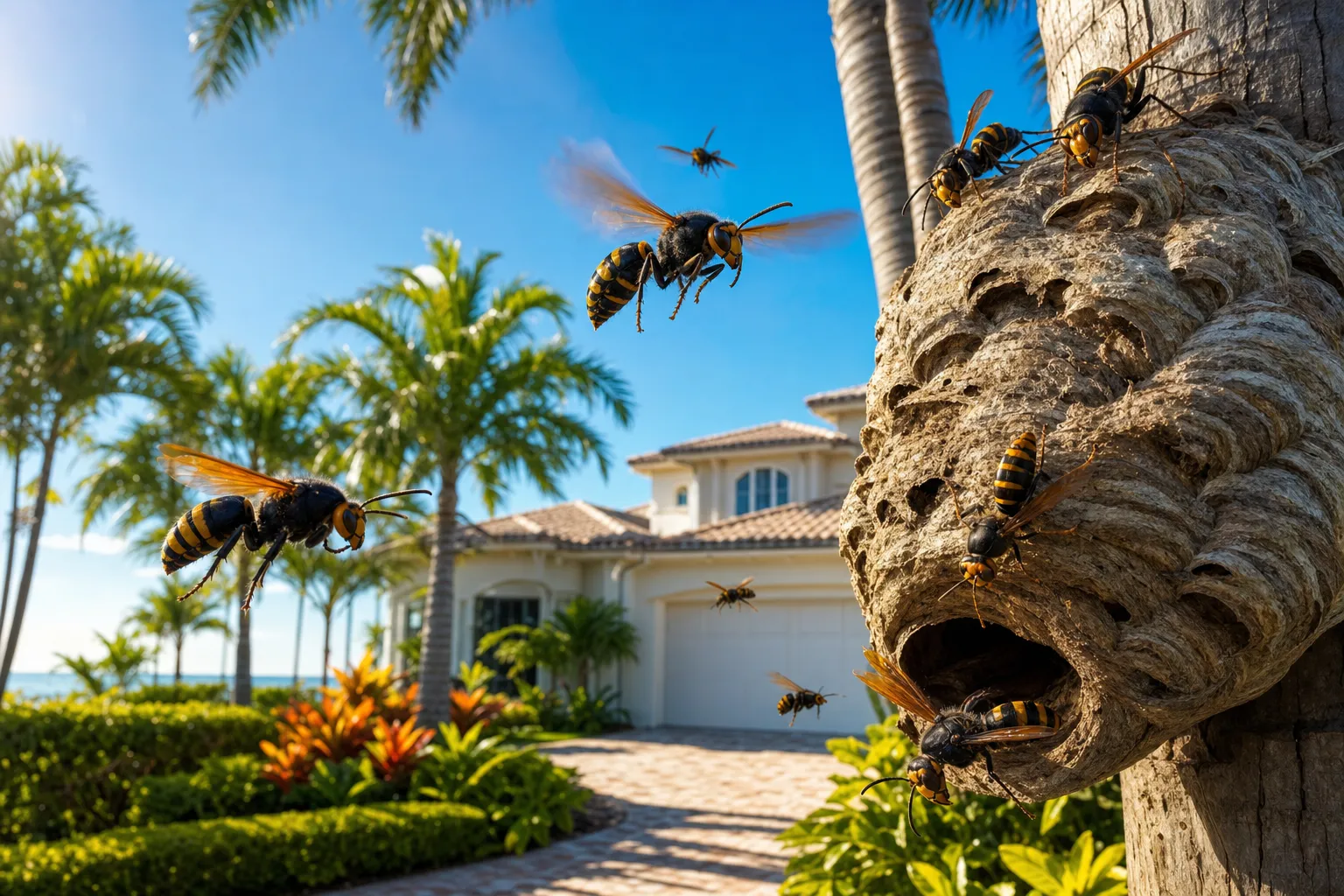
Bald-faced hornets
Technically a wasp (Dolichovespula maculata), not a true hornet. Big, black-and-white, and they build those grey, football-shaped paper nests hanging from tree limbs, shrubs, or the side of the house. Very protective of the nest — this is not one to test.
The mostly-harmless crew: mud daubers, cicada killers, scoliid wasps
You’ll see these too. Mud daubers build those little organ-pipe mud tubes on stucco and eaves. Cicada killers are the giant, intimidating ground wasps that show up mid-summer chasing (surprise) cicadas. Scoliid wasps hover low over the lawn hunting beetle grubs. None of them are hunting you — they’re solitary insects with better things to do. Leave them alone and they’ll return the favor.
Why Wasp Pressure Ramps Up Down Here
Seasonal pressure
Southwest Florida pest pressure through the year
- Spring Mar–MayBuilding
Warming weather wakes colonies up — activity climbs week over week.
- Summer / rainy season Jun–AugPeak
Heat + humidity + standing water = the year’s heaviest pressure.
- Hurricane season Sep–OctSurge
Storms and flooding push pests indoors looking for dry shelter.
- Fall NovActive
Cooler nights slow things down, but activity stays well above zero.
- Winter Dec–FebLower (not zero)
Our mild winters keep many pests going year-round indoors.
Summer / rainy season & Hurricane season run hottest. Southwest Florida pest pressure by season — stinging insect colonies build fast once the wet season kicks in.
A few things stack the deck in the wasp’s favor across SWFL:
- Mild winters. Queens don’t have to survive a hard freeze, so overwintered queens can start new nests earlier than they would up north.
- Afternoon storms. Wet-season humidity plus daily rain gives wasps steady water and lots of soft, decaying wood fiber to chew into nest material.
- Sandy soil. Yellowjackets and cicada killers dig easily. Old rodent burrows in loose, sandy yards become instant yellowjacket real estate.
- Screened lanais and generous soffits. Coastal Florida homes are basically wasp condos — protected overhangs, screen enclosures, pool cages, boat lifts, and grill covers all check the “safe, dry, defensible” box.
By mid-summer, a paper wasp nest that was quarter-sized in April can hit the size of your palm. Yellowjacket colonies balloon even faster once the workforce gets going.
Safe DIY Moves (and What to Skip)
Your home, zone by zone
Where we inspect & treat
A typical Southwest Florida home — the numbered zones a local tech walks on every visit.
- Foundation & ground-level gaps Where the slab meets soil — yellowjackets use holes and voids along this line.
- Door frames & entry overhangs Sheltered ledges above doors are prime paper wasp real estate.
- Eaves & soffits The classic umbrella-nest zone — checked corner to corner every visit.
- Weep holes & wall voids Unscreened block-wall gaps yellowjackets use to nest inside the wall.
- Garage corners & framing Quiet, dry framing where overwintered queens start spring nests.
- Lanai & pool cage rails Screen framing and top rails draw nest-building queens all season.
- Mulch beds & lawn edges Ground-hole traffic here points to yellowjackets or cicada killers.
- Interior walls Muffled buzzing or wasps showing up indoors signal a wall-void colony.
- Utility penetrations & vents Unsealed pipe gaps and unmeshed gable vents that let scouts inside.
- Attic & roofline Checked for hidden nests tucked into vents and framing up top.
The zones a Waves tech checks first for wasp activity on a SWFL home.
Here’s the honest homeowner playbook.
Do:
- Walk your eaves, soffits, and lanai framing once a week in spring while nests are still tiny. A nickel-sized nest with one or two wasps on it is a very different problem than a softball-sized one with forty.
- Watch for ground holes in the yard, especially near irrigation heads and old mulch beds. Sudden wasp traffic in and out is a yellowjacket giveaway.
- Seal wall-void entry points: torn screens, gaps around utility penetrations, unscreened weep holes, gable vents without mesh.
- Keep sugary drinks covered outside. Yellowjackets are wildly attracted to soda cans and open trash cans.
Don’t:
- Spray a big nest at dusk with a garden hose “just to see.” You will absolutely regret it.
- Knock down a paper wasp nest with a broom while standing on a wobbly ladder. Falls are the actual injury most people get from wasps — not the stings.
- Plug a yellowjacket ground hole with dirt or a rock. They’ll dig a new exit and come out extremely displeased.
- Use gasoline. It’s not just illegal — it’s a house fire waiting to happen.
Pro tip from the field: If you can see the nest but can’t hit it from the ground with a can of wasp spray, it’s a pro job. Ladders plus defensive wasps plus concrete pool decks is how ER visits happen. Same goes for anything inside a wall — treating the visible entry hole without opening the void just drives the colony deeper into the structure.
For anything bigger than a starter nest, tucked into a wall, or hanging over a walkway, tap a licensed tech. If you want a ballpark before you pick up the phone, our wasp and hornet control estimate quotes nest treatment by species and nest location in about a minute.
How Waves Actually Handles Wasp Nests
When a Waves tech rolls up on a wasp call in Southwest Florida, the flow usually looks like this:
- Verify the species. Paper wasp vs. yellowjacket vs. bald-faced hornet changes both the product and the approach.
- Time the treatment. Most nest knockdowns happen early morning or after dark, when foragers are back inside and the whole colony is home.
- Direct-treat the nest with a labeled residual or dust — dust for wall voids and ground nests so returning workers pick it up on their way in, liquid for exposed paper nests.
- Remove and dispose of the physical nest once activity stops, so scavengers and future queens don’t reuse the site.
- Perimeter follow-up. A residual treatment around eaves, soffits, and lanai framing makes the surface less attractive for the next queen scouting a build site.
On every inspection
What your tech is looking for
- Nest entrances Steady in-and-out traffic marks a ground or wall-void colony.
- Paper combs Open umbrella combs under eaves, rails, and grill covers.
- Flight lines Repeated flight paths trace foragers back to the nest.
- Ground holes Fresh holes with wasp traffic in turf and mulch beds.
- Wall-void activity Buzzing or wasps at one wall gap can mean a colony inside.
- Chewed wood fiber Scraped fence and deck wood wasps harvest for nest paper.
- Mud tubes Organ-pipe tubes on stucco mean harmless mud daubers, not hornets.
- Entry gaps Torn screens, open weep holes, and vents worth sealing.
What the tech is looking for on a stinging insect inspection around a SWFL home.
Wasps aren’t a one-and-done pest around here — new queens are prospecting new spots basically all season. That’s why most of our customers roll wasp coverage into a WaveGuard membership instead of paying à la carte every time a nest pops up on the lanai. Same tech, same schedule — and if a nest sneaks back in between quarterly visits, re-treatment is free.
Want more on individual species and what they build? The pest library breaks each one down with photos, and our other blog posts on Florida stinging and biting pests go deeper on treatment specifics — including a dedicated write-up on getting rid of yellowjackets, ground nests included, that’s worth a skim before you go poking around a suspicious lawn hole.
Frequently Asked Questions
Which wasps around here will actually sting me?
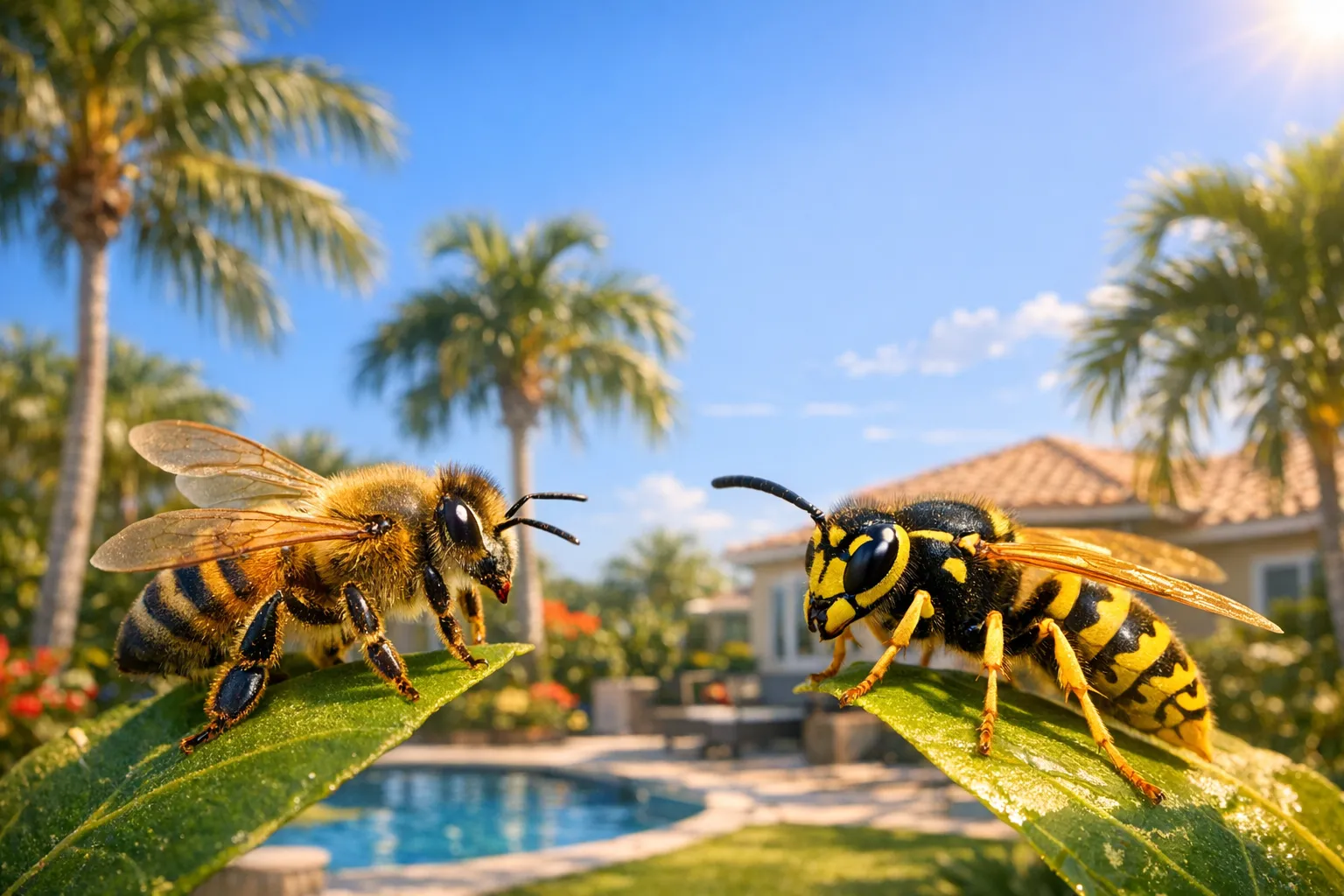
Paper wasps, red wasps, yellowjackets, and bald-faced hornets are the four to keep an eye on in Southwest Florida. All of them can sting multiple times because — unlike honeybees — a wasp’s stinger is smooth rather than barbed, so it doesn’t lodge in your skin. A single agitated wasp can hit you five or six times before you can back away.
Do wasps leave a stinger behind like bees?
Almost never. If you find a stinger left in the wound, you were almost certainly stung by a honeybee, not a wasp — a genuinely useful clue when you’re trying to figure out what nailed you. The first aid is the same either way; the only extra step for a bee sting is removing the stinger promptly, then following the wash-ice-antihistamine routine below.
What actually calms down a wasp sting?
Wash the site with soap and water, ice it for 10–15 minutes to knock down the swelling, and take an oral antihistamine if you’re getting a puffy local reaction. Cortisone cream helps with the itch a day or two later. If you see hives spreading beyond the sting site, throat tightness, or trouble breathing, that’s anaphylaxis — call 911, not your neighbor.
Ready to Get Wasps Off Your House?
If nests are already showing up under the eaves — or you’re just tired of dodging yellowjackets every time you mow — Waves handles the whole thing: ID, treatment, nest removal, and a residual perimeter follow-up that greatly reduces the chance wasps rebuild in the same corner — and if they do come back between visits, re-treatment under WaveGuard is free. Browse our pest control services for the full menu, or lock in year-round coverage with a WaveGuard membership so the next queen shopping your soffit for real estate finds it very unappealing.
Prefer to just talk to a human? Give us a ring at (941) 297-5749 and we’ll get a tech scheduled.