Jump to a section (12)
- 01What aquatic midges are
- 02Why Sarasota lakefront homes get so many
- 03Are midges harmful?
- 04Midges, mayflies or something else?
- 05Start with the water
- 06Questions to bring to your HOA or pond manager
- 07Change your lighting
- 08What a technician visit can and cannot do for midges
- 09What not to do
- 10When to call for help
- 11Living with midges
- 12Frequently Asked Questions
If you live on a Sarasota pond and step outside on a warm evening into a cloud of small, mosquito-looking flies that never bite, you have met aquatic midges. Locals call them blind mosquitoes. They pile up on porch lights, screens, cars and light-colored walls, and they leave a mess behind. This guide covers what they are, why lakefront homes get so many, and which steps help, based on University of Florida (UF/IFAS) guidance.
The short version: midges come from the water, so the fixes that last happen in and around the pond. Spraying the house does little against a lake that keeps producing new adults. If you want someone to look at your property and talk through it, you can get a Sarasota pest control quote.

What aquatic midges are
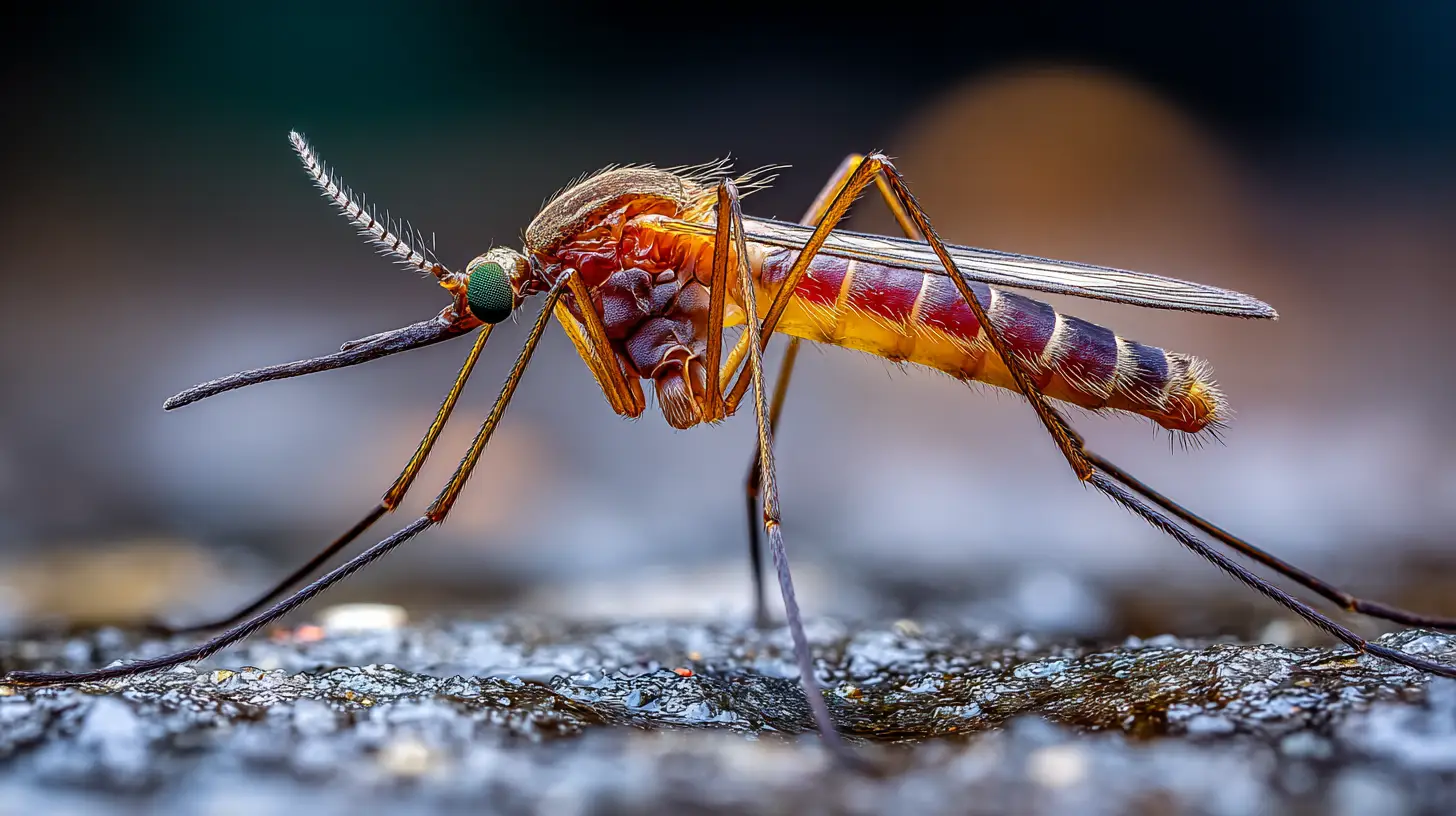
Aquatic midges are non-biting flies whose larvae live in the muck at the bottom of lakes and ponds. UF/IFAS entomologist William Kern describes chironomid midges as “the size and shape of medium to large mosquitoes,” and says plainly that “adult chironomid midges do not bite or transmit disease” (UF/IFAS news, April 2022).
A few facts from that UF/IFAS interview explain the swarms:
- Short adult life. Adults live about two to three days. The swarm you see tonight is a different group from the one last week.
- Larvae that handle low oxygen. The larvae carry hemoglobin, so they survive in low-oxygen bottom muck where many other insects cannot.
- Native insects. Midges are native to Florida. They boom where fertilizer runoff and septic leakage feed extra algae.
- Long season. Swarms form near still or slow-moving water in warm months, and in subtropical Florida different species can emerge at different times of year.
Midges are easy to confuse with two other small flies. Mosquitoes bite and have a long, piercing mouthpart. No-see-ums are a different group (biting midges) that breed in moist soil, mangrove edges and pond margins, bite hardest at dawn and dusk, and pass through standard window screening. If you are getting bitten, you are not dealing with aquatic midges. The Waves pest library has more on the common Florida lookalikes.
Why Sarasota lakefront homes get so many
Stormwater ponds are built to collect runoff, and runoff carries nutrients. Those nutrients feed algae, the algae and dead plant matter settle as muck, and the muck feeds midge larvae. Many Sarasota-area neighborhoods are master-planned communities built around retention ponds, so a lot of homes sit right next to a midge nursery.
When adults emerge they head for light and light-colored surfaces. That is why the lanai, the garage door and the pool cage take the worst of it, and why the homes closest to the water see the most.
Are midges harmful?
Midges are a nuisance, not a health threat. They do not bite, sting or carry disease, per UF/IFAS. They are not a structural pest either, so they will not damage the house.
UF/IFAS does note two real problems with big swarms. Dead midges can pile up thick enough to make surfaces slippery, and people with insect allergies may react mildly to the scales and hairs the adults shed. If you have asthma or allergy symptoms that get worse during swarms, talk to your doctor.

Midges, mayflies or something else?
Midges are not the only insects that rise out of Sarasota-area ponds. Mayflies also emerge in large numbers from stormwater retention lakes and swarm the same lights and walls. Both are aquatic-origin nuisances, and neither bites or damages the home. The clues on your walls in the morning help you tell what came out of the pond:
- Midges are the size and shape of medium to large mosquitoes, per UF/IFAS, and they leave spent bodies stuck to screens, siding and light fixtures.
- Mayflies leave papery shed skins, called shucks, on walls and screens along with their spent bodies.
- Mosquitoes come looking for you. If you are getting bites in the evening, treat that as a mosquito or no-see-um problem, not a midge problem.
If you are not sure which one you have, take a clear photo of one resting insect next to a coin. That photo makes the conversation with a technician or your county extension office much faster.
Start with the water
Since the larvae live in pond-bottom muck, the steps with the most effect target the pond itself. On a shared stormwater pond these are usually decisions for your HOA or pond management company, so bring them up there.
Cut the nutrients that feed the muck
UF/IFAS ties midge booms to excess algae fed by fertilizer and septic leakage. Every homeowner on the shoreline can help:
- Keep fertilizer, grass clippings and yard debris out of the water and off the bank.
- Follow Sarasota County’s fertilizer rule: nitrogen and phosphorus may not be applied from June 1 through September 30.
- Leave a strip of unmowed or planted shoreline between your lawn and the water so runoff slows down before it reaches the pond.
Let small native fish do some of the work
UF/IFAS’s Kern says small native predatory fish, such as the eastern mosquitofish and the least killifish, can help control midge populations. Ponds often already have them. Before anyone stocks fish in a shared pond, check with the HOA or the company that manages it.
Ask about the bigger lake projects
Kern also describes lake drawdowns, which expose the bottom muck to air so it oxidizes and dries. Dredging the muck out is possible in theory, but he calls it economically unfeasible in most cases. Either is a community-level project, so it belongs on an HOA agenda, not on a single homeowner’s to-do list.
Anything added to the water to treat larvae is a pesticide application. It follows the product label, and on a shared pond it is the pond manager’s call.
Questions to bring to your HOA or pond manager
Midges are a shoreline problem, so the useful conversation happens at the community level. These questions keep it concrete:
- Who manages the pond, and what is done to it now for algae and vegetation?
- Does the plan follow the product label for anything added to the water, and who is licensed to apply it?
- Is there a shoreline buffer rule, and do homeowners know to keep clippings and fertilizer away from the bank?
- Has the community talked about a drawdown or muck work, and what would it take to study the cost?
- Can common-area lights near the water switch to yellow bulbs, aim down, or go on timers?
Write down which months the swarms are worst on your street. A simple log of dates, weather and how bad the swarm was gives the board something real to work with.
Change your lighting
Lighting is the one change you control on your own lot, and it pays off fast. Reducing or shielding outdoor lighting helps more than routine spraying does against lakefront midge swarms.
- Turn off decorative and landscape lights you do not need after dark.
- Swap bright white bulbs near doors and the lanai for yellow bug-light bulbs.
- Aim fixtures down and away from the water, and put entry lights on motion sensors or timers.
- Close blinds on lake-facing windows at night so indoor light does not draw them to the glass.
Pro tip: Switch off lights on the water side of the house during the hour after sunset. That is when swarms are moving, and a dark lanai gives them less reason to stop at yours.
What a technician visit can and cannot do for midges
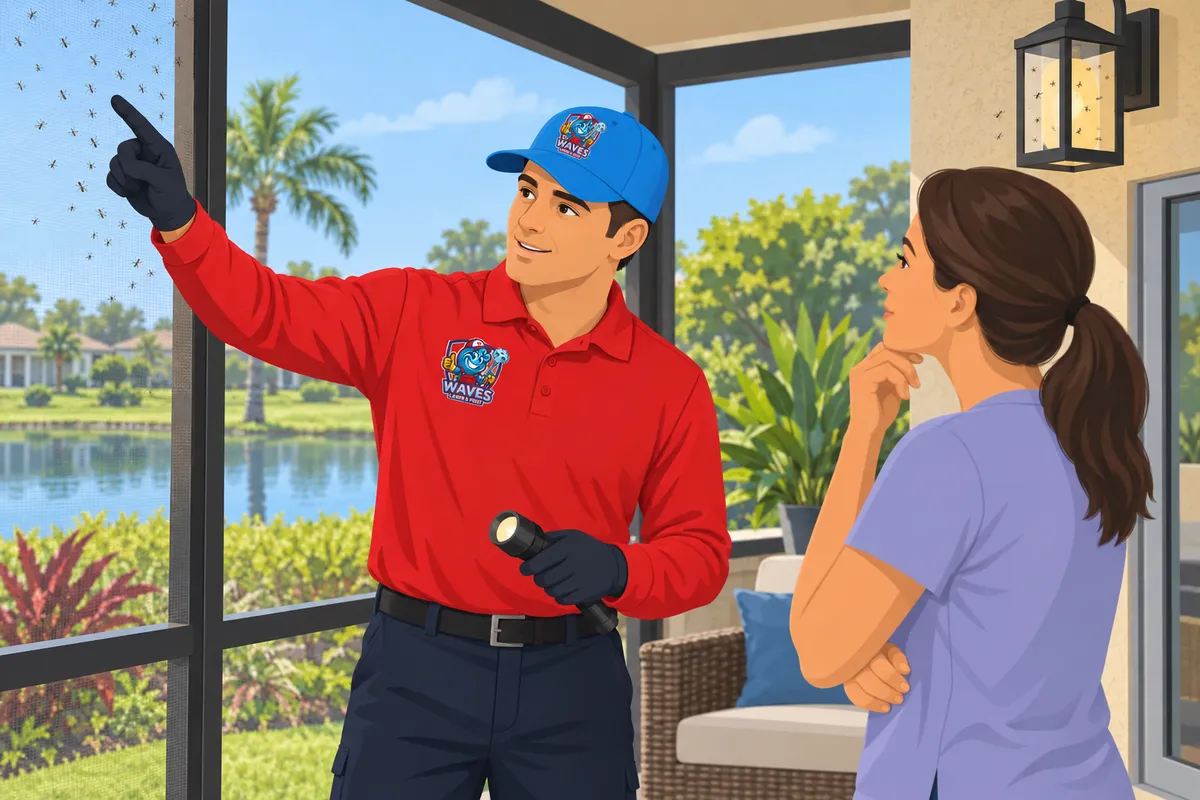
A technician can come out, but set your expectations before you book. A visit can help you find where midges gather and rest on your home and which lights draw them. It cannot stop the next emergence, because that comes from the pond.
Routine perimeter spraying is the wrong tool for midges. They are an aquatic, seasonal nuisance, and new adults keep coming as long as the larvae keep developing in the muck. The useful visit is one that pairs any exterior work with honest advice on lighting and pond management. For the ants, roaches and other household pests that also come with lakefront living, see our pest control services and WaveGuard memberships. You can also read about Waves service in Sarasota.
What not to do
- Do not fog the yard every evening. The adults only live a few days, and a fresh group follows. Repeated spraying adds product to the yard without touching the source.
- Do not pour anything into the pond yourself. On a shared stormwater pond, treatments belong to the pond manager and follow the product label.
- Do not use a pressure washer on fresh piles near the water. Sweep or rinse the dead midges onto the lawn instead, so you are not washing extra organic matter back into the pond.
When to call for help
Call a professional when the insects bite, when you see them indoors in numbers every night, or when you cannot tell what you have. Those are signs the problem may be mosquitoes, no-see-ums or a pest breeding inside the house, and each one has a different fix. For a pure midge swarm from the pond, the technician’s job is to confirm the insect, check where it rests on the home, and give you a straight answer about what spraying can and cannot do. Bring your swarm log and photos to the visit. They help the technician tell a short seasonal emergence from a steady one.
Living with midges
You can lower the numbers and the mess, but a Florida pond will keep producing some midges. They are part of the food web for fish, birds and dragonflies. Lighting changes help right away. Nutrient and pond work takes longer and works best when the whole shoreline takes part.
If you want a technician to walk the property with you, get a Sarasota pest control quote.
Frequently Asked Questions
What are aquatic midge flies?
They are small, non-biting flies, often called blind mosquitoes, whose larvae live in the muck at the bottom of lakes and ponds. UF/IFAS says the adults do not bite or transmit disease.
How long do midges live?
Adults live about two to three days, per UF/IFAS. New groups keep emerging from the water, so swarms can last much longer than any one fly.
Will spraying my house get rid of midges?
Spraying alone will not. The adults keep coming from the pond, so routine spraying gives short relief at best. Lighting changes and pond nutrient work make more difference.
Are midges dangerous to people or pets?
They do not bite, sting or carry disease. UF/IFAS notes that large piles can make surfaces slippery and that people with insect allergies may have mild reactions.
When are midges worst in Sarasota?
Swarms are heaviest in the warm months, but UF/IFAS says emergence can happen year-round in Florida because different species emerge at different times.