Jump to a section (8)
- 01Do you need one-time or recurring pest control in Bradenton?
- 02What changes through a Southwest Florida year
- 03Compare the work you are buying
- 04How to choose between a one-time service and an ongoing plan
- 05When might a single service fit?
- 06When might recurring service fit?
- 07Two situations that lead to different questions
- 08Frequently Asked Questions
Do you need one-time or recurring pest control in Bradenton? A one-time service fits one identified problem with a clear end point. A recurring plan fits pests that keep coming back with the seasons, like fire ants in sandy yards or ghost ants that move indoors during heavy summer rain. Let the inspection findings decide.
Waves Pest Control is a pest and lawn company in Southwest Florida, licensed by FDACS under Florida Statute Chapter 482, serving Bradenton, Sarasota and nearby cities. One-time pest control addresses a defined problem; an ongoing plan schedules recurring service for the pests and areas named in the agreement. Choose after identifying the problem and reading the scope. Neither label alone tells you what is covered.

Do you need one-time or recurring pest control in Bradenton?
It depends on which part of Bradenton you live in and what keeps showing up. A single identified problem fits a one-time quote, and pressure that returns every season makes an ongoing plan worth pricing. Bradenton neighborhoods carry different pest pressure, so the same question gets different answers a few miles apart:
- East Bradenton and the SR-70 corridor: new construction on cleared agricultural land sees ghost ants and fire ants colonize fresh sod and landscape beds within 60 to 90 days of install. Fire ants tend to be a repeat problem. UF/IFAS Gardening Solutions notes that fire ants can quickly re-infest an area once removed and that there is not a permanent solution for controlling them. UF/IFAS adds that Florida’s sandy soils keep fire ant mounds smaller than the ones you see in clay-soil states.
- Oak-canopy neighborhoods like Bayshore Gardens and Trailer Estates: roof rats and smokybrown roaches ride oak limbs to the roofline, then slip through soffit gaps into attics. Rodent monitoring and soffit work are worth asking about by name, since a general plan may not list them.
- The historic core (Old Manatee, Ballard Park, River District): 1940s and 1950s wood-frame homes on pier footings or shallow slabs carry heavy subterranean termite pressure. Termite work is a separate service from a general pest plan.
- Downtown apartments and mixed-use buildings along Old Main Street: German cockroaches move between units through shared plumbing walls. Bait rotation and monitoring over several visits fit that setting better than one broad spray.
If your problem matches one of these patterns, price an ongoing plan next to a one-time quote. If it was one wasp nest or one trail of ants with a clear cause, a one-time visit may cover it.
What changes through a Southwest Florida year
Pest pressure here follows the calendar, and that is the main case for a recurring plan. Spring (March through May) brings subterranean termite swarmers around older inland homes, plus fire ant mounds expanding after the first warm rains and new wasp nests. Summer (June through September) is the peak for roaches and mosquitoes, ghost ants push indoors during heavy rain, and fire ant mounds keep rebuilding after storms. In fall (October and November) rodents start pushing indoors and spiders gather around porch lights. Winter (December through February) is when roof rat pressure in attics peaks.
Those afternoon storms matter for scheduling, too. An exterior treatment has to dry before rain reaches it, and the product label sets that timing. Ask any provider what happens if a downpour hits soon after a one-time visit, and get the answer before you book.
Lawn pests run on their own schedule. UF/IFAS Gardening Solutions calls southern chinch bugs a major pest of St. Augustinegrass and says damage usually shows up first in water-stressed grass or full sun. That is lawn care, separate from a household pest plan, so do not expect a perimeter treatment to cover it.
Compare the work you are buying
| Decision | One-time service | Ongoing plan |
|---|---|---|
| Purpose | A defined corrective or isolated service | Scheduled service for ongoing needs |
| Follow-up | Confirm what the individual proposal includes | Confirm scheduled frequency and callback terms |
| Pest coverage | The pest and areas named in the quote | The covered pests and exclusions in the plan |
| Cost comparison | Compare the full defined scope | Compare per-application price and frequency |
| Useful starting evidence | Confirmed isolated activity | Repeated activity or a documented preventive need |
These are purchasing criteria, not a promise that every provider offers the same terms.
How to choose between a one-time service and an ongoing plan
- If you saw one pest once and can name it, start with identification and a one-time service quote for that pest.
- If the same pest returns season after season, such as fire ants re-mounding in a sandy yard, choose an ongoing plan and compare visit frequency and what happens between visits.
- When the problem is termites, rodents or German cockroaches, pick the specialty service by name, whether it comes as a one-time service or an ongoing plan.
- When you live in a shared-wall building, choose an ongoing plan only after asking whether it coordinates with neighboring units, since roaches can travel through shared plumbing.
- If two quotes differ, use the scope and frequency of each one-time service or ongoing plan as the comparison before price.
When might a single service fit?
A specific, identified problem with a clear service boundary can make a one-time quote worth considering. Ask what result the work is intended to achieve and whether any follow-up is included. Do not infer a warranty from the phrase one-time treatment.
An isolated insect sighting may only need identification and observation. Use the pest identifier, the pest library and the observation checklist to clarify the problem before selecting a program. The EPA’s integrated pest management guidance makes the same point: monitor and identify pests accurately so control decisions fit, which keeps pesticides from going down when they are not needed or the wrong kind from being used.
When might recurring service fit?
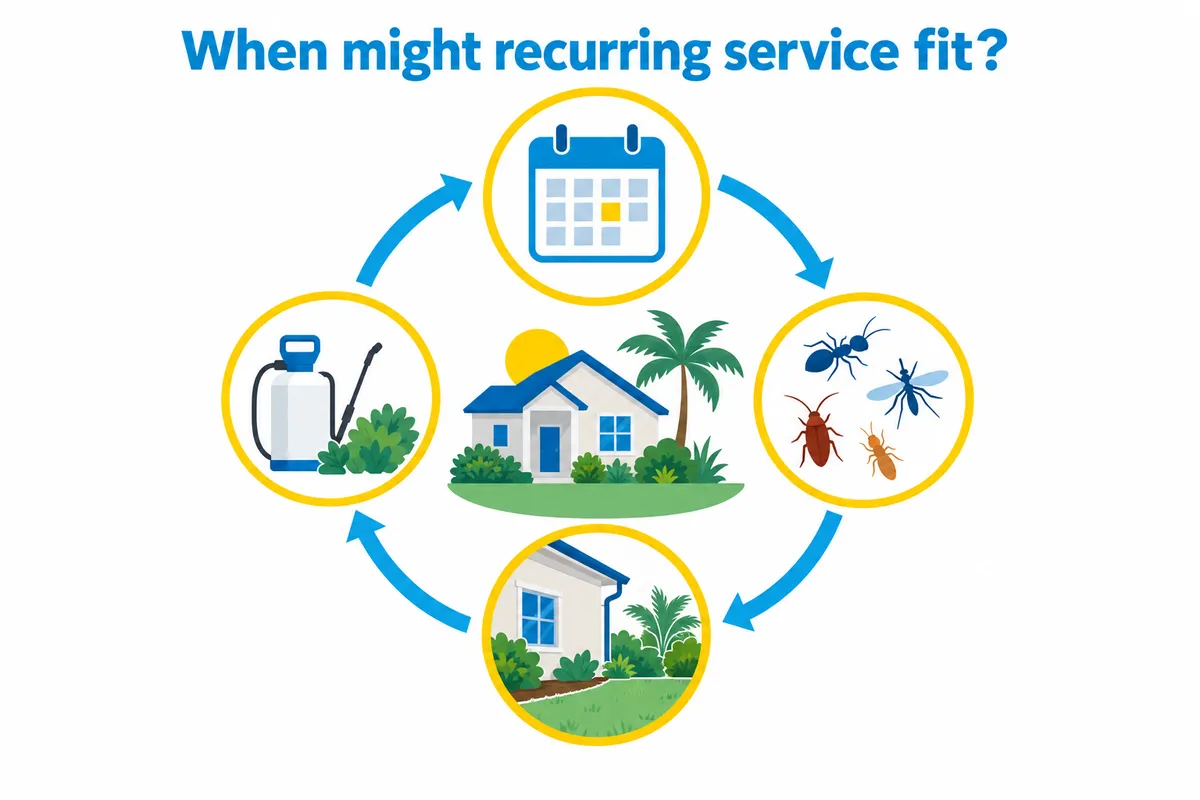
A recurring plan is worth comparing when you want scheduled inspections or applications for an ongoing need. Confirm the service frequency, covered pests, treatment areas, and what happens between scheduled applications.
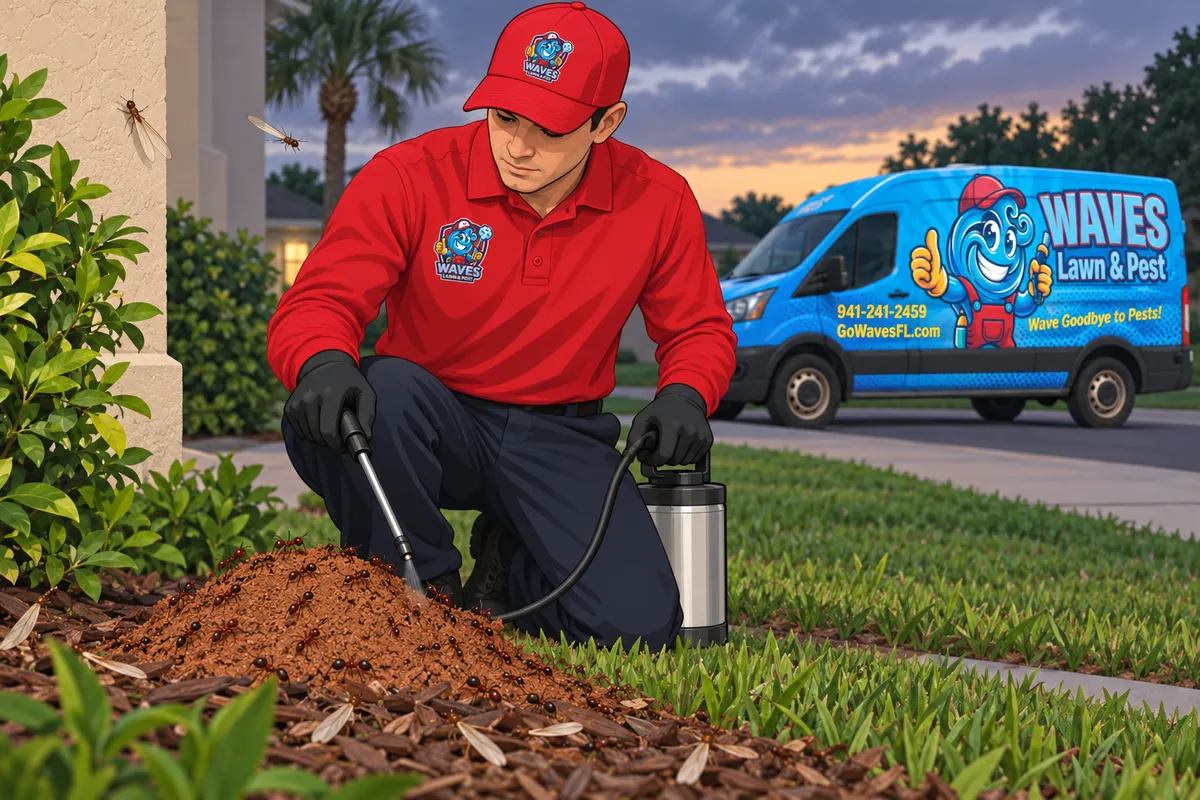
Here is how our approach works at Waves Pest Control, so you have something concrete to compare against. The first visit typically runs 60 to 90 minutes: a walk of the property, finding active pressure, inspecting soffits, eaves and the slab line, knocking down webs at entry points, a perimeter treatment around the foundation, interior spot treatment where pests are active, and rodent stations if the inspection calls for them. Recurring visits are quarterly and typically run 30 to 45 minutes, focused on the exterior, with interior service on request or when there is active pressure. If pests show up between quarterly visits, WaveGuard memberships let you report it and request a re-treatment. The full list of what we treat is on the pest control services page.
Specialty problems need their own scope. German cockroaches, termites, rodents, and lawn concerns should not be assumed to be included in a general pest plan. Ask the provider to name the applicable service and exclusions.
Two situations that lead to different questions
An isolated, identified problem: ask for a quote that names the problem and the work intended to address it. Clarify whether an inspection, treatment, and a later check are separate items or part of one proposal. The word one-time does not answer those questions on its own.
Repeated activity in a property you want maintained: ask what each scheduled application includes, whether the same areas are inspected, and how you request help between scheduled services. An ongoing plan is easier to evaluate when the recurring work and callback terms are explicit.
These examples are a way to compare offers, not a diagnosis of your home. The same initial sighting could lead to different recommendations after an inspection. Ask the provider to connect the recommendation to what was found rather than treating frequency as a default answer.
Frequently Asked Questions
How often should pest control come to a house in Bradenton?
Waves Pest Control’s recurring visits are quarterly, with interior service on request or when pests are active inside. The right schedule for your home still depends on what the inspection finds and which pests keep returning.
Is a one-time treatment enough for German cockroaches?
Ask whether the quote includes follow-up visits. German cockroaches live indoors and, in apartments and condos, move between units through shared plumbing walls, so bait and monitoring over several visits usually fit better than a single spray.
Does a regular pest plan cover termites?
Termites are usually a separate service. Florida licenses termite and wood-destroying organism work as its own category apart from general household pest control, and Waves Pest Control runs subterranean termite work as its own service line. Ask any provider to name termite coverage in writing.
How should you compare prices?
Compare the same pest, property, treatment areas, frequency, and follow-up terms. A lower headline amount can describe less work. Our cost-factor guide provides a quote checklist, and you can get a pest control estimate with the calculator for current available pricing.
What can you do before deciding?
EPA’s pest prevention guidance recommends addressing food, water, and shelter. Those observations also make an inspection more useful. Bring your notes and ask which findings justify the proposed service.
Ready to compare options for your own home? See pest control in Bradenton or get a pest control estimate for your property.