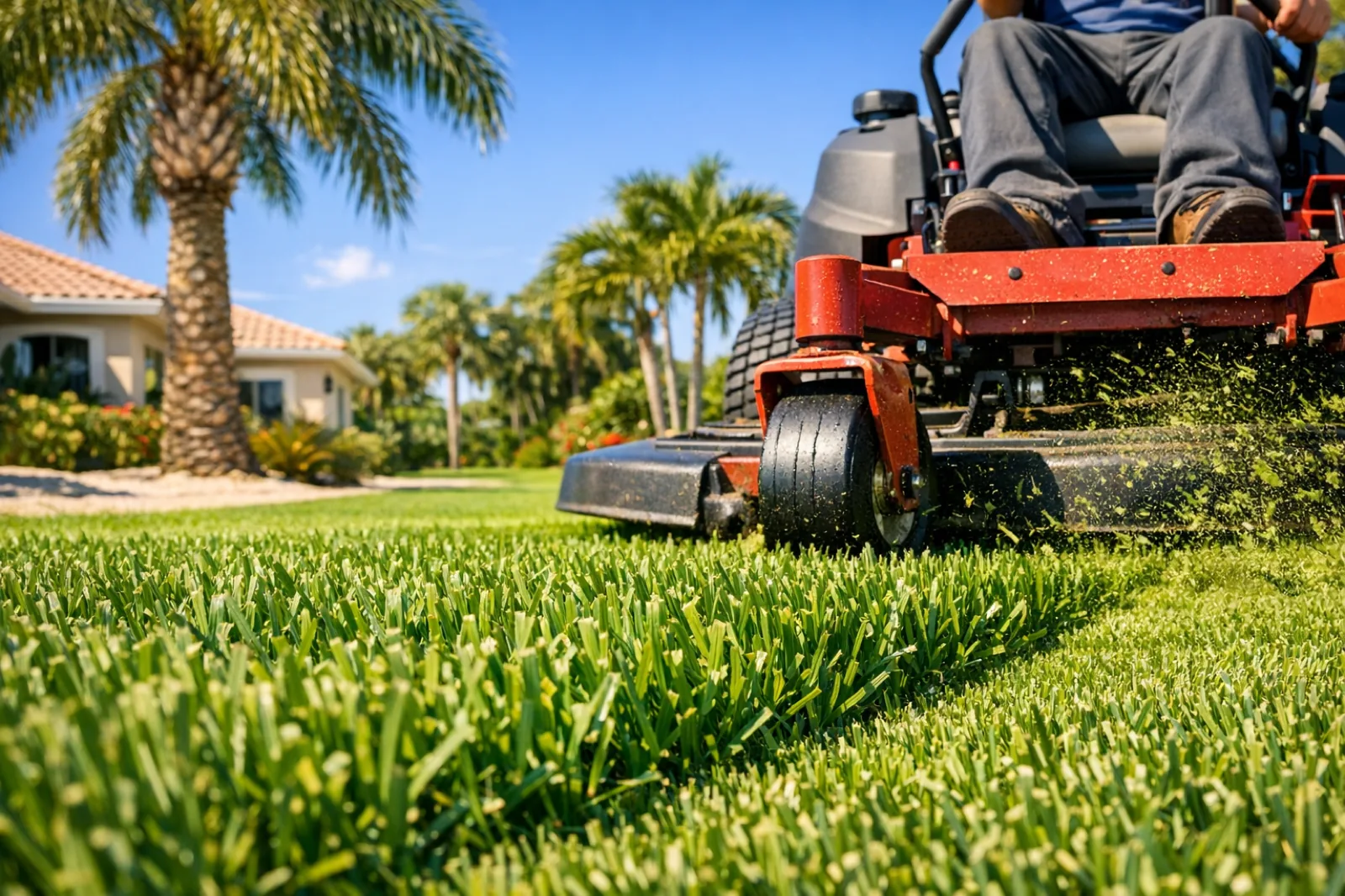
October 1 is the day a lot of Sarasota lawns get a shock treatment. The summer fertilizer restricted season just lifted, the bag has been sitting in the garage since May, and the temptation is to spread every bit of it chasing that deep green. I get the urge. Before starting Waves I spent years in technology and medical-device sales, and the greenest fall lawns I have seen since have almost never been the ones that got the heaviest feeding.
October feeding on St. Augustine is about recovery. Your grass spent the summer fighting heat, afternoon storms, and pests, and now it needs to rebuild root reserves before cooler weather slows it down. This guide walks through what the Sarasota County rules actually say, what your lawn is short on after summer, and how to feed it without wasting the bag or fueling disease. For the bigger picture on seasonal turf care, start with our Sarasota lawn service. And if you would rather hand the timing off to someone who does this all week, you can request a quote for a Sarasota program.
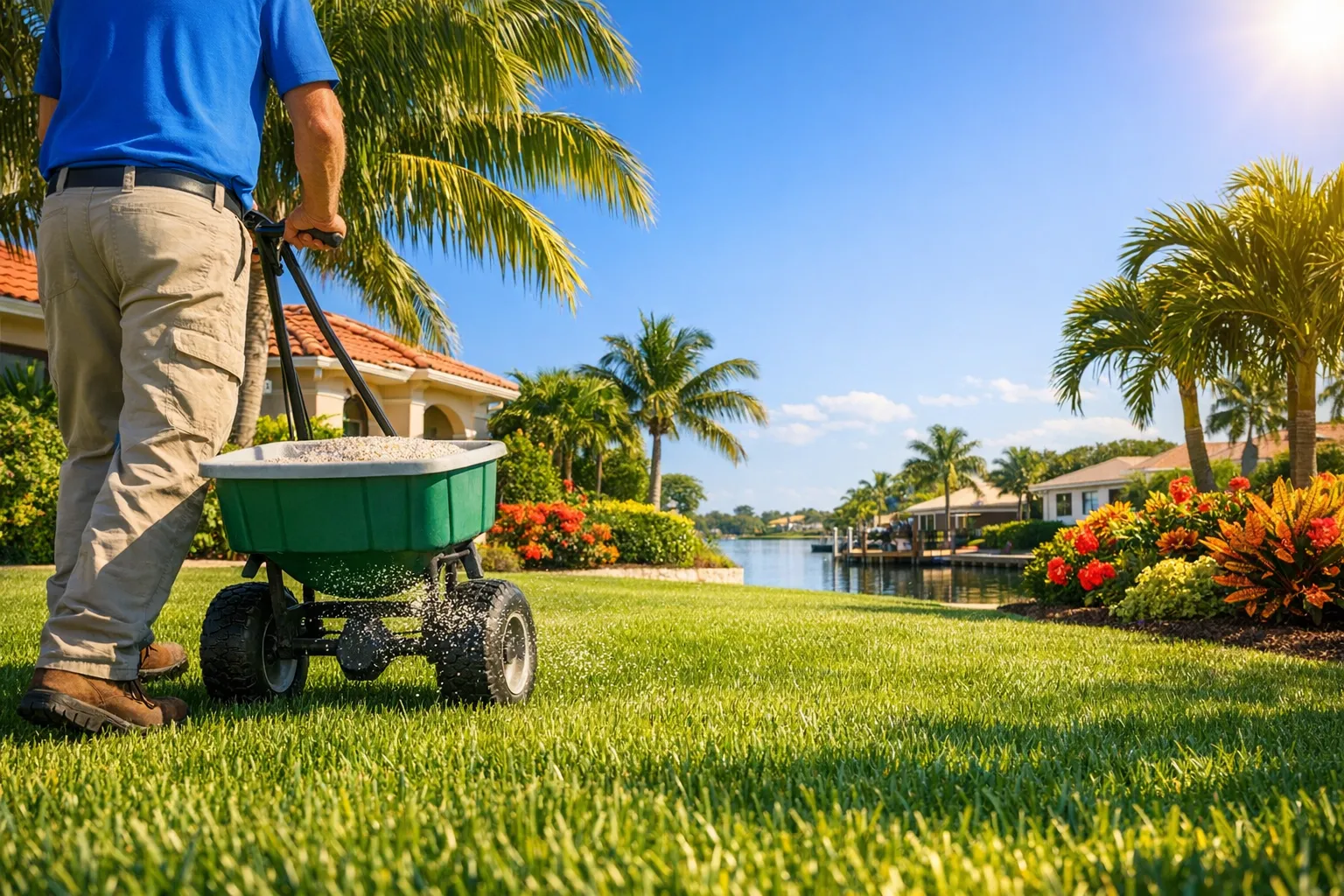
The Restricted Season Just Ended
From June 1 through September 30, Sarasota County prohibits any fertilizer containing nitrogen or phosphorus on lawns and landscape plants. The county enacted that ordinance back in 2007 to keep nutrients out of local waterways during the rainy season, when heavy summer storms wash whatever you spread straight into storm drains and, eventually, into Sarasota Bay. Per UF/IFAS Extension Sarasota County, the City of Sarasota, the City of Venice, and the Town of Longboat Key run the same June 1 to September 30 window — but note North Port runs a stricter April 1 through September 30 blackout, so April and May feedings are off the table there. Neighboring Manatee County has its own version of the summer restriction, which I broke down in our Manatee County fertilizer blackout guide. Not sure whether your city is in the window right now? The fertilizer blackout checker gives a same-day answer for the Sarasota, Manatee and Charlotte county cities we serve.
So October 1 is the first legal day to put nitrogen back down, and that timing happens to line up with what your grass wants anyway. Phosphorus is a different story: it stays restricted year-round unless a soil test taken within the past two years documents a deficiency, which Sarasota’s naturally phosphorus-rich soils rarely show. An older test does not qualify, even if it showed one.
What Summer Took Out, and What October Feeding Is For
Think about what a Sarasota lawn goes through from June to September. Daily heat, saturated sandy soil, and a four-month stretch where you legally cannot add nitrogen or phosphorus. The pests, meanwhile, are having a great summer. Southern chinch bugs are the number one insect pest of St. Augustine, and gray leaf spot spreads fast in warm, humid, wet weather. If you want help telling one problem from another, our pest library is a decent starting point. By the time the restricted season lifts, plenty of lawns are thin, patchy, and low on stored energy.
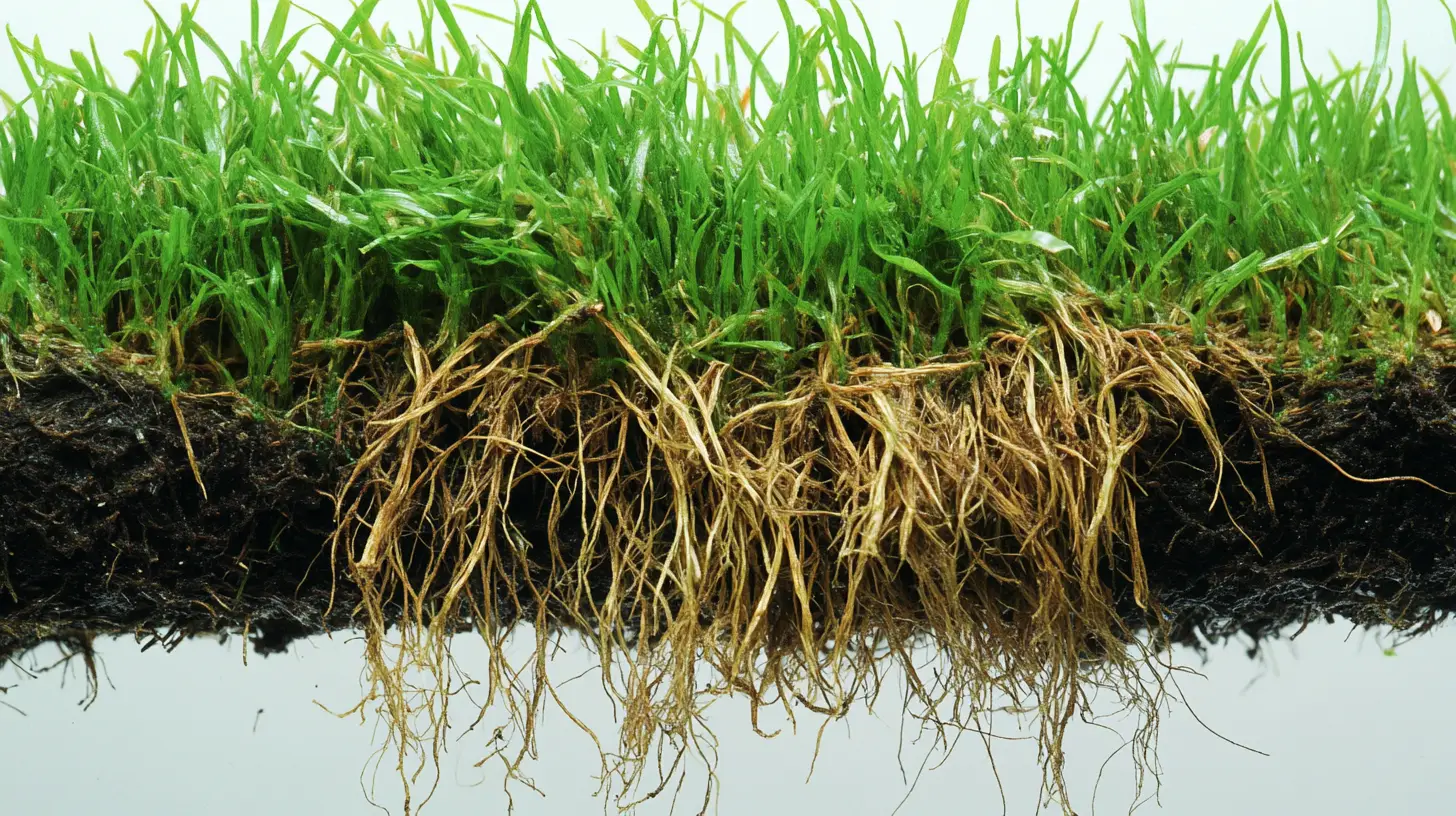
That is the job October feeding is built for. A measured, slow-release feeding helps the grass recover density and rebuild root strength while it is still actively growing. UF/IFAS points out that fertilizer only does you any good when the grass is actively growing and can take it up, so early October, while the soil is still warm, is the sweet spot in our area.
The Year-Round Rules That Still Apply
Lifting the restricted season does not mean anything goes. A few Sarasota County rules run all year, and they are worth knowing before you buy a bag:
- At least 50% slow-release nitrogen. Any nitrogen fertilizer you use has to be at least half slow-release. Slow-release feeds the lawn steadily and leaches less through our sandy soil.
- Nitrogen caps. No more than 1 pound of nitrogen per 1,000 square feet in a single application, and no more than 4 pounds per 1,000 square feet across the whole year. General UF/IFAS guidance for St. Augustine can run up to 6 pounds, but in Sarasota County the 4-pound legal cap governs.
- Go easy on phosphorus. Sarasota County soils are naturally rich in phosphorus, so the ordinance limits it and most lawns here do not need any. Look for a zero in the middle number on the bag unless a soil test from the past two years says otherwise.
- Keep it away from water. Fertilizer cannot be applied within 10 feet of a pond, stream, canal, lake, or wetland. If your yard backs up to a canal or a retention pond, and plenty of Sarasota lots do, use a spreader with a deflector shield and leave that 10-foot strip alone.
- Sweep, do not rinse. Any fertilizer that lands on the driveway or sidewalk gets swept back onto the lawn, never hosed toward the storm drain. Grass clippings stay out of the road and waterways year round too.
Pro tip: Read the bag before you buy it. The three numbers are nitrogen, phosphorus, and potassium. For most Sarasota St. Augustine lawns you want a slow-release product with a zero middle number and a solid last number for potassium — a phosphorus-containing analysis is only an option when a soil test from within the past two years documents a deficiency. Ask your county Extension office or a licensed pro which analysis fits your soil test results.
The Over-Application Trap
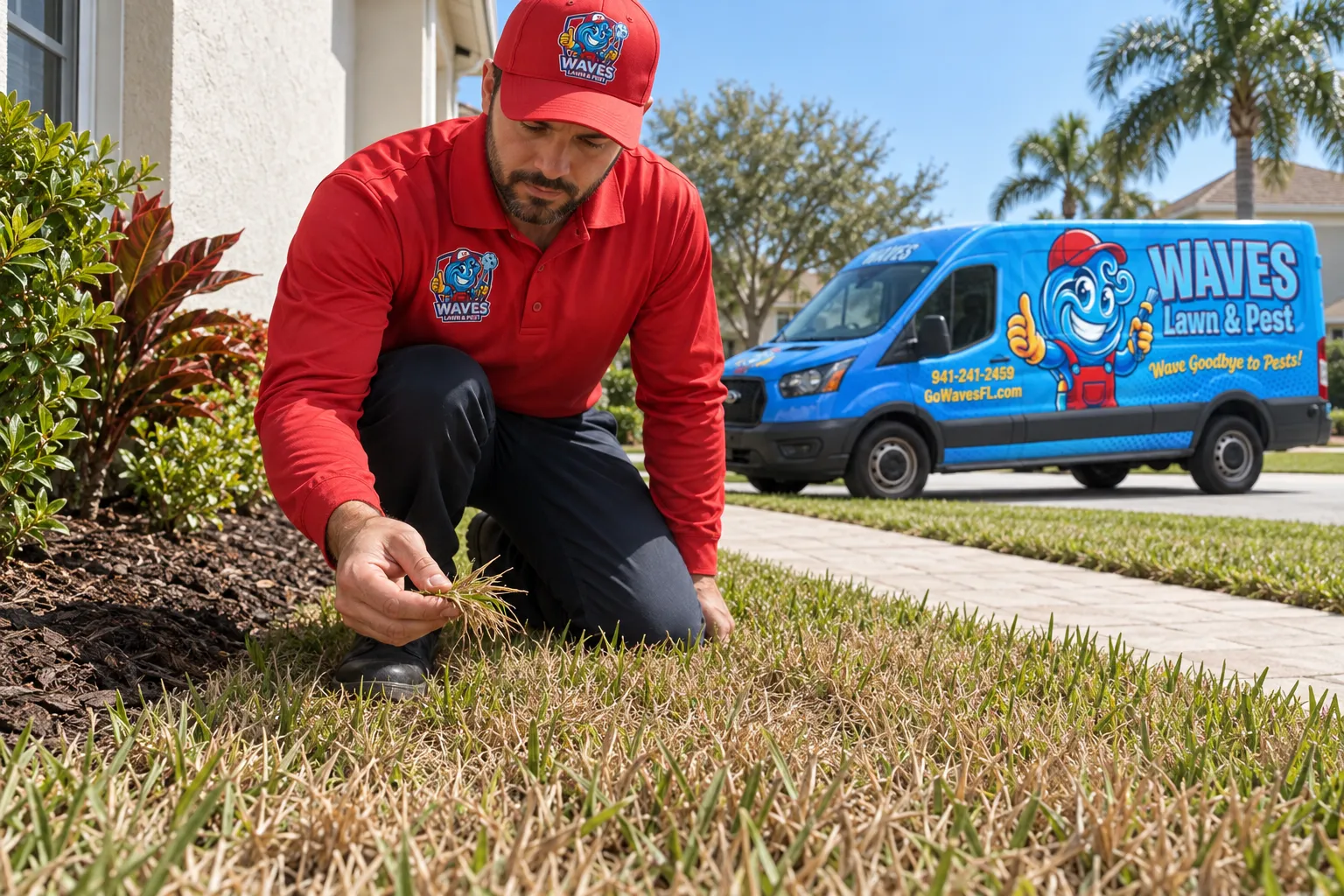
Here is where good intentions get lawns in trouble. October is also when large patch wakes up. Large patch is a fungal disease caused by Rhizoctonia solani, and per UF/IFAS Gardening Solutions it shows up most often once temperatures drop below 80 degrees, usually from November through May. St. Augustine is one of its favorite targets.
What feeds large patch is exactly what a heavy fertilizer dump creates: lush, soft, fast growth. UF/IFAS notes that St. Augustine lawns are very susceptible to large patch in the fall, and that avoiding excess nitrogen and watering early in the day are two of the best ways to keep it in check. A big shot of quick-release nitrogen in October can green things up for two weeks and then hand you circular brown patches all winter.
| What happens | Dump the whole bag on | Feed for recovery |
|---|---|---|
| Top growth | Fast, soft, floppy | Steady, denser turf |
| Root reserves | Little gain | Rebuilt before winter |
| Large patch risk | Higher heading into fall | Lower with sparing, slow-release N |
| Runoff into waterways | More leaching through sandy soil | Stays in the root zone |
| What it costs you | Redo the work in spring | Healthier lawn, less rescue |
Recovery-focused October feeding versus over-application on Sarasota St. Augustine.
Soil Test First
Before you spend money on fertilizer, spend a little on a soil test. Sarasota County soils are naturally rich in phosphorus, so a bag loaded with it is usually money down the drain. Our soils also tend to be sandy, which means nutrients leach quickly if you apply more than the grass can grab.
UF/IFAS recommends testing before you fertilize so you only add what the soil is actually short on. Be clear about what the report can and cannot tell you: a standard turf soil test reads pH, phosphorus, potassium, and other nutrients, and pH drives how available those nutrients are to the roots. It does not measure nitrogen need. Nitrogen rates come from the grass type, the season, how the lawn is responding, and the county’s legal limits, not from the soil report. In practice the test usually confirms that phosphorus is already plentiful and tells you whether potassium needs topping up. Your county Extension office can show you how to pull a sample and read the results. It is cheap insurance against wasting a whole application on the wrong nutrients.
A Sensible Fall Program Through Winter
Here is the shape of a reasonable fall on Sarasota St. Augustine:
- Early October: Your main fall feeding, once you are past September 30. Slow-release nitrogen, no phosphorus unless a soil test from within the past two years documents a deficiency, potassium in the mix, and no more than 1 pound of nitrogen per 1,000 square feet.
- Late October into November: Watch your watering more than your fertilizer. Water in the early morning so the blades dry during the day, which is the single best thing you can do to slow large patch. Keep mowing at the tall end for your cultivar so the grass holds a deep root system — around 3.5 to 4 inches for standard St. Augustine like Floratam, but dwarf and semi-dwarf types run much shorter (CitraBlue around 2 to 3 inches; Seville, Delmar, and Captiva around 2 to 2.5), so check which one you have.
- By mid-November: Make your last heavy feeding of the season. Feeding at a full rate too late leaves tender growth exposed when the first cool fronts arrive.
- December and January: In Sarasota, our St. Augustine often stays green through the winter, so a light, low-rate maintenance feeding can still make sense while the turf is holding color. Keep rates low, skip nitrogen entirely if the grass has gone dormant, and spot-check for large patch and sod webworm damage rather than throwing a quick fix at yellow spots. Our Sarasota lawn service schedules low-rate winter maintenance when the turf calls for it.
If large patch has hit the same areas for years, UF/IFAS notes that preventive fungicide timing before symptoms appear can help, and reminds everyone that the product label is the law. That is a good moment to bring in a licensed pro rather than guessing, especially since chinch bugs, gray leaf spot, and take-all root rot can all look alike at a glance.
How we handle it at Waves: we build the fall and winter schedule around the ordinance, the growing season, and a soil test, and we time the feeding for recovery rather than a short-lived color pop. Our Sarasota lawn service covers the city and the surrounding communities.
Frequently Asked Questions
Can I fertilize my Sarasota lawn right before a rainstorm?
Hold off. The whole reason Sarasota County shuts fertilizer down in summer is that heavy rain washes nitrogen and phosphorus off your lawn and into storm drains before the grass can use them, and our sandy soil lets it leach fast. Feed when you have a stretch of dry weather ahead, water it in lightly by hand if the product directions call for it, and skip the application if a big storm is in the forecast.
I irrigate with reclaimed water. Does that change how much fertilizer I use?
It can. Reclaimed water often carries nitrogen already, so you may be feeding the lawn a little every time you irrigate. Sarasota County advises reclaimed-water users to find out the nitrogen concentration of their water and factor it in, which usually means you can apply less fertilizer. A lot of Sarasota communities run on reclaimed irrigation, so it is worth checking.
I just laid new sod. When can I fertilize it?
New sod needs roots before it needs a big meal. UF/IFAS says to wait about 30 to 60 days after planting before fertilizing, because the root system is not developed enough to use it yet. One thing the county’s 60-day new-planting allowance does NOT do: it exempts new plantings from the waterway buffer-zone rules, not from the summer nitrogen and phosphorus prohibition. So for sod laid during the restricted season, wait for whichever comes later — the blackout ending October 1, or the end of that 30-to-60-day rooting window for your installation date.
Not sure what your lawn is short on, or want the fall program handled for you? Get in touch and we will take a look at your Sarasota lawn.