If you live anywhere in Manatee County, you already know the rhythm. The storm rolls through around three, your sandy yard drinks most of it, and by dusk something is whining in your ear. Mosquitoes own this stretch of Southwest Florida from late spring into fall, and the rainy season is what keeps them coming.
You have more say over your yard than you do over the weather, though. Below is a plain walk-through of why the pressure spikes here and what you can knock down yourself this weekend. A pro fits in after that. Waves runs mosquito and general pest service across Manatee County, so most of this is the same read our techs make when they pull up to a yard in Bradenton or Palmetto.
Curious what recurring mosquito service would run at your place? Plug your details into the pest control calculator for a ballpark, then come back.
Why mosquitoes love your Manatee County yard
Sandy soil drains fast, which fools a lot of homeowners into thinking they can’t have a standing-water problem. The water that matters to a mosquito is not the rain soaking into the ground. It is the rain sitting in a saucer, a gutter, a folded tarp. Every afternoon storm tops those little reservoirs back off, and in July heat a mosquito can go from egg to biting adult in about a week.
Warm and wet describes your yard for half the year. St. Augustine grass holds humidity down at the soil line and gives adult mosquitoes a cool, shady place to rest between meals. Add the daily rain and you have a breeding machine that resets itself every 24 hours.
Here is roughly how the pressure stacks up through the year in our part of the coast.
Seasonal pressure
Southwest Florida pest pressure through the year
- Spring Mar–MayBuilding
Warming weather wakes colonies up — activity climbs week over week.
- Summer / rainy season Jun–AugPeak
Heat + humidity + standing water = the year’s heaviest pressure.
- Hurricane season Sep–OctSurge
Storms and flooding push pests indoors looking for dry shelter.
- Fall NovActive
Cooler nights slow things down, but activity stays well above zero.
- Winter Dec–FebLower (not zero)
Our mild winters keep many pests going year-round indoors.
Summer / rainy season & Hurricane season run hottest. In Southwest Florida, pest pressure eases in winter but never fully stops — that’s why year-round protection beats a seasonal patch.
The load starts climbing in May. By July and August, when the rain is close to daily, mosquitoes are the number one thing people call us about.
Know what’s biting you
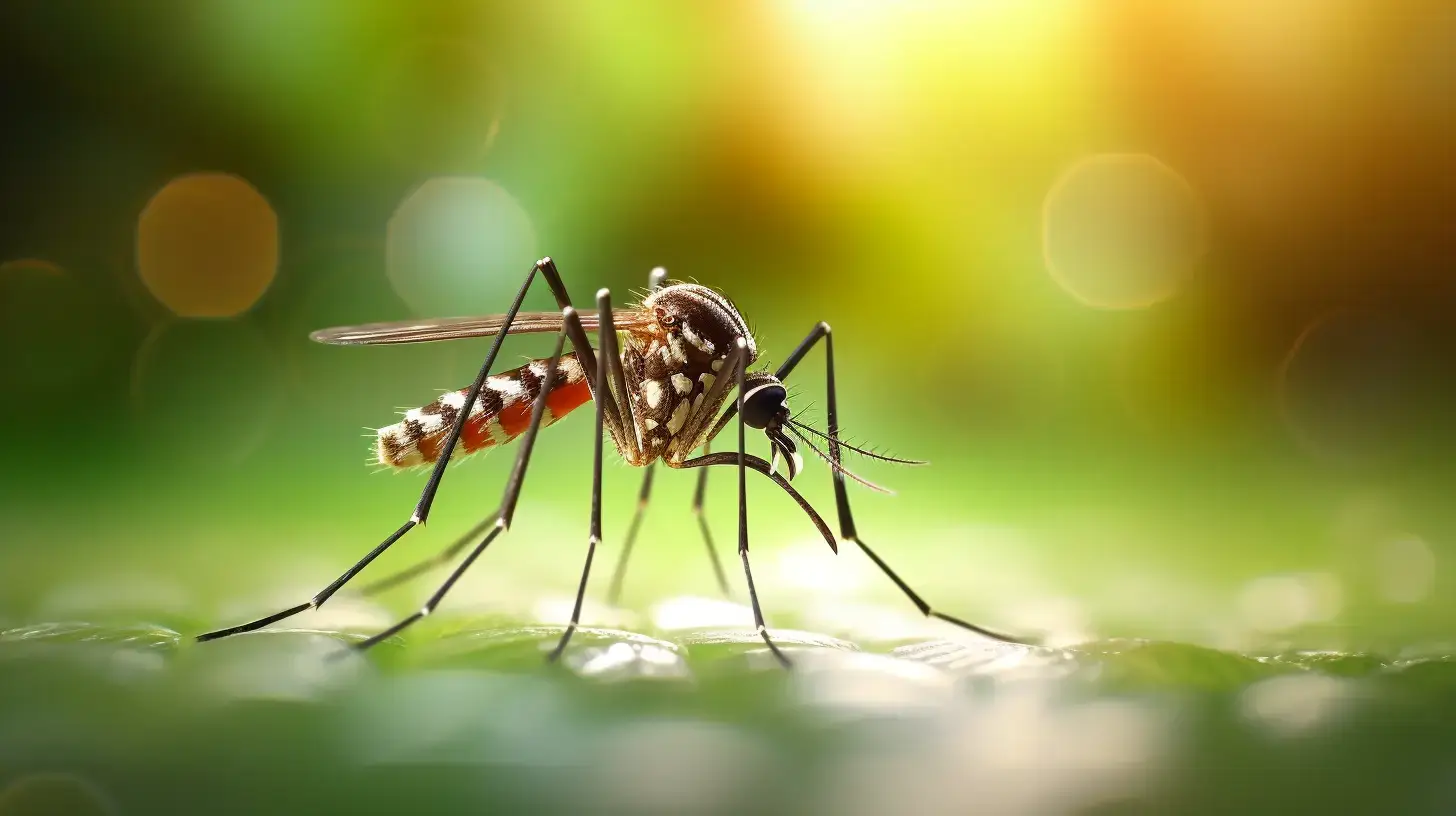
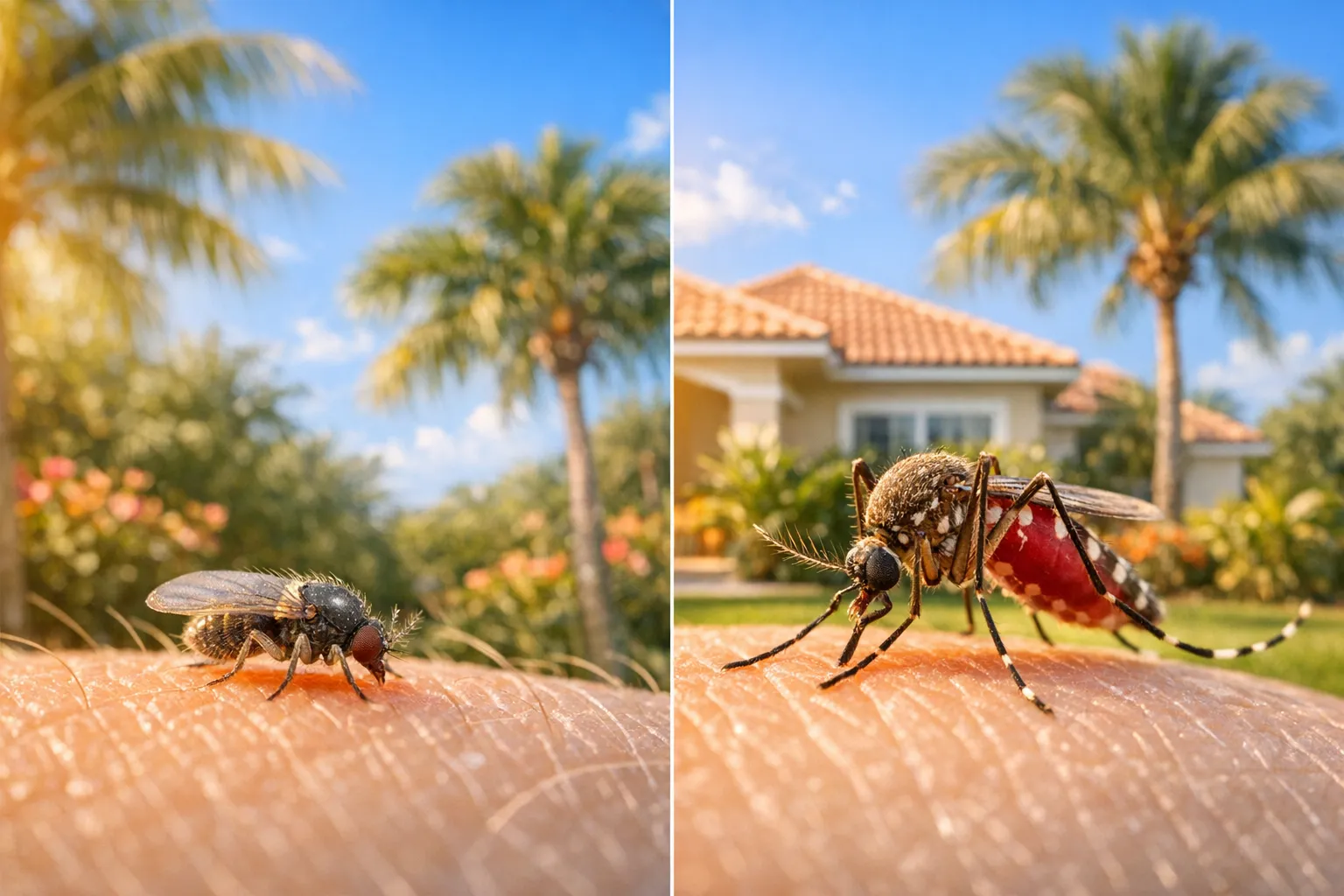
Two broad groups do most of the damage around here. Container breeders are the small dark ones that come at you in the daytime, and the yard-dwelling tiger mosquito is the poster child for that crowd. They breed in anything that holds water for a few days, which usually makes your own property the source. Floodwater mosquitoes are the bigger, more aggressive ones that show up in clouds after heavy rain or when a high tide pushes into low ground and the marshes. Those travel in from larger breeding areas well beyond your fence line.
Why sort them out? Because the fix is different. Container breeders you can starve out by hand. Floodwater mosquitoes are where the Manatee County mosquito control district’s larger spray program and a recurring pro service do the heavy lifting, since you can’t drain a marsh from your patio. If you’re not sure what you’re looking at, our pest library has photos to help you narrow it down before you decide what to do.
Starve them out: source reduction that works
This is the part with the best return on your time. Mosquitoes can’t breed without standing water, so the whole game is finding and killing every little pool on your property. Do a lap after the next storm and hit these spots first.
On every inspection
Standing water to hunt down after a storm
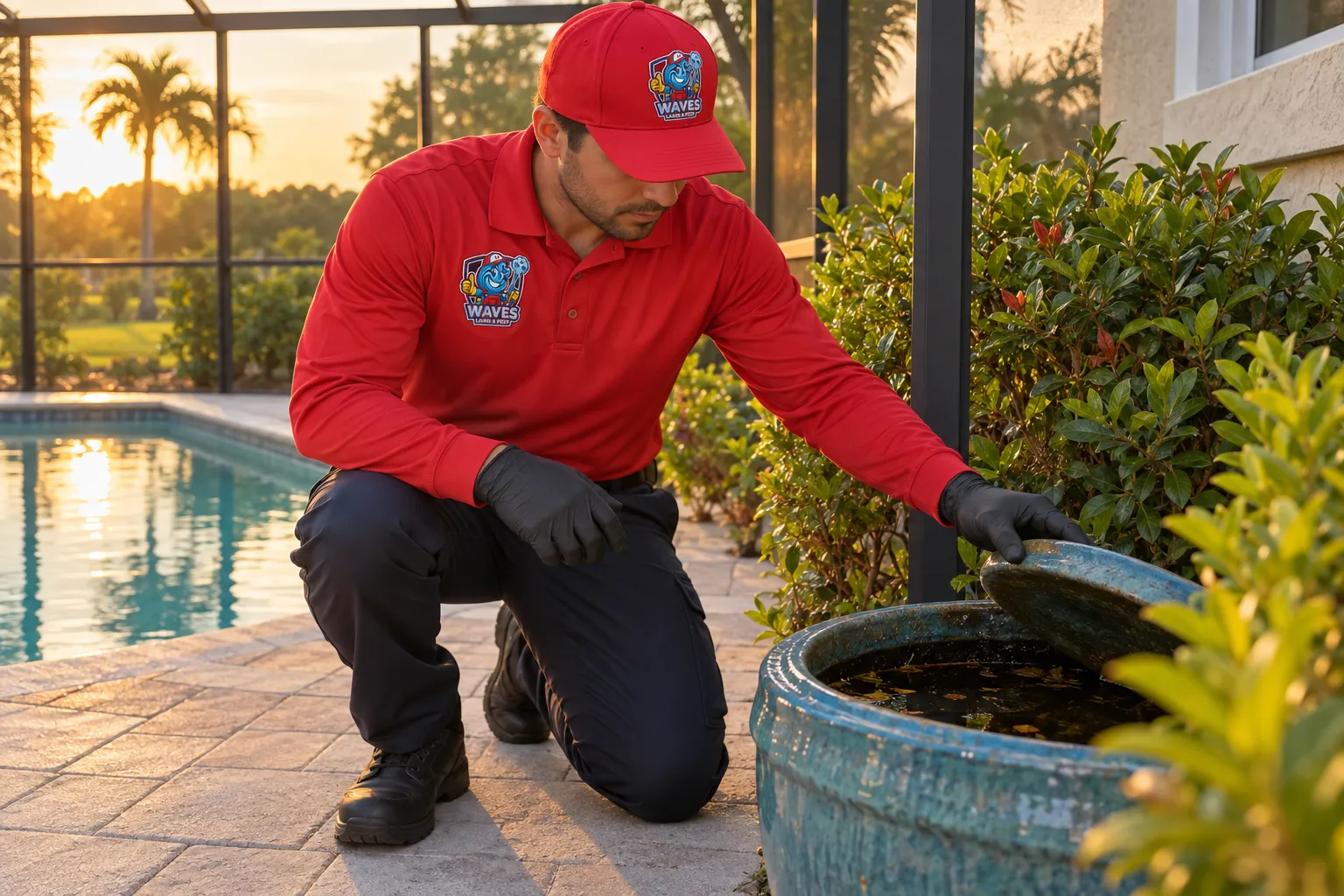
- Plant saucers and bromeliads The cups under potted plants and inside bromeliad leaves hold water for days.
- Clogged gutters A leaf pack turns your gutter into a shallow pond after every rain.
- Tarps, buckets, and toys Anything left out catches rain and can breed in about a week.
- Corrugated drain pipe Those ridged black downspout extensions trap water in every low ridge.
- Bird baths and pet bowls Fine as long as you dump and refill them a couple times a week.
- Old tires and empty pots Classic container breeders. Even a bottle cap can hatch a few.
Common backyard breeding sites in Southwest Florida.
Then make it a weekly habit. Tip and toss anything that collects water, scrub the bird bath, and keep the gutters clear so they drain instead of pond up. For water you can’t dump, like a rain barrel or an ornamental pond or a low spot that stays wet, drop in a biological larvicide made for standing water. That kind targets the larvae and leaves fish and pets alone. Read and follow the label, keep any product off surfaces where you prep food, and store it up out of sight and reach of kids and pets.
Pro tip: Walk the yard the morning after a big storm, not on a dry day. The standing water shows you exactly where the next batch is coming from, and you can dump it before anything hatches.
What to skip
Not every gadget earns its shelf space. Bug zappers mostly electrocute harmless beetles and moths while the mosquitoes ignore them. Citronella candles buy you a small bubble of relief in dead-still air, and our afternoon sea breeze usually erases even that. And please don’t empty a can of Raid into a puddle hoping to fix it. You’ll knock off a few adults and do nothing to the hundreds of larvae underneath.
Easy on the water and fertilizer
Your irrigation timer matters more than you’d think. A lawn that never dries out gives adult mosquitoes a damp place to loiter all day. Back the sprinklers off to what your St. Augustine really needs and let the soil surface dry between runs. Manatee County also restricts lawn fertilizer that contains nitrogen and phosphorus from June 1 through September 30, so summer is already a good window to ease off the feed-and-water routine. The Manatee County fertilizer rules spell out what’s allowed while that window is open.
When to bring in a pro
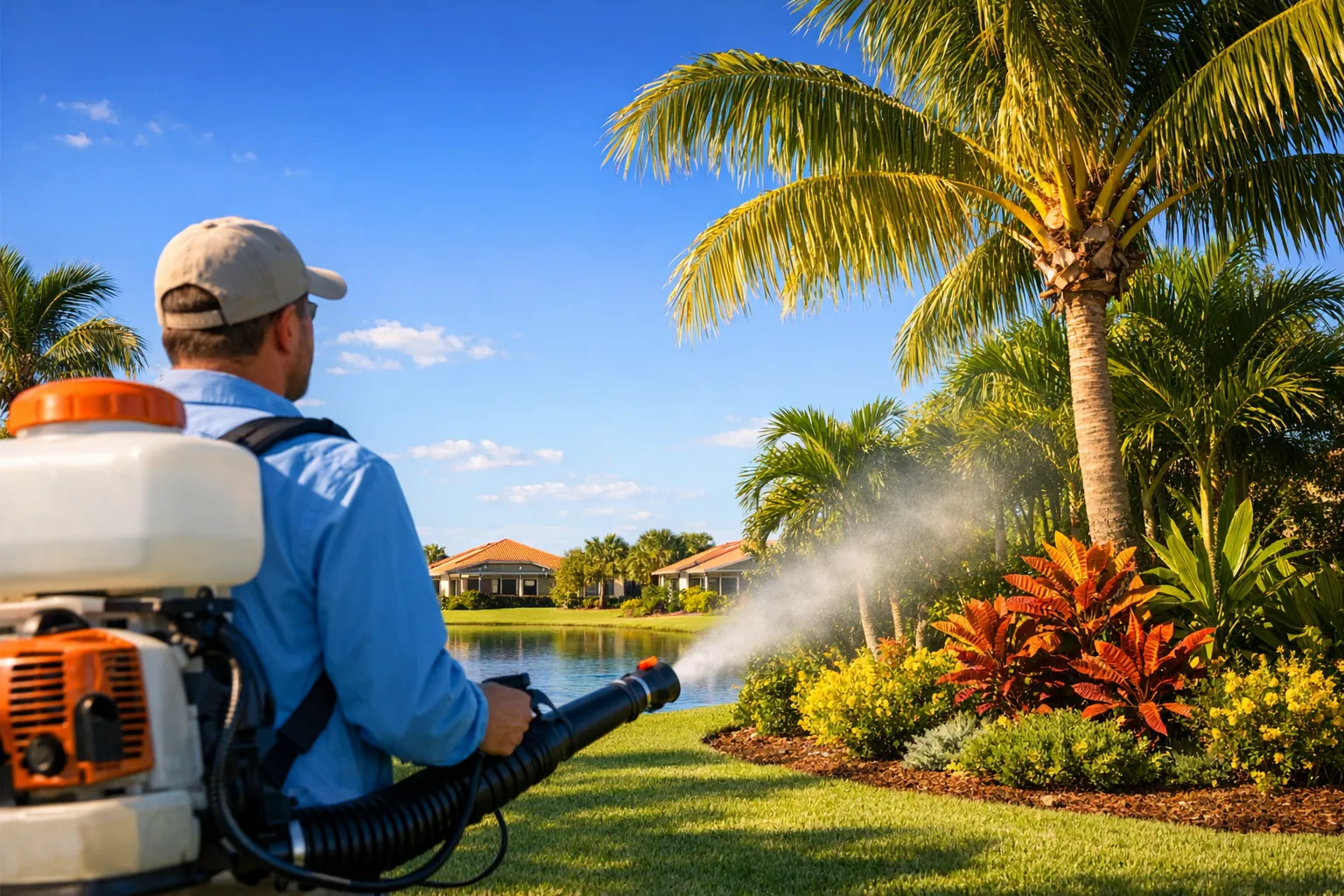
Source reduction cuts your homegrown mosquitoes way down, and it still won’t touch the ones flying in from the retention pond two streets over. That’s where recurring service helps. A barrier treatment coats the shady vegetation and resting spots where adults hide during the day, and a larvicide goes into the standing water that won’t drain. Together they knock the population back and keep pressure lower through the season.
Nobody can make a yard mosquito-proof, and anyone promising that is selling you something. What you can get is a lot fewer bites and a backyard you’ll want to use in August. If you’d rather hand it off, see how Waves handles mosquito pressure across the county or run a quick estimate on the calculator.
Frequently Asked Questions
What month are mosquitoes the worst in Florida?
The rainy season, roughly June through September, brings the heaviest load. Here on the Manatee County coast, July and August are usually the peak, because the storms come close to daily and every one of them refills the breeding sites. Pressure starts building in May and tapers as the rain backs off in fall.
What smell do mosquitoes hate most?
Scent alone is a weak defense, so keep your expectations low. Oil of lemon eucalyptus has real repellent data behind it, and citronella does a little in dead-still air. For protection that holds up outside, put an EPA-registered repellent on your skin and use it the way the label says. DEET and picaridin are the two most common ones.
What keeps mosquitoes away from your yard?
No single trick does it. You get the best results by stacking a few habits. Kill the standing water on a weekly lap around the property and ease off the irrigation so the yard dries out between runs. Wear repellent at dawn and dusk when the biters are most active. Layer a recurring barrier and larvicide service on top and the population drops further. Just remember you’re reducing pressure, not erasing it.
Whether you’re in Bradenton or up in Lakewood Ranch, you don’t have to donate blood in your own backyard all summer. See how Waves approaches pest and mosquito service in Bradenton and get your yard back.