Can rats carry rabies? They can, but rabies in small rodents is very rare in the United States. A rat bite still needs prompt medical attention because other infections are a concern. This guide separates the rabies question from the practical steps to take after a bite or signs of rodents at home. For help identifying local pests, start with the Waves pest library.
If you already know you’ve got a rat problem and just want a ballpark, Get a Rodent Control Estimate in a couple of minutes. Otherwise, here’s the real story on rats and rabies.
Can rats carry rabies in the United States?
A rat is a mammal, and any mammal can catch the rabies virus, so on paper the answer is yes. In practice it almost never happens. Per the CDC, small rodents like rats, mice, squirrels, chipmunks, and guinea pigs are almost never found infected with rabies, and they have never been known to cause a single human rabies case in the United States. Decades of surveillance back that up.
Rats are not a usual rabies reservoir in the United States. That does not make every animal encounter risk-free, and an animal’s behavior alone cannot tell you whether it is infected. Let a healthcare provider or local health department assess an exposure.
Larger rodents are a different case. In the CDC’s 1990–1996 surveillance, woodchucks accounted for 93% of the 371 rodent rabies cases reported in areas with established raccoon rabies. That is a historical finding, not a current estimate for rats in Florida. The CDC’s 1999 rabies prevention recommendations explain both the small-rodent risk and that dated woodchuck statistic.
| Rabies factor | Rats and small rodents | Bats, raccoons, skunks, foxes |
|---|---|---|
| Known rabies reservoir? | No, per CDC surveillance | Yes, the main US carriers |
| Documented human rabies cases in the US | None on record | The leading source of human rabies |
| After a bite | Wash immediately and contact a healthcare provider promptly | Wash and get medical care right away for possible rabies shots |
Rabies risk by animal group, based on CDC rabies surveillance.
The diseases rats do carry
This is where rats earn the bad reputation. Most of what worries public health folks spreads through rat urine, droppings, saliva, or food the rats have gotten into:
- Leptospirosis, a bacterial infection carried in rat urine that thrives in warm standing water. When an afternoon storm leaves puddles sitting around your yard for days, that’s the kind of spot it likes.
- Rat-bite fever, caused by bacteria living in a rat’s mouth, which becomes the main worry if a rat sinks its teeth into you.
- Salmonella, picked up when rats get onto food or prep surfaces.
- Hantavirus and LCMV, viruses tied to rodent droppings and urine that can go airborne once dried droppings get stirred up.
That list runs a lot longer and nastier than rabies ever did. For a fuller rundown on what rodents can do to a household, we broke it down in the health risks of rodents.
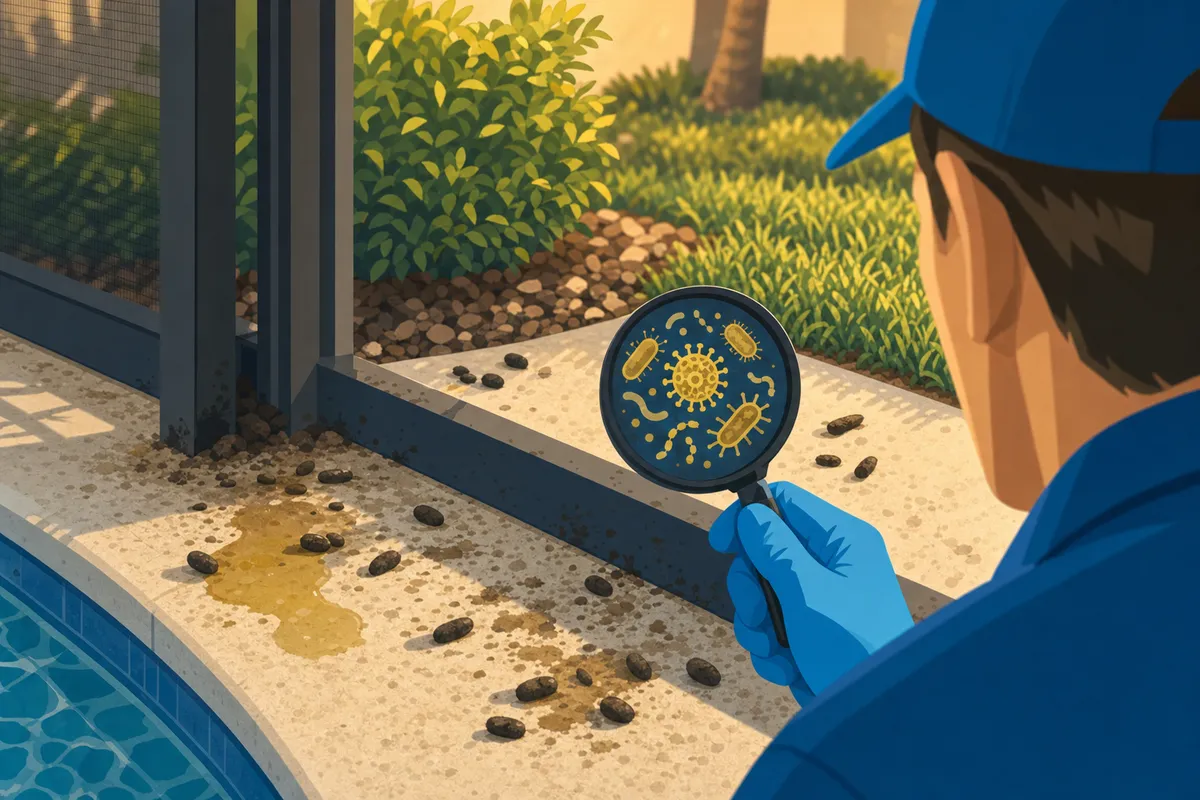
Cleanup precautions: Never sweep or vacuum rodent waste. For a home or shed, open doors and windows for 30 minutes and leave while it airs out. Wearing rubber or plastic gloves, thoroughly wet droppings and urine with an EPA-registered disinfectant. Wait five minutes, or follow the product’s specified contact time, before wiping up with paper towels. Put waste in a covered trash container, disinfect the surface, wash the gloves before removing them, then wash your bare hands. Heavy infestations need additional protection and professional guidance. See the CDC’s rodent cleanup instructions.
Bitten by a rat? Do this
If a rat bite breaks the skin, wash it immediately with soap and running water and contact a healthcare provider promptly, even if you feel well. Do not wait for symptoms. The clinician can assess the wound, tetanus protection, and whether treatment is needed. Seek urgent care for a serious wound or bleeding that will not stop. The CDC’s small-mammal bite guidance explains why even a minor-looking bite deserves attention.
If fever, rash, joint pain, or increasing redness or swelling develops afterward, seek medical care immediately and mention the rodent exposure. Rat-bite fever symptoms may take up to 21 days to appear, even after the wound seems to heal.
Rabies treatment is rarely needed for a rat bite in the United States, but that decision belongs to a healthcare provider or your county health department. The low rabies risk is not a reason to delay wound assessment.
Why rats keep turning up in SWFL homes
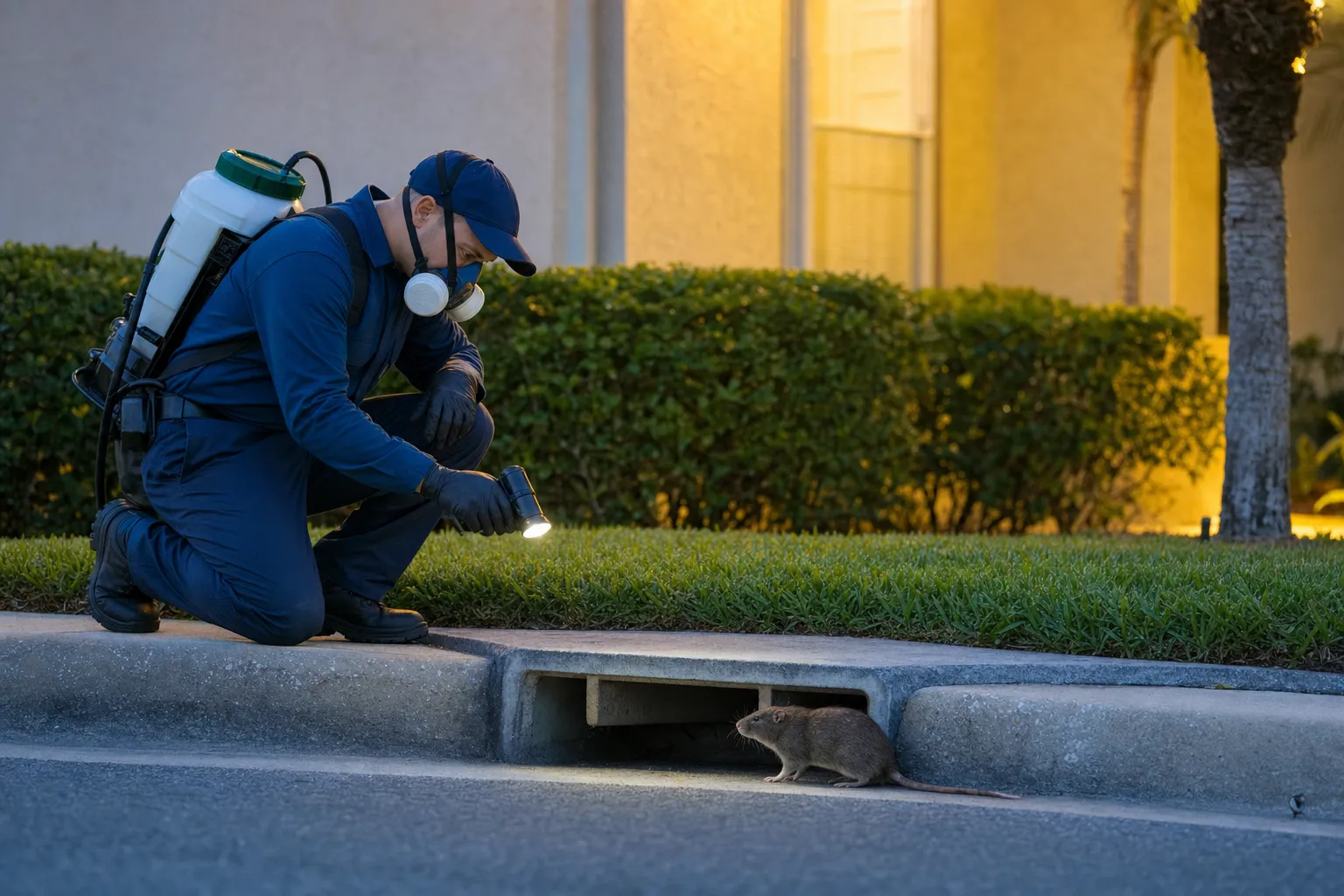
Southwest Florida is a rat resort. It stays warm all year, fruit drops in the yard after every storm, and attics hold a cozy temperature even in January. Roof rats are the headliner around here, and they climb, so they come in high along the roofline, soffits, and any branch touching the house. Norway rats stay lower and burrow near foundations and slabs. Working out which one you’ve got matters, because it points you to where they’re getting in and where you need to seal.
On every inspection
Signs we check during a rodent inspection
- Droppings Location and shape help assess rodent activity; leave waste undisturbed.
- Grease/rub marks Marks along rafters and openings can indicate travel routes.
- Gnaw marks Chewed vents, wood, or packaging help locate damaged areas.
- Entry gaps Openings around soffits, pipes, and doors guide the exclusion plan.
An inspection combines the evidence to identify the rodent and plan exclusion and trapping.
Safe checks you can do (and what to skip)
You can handle a good chunk of this without getting anywhere near a live rat:
- Walk the outside of the house and look for gaps about 1/2 inch wide or larger around pipes, vents, soffits, and the corners of the garage door. Rats can fit through a half-inch opening; mice need only about 1/4 inch. Check from ground level and leave roof or attic access to a professional.
- Trim branches back off the roof so roof rats lose their bridge.
- Look for droppings, gnaw marks, and greasy rub trails along baseboards and beams.
- Move pet food and pantry staples into sealed hard-sided containers.
What to skip: don’t pick up a rat, dead or alive, with bare hands. Don’t scatter poison pellets around the yard where kids, pets, or wildlife can reach them. If you set snap traps, read the packaging first and keep them out of sight and reach of children and pets. And don’t lean on one hardware-store trap to clear a real infestation, since rats breed faster than you can reset it.
Your home, zone by zone
Potential rodent inspection areas
A typical Southwest Florida home — potential inspection areas, subject to safe access.
- Foundation perimeter Check for burrows and gaps at ground level.
- Doors and windows Inspect damaged sweeps and openings around frames.
- Eaves and soffits Check roofline gaps used by climbing roof rats.
- Lower wall openings Inspect vents and penetrations for entry gaps.
- Garage Look for droppings and damaged door seals.
- Lanai Inspect accessible edges for signs of rodent travel.
- Landscaping Look for routes leading toward the building.
- Interior baseboards Check for rub marks and gnawed materials.
- Plumbing penetrations Inspect openings around pipes.
- Attic A professional checks for runs, droppings, and nesting where access permits.
Inspection areas depend on the property and safe access. Findings determine where exclusion, trapping, and monitoring are appropriate.
Ready to get them out? Our Sarasota rat guide walks through the hands-on steps.
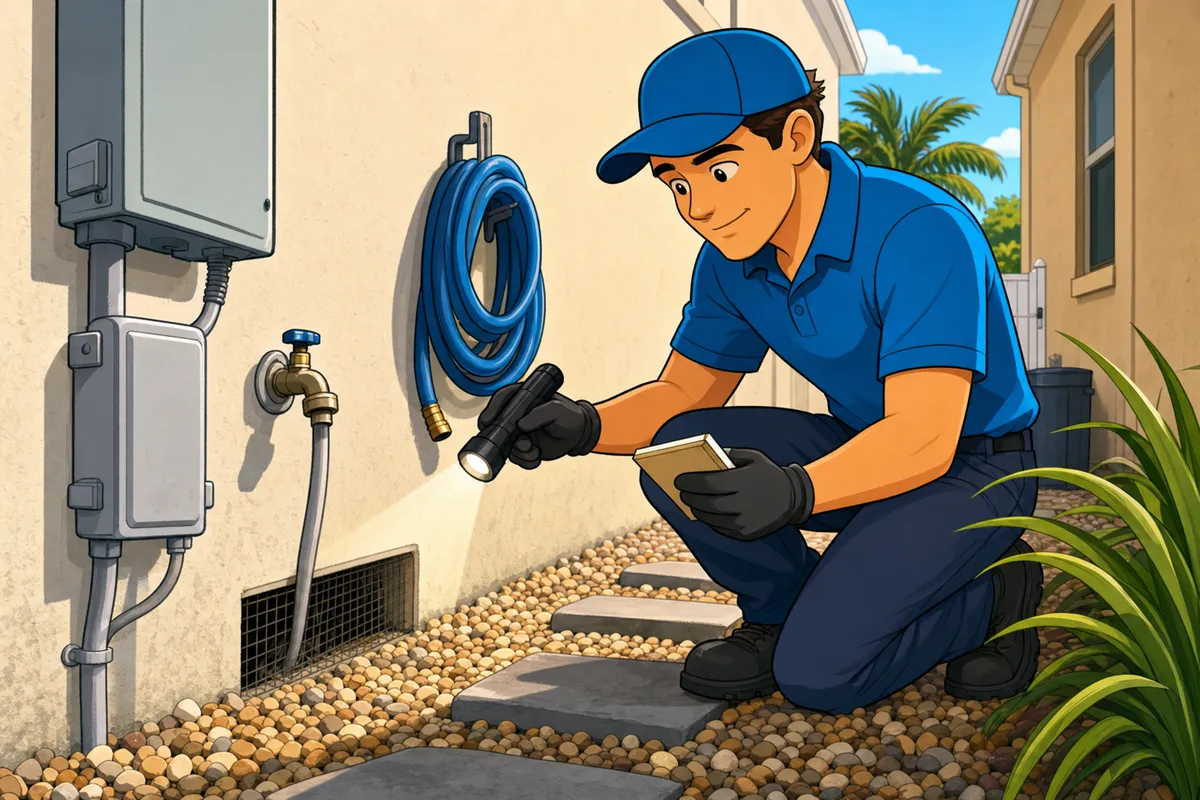
When to call a professional and how Waves handles rats
Recurring droppings, gnawed materials, or nighttime attic noise are reasons to arrange a rodent inspection. We start by identifying which rodent you’re dealing with and how it’s getting inside, because trapping without sealing the entry points just turns your house into an open buffet with a revolving door. From there it’s targeted trapping, exclusion work to close the gaps, and follow-up monitoring so the activity drops off and stays down. Nobody honest can promise a rat will never touch your property again, though solid exclusion and monitoring bring the pressure way down and hold it there.
Want the full picture of what we cover? Take a look at our pest control services, and Get a Rodent Control Estimate before anyone heads out.