Jump to a section (10)
- 01What UF/IFAS says about mice in Florida homes
- 02Is it a mouse?
- 03Step 1: Seal the gaps
- 04Step 2: Take away food, water and shelter
- 05Step 3: Trap the mice already inside
- 06What about poison, glue boards and live traps?
- 07Cleaning up droppings and nests safely
- 08Hantavirus and your health
- 09When to call a professional to get rid of mice
- 10Frequently Asked Questions
Mice get into Southwest Florida homes through gaps most people never notice, and a trap alone does not close them. The lasting way to get rid of mice has three parts: seal the openings, take away what draws mice in, and trap the ones already inside. Clean up the droppings the right way, too, because the usual instinct (sweep or vacuum) is the wrong one.
This guide follows what UF/IFAS and the CDC recommend, and then says where a professional helps.

What UF/IFAS says about mice in Florida homes
UF/IFAS Extension in Sarasota County names three rodents that live alongside people in Florida: the house mouse, the roof rat and the Norway rat. The house mouse is “easily identifiable with its short body, long tail, and relatively large ears” (UF/IFAS Extension Sarasota County). The same page makes the point that matters most for a homeowner: “it is much easier to keep rodents out than to remove them once they have already established residence in a structure.”
Rodents are active in Florida all year, but indoor activity picks up in the cooler months. Roughly October through February, rats and mice move into attics and wall voids for warmth and shelter.
Is it a mouse?
Look for the signs before you pick a method:
- Droppings. House mouse droppings are small, around a quarter inch, and rice-shaped. The CDC describes rodent droppings as “pointed at one end and often contain hair” (CDC).
- Gnaw marks on wood, packaging and food boxes.
- Activity near food: pantries, kitchens, garages and wall voids.
- Noise in the attic or ceiling at night points more often to roof rats, which climb. Mice are more likely behind walls and cabinets.
Not sure which rodent you have? Our guide to telling a roof rat, Norway rat and mouse apart walks through droppings, sounds and entry points. If it sounds like rats overhead, start with roof rats in Lakewood Ranch.
Step 1: Seal the gaps
The CDC says “mice can fit through a hole the width of a pencil (1/4 inch or 6 millimeters in diameter)” (CDC). Its sealing advice:
- Fill small holes with steel wool, and put caulk around the steel wool to hold it in place, or use spray foam.
- Use lath screen or metal, cement, hardware cloth or metal sheeting for larger holes.
- Check inside: under sinks, around pipes and electrical or gas lines, behind appliances, and around air vents.
- Check outside: the roofline (eaves, soffits, gables), vents, doors and windows without weather stripping, the gap where the foundation meets the ground, and utility entry points.
Sealing matters more than any trap. Setting traps without closing the openings just leaves the door open for the next mouse. Sealing lowers the odds of re-entry. It does not guarantee a home is rodent-proof.
Step 2: Take away food, water and shelter
The CDC lists food, water and shelter as the three things to remove. UF/IFAS Extension adds specifics: use trash cans with tamper-resistant lids that animals cannot tip over, and know that rodents “can utilize as little as a bottle cap full of water.” From the CDC:
- Store food in containers with tight lids, including pet food.
- Pick up pet food and water bowls at night.
- Keep woodpiles and vegetation away from the house.
Step 3: Trap the mice already inside
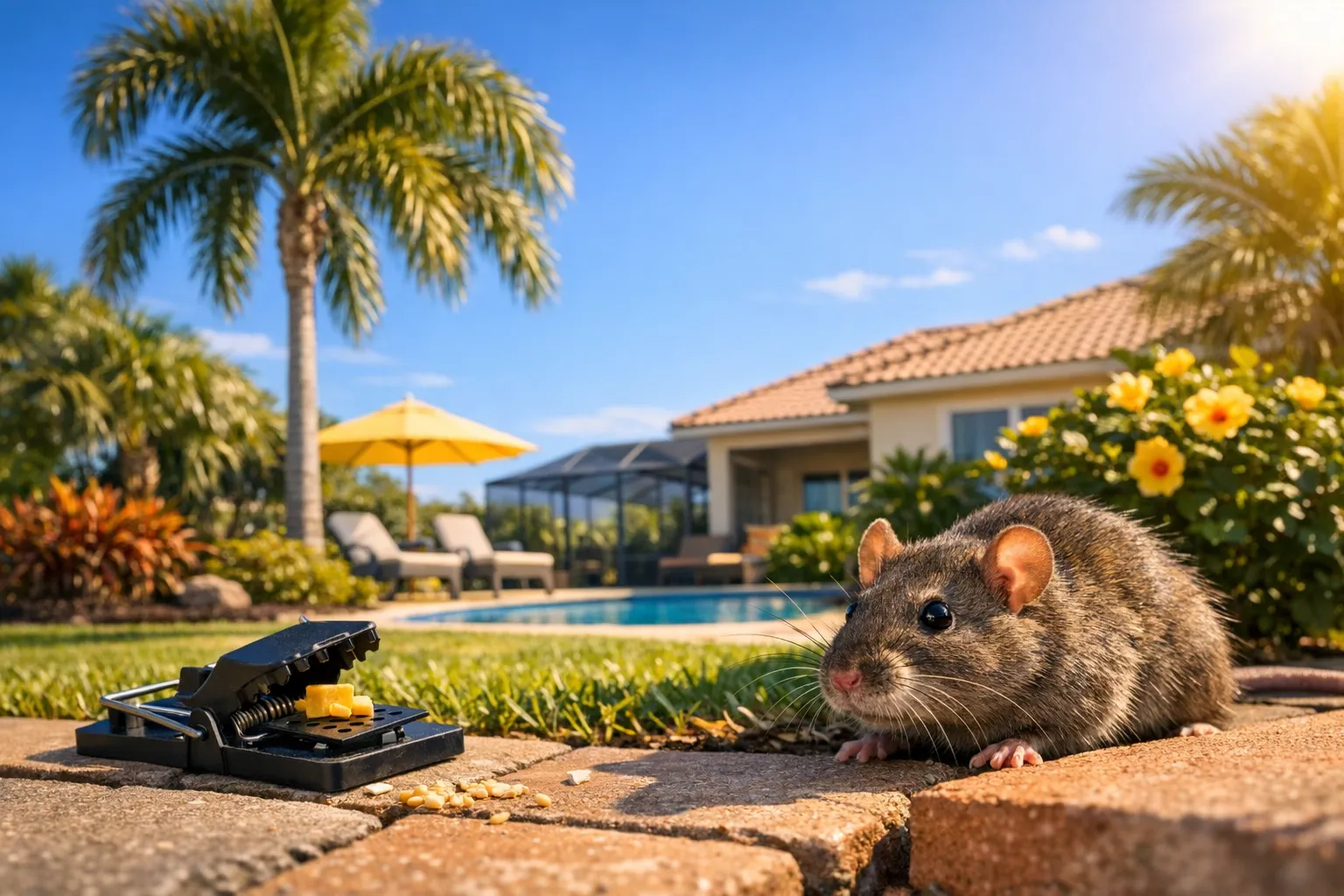
UF/IFAS Extension in Sarasota County says “spring-loaded snap traps are the recommended method of managing rodents for homeowners,” because they are affordable, effective and more likely to cause a quick death. The CDC’s trapping advice:
- Keep traps and bait out of reach of children and pets.
- Use chunky peanut butter on the bait pan of the snap trap.
- Place the trap on the floor against the wall, with the baited end next to the wall so the trap forms a “T” with it.
- Put traps where you see activity and in closed areas, such as behind the stove and refrigerator and at the back of cabinets and drawers.
- Check traps every day and get rid of dead rodents right away. Keep traps out longer if you still have mice (CDC).
What about poison, glue boards and live traps?
- Glue traps and live traps: the CDC says not to use them, because they can scare rodents into urinating, which increases your chance of getting sick. UF/IFAS Extension calls glue traps inhumane.
- Poison: the CDC says to turn to poison or bait stations only if an infestation persists after traditional traps, and to choose EPA-registered products. UF/IFAS says second-generation rodenticides can also kill animals that feed on poisoned rodents, including cats, dogs, owls, eagles and hawks. It advises placing bait only where children and pets cannot reach it, or inside tamper-proof bait stations (UF/IFAS). Read the label and follow it.
Cleaning up droppings and nests safely
The CDC’s rule is that you should not sweep or vacuum rodent urine, droppings or nesting material. Doing so can put tiny droplets carrying viruses into the air. Before you clean inside a home or an outbuilding such as a shed, the CDC says to open all doors and windows for 30 minutes to air out the space, and to leave the area during that time. Then (CDC):
- Wear rubber or plastic gloves.
- Spray the droppings and urine until very wet with an EPA-registered disinfectant, used as its label directs, or with a bleach solution: 1.5 cups of household bleach in 1 gallon of water (1 part bleach to 9 parts water). Mix the bleach solution fresh before use. Let it soak for 5 minutes, or as long as the disinfectant label says.
- Wipe it up with paper towels and throw them in a covered garbage can.
- Mop or sponge hard surfaces with the disinfectant.
- Wash gloved hands with soap and water or disinfectant before taking the gloves off, and wash your hands again afterward.
For dead rodents and nests, the CDC says to spray and soak them, double-bag them in sealed plastic bags, and put the bag in a covered garbage can. For heavy contamination, such as a large attic infestation, the CDC says special precautions apply, including protective gear, and points to local health departments for guidance. That is a job for a professional.
Hantavirus and your health
Rodents can spread disease, so the cleanup steps above matter. The CDC says people get hantavirus from contact with rodents like rats and mice, especially their urine, droppings and saliva (CDC). It names the deer mouse as the carrier of the most common hantavirus that causes illness in the United States. Illness can start 1 to 8 weeks after contact with an infected rodent. Early signs are fatigue, fever and muscle aches, and later symptoms include coughing and shortness of breath.
If you suspect hantavirus disease, the CDC says to see a physician immediately and mention possible rodent exposure. See a doctor if you develop fever, fatigue or muscle aches in the weeks after cleaning up after rodents. Call 911 or get emergency care right away if you have severe shortness of breath or trouble breathing.
When to call a professional to get rid of mice
Call in help if droppings keep appearing after you have sealed and trapped, if you hear activity in the attic or walls at night, or if contamination is heavy. Waves Pest Control provides rodent control for rats and mice, built on exclusion first: an inspection to identify the species and the entry points, sealing with rodent-proof materials, interior trapping, and tamper-resistant exterior stations that monitor for activity. Baiting alone, without sealing the building, leaves the openings for the next rodent.
The standard trapping service includes a setup visit and one follow-up trap check. If activity continues after that, extra checks are scheduled and billed separately. Final verification happens after activity stops, with a look for new droppings, fresh gnaw marks or night noises. Our rodent control service page has the details, you can price a job with the rodent trapping estimate, and the pest control calculator covers the rest. For a broader look at the health side, see our guide to the health risks of rodents.
Frequently Asked Questions
How do I get rid of mice in my house?
Seal gaps a quarter inch or wider, remove food, water and shelter, and trap with snap traps placed against walls where you see activity, out of reach of children and pets. UF/IFAS Extension recommends snap traps for homeowners. Sealing is what lowers the odds of new mice getting in.
Should I use poison for mice?
The CDC says to use poison only if an infestation persists after traditional traps, and to use EPA-registered products as the label directs. UF/IFAS warns that rodenticides can harm pets and wildlife, so bait must be out of reach or in tamper-proof stations.
How do I clean up mouse droppings?
Do not sweep or vacuum them. Open the doors and windows for 30 minutes first, and stay out of the area while it airs out. Then wear gloves, spray the droppings until very wet with an EPA-registered disinfectant or a fresh bleach solution (1.5 cups of household bleach per gallon of water), let it soak for 5 minutes or as the disinfectant label says, wipe with paper towels, and throw them in a covered garbage can.
Do mice carry hantavirus?
The CDC says people get hantavirus from contact with rodents like rats and mice, and names the deer mouse as the carrier of the most common hantavirus causing illness in the United States. If you suspect it, see a physician immediately and mention rodent exposure. Call 911 or get emergency care right away if you have severe shortness of breath or trouble breathing.
Why do I hear noises in my attic at night?
Scratching or scurrying overhead at night often points to roof rats, which climb. Look for droppings to confirm which rodent you have. Finding and sealing the roofline entry points is the lasting fix, along with removing the ones already inside.