A house centipede sprinting across the bathroom tile at midnight is one of the more startling things you can meet in a Florida home. Those are the skinny, blur-fast ones with what looks like a hundred legs. If you keep finding them near the shower or down in the laundry room, your house is holding onto moisture and feeding a bug population those centipedes are hunting.
Good news: you have real control over both. Dry out the damp corners and close the gaps they slip through. Thinning out the smaller insects they eat helps too, since a centipede with no food supply moves on. Waves does this across Southwest Florida every week, and our pest control services cover the crawlers that turn up when the afternoon storms keep everything humid. If you want a rough number before you dig in, the pest control calculator will hand you one in about a minute.
What a house centipede is
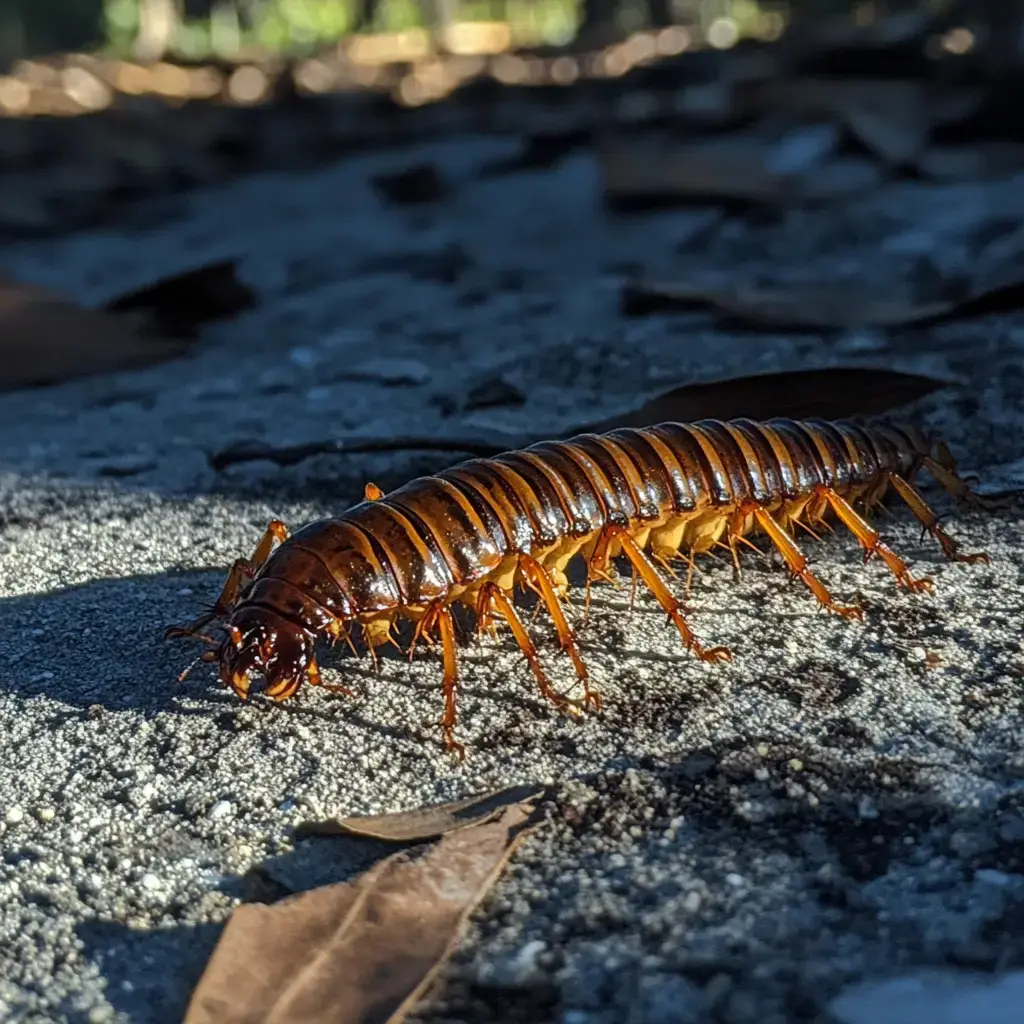
House centipedes run about an inch to an inch and a half long, grayish-yellow, with long banded legs that make them look bigger and faster than they are. Count the legs and you’ll find up to 15 pairs. They move in quick bursts and dash for cover the second you flip the light on — always running away from you, never toward you — which is why they seem to vanish into thin air.
Here’s the part people miss. They’re predators. A house centipede eats roaches, silverfish, ants, and small spiders, so finding a few means the buffet inside your walls is open for business. We covered their menu in detail in what centipedes eat. Before you treat anything, confirm that’s what you’re dealing with, because roaches and other crawlers call for a completely different plan. The Waves pest identifier has a house centipede card to help you match what you saw.
One quick note on scope: if your question is more “why does my no-basement Florida house have basement centipedes in the laundry room,” we dug into that habitat riddle in basement centipedes in Southwest Florida. This guide stays on the removal playbook — the step-by-step for getting them out and keeping them out.
Why they show up in Southwest Florida homes
Centipedes chase humidity, and Southwest Florida hands it to them all year. Afternoon storms soak the yard, the AC drips condensation, and our sandy soil drains fast up top while the slab edge and irrigated beds stay damp underneath. A well-watered St. Augustine lawn keeps that perimeter moist right up against the foundation, which is prime centipede real estate.
Block homes on slab, the standard build around Sarasota and Bradenton, hand them cool damp voids at floor level to hole up in. Add a healthy roach or silverfish population and you’ve got both the water and the food that keep them hanging around. That’s why this is rarely a one-and-done problem, and why steady pressure matters more than a single blitz.
Seasonal pressure
House-centipede pressure through the SWFL year
- Spring Mar–MayBuilding
Humidity and irrigation ramp up — slab edges stay damp and the prey insects get moving.
- Summer / rainy season Jun–AugPeak
Daily storms keep every hideout damp, and the roaches and silverfish they hunt are booming.
- Fall / storm season Sep–NovSurge
Storm soakings push prey insects indoors — the hunters follow them in.
- Winter Dec–FebLower (not zero)
Mild winters and indoor plumbing moisture keep these solitary hunters active inside.
Summer / rainy season & Fall / storm season run hottest. House centipedes are solitary hunters, not colony pests — their pressure tracks moisture and prey, and neither drops to zero in Southwest Florida.
How to get rid of house centipedes
You don’t need a chemical arsenal for this. Most of the work is making your home a drier, hungrier place for a centipede to live.
- Confirm the ID first. Match what you saw against the pest identifier so you’re treating the right pest. A moisture plan for centipedes does nothing for a termite or ant issue.
- Dry out the damp zones. Fix the slow drip under the sink and run a dehumidifier where the air feels heavy, like the laundry room. Keep indoor humidity under about 50% and centipedes lose interest quick.
- Cut the water at the perimeter. Point your downspouts away from the slab and pull mulch back off the foundation. Ease up on the irrigation too, since a soaked St. Augustine wall line reads as an open invitation.
- Seal the ways in. Add door sweeps and re-caulk around the pipe and utility penetrations where they squeeze through. Pest screening on attic, soffit, and crawl-space vents closes another door they use — but never screen the dryer exhaust: a screen there traps lint and becomes a fire hazard, so give that one a louvered, code-compliant cover instead.
- Declutter and vacuum. Cardboard boxes and floor storage give them dark, still harborage. When you spot one, a vacuum grabs it fast, and you empty the canister outside afterward.
- Thin out their food. Seeing centipedes usually means something else is living in your walls. Knock down the roaches or silverfish they feed on and you take away their whole reason to be inside.
When Waves treats a home for crawling pests, we hit the spots centipedes use. Here’s the rough map of where the work happens:
Your home, zone by zone
Where the centipede work happens
A typical Southwest Florida home — the numbered zones a local tech walks on every visit.
- Foundation perimeter The damp slab edge — where the exterior treatment band goes down.
- Entry points (doors/windows) Thresholds without door sweeps are their front door too.
- Eaves & soffits Harborage for the spiders and other prey centipedes come inside to hunt.
- Weep holes Block-wall gaps into the cool, damp voids they hole up in.
- Garage corners Cardboard and floor storage give them dark, still cover.
- Lanai & screen cage Shaded, damp slab where they hunt at night.
- Mulch beds & turf edges Irrigated beds against the slab are prime centipede real estate.
- Interior baseboards Floor-level cracks and voids where they harbor and travel.
- Kitchen & bath plumbing gaps Moisture plus pipe penetrations — their favorite rooms for a reason.
Nine zones, one theme: cut the moisture and the prey, and centipedes lose their reason to stay.
One thing to skip: don’t empty a can of Raid on the single centipede you found and call it handled. A contact spray drops the one you can see, and it does nothing about the moisture and the prey pulling the rest of them in. You’ll be back on the same tile next week wondering why.
Pro tip: Grab a cheap hygrometer at the hardware store and set it in your worst room. If it reads north of 55%, a dehumidifier will do more against centipedes than any spray on the shelf. They can’t hang around where they can’t stay damp.
When to call Waves, and how we handle it
If you’ve dried the place out and sealed the obvious gaps and you’re still finding them, the count usually points to a bigger insect population feeding underneath. That’s a job for a pro. A Waves tech tracks down the moisture source and the prey, then runs a labeled residual perimeter band around the outside with targeted work at the interior cracks and voids where centipedes harbor. No product names to memorize, just the professional-grade version of everything above, done thoroughly.
Because centipedes ride along with whatever else lives in your walls, steady coverage beats one heroic visit. A recurring pest plan includes unlimited callbacks between your scheduled visits at no extra charge, so if covered pests turn back up between services, we come back out free. And if you bundle a second recurring service, WaveGuard — our automatic bundle discount, nothing to sign up for — starts taking 10–20% off every visit. Curious what any of this runs? The pest control calculator gives you a straight estimate, and our full pest control services lineup handles the roaches and silverfish that brought the centipedes in to begin with.
Frequently Asked Questions
What kills house centipedes instantly?
Physically removing them is the fastest route. A vacuum grabs the one on your wall on the spot, and a shoe works if you’re quick about it. A labeled contact spray will drop the individual you see, though it won’t touch the harborage back in the walls. If you do reach for any product, read and follow the label, keep it off food-prep and food-contact surfaces, and place it out of sight and reach of kids and pets. The lasting answer is still drying out the room and cutting into their food supply.
Why shouldn’t you kill a centipede in your house?
Centipedes eat roaches, silverfish, and other pests, so a stray one is quietly doing you a favor. Plenty of folks let a lone centipede be. The catch is that a climbing centipede count is a smoke signal for a bigger insect problem behind your walls, and that part is worth chasing down.
How do I get rid of a house centipede infestation?
Work the source on two fronts: pull the indoor humidity down and seal the gaps they enter through. Then reduce the roaches or silverfish feeding them, and the infestation loses its footing. If they keep coming after all that, a recurring perimeter treatment from a licensed pro keeps steady pressure on what’s drawing them. You can check pricing anytime with the pest control calculator.
Ready to stop chasing them
Centipedes are a moisture-and-menu problem, and Southwest Florida serves up plenty of both. If you’re tired of the midnight tile sprints, book a treatment through our pest control services or run the numbers first with the pest control calculator. Either way, you get your bathroom back.