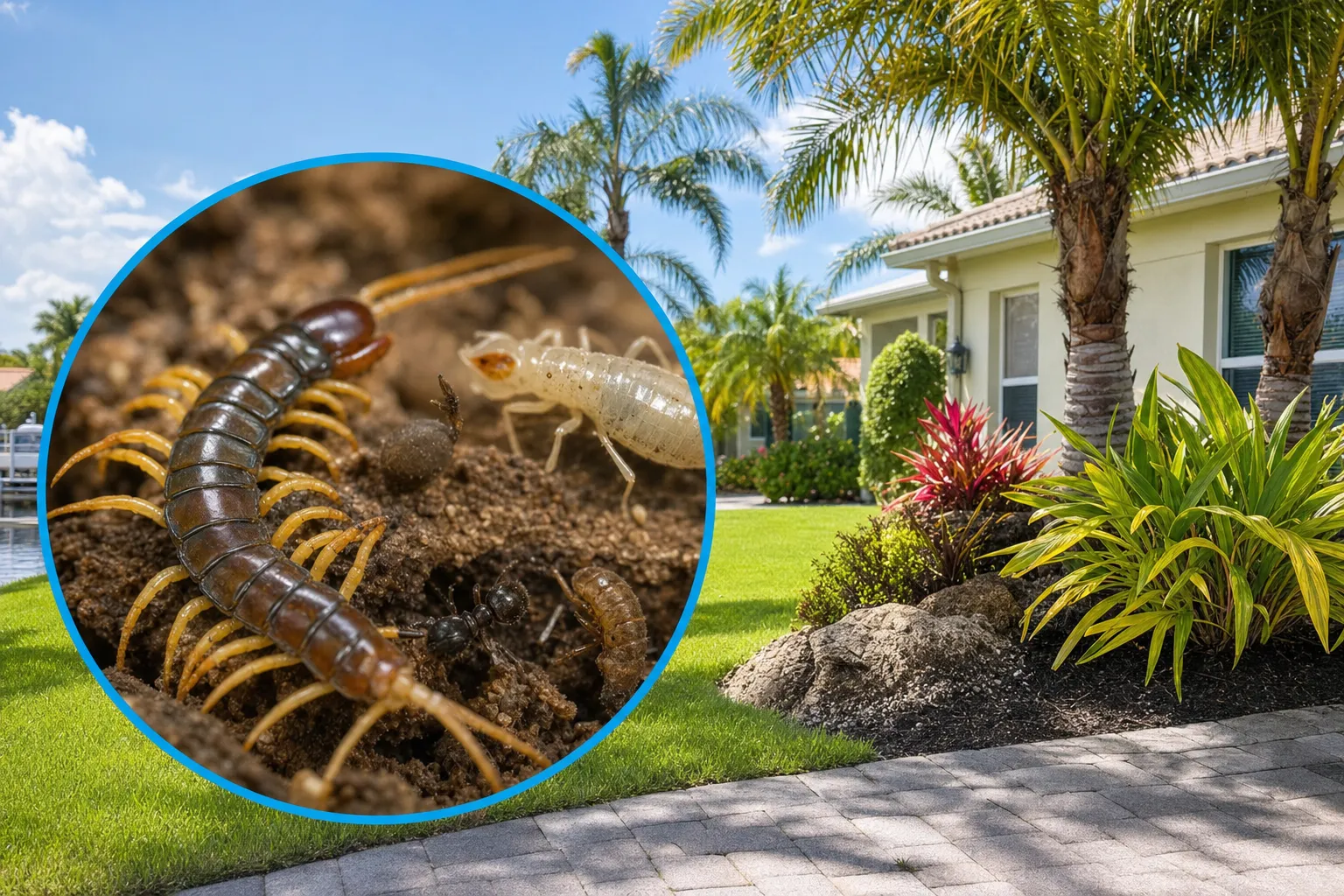
If you’ve flipped on the bathroom light in a Sarasota rental and watched something with fifteen pairs of legs sprint under the vanity, you already know: centipedes look like they were designed to ruin your evening. The good news? They aren’t after you. They’re after everything else living rent-free in your walls.
So — what do centipedes eat? The short version: other bugs. All of them. Roaches, silverfish, spiders, ants, earwigs, termite alates, and any soft-bodied insect small enough to lasso with those creepy back legs. Centipedes are carnivorous predators that use venom to subdue prey, and their menu is basically a list of everything else you don’t want in your house. That’s why entomologists call them “beneficial” and why homeowners still (understandably) want them gone.
This is the plain-English homeowner guide — what they eat, why they moved in, what a sighting is actually telling you about your home, and when it’s time to stop DIY-ing and call a pro. Want a broader tour of what crawls, flies, and scurries around Southwest Florida? Bookmark the Waves pest library — it’s the reference we send to customers all week long. Already seeing centipedes indoors and don’t want a science lesson? Get a fast, no-pressure pest control quote and we’ll come look.
The short answer: centipedes are tiny, venomous vigilantes
Centipedes are arthropods, not insects, and they’re strict carnivores. Every centipede — from the pinky-nail-sized house centipede scuttling across your grout to the three-inch Florida blue centipede hiding under a paver — hunts live prey.
The mechanics are the same across species. That first pair of legs behind the head is modified into pincer-like fangs called forcipules, and the centipede uses them to inject venom into whatever it just tackled. Those forcipules are what let centipedes subdue insects like roaches, spiders, and silverfish. The venom paralyzes prey and starts breaking it down before the centipede has even finished chewing. Efficient. Gross. Effective.
They use venom to subdue prey, but a bite usually causes only minor irritation or a mildly painful sting — for most people it’s a “I don’t want that in my laundry room” problem, not a medical emergency. The exception: if someone has trouble breathing, swelling of the lips, tongue, or throat, or another severe or allergic reaction after a bite, treat it as urgent — call Poison Control at 1-800-222-1222 or seek emergency care. Small children, older adults, and anyone with known insect-sting allergies warrant a closer eye.
What house centipedes actually eat in your SWFL home
The species you’re most likely to meet indoors is the house centipede (Scutigera coleoptrata) — that yellow-gray blur with the ridiculously long legs. House centipedes feed on spiders, bed bugs, termites, cockroaches, silverfish, ants, and other household arthropods, delivering venom with those forcipules — and they do most of their hunting at night.
Read that list again. If you’re seeing house centipedes, your home is feeding at least one of the following:
- German or American roaches — a common centipede meal in Florida homes
- Silverfish — thrive in the same humid bathrooms and pantries centipedes love
- Ants — especially the tiny sugar and ghost ants that trail through kitchens
- Spiders — yes, centipedes eat spiders; they climb up the food chain when they can
- Termite swarmers — soft-bodied and defenseless when they land after a flight
- Bed bug nymphs, book lice, small moths, mosquitoes, drain flies
To capture prey they either jump onto it or use their legs in a technique best described as “lassoing.” That’s not marketing copy — that’s what they actually do. House centipedes have even been observed telling potential prey apart, avoiding insects that could hurt them and adjusting their attack to whatever hazard the prey poses. Weirdly smart for something that lives behind your washing machine.
Pro tip: If you’re seeing more than the occasional centipede — like, one every few days — you almost certainly have a background pest problem you haven’t spotted yet. Centipedes don’t move into empty pantries. They follow the buffet.
Bigger cousins outside: what the Florida blue centipede hunts
Step outside and the menu gets meatier. The Florida blue centipede is usually bluish-gray and grows to about three inches long, and people who get bitten often compare the feeling to a bee sting. These live under mulch, pavers, potted plants, and leaf litter in yards from Bradenton down to Naples.
Bigger body, bigger prey. Outdoor centipedes will take on crickets, roaches, small spiders, beetle larvae, worms, slugs, and even the occasional tiny lizard or frog. In gardens, centipedes feed on a range of soil-dwelling insects, larvae, worms, and slugs — a diet that helps keep plant-damaging pests in check and quietly earns them a spot on the “good guys” roster.
The catch: Florida blue centipedes can be aggressive if they feel threatened. Do not pick one up. Do not let your kid poke one with a stick. That “bee sting” comparison is optimistic — plenty of homeowners describe it as significantly worse.
Why centipedes show up in your house (and what their menu says about your home)
Centipedes need three things: moisture, hiding spots, and prey. Southwest Florida serves all three on a silver platter.
Our sandy soil drains fast but stays humid underneath. Afternoon storms roll in like clockwork May through October and soak the mulch beds around your foundation. St. Augustine grass holds moisture at the thatch layer. Centipedes are moisture-seekers that thrive in damp environments — which makes bathrooms, crawlspaces, and under-sink cabinets common hotspots. And after a heavy rain, expect a spike in sightings as centipedes get flushed out of their usual hiding places.
But moisture only matters if there’s something to eat. A centipede problem in your home is usually a sign that a healthy population of their prey is living with you too — and remember, that includes cockroaches. If there were nothing for the centipedes to eat, they’d move elsewhere.
Translation: a centipede is a symptom, not the disease. Kill the centipede and you still have roaches. Kill the roaches and the centipedes leave on their own.
The homeowner playbook: safe checks and what not to do
Before you call anyone, here’s what you can do this weekend:
Do:
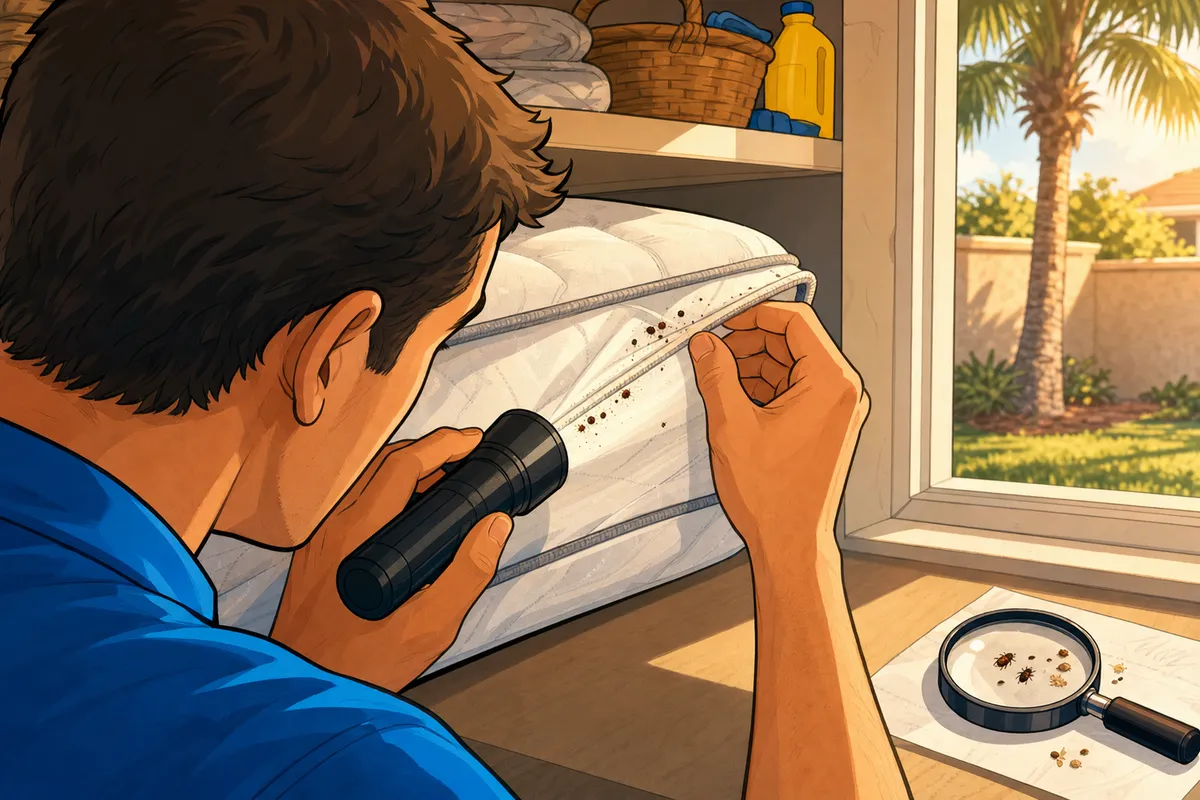
- Walk your baseboards, under-sink cabinets, and garage with a flashlight at night. That’s when centipedes hunt and when you’ll see what else is moving.
- Check for silverfish evidence in bathrooms and under sinks — small scales, pepper-like frass on shelf paper.
- Look for roach droppings behind the fridge, under the dishwasher, and inside pantry corners.
- Pull mulch back at least 12 inches from the foundation. Wet mulch against stucco is a centipede highway.
- Fix the leaky hose bib, the dripping A/C condensate line, and the toilet supply that’s been “fine” for three years.
- Seal the gap under the garage door and the utility penetrations behind the washer.
Don’t:
- Don’t stomp a centipede with bare feet. They can and will bite defensively.
- Don’t spray bleach or ammonia at them. Doesn’t work, damages surfaces, and you’re breathing it in.
- Don’t buy a bug bomb. Foggers scatter roaches deeper into wall voids and don’t touch centipedes at all.
- Don’t assume “one and done” — if you see one, the conditions are right for more.
How Waves handles a centipede problem in Southwest Florida
Because centipedes are a follow-the-food pest, our approach isn’t “spray the centipede.” It’s find the prey, close the entry points, and dry out the harborage.
On every inspection
What our tech looks for on a centipede callback
- Prey signs Roach frass, silverfish scales, ant trails, spider webs in the same rooms centipedes are showing up.
- Moisture sources A/C condensate lines, leaky traps, irrigation overspray hitting the foundation, damp mulch beds.
- Harborage Cluttered garages, cardboard against exterior walls, gaps behind baseboards, weep holes without screens.
- Entry points Gaps under exterior doors, unsealed pipe penetrations, torn screens on soffit vents.
A centipede sighting is a diagnostic clue. We treat the cause, not just the symptom.
Southwest Florida pest pressure isn’t seasonal in the “winter break” sense — it’s year-round with different peaks, and centipede activity tracks the pests they eat, which never really turn off here. That’s exactly why we build ongoing service around it instead of one-time sprays.
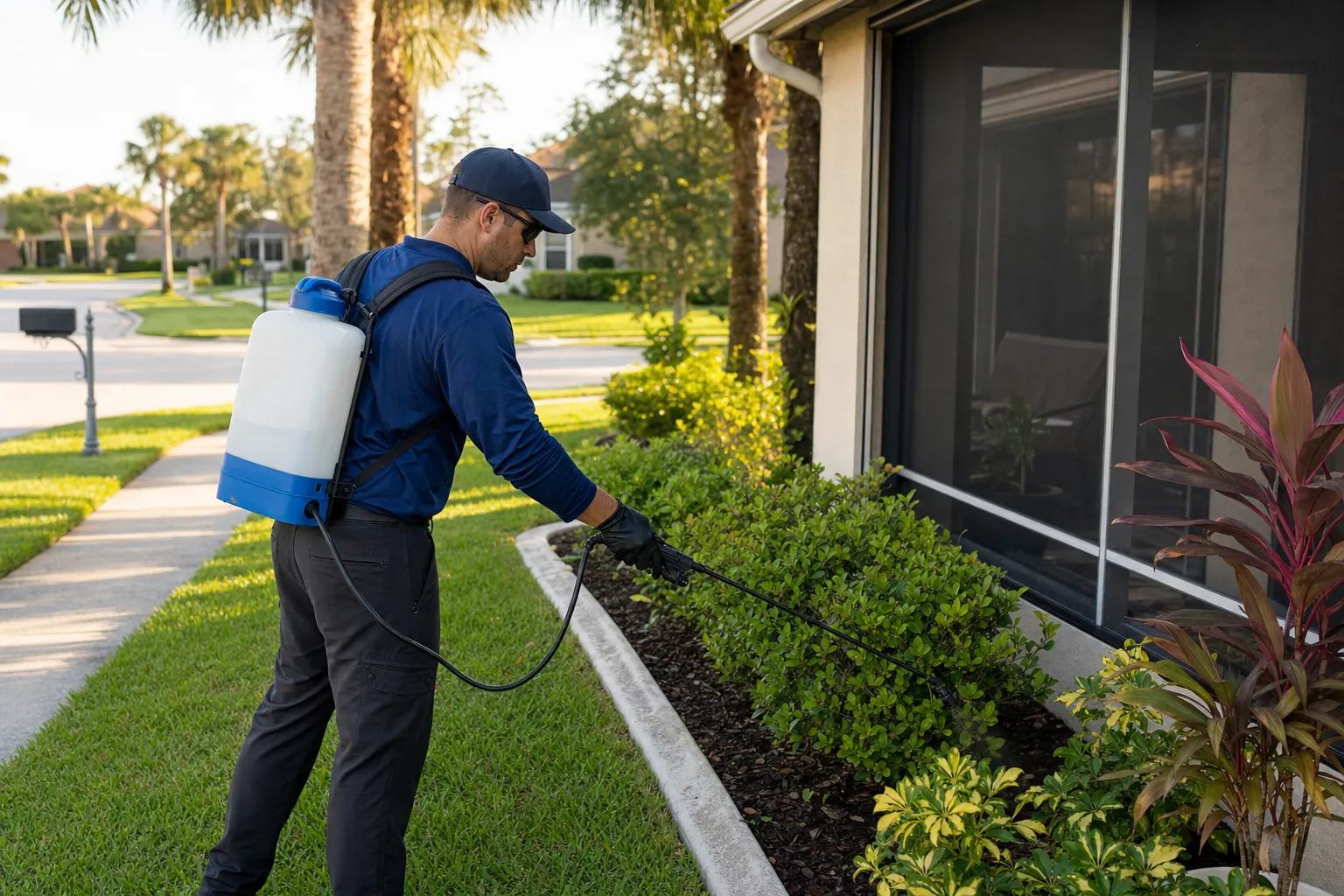
Once we’ve mapped the property, we treat exterior harborage (mulch beds, foundation, weep holes), interior cracks and crevices where prey travels, and any moisture-heavy voids. We also give you a punch list of the DIY stuff — the leaky supply line, the mulch you should thin out, the door sweep that needs replacing.
Full detail on how our regular service works lives on the pest control services page. If you want the same treatment on a scheduled cadence (which, for occasional invaders like centipedes, is genuinely the difference between “gone” and “back in six weeks”), our WaveGuard membership is what most of our Sarasota and Bradenton customers land on.
Curious what any of this costs before you talk to a human? Skip the sales calls and use the pest control calculator for a real number.
Frequently Asked Questions
Do centipedes eat spiders?
Yes. House centipedes will absolutely take down small to medium spiders, and they’re quick enough to catch them off web. It’s one of the reasons some homeowners tolerate them — you’re essentially trading one creepy roommate for another that eats the first. As terrifying as they look, house centipedes are genuinely beneficial invertebrates that help keep pests like cockroaches and spiders under control.
Will centipedes eat bed bugs, termites, or roaches?
All three. House centipedes feed on spiders, bed bugs, termites, cockroaches, silverfish, ants, and other household arthropods. That said, don’t rely on centipedes as pest control — they don’t reproduce fast enough to keep up with a real roach or bed bug infestation, and you’d need a horror-movie population to make a dent. If you have those pests, treat those pests.
What do centipedes drink, and do they need standing water?
Centipedes get most of their moisture from prey and from humidity in the air. They don’t need a puddle, but they will absolutely dry out and die in a low-humidity environment. That’s why reducing indoor humidity (dehumidifier in the laundry room, fixing the A/C drain pan, running the bath fan) is one of the single most effective things you can do to make your home unfriendly to them.
Should I kill a centipede if I see one?
Your house, your call. If it’s outdoors and minding its own business, leave it — it’s earning its keep in your garden. If it’s in your bathroom at 2 a.m., a shoe (or a glass and a piece of cardboard, if you’re the humane type) does the job. Just don’t handle one with bare hands.
Ready to stop hosting the centipede buffet?
If you’re seeing centipedes indoors more than once or twice a season, there’s a prey population feeding them — and that’s the problem we actually solve. Grab a free pest control quote and we’ll come look at what’s really going on. No pressure, no upsell theater, no corporate script. Just a tech who’s done this in your neighborhood a hundred times.