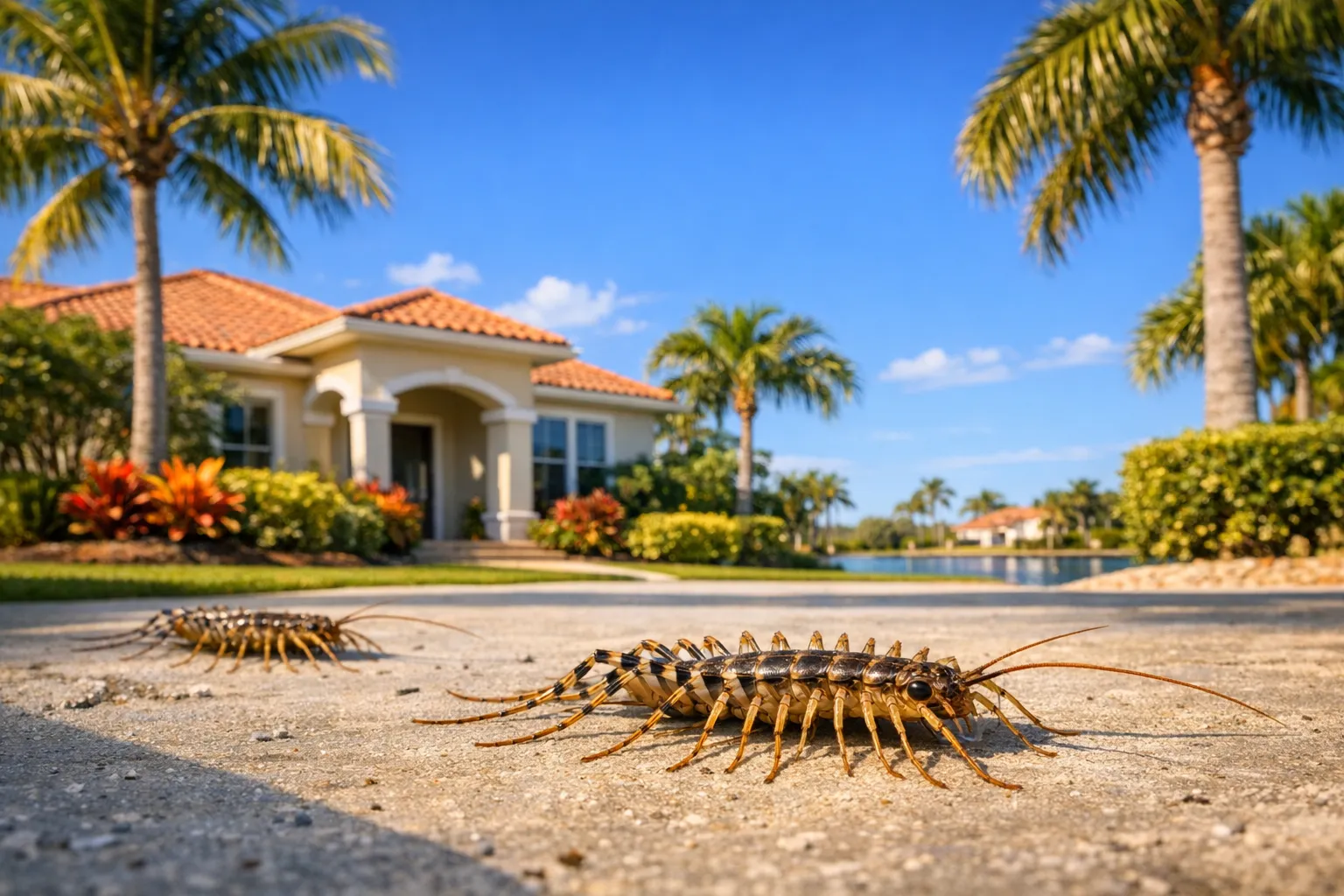
You typed “basement centipedes” into Google. Fair. That’s exactly what those things look like they belong in — some cool, damp, forgotten corner where nobody’s been in a decade. Problem is, if you’re reading this from a home anywhere between Bradenton and Naples, you almost certainly do not have a basement. Our water table sits inches below sandy soil, and the second you dig a hole deeper than a beach chair, it fills up. So whatever you saw skitter across the tile at 11 p.m. is technically not a “basement centipede.” It’s a Southwest Florida centipede that picked the closest thing it could find — your garage, your laundry room, your slab-edge crawlspace, or the tile grout behind the toilet.
Good news: they’re mostly harmless and honestly a little useful. Bad news: if you’re seeing them regularly, they’re telling you something about moisture and prey inside your walls that you probably want to know. Here’s the whole story, plus what to actually do about it — and if you’d rather just skip to “someone else handles this,” our pest control services team runs the perimeter treatments and moisture inspections that shut this problem down.
What “basement centipedes” actually are
Nine times out of ten, the critter you’re seeing is the house centipede (Scutigera coleoptrata). It’s the one with the long, feathery legs — fifteen pairs of them — a mustard-yellow body with dark stripes, and antennae that are roughly as long as the rest of it. They move like someone spilled a fistful of eyelashes across your floor. It’s unsettling. That’s the whole vibe.
Two things worth knowing right away:
- They’re predators, not pantry pests. House centipedes eat cockroach nymphs, silverfish, ants, small spiders, and pretty much anything soft-bodied they can grab. If they’re in your house, they’re hunting something.
- They’re not medically significant. Yes, they technically have venom (used on prey). No, they very rarely bite people, and when they do it’s on par with a mild bee sting. They’re not going to send anyone to the ER.
If you’re trying to ID what you actually saw, our pest library has photo comparisons for house centipedes, silverfish, and a couple of the leggy things people confuse them with.
Why they show up in Southwest Florida homes that don’t have basements
Centipedes want three things: humidity, cover, and food. Southwest Florida hands them all three on a silver platter.
Humidity. Our afternoon storms roll in like clockwork from June through September, dew points sit in the 70s for months, and slab foundations wick ground moisture up through concrete. Even a “dry” garage in Sarasota is running higher relative humidity than most centipede habitats need.
Cover. Sandy soil drains fast on the surface but stays damp underneath, so mulch beds, landscape timbers, pool-cage skirts, and stacked plant pots along the wall are all prime harborage. Then they follow a weep hole or garage-door gap inside.
Food. If you have centipedes, you have prey. In SWFL that usually means silverfish (love our humidity), German or American roaches, book lice, or small ants. A house centipede is basically a moisture-and-prey detector with legs.
The rooms we see them in most, in order:
- Garages — concrete floor, warm, humid, often has cardboard storage.
- Laundry rooms — leaky washer hookups, dryer condensation, warm.
- Guest bathrooms — rarely used showers keep drains humid.
- Slab-edge crawlspaces on raised homes (older builds) — the closest thing we’ve got to a basement.
- Lanai storage closets — pool cage humidity does its thing.
Pro tip: Before you spray anything, walk your garage and laundry room barefoot at 6 a.m. Cold spots on a concrete slab tell you exactly where moisture is coming up. Nine times out of ten, that’s the same spot the centipedes are cruising.
Should you kill the ones you see?
Honest answer: it depends on how many, and what else is going on.
- One centipede, once a month, in a garage or bathroom? Sweep it outside or leave it. It’s eating things you like even less.
- Multiple centipedes, multiple rooms, more than once a week? That’s not a centipede problem. That’s a moisture-and-prey problem wearing a centipede costume. Killing the ones you see does nothing about the buffet drawing them in.
The PAA people ask “what does it mean when you have centipedes in your basement” — in Southwest Florida, the honest translation is: you have a damp spot and a hidden prey population somewhere near a slab, weep hole, or utility penetration. Fix that, and the centipedes leave on their own.
What to actually do (the homeowner playbook)
Here’s the practical order of operations. You can do the first four yourself.
1. Find the moisture
Check under-sink cabinets, behind the washer, around the water heater, and along the garage-door threshold after a storm. A cheap hygrometer from any hardware store will tell you if a room is sitting above 60% RH — that’s the danger zone for silverfish, roaches, and everything that eats them.
2. Reduce harborage outside
Pull mulch back 6–12 inches from the foundation. Move stacked pots, firewood, and landscape debris away from exterior walls. Trim St. Augustine turf so it isn’t touching stucco — grass blades wicking against the wall keep the slab edge permanently damp.
3. Seal the obvious entry points
Weep holes are supposed to be open (they drain wall cavities), but you can add stainless-steel weep-hole covers that let water out and keep bugs out. Then check garage-door bottom seals, dryer-vent flaps, and cable/plumbing penetrations. Silicone or foam-backed rod stock, done.
4. Dry the spaces they love
A small dehumidifier in a laundry room or garage that pulls RH under 55% will make the room hostile to silverfish, roaches, and by extension centipedes. Run bathroom exhaust fans for 20 minutes after showers. If you have a slab-edge crawlspace, check the vapor barrier.
5. What NOT to do
- Don’t bomb the house with foggers. They knock down what’s already exposed and do nothing to the harborage inside walls. You’ll be back to square one in a week.
- Don’t seal weep holes shut. You’ll trap moisture inside your wall system, which is a bigger problem than centipedes will ever be.
- Don’t spray a repellent on active ant or roach trails if you’re using baits — you’ll break the bait transfer and prolong the infestation the centipedes are eating.
6. When to call somebody
If you’ve done the moisture and harborage work and you’re still finding centipedes weekly, or you’re seeing the prey species (silverfish, small roaches, book lice) that drew them in, that’s a professional job. A licensed tech can do a proper exterior perimeter treatment, target the harborage voids with a labeled dust, and put you on a rotation that doesn’t let the prey population rebuild.
How Waves handles centipedes in SWFL homes
Our approach is boring in the best way: treat the reason the centipedes are here, not just the centipedes.
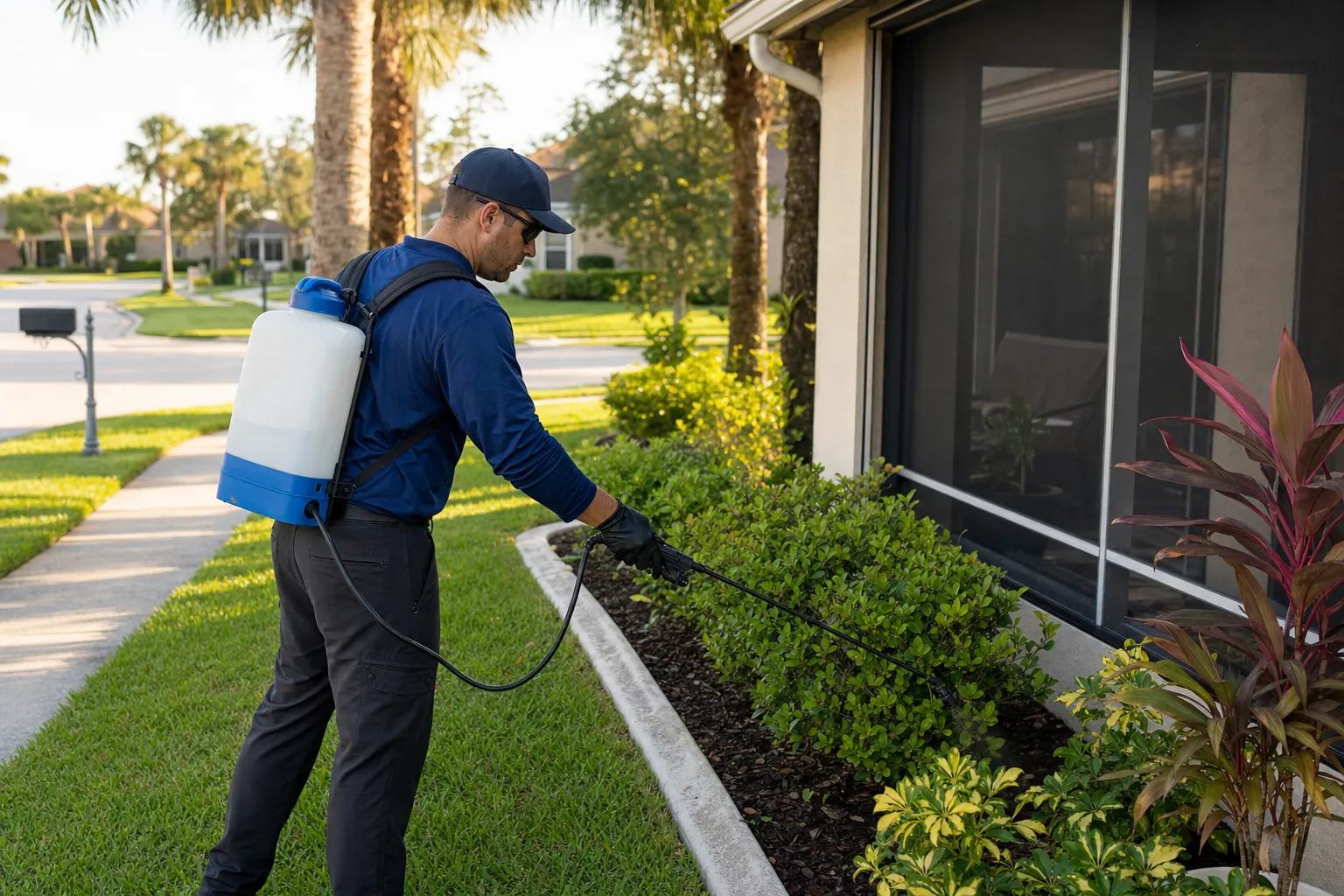
- Exterior perimeter treatment with a labeled residual (we rotate active-ingredient classes across visits so nothing builds tolerance).
- Crack-and-crevice work in the actual harborage — garage thresholds, weep-hole zones, water-heater closets, laundry hookups.
- Prey suppression. Because centipede pressure follows silverfish and roach pressure, we knock those down at the same visit.
- Moisture callouts. If your tech spots a chronic damp spot — a leaking hose bib, a saturated mulch bed, a bad garage-door seal — you’ll get it flagged in writing so you can fix it or hand it to the right trade.
Most homes in Southwest Florida do best on a quarterly rotation, which is what our WaveGuard membership is built around. Want a ballpark before you talk to anyone? Punch your address details into the pest control calculator and it’ll price a plan for your specific footprint.
Frequently Asked Questions
Should you kill centipedes in your basement?
If it’s a one-off house centipede, no — it’s eating pests you’d rather not have. Sweep it out or ignore it. If you’re seeing them every few days, killing the ones you see is just cosmetic. Address the moisture and the prey population instead, or the next one is already on its way in.
What does it mean when you have centipedes in your basement?
In Southwest Florida — where you probably don’t actually have a basement — it usually means one of two things. Either you have a damp room (garage, laundry, guest bathroom) sitting above 60% relative humidity, or you have a hidden silverfish/roach population somewhere on the ground floor. Centipedes are predators, so consistent sightings are a symptom, not the disease.
Will house centipedes crawl in your bed?
Almost never. They dry out fast in open, well-ventilated rooms and they’re hunting soft-bodied prey — which isn’t on your mattress. They’ll cruise a baseboard on the way from a bathroom to a laundry room, but bedding is not their habitat. If you’re finding them on sheets, check the wall behind the headboard for moisture or a hidden gap.
Do dehumidifiers get rid of centipedes?
Indirectly, yes — and it’s one of the most effective things you can do. Dropping a garage or laundry room from 65% RH to under 55% makes it hostile to the silverfish and small roaches centipedes eat. Take away the food, take away the centipedes. On its own a dehumidifier won’t solve a heavy infestation, but paired with perimeter treatment and sealing, it’s the difference between a one-time fix and a recurring problem.
Ready to stop finding legs in the laundry room?
If you’ve done the homeowner steps and the centipedes keep showing up — or you’d rather just skip straight to “handled” — book a visit through our pest control services page. We cover Sarasota, Bradenton, Venice, Lakewood Ranch, North Port, Palmetto, Parrish, and Port Charlotte, and every quarterly plan includes the perimeter and prey work that actually keeps centipedes out. Not the guessing kind.