
You just closed on a brand-new house in Lakewood Ranch or Parrish, and a few weeks later there’s a line of tiny ants along the kitchen wall. New construction pest control in Florida starts with a simple distinction: a new house can still have pest entry points, and a builder’s termite treatment is not a general pest plan. Fresh sod, construction debris, irrigation, and gaps around utility penetrations all deserve attention during the first year. Start with the records and checks below, or get a property-specific pest control estimate. Our pest control services page explains the available service options.
Why a brand-new home gets pests (the honest mechanics)
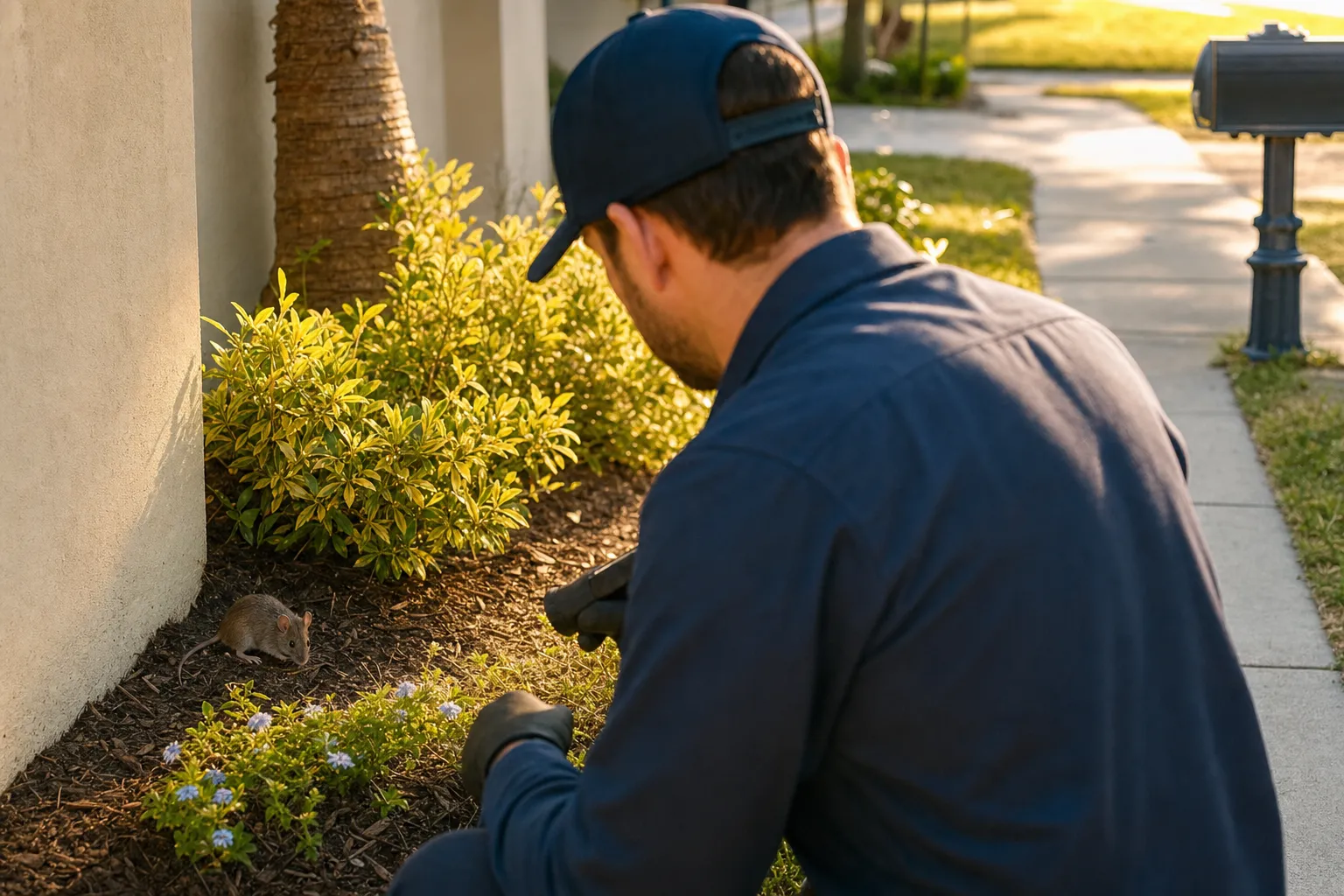
Construction changes the soil and landscaping around a home. Small gaps at doors, utility conduits, and plumbing penetrations can give ants and other insects a route inside. A tiny trailing ant is not automatically a ghost ant: photograph it and trace the trail before choosing a treatment.
Wood scraps and cardboard left against a foundation can provide food or shelter for pests. Ask the builder to remove construction debris; do not dig beside the slab to hunt for buried material yourself. Irrigation leaks and poorly directed sprinklers can keep the perimeter damp. Near retention ponds, clouds of small flies may be non-biting aquatic midges rather than mosquitoes. Identification matters because routine perimeter treatment does not control insects emerging from a pond.
Identify your builder’s termite treatment first
Ask the builder for the termite treatment certificate and the pest-control company’s contact details. Confirm the treatment method, product, application date, inspection schedule, and any transfer or renewal requirements. Florida new homes can receive a soil treatment, a borate treatment of structural wood, or another approved protection method. Do not assume that someone sprayed the soil before your slab was poured.
The UF/IFAS guide to termite prevention and control explains why the method matters. A soil treatment protects a treated zone around or beneath the building; borates treat the wood itself. A product’s registration standard is not a guarantee of five years of protection for your particular house, nor does it set your contract’s expiration date.
If your certificate identifies a soil treatment, contact the termite provider before adding a patio, pool, irrigation trench, or planting bed beside the foundation. Digging or new construction can disturb treated soil and may require follow-up work. For wood treatments or bait systems, ask the provider which maintenance and inspection requirements apply. Whether a change affects coverage depends on the written agreement; do not assume it automatically voids a warranty.
Keep the foundation edge visible and avoid piling soil, mulch, or stored wood against it. Follow the construction details and your provider’s clearance guidance so inspections remain possible. A termite treatment does not replace routine checks for leaks, debris, or new signs of activity.
Your first-year plan, month by month
These months count from move-in, not from January. Adjust the lawn and outdoor checks to the season in which you arrive, and follow any earlier inspection or renewal dates in your termite agreement.
Warm weather, rain, and irrigation can affect what you see around the house, but there is no pest-free season in Southwest Florida. NOAA lists the Atlantic hurricane season as June 1 through November 30; after storms, check for leaks, displaced screens, and containers holding water.
Months 1 to 3: settle in and watch the edges
- Inside, watch slab edges, window frames, and pipe penetrations for ghost ants and other tiny trailing ants. A new home is full of little openings that haven’t been caulked or landscaped over yet.
- Outside, have the builder remove leftover wood and cardboard. Keep mulch and stored materials away from the foundation, and report leaks or water pooling beside the slab.
- For the lawn, follow an establishment routine suited to your sod and current watering restrictions; our new sod care guide covers the basics. Do not fertilize by the move-in calendar alone. Sarasota County and Manatee County restrict nitrogen and phosphorus fertilizer from June 1 through September 30; North Port restricts nitrogen and phosphorus fertilizer on turf from April 1 through September 30. North Port has different provisions for landscape plants, so use the city’s fertilizer fact sheet to check your application. Confirm the rules for the property’s jurisdiction, including any new-landscape provisions. See our Sarasota County fertilizer guide and Manatee County fertilizer guide.
Months 4 to 8: the yard wakes up
- Outside, recheck gaps and drainage as landscaping settles. Tell your technician about new mulch, irrigation work, ant trails, or roach sightings so service can target the actual problem.
- Around water, empty household containers after rain to reduce mosquito breeding sites. For non-biting midges emerging from a retention pond, reduce unnecessary outdoor lighting and maintain screens; emptying a plant saucer will not stop a pond emergence.
- For the lawn, watch St. Augustine for expanding patches during hot weather. Chinch bugs are one possibility, but irrigation problems and other causes can look similar. Get the cause confirmed before treating.
Months 9 to 12: get ahead of the warranty
- Review your pest notes and any recurring service recommendations. Request interior work for specific activity rather than assuming every visit includes it.
- Review the termite contract’s inspection and renewal dates. Arrange any required inspection before its actual deadline; report suspected termite activity immediately.
- Your sod is established now, so shift from babying it to a steady maintenance rhythm.
Want a number for all of this? Our pest control estimate calculator will get you a ballpark for a first-year plan in about a minute.
The Taexx question if your home has it
A lot of SWFL builders install Taexx, a built-in pest control system. During construction they run a network of small tubes inside your walls so a technician can inject product from ports on the outside without stepping indoors. If your home has it, you’ve probably got a wall port near the garage.
Before activating a plan, ask what the system treats, what is excluded, who can service its ports, and what the agreement costs to renew. HomeTeam’s Taexx FAQ describes proprietary access to the system and confirms that it is not a termite treatment. Choosing a different pest-control provider does not mean that provider can use those ports. A conventional exterior-and-targeted-interior plan is another option; our guide to what happens during a pest control visit explains that approach. Keep termite protection separate from any general pest service agreement.
Review your termite agreement and inspection records
Your builder’s structural warranty and your termite service agreement are different documents. Read each for its own deadlines, coverage, exclusions, and transfer requirements. Do not assume either ends at twelve months or includes termite damage repair.
A professional inspection can document visible evidence in accessible areas, along with inspection limitations. The FDACS WDO report form explains those limits: the report cannot guarantee there are no hidden termites or prevent a later infestation. Ask your provider whether you need a routine termite inspection or a formal WDO inspection report. Our termite inspection page explains the service; our guide to termite prevention in Bradenton covers prevention options.
Safe checks you can do, and what to skip
A few things you can handle yourself before calling anyone:
- Walk the slab perimeter and photograph where you see ant trails. Where they get in matters more than how many you count.
- Keep mulch, soil, and stored wood back from the foundation.
- Knock down standing water after storms: plant saucers, tarps, clogged gutters, forgotten toys.
- Get a rough ID from our pest library before you assume what you’ve got. Treatment depends on the species, so identification comes first.
And a few things to skip:
- Don’t spray an unidentified ant trail indiscriminately. Some small ant species can become harder to control after repellent sprays; identify the pest before choosing a product.
- Don’t pile fresh landscaping soil against the slab edge, because you can bury the termite barrier you already paid for.
- If you do put out a store-bought bait, read and follow the product label, keep it off counters and food-prep surfaces, and place it out of sight and reach of kids and pets.
Call a pro when you see winged insects swarming indoors, mud tubes on the foundation, ant trails you can’t trace back, or a lawn patch that keeps spreading. Those are identify-and-treat situations, not DIY ones.
How Waves builds your first-year pest plan
We start with the pest you are seeing and the places it can enter: the foundation perimeter, slab-line penetrations, doors, and utility conduits. General pest service is exterior-focused. Interior treatment is targeted where needed or requested; an attic inspection and treatment of every room are not promised on every recurring visit. Lawn pests and termites need their own assessment and service scope.
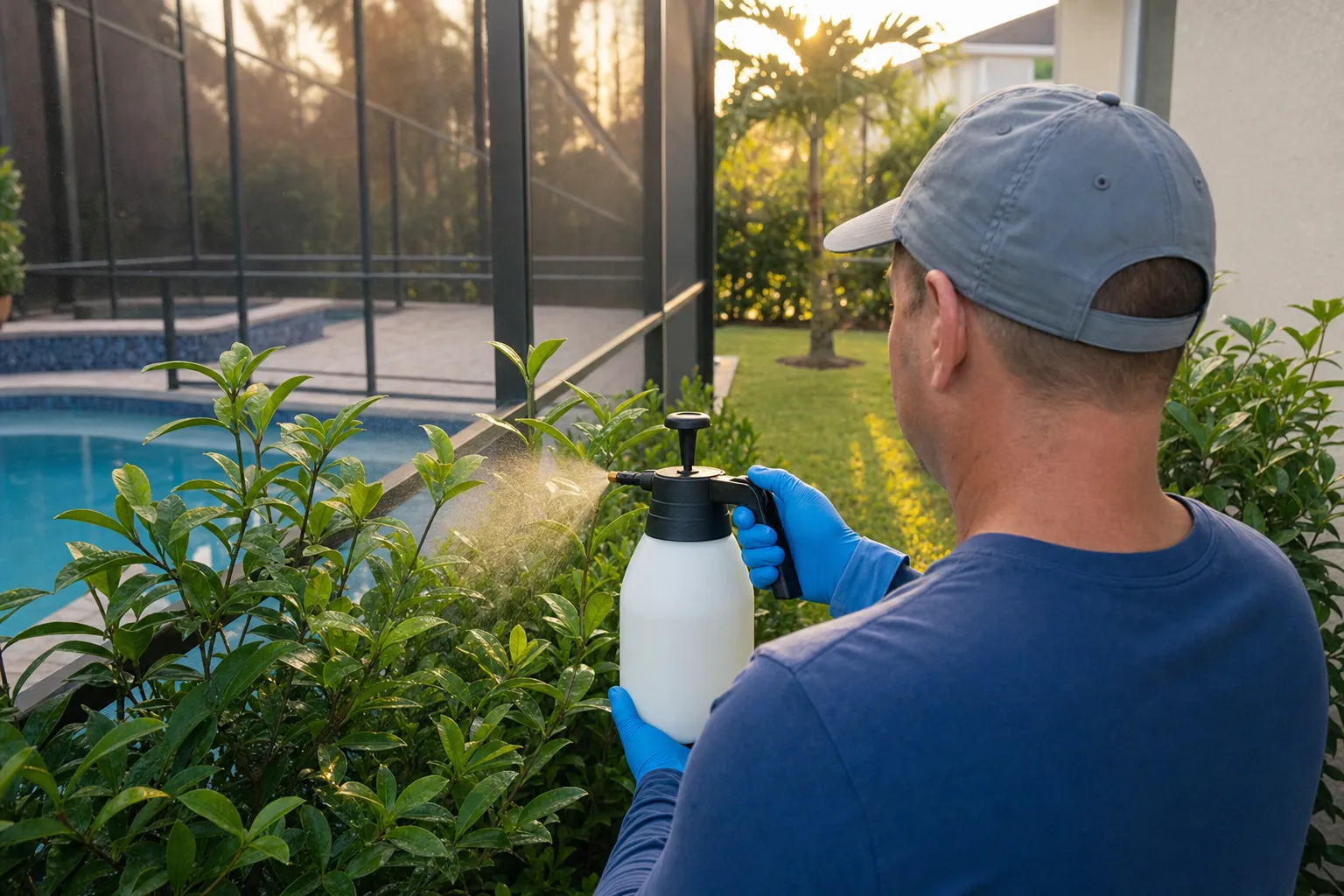
We explain the treatment areas and the product-label precautions for your visit. Keep children and pets away from treated areas until the label and technician’s reentry instructions allow access; do not substitute a fixed waiting time from an online article. Tell us about ongoing activity and changes to the landscaping between visits.
Our WaveGuard memberships explain recurring general pest service and between-visit re-treatment for covered pests. Check the plan’s covered pests and exclusions when you request your quote; general pest coverage does not make a promise about termite damage or every insect around a pond.
Frequently Asked Questions
Does a brand-new home really need pest control if the builder treated for termites?
Termite protection and general pest control address different problems. Check which termite method your builder used, then assess any ants, roaches, or other activity separately. A new house does not automatically need treatment everywhere, and routine perimeter service will not control aquatic midges emerging from a retention pond.
How long does a builder’s termite pre-treat last?
There is no single lifespan that applies to every builder treatment. Soil termiticides, treated wood, and bait systems have different maintenance requirements. Use the certificate and written agreement to confirm the product, inspection schedule, and renewal date with the provider; do not treat a five-year product standard as your home’s warranty.
When should I get the first WDO inspection on a new build?
Check your termite agreement as soon as you move in and book any inspection it requires before the stated deadline. A year-one review can be useful, but there is no universal nine-to-twelve-month WDO deadline for every new home. If you see mud tubes, indoor swarmers, or damaged wood, arrange an inspection promptly instead of waiting for an anniversary.
Get your first-year plan dialed in
Ready to stop guessing? Grab a plan quote and we’ll build a first-year schedule around your home, your sod, and your pond. You can also run the numbers yourself with our estimate calculator.
Treatment records and written service agreements determine your home’s inspection schedule and coverage. Confirm current terms with the provider before you sign or change an existing plan.