Found a scatter of translucent wings on a window sill after one of our afternoon storms? Or a little pile of what looks like coffee grounds under a baseboard? Your first questions are usually how bad this is and what treatment actually involves. Here is the straight version of termite treatment in Bradenton, from figuring out what you are looking at to how the work gets done.
The two groups this article covers are subterranean and drywood termites, and they call for completely different treatments. Sorting out which one you have comes before anything else. If you want a rough cost before you talk to anybody, you can get a termite estimate whenever.
Know which termite you’re dealing with
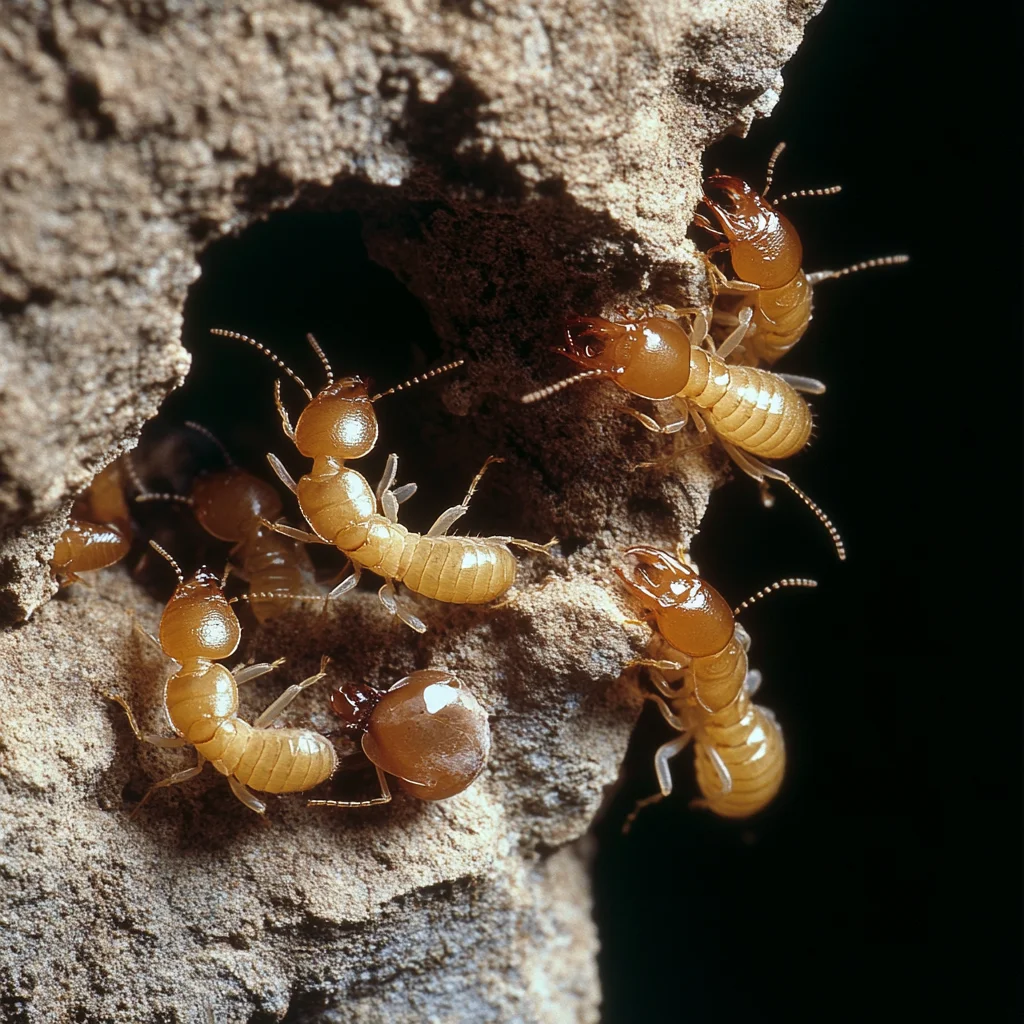
Subterranean termites, mostly the eastern subterranean (Reticulitermes flavipes), live in the soil and tunnel up into your wood through mud tubes they build across foundations, slabs, and piers. Eastern subterraneans are the most common subterranean termite in Florida, and the sandy soil around here suits them fine. In Bradenton’s historic core, Old Manatee, Ballard Park, and the River District, a lot of homes are 1940s and 1950s wood frame sitting on pier footings or shallow slabs, and that is where subterranean pressure runs heavy. You will find pencil-thin mud tubes climbing the piers, and in spring, swarmers collecting on the window sills.
Drywood termites work a different way. The West Indian drywood (Cryptotermes brevis) never touches soil and lives its whole life sealed inside the wood it eats. The giveaway is frass: tiny six-sided pellets that look like coffee grounds or coarse sawdust, kicked out of small holes and piling up under an infested board. On the coastal, west side of town, Palma Sola and West Bradenton, where older wood has spent decades in salt air, drywoods tend to be the bigger structural worry. There is also a less common powderpost drywood that leaves finer frass and gets the same localized treatment.
The customer question I hear most: how do you tell a termite swarmer from a flying ant? Quick tells. A termite has a straight, thick waist, two pairs of equal-length wings, and straight antennae. A flying ant has a pinched waist, front wings longer than the back pair, and elbowed antennae.
Pro tip: If you find a swarm or a pile of wings, sweep a few into a sandwich bag before you clean up. A tech can call termite versus ant off a decent sample in about two seconds, and it saves everyone a guessing game.
On every inspection
What termite evidence looks like
- Mud tubes Pencil-width soil tubes running up foundation piers and slabs. The calling card of subterranean termites.
- Frass pellets Six-sided pellets that look like coffee grounds under a board, kicked out through tiny holes. That is drywood.
- Swarmers and wings Winged alates on window sills and light fixtures in spring, or little piles of shed wings by a door.
- Hollow-sounding wood Trim or a sill that sounds papery when you tap it, sometimes with a blistered surface.
Signs a Bradenton homeowner can spot without opening a wall.
When termites show up around here
Seasonal pressure
Termite pressure across the Bradenton year
- Spring Mar-MayPeak
Subterranean swarmers pile up on window sills after warm rain. UF/IFAS puts the statewide eastern-subterranean swarm around April to June.
- Summer Jun-SepSurge
Subterraneans keep going in moist soil, drywoods swarm May through August, and closing-season WDO inspections peak.
- Fall Oct-NovActive
Swarming eases off while colonies keep feeding. Nothing goes dormant down here.
- Winter Dec-FebLower
Fewer visible swarmers, though colonies stay active year-round. A solid window to get monitoring stations in the ground.
Spring & Summer run hottest. Seasonal termite activity in Bradenton and Manatee County.
Spring is when most people first notice a problem, because that is when subterranean swarmers turn up on sills and around light fixtures. Summer keeps them active since the soil stays damp, and it overlaps with drywood swarm season and the busiest stretch for real-estate WDO inspections. Winter quiets the visible swarming, but colonies never go dormant in our climate, so the work does not stop. That makes the cooler months a decent time to get monitoring stations in before spring.
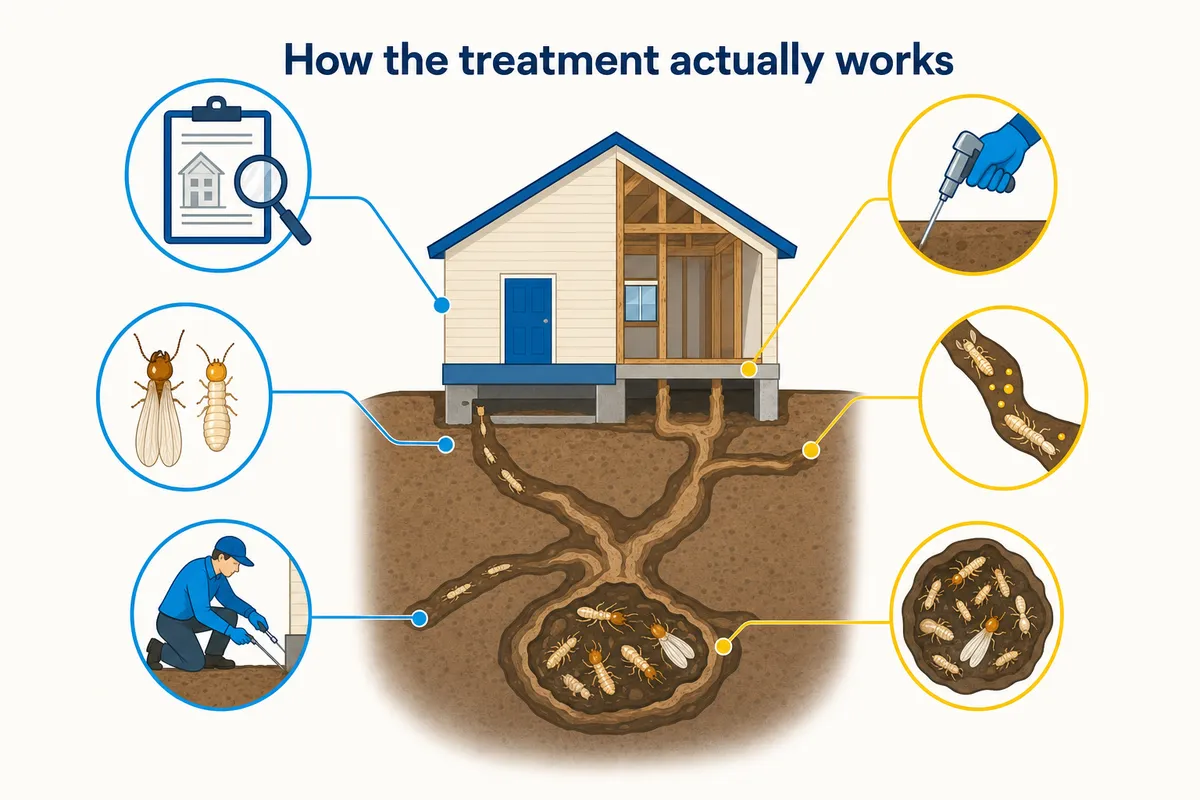
How the treatment actually works
Everything starts with an inspection and a species ID, since the right treatment depends entirely on which termite you have.
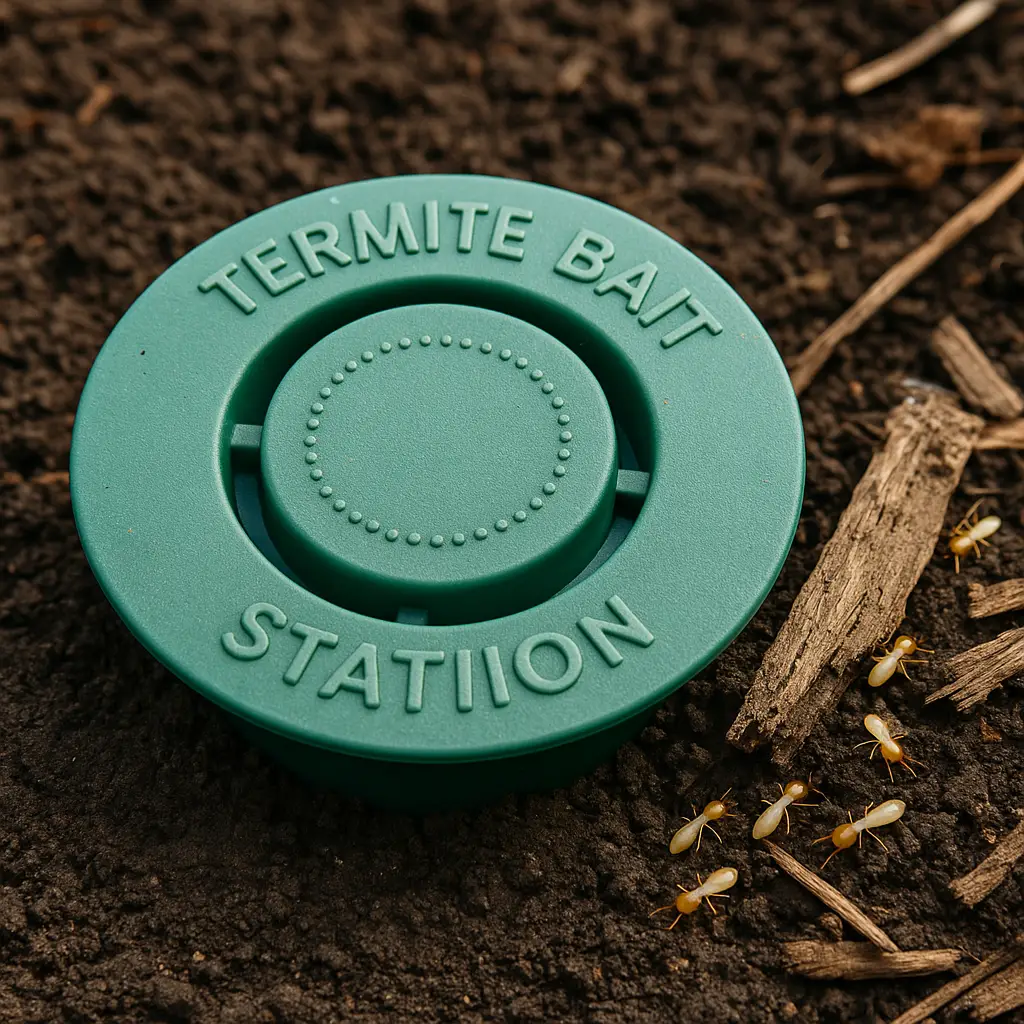
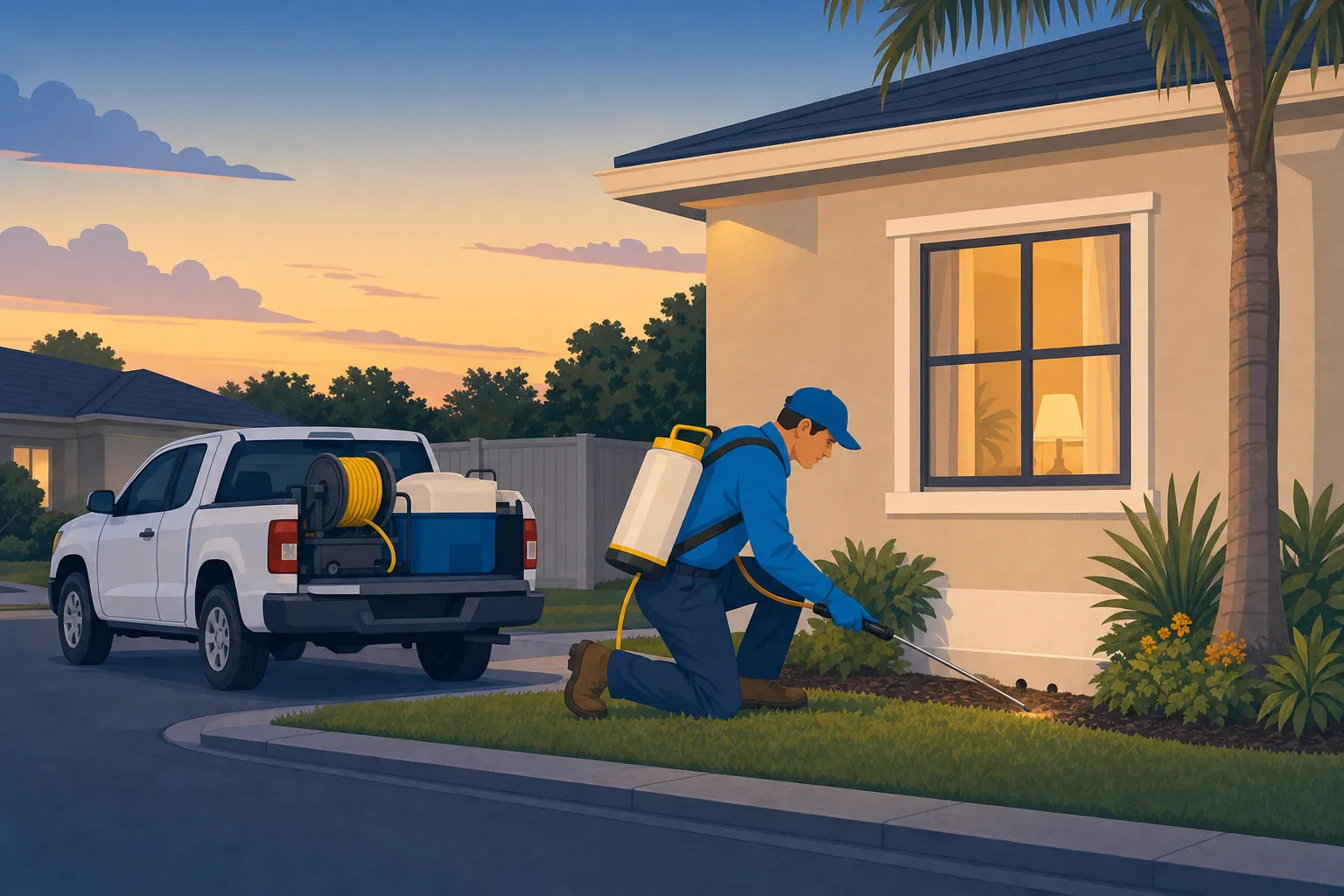
For subterranean colonies, the standard approach is in-ground bait stations set around the foundation, spaced roughly every 10 to 20 feet and checked on a quarterly schedule. The bait is a slow-acting growth regulator; worker termites feed on it and carry it back, and it interrupts the colony’s molting cycle until the colony collapses. A colony that is actively feeding on the stations is typically eliminated three to six months later. Ongoing monitoring after that keeps pressure down, though nobody honest is going to promise a colony will never test your property again when there are other colonies out in the soil.
Drywood is handled differently because the insects are sealed inside the wood. The approach is localized spot treatment, injected straight into the galleries through small drill points. Depending on what the inspection turns up, a borate treatment may be applied to bare, accessible wood, and broader accessible-framing borate coverage can be quoted separately as an add-on.
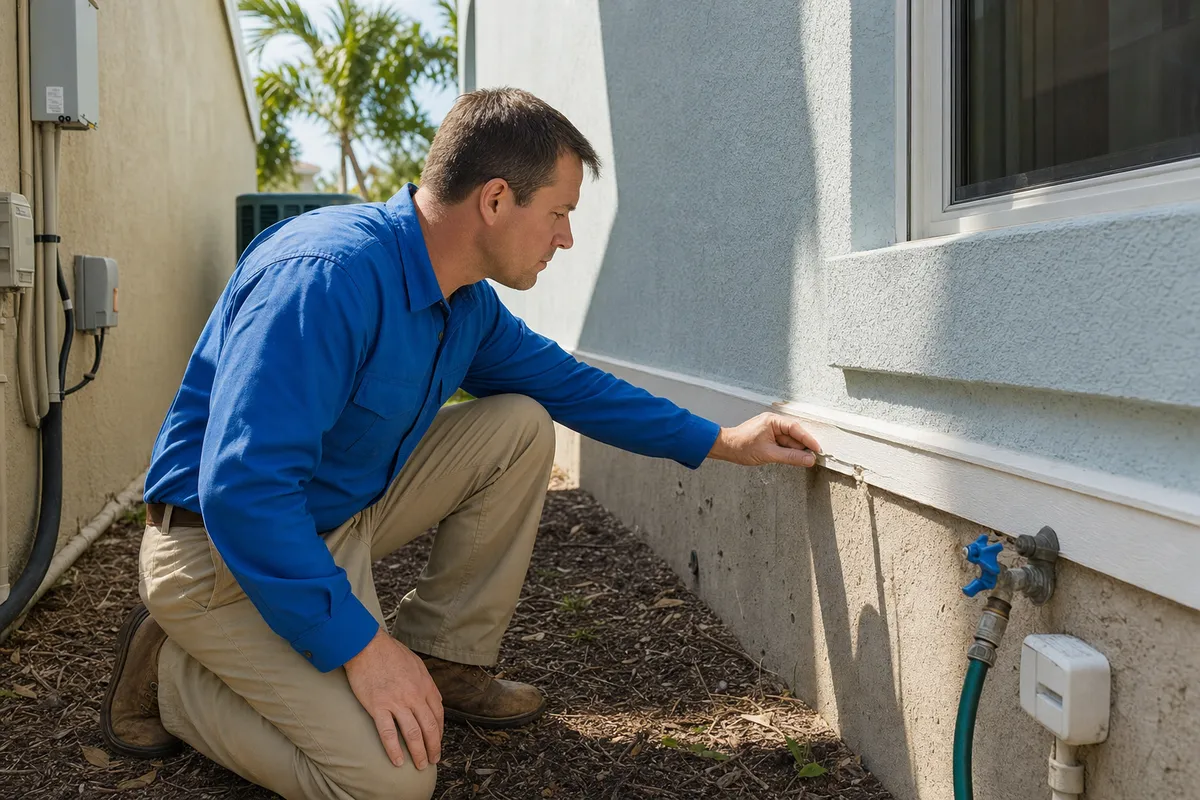
A big part of keeping subterraneans out is fixing what invites them. On inspections we flag conducive conditions: mulch or soil banked against the stucco above the slab line, wood-to-soil contact like fence posts, deck posts, or lumber stacked against the house, chronic moisture from a leaking AC condensate line or an irrigation head soaking the foundation, and scrap wood or form boards left under the slab. Correcting those is genuine prevention work, and it costs you nothing but a Saturday.
What the inspection covers
A proper termite inspection runs 60 to 90 minutes and covers the full WDO inspection scope: foundation, framing, attic, crawl spaces, the perimeter, moisture areas, and the garage. You get species identification, photos of what was found, and a written quote. When it is tied to a quote, the inspection is free. For what treatment itself runs, get a termite treatment estimate for a ballpark.
Warranty, and who owns the stations
Termite protection runs on an annual renewable warranty, the industry-standard bond you renew each year. It is optional, and it is priced separately from the installation, so the first year of the warranty is not baked into the treatment price. Budget for it as its own line and you will not get blindsided.
The bait program comes two ways on the same estimate, and you pick:
- Buy: a one-time installation charge, and you own the stations. They stay in the ground even if you ever end service.
- Rent: no installation charge. Waves keeps title to the hardware and folds its cost into a higher recurring rate, then removes the stations if the program ends. The rental rate is a fixed ongoing rate, not a plan that expires.
Change your mind down the road and you can ask to switch either direction with no penalty; we just re-quote it under the other structure. Either way, every station check and inspection finding is saved in your Waves app account and stays in your service history, even if rented stations get pulled later.
New construction and the WDO inspection nobody warns you about
If your home is one of the concrete-block builds off the SR-70 corridor or out in east Bradenton on old ag land, it was required by the Florida building code to get subterranean termite protection during construction, either a soil pretreatment or an approved alternative system, with a Notice of Termite Protection posted near the electrical panel or up in the attic. Here is the catch most owners miss: the builder’s termite warranty is time-limited and often lapses a few years after closing. Plenty of newer homes are running with no active protection and nobody living there realizes it.
Buying or selling? Your lender or title company will very likely want a WDO inspection at closing. Florida’s version is reported on FDACS Form 13645; VA and FHA loans usually use the national NPMA-33 instead. Either report documents visible evidence of wood-destroying organisms in accessible areas. It is a snapshot on the day of the inspection, not a guarantee the house is free of termites.
What to do, and what to skip
Safe things you can check yourself: walk the foundation and piers looking for mud tubes. In spring, scan the window sills and light fixtures for wings. Tap any suspicious trim and listen for a hollow, papery sound, and look under baseboards and window frames for frass.
What to skip: resist the urge to knock down every mud tube before an inspection, because you erase the evidence a tech uses to map where the colony is getting in. A can of Raid on a swarm just kills the bugs you can see while the colony in the soil or the wall keeps going. And if you turn up a frass pile you might want identified, leave it be instead of vacuuming or painting over it.
When to call a pro: confirmed mud tubes, live swarmers indoors, or fresh frass all warrant a professional inspection. Termite damage adds up quietly, and by the time it shows on the drywall, the repair bill has usually lapped the cost of treatment.
Getting it handled in Bradenton
If you are in Bradenton, or just across the Manatee River in Palmetto where the older wood-frame stock carries the same subterranean concern, start with an inspection so the treatment matches what is actually in your walls. Line up a full termite inspection, or request a termite quote for your place. Want to read wider first? The pest library and our termite control overview go deeper.