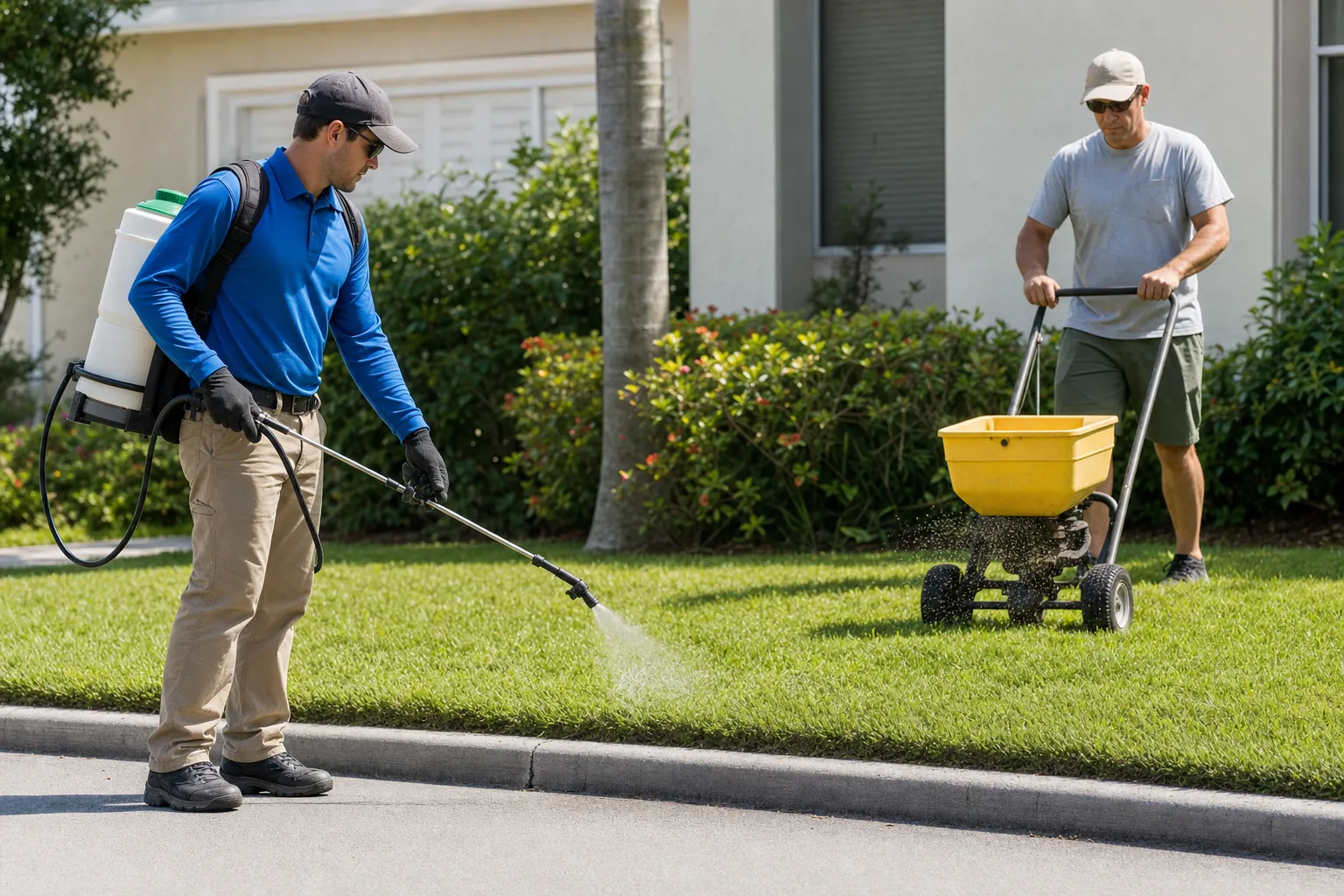
Three honest options exist for keeping a Southwest Florida yard alive: hire a national chain, hire a local company, or do it yourself. All three can work. Which one fits comes down to what your lawn needs right now and how much of the work you want to own.
Southwest Florida lawns often have St. Augustinegrass growing in sandy soil that drains water and nutrients quickly. Summer storms also affect when fertilizer can be applied. Those local conditions change the work involved in all three options, including the summer fertilizer restricted season (more on that below, and in our Manatee County fertilizer blackout guide).
If you’d rather skip the trial-and-error, you can Request a Lawn Care Quote and we’ll size a plan to your yard. If you want to understand the trade-offs first, here’s the honest version.
The three ways to get your lawn handled
A national chain may offer a standardized program with predictable scheduling and wide coverage. Ask how its local branch adjusts visits and products for your yard and your county’s calendar.
A local company can build the plan around your grass, soil, and county rules. Ask who will visit, whether the same crew returns, and how the company handles questions between visits.
DIY gives you control over the schedule and products, though you still pay for supplies and equipment. For maintenance on a healthy, established lawn it can be a fine choice, and UF/IFAS publishes free guidance to help. Diagnosing a new problem takes more work.
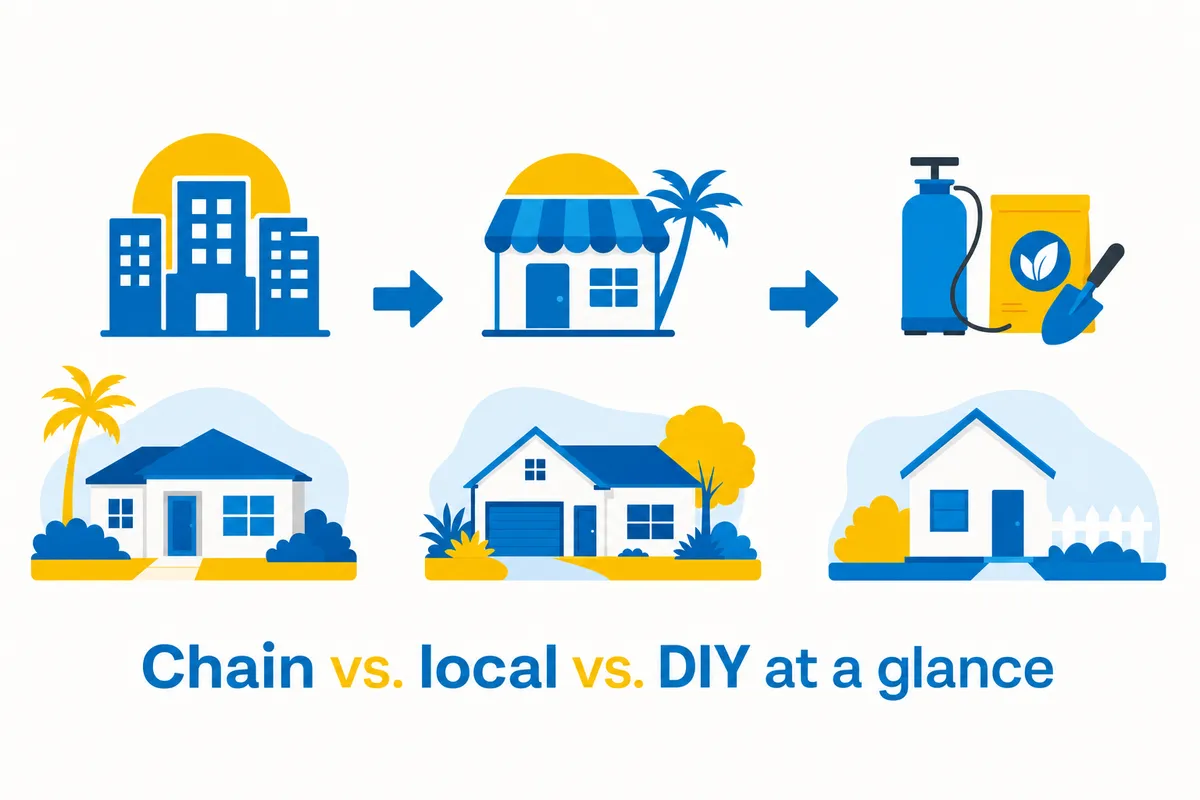
Chain vs. local vs. DIY at a glance
| What to weigh | National chain | Local SWFL company | DIY |
|---|---|---|---|
| Program flexibility | Ask what the local branch can adjust | Ask how the plan is adjusted for your yard | Whatever you decide, on your own schedule |
| Local calibration (soil, restricted season, pests) | Confirm how the branch handles local rules | Confirm the plan covers county rules and your grass type | Only as good as what you take the time to learn |
| Who does the work | Ask which technician or crew visits | Ask whether the same crew returns | You |
| Accountability between visits | Handled per your service agreement | Ask about re-service terms before you sign | On you |
| Commitment | Check the service agreement | Check the service agreement | None beyond your time |
| Cost | Varies | Quote-based | Product and equipment costs |
Category-level comparison only. No specific companies are named or ranked.
None of the three categories is “the winner” here. Each column has a home-field scenario, which is the whole point of the honest close at the bottom.
What a Southwest Florida lawn actually demands
Three local realities separate a plan that works here from one that just looks busy.
First, the summer fertilizer restricted season. Sarasota County and Manatee County both prohibit applying fertilizer that contains nitrogen or phosphorus on lawns and landscapes from June 1 through September 30, because rainy-season storms can wash those nutrients into waterways. Phosphorus is in the restriction alongside nitrogen. Outside the restricted season, Sarasota County requires at least 50% slow-release nitrogen in lawn fertilizer; Manatee County prohibits granular products with less than 50% slow-release nitrogen. North Port’s turf restriction begins April 1, so confirm your city and county rules before spreading anything.
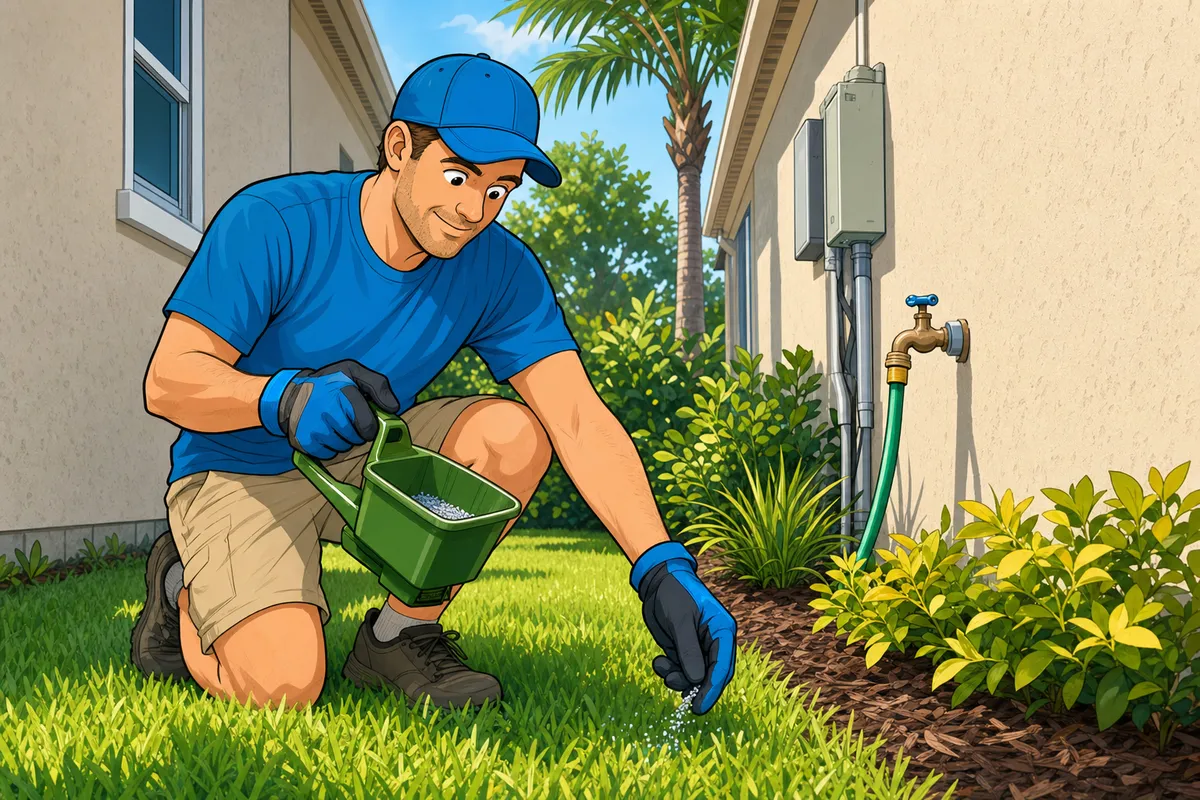
Second, the soil. Local sand drains fast, increasing the risk of nutrient leaching. UF/IFAS recommends slow-release nitrogen and little to no phosphorus for many Florida lawns, with a soil test before adding phosphorus.
Pro tip: Before you buy fertilizer, get a soil test. It helps identify what your yard needs instead of leaving you to guess. In Manatee County, a soil test showing a deficiency is required before applying phosphorus.
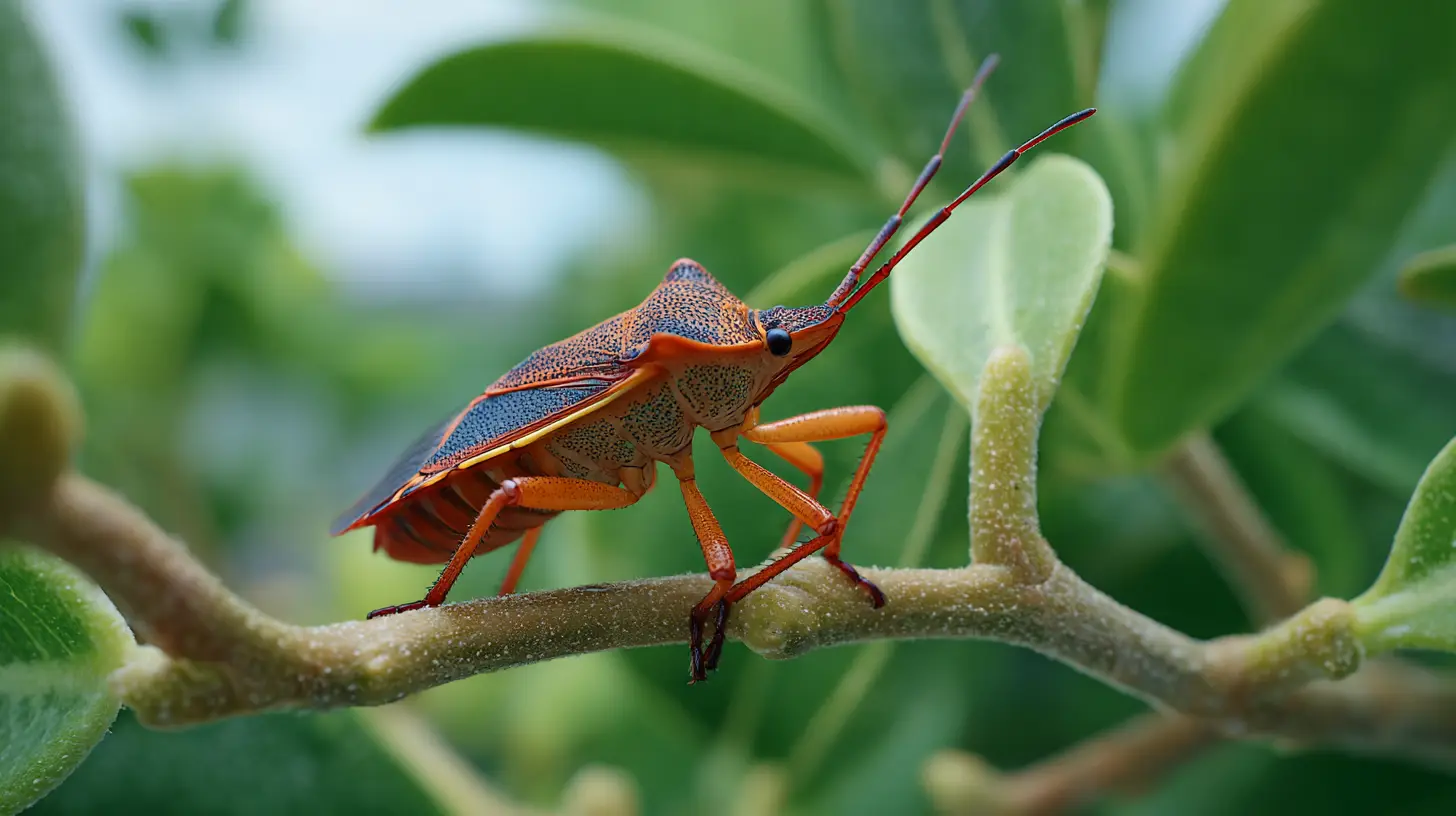
Third, the pest calendar. Chinch bugs are a serious pest of St. Augustinegrass. UF/IFAS Gardening Solutions notes they tend to appear in sunny, water-stressed spots as yellow-to-brown patches and can damage turf year-round in our climate. Large patch is a different problem: UF/IFAS says it tends to flare in cooler, damp weather, especially in fall, so a summer brown patch should not be diagnosed by appearance alone.
The DIY reality check: what UF/IFAS says you can handle
Plenty, honestly. According to UF/IFAS Gardening Solutions, the highest-leverage lawn jobs are the ones any homeowner can do:
- Mow high. Standard St. Augustine cultivars want 3.5 to 4 inches, and you should never remove more than a third of the blade in one pass. Scalping stresses the grass and opens the door to weeds and disease.
- Leave the clippings. They break down and return nutrients, so you fertilize less.
- Keep the mower blade sharp, and skip mowing when the lawn is wet.
- Match fertilizer to the label and the season. Read the N-P-K numbers, look for the slow-release percentage, and don’t apply during the restricted season.
The harder DIY job is diagnosis. UF/IFAS explains that iron can green up color during summer but will not cure a true nitrogen deficiency. Plant-parasitic lawn nematodes can thin St. Augustinegrass from below; an assay is needed to confirm them, and reducing turf stress is a key management step. Some chinch bug populations have developed resistance to insecticides, so repeat damage calls for a fresh diagnosis rather than another blind spray.
Here’s the practical homeowner playbook when a patch turns brown:
- Identify before you treat. Part the grass at the edge of a dying spot, where green meets brown, and look for small chinch bugs down at the soil line. Not every brown patch is bugs. Drought, disease, and dog spots all look similar at a glance.
- Check the basics. Confirm your irrigation is reaching that zone, look at your mowing height, and note whether the spot sits in full sun.
- What not to do. Don’t scalp the lawn trying to “clean it up,” don’t empty a bottle of hardware-store bug killer over the whole yard, and don’t drown the patch with extra water hoping it recovers.
- When to call a pro. Spreading patches, repeat flare-ups after you’ve already treated, or anything you can’t identify are good reasons to ask for help. If you suspect nematodes, ask your local UF/IFAS Extension office about a nematode assay before deciding on treatment.
Our approach to a lawn that is struggling
When Waves takes on a lawn, the first visit is an assessment: what grass, what soil, what is actually damaging it, and where the county calendar constrains the plan. From there the program gets built around your yard and applied on label. A calibrated program can cut how often problems flare, though nothing makes a Florida lawn bulletproof. If you want to sanity-check what you’re seeing, our pest library has ID help for the usual suspects.
Questions to ask any provider before you sign
Category-neutral, and it works whether you’re calling a chain or a local shop:
- What fertilizer training and certification do your applicators hold? Manatee County and Sarasota County have Best Management Practices training and vehicle-decal rules; North Port no longer requires a city decal, so ask for the training certificate there.
- How do you handle the June through September restricted season?
- What is your specific plan for chinch bugs and summer disease?
- Is this a standardized program, or is it built for my yard and grass type?
- What happens if something looks wrong between visits, and how is that handled?
- Month-to-month, or an annual commitment?
- Who actually shows up, and is it the same crew?
So who should pick what?
Each category can fit a different situation. DIY works well when your lawn is healthy and you like the Saturday routine. A national chain may suit you if its local branch offers the schedule and adjustments your yard needs. A local company may suit you if recurring problems call for more individual attention. Compare the actual proposals and service agreements before choosing.
Frequently Asked Questions
Is professional lawn care worth it in Southwest Florida?
It depends on your lawn. If your St. Augustine is healthy and you enjoy the weekend routine, DIY may cost less in cash. Professional care may help when you’re fighting chinch bugs, large patch in cooler damp months, or thinning turf on sandy soil, and when you would rather not track your local fertilizer restrictions yourself. Match the spend to the problem.
Can I keep up a St. Augustine lawn myself?
For maintenance on a healthy lawn, yes. UF/IFAS Gardening Solutions says the big levers are mowing high (3.5 to 4 inches for standard cultivars), never cutting more than a third of the blade at once, leaving your clippings on the lawn, and watering deep but infrequently. Diagnosis can be harder. Suspected lawn nematodes need a lab assay, and certain chinch bug populations have grown resistant to common insecticides. If a patch keeps spreading or returning, ask for help identifying the cause before treating again.
What should I ask a lawn care company before I sign?
Ask what fertilizer training and certification their applicators hold, how they handle your local restricted season, what their plan is for chinch bugs, whether the program is adjusted for your yard, and what happens if something goes wrong between visits. The checklist earlier in this post covers the rest.
If you’d like a plan calibrated to your yard, your grass, and your county’s calendar, Get a Lawn Care Estimate, or see what a local program covers on our lawn care companies in Lakewood Ranch page. Cost depends on lot size and what the lawn needs, so we quote it after a look rather than guessing here.