Jump to a section (10)
- 01Can zoysia grass grow in Southwest Florida?
- 02How to tell which zoysia you have
- 03Planting zoysia: sod or plugs, then steady water
- 04Mowing height for zoysia
- 05Watering zoysia in sandy soil
- 06Feeding zoysia under the Sarasota and Manatee fertilizer rules
- 07Thatch: the chore zoysia adds
- 08Signs of trouble in a zoysia lawn
- 09When to call a pro, and how Waves Pest Control looks at zoysia
- 10Frequently Asked Questions
Zoysia grass grows well in Southwest Florida, and you find it in higher-end and newer gated communities from Lakewood Ranch to North Port. UF/IFAS Gardening Solutions calls it a suitable lawngrass for all areas of Florida, adapted to a variety of soils, with good tolerance to shade, salt and traffic. UF/IFAS also says zoysia maintenance differs from other Florida lawn grasses, so it asks for a different routine than the St. Augustine most of your neighbors grow. This guide covers that routine for sandy SWFL yards, plus the problems that show up most. For the service side, see our Lakewood Ranch lawn care page.
Want a second set of eyes on a zoysia lawn that is thinning or browning? Request a lawn care quote and tell us what you are seeing.
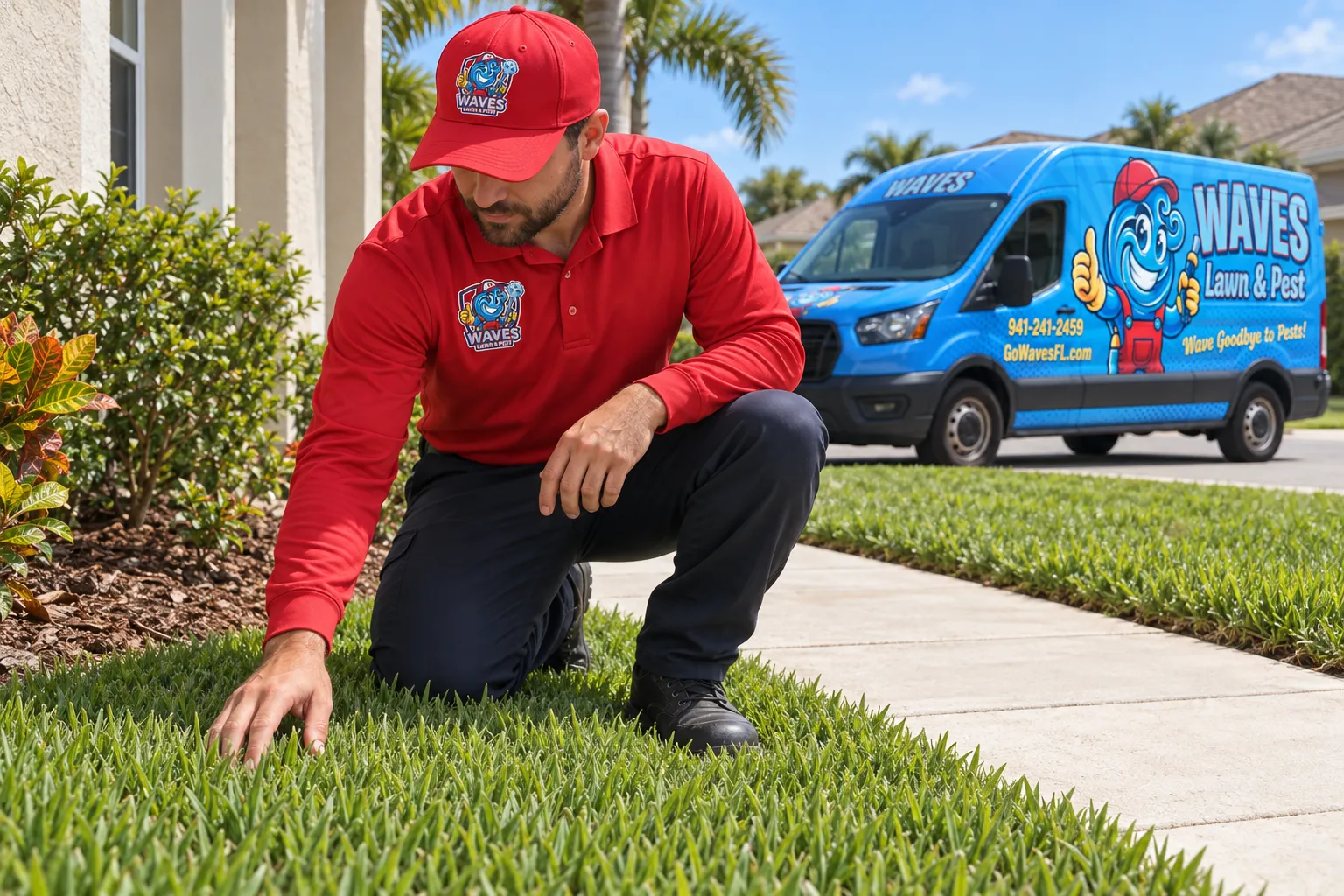
Can zoysia grass grow in Southwest Florida?
Yes. Zoysia tolerates our heat, sandy soil and salt, and UF/IFAS lists it for every part of the state. Most Southwest Florida home lawns are still St. Augustine. Zoysia turns up more in HOA and higher-end communities.
Per UF/IFAS Gardening Solutions, zoysia is dark green and shorter and finer textured than St. Augustinegrass. It grows more slowly and at a lower height than other southern lawngrasses, which gives it that thick, carpet-like look. The same page names its two main drawbacks: a slow growth rate and a tendency to build thatch.
How to tell which zoysia you have
The first thing to identify is the species, because mowing height and shade fit depend on it. A UF/IFAS turfgrass presentation by J. Bryan Unruh of the West Florida Research and Education Center splits Florida lawn zoysias into two groups:
- Zoysia japonica (Japanese lawngrass): the coarse-textured species. Shade tolerance runs from poor to very good, depending on the cultivar.
- Zoysia matrella: the fine-textured species. Unruh rates its cultivars good to excellent in shade.
Blade texture is the quick clue. A wider blade points to the coarse Zoysia japonica, and a very narrow blade points to the fine Zoysia matrella. Your sod receipt or your HOA’s landscape records may name it. If neither does, a lawn technician can identify it on a first visit.
Planting zoysia: sod or plugs, then steady water
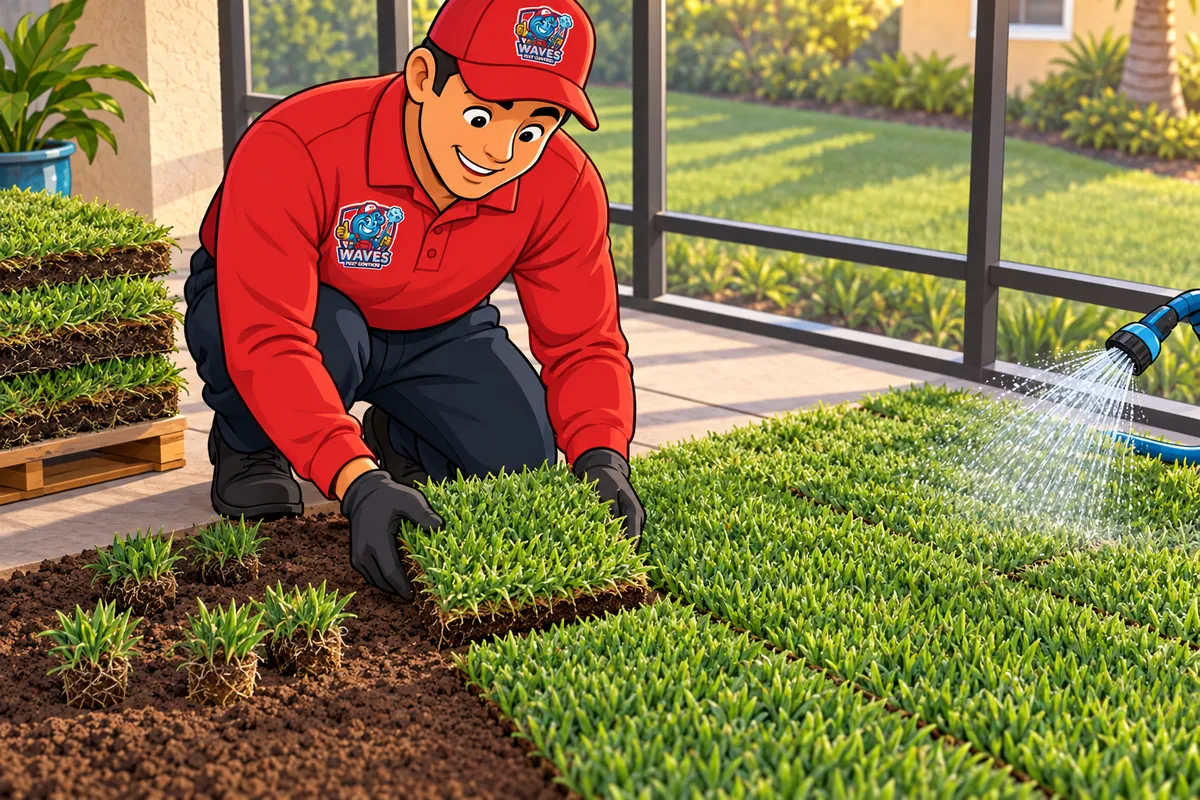
UF/IFAS says zoysia is typically planted as sod or plugs here. The UF/IFAS homeowner guide to zoysiagrass, written by UF/IFAS assistant professor A.J. Lindsey, adds that Zoysia japonica is the one species sold as seed, and seeded cultivars generally do not perform as well as the ones planted from sod or plugs.
New sod needs water at least twice a day, about 1/4 inch each time, until new roots hold it fast to the soil. That usually takes 2 to 3 weeks, per the same guide. After that, cut back to watering only as needed. Hold off on fertilizer for 30 to 60 days after planting, according to UF/IFAS Extension Charlotte County’s Z is for Zoysia. Expect gaps between plugs to stay open for a while, since Unruh lists slow establishment among zoysia’s weaknesses.
Mowing height for zoysia
The UF/IFAS homeowner guide gives two ranges:
- Medium- to coarse-textured zoysia: 1.75 to 2.5 inches.
- Fine-textured zoysia: 0.25 to 1 inch, which means frequent mowing.
Either way, remove no more than 1/3 of the leaf blade in one mowing, and leave the clippings on the lawn. Cutting off more than that risks scalping, which Unruh describes as removing the growing point. Our guide to mowing height by grass type compares zoysia with St. Augustine and bahia.
Watering zoysia in sandy soil
Water zoysia when it shows stress, and give it 1/2 to 3/4 inch each time. The UF/IFAS homeowner guide lists the signs: leaf blades start to wilt or turn a blue-gray color. Zoysia answers drought by turning brown and going dormant. It greens back up once rain or irrigation returns, and UF/IFAS calls letting it go off-color an acceptable way to save water.
Pro tip: Change how often you run the sprinklers through the year, and keep the amount per run the same. UF/IFAS puts it this way: how often the water is applied, not how much, should change seasonally. Stay inside your county’s watering-day rules.
Running the timer every day works against zoysia. The UF/IFAS guide links excessive irrigation, along with excessive soluble nitrogen, to large patch, the major disease of zoysia. If you need to run a single zone by hand after a dry week, our Hunter sprinkler timer guide walks through it.
Feeding zoysia under the Sarasota and Manatee fertilizer rules
Zoysia can be kept on less nitrogen than St. Augustine, per UF/IFAS Extension Charlotte County, and overfeeding nitrogen builds thatch. The UF/IFAS homeowner guide recommends 2.5 to 4.5 pounds of nitrogen per 1,000 square feet per year for South Florida, which it defines as south of State Road 60. Split that into 3 to 6 applications while the grass is actively growing. Let a soil test decide phosphorus, since UF/IFAS says an established Florida lawn often needs none, and apply potassium at the same rate as nitrogen.
Local law sets the outer limits, and it covers nitrogen and phosphorus:
- Sarasota County, City of Sarasota and City of Venice: no fertilizer containing nitrogen or phosphorus on turf from June 1 through September 30, per the UF/IFAS Extension Sarasota County code summary. Nitrogen products must be at least 50 percent slow-release, with no more than 1 pound of nitrogen per 1,000 square feet per application and 4 pounds per year. That yearly cap sits below the top of the UF/IFAS range, and the code wins.
- North Port: the same restricted season starts earlier, on April 1, and runs through September 30.
- Manatee County: the county ordinance restricts nitrogen or phosphorus products from June 1 through September 30, and phosphorus without a soil test showing a deficiency. Our summer fertilizer blackout guide has the details.
After any fertilizer application, water it in with about 1/4 inch of irrigation, as UF/IFAS Extension Charlotte County advises. Keep granules off driveways and sidewalks, and never blow clippings into a storm drain. The Sarasota County code bans both.
Thatch: the chore zoysia adds
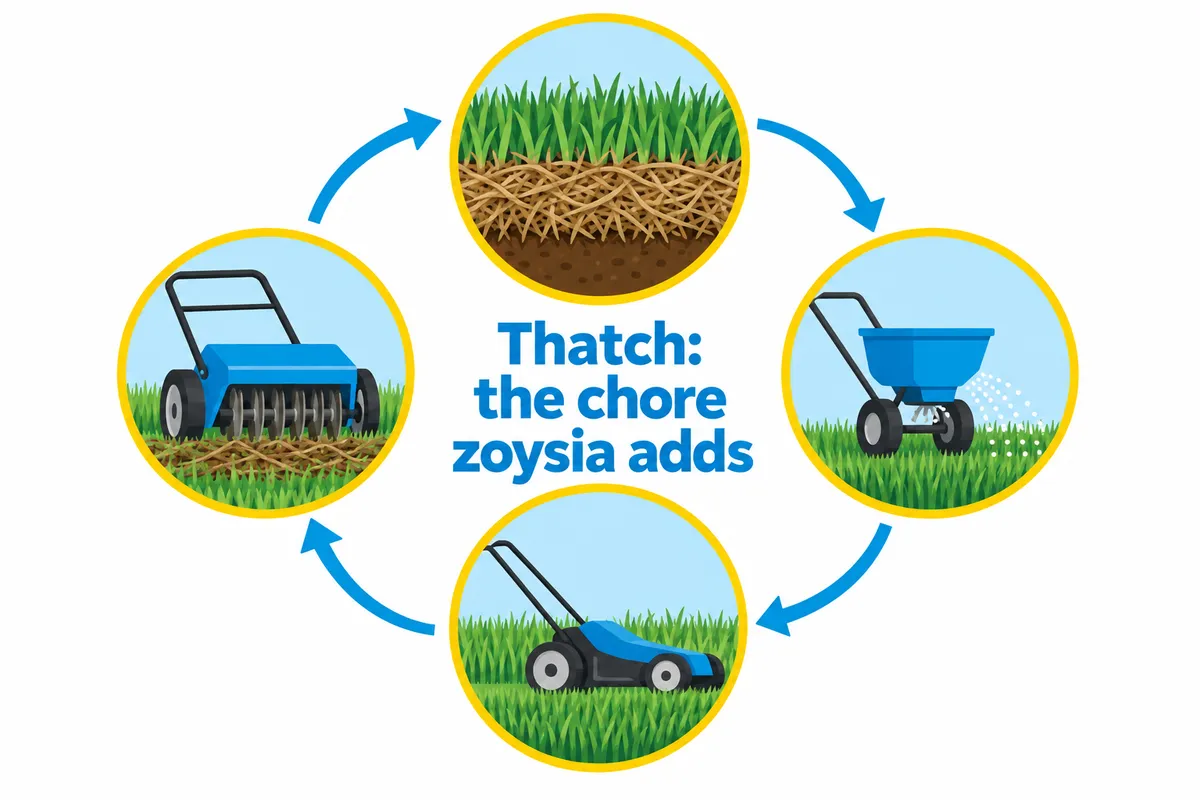
Zoysia generally builds a thick thatch layer in the years after it goes in, per the UF/IFAS homeowner guide. Proper nitrogen rates and mowing heights help keep the layer down. When it gets thick, remove it mechanically with a vertical mower or power rake. Unruh’s presentation suggests dethatching home lawns in spring, while the grass is actively growing, so the turf recovers with little weed encroachment.
Signs of trouble in a zoysia lawn
Most zoysia problems show up as brown or thin areas, so check the pattern before you treat anything:
- Irregular patches dying from fall to spring: a clue for the hunting billbug, a tiny weevil. UF/IFAS Extension Charlotte County says it damages stems and rhizomes and causes patches of turf to die in an irregular pattern, with most damage from fall to spring.
- Yellow patches that turn brown and keep growing in cool weather: a clue for large patch. The same Charlotte County article says it is most common during the cooler part of the year and can spread to several feet across. Our large patch guide shows the signs and the lookalikes.
- The whole lawn browning after a dry stretch: often drought dormancy. The UF/IFAS homeowner guide says zoysia turns brown and goes dormant in drought, then regains its green color once rain or irrigation resumes.
- Thin areas that do not respond to water or feeding: nematodes are one possible cause, though the UF/IFAS homeowner guide says nematode problems on zoysia are not well documented.
What not to do while you sort it out:
- Do not push extra nitrogen to chase color, and avoid daily watering cycles. The UF/IFAS guide ties both excess nitrogen and excess irrigation to large patch.
- Do not use a weed or insect product unless its label lists zoysiagrass, and apply it only as the label directs.
- Skip fertilizer containing nitrogen or phosphorus during the restricted season.
Your local UF/IFAS Extension office can help identify the pest or disease before you spend money on a treatment.
When to call a pro, and how Waves Pest Control looks at zoysia
Call a professional when patches keep spreading after you have corrected watering and mowing, when irregular dead areas show up between fall and spring, or when you cannot tell dormancy from damage.
Waves Pest Control starts a lawn program with a property walk. The technician identifies the grass type and checks root depth, soil compaction, thatch, weed pressure and active pests, then notes your irrigation schedule and watering day. Photos go into the service report. During the June through September restricted season, the program switches to iron and micronutrients to hold color while nitrogen and phosphorus are prohibited. The lawn program covers fertility, weed, insect and disease control and diagnosis. Mowing, trimming and irrigation repair are referred to a landscaper or irrigation contractor.
Ready for a plan built around your zoysia? Request a lawn care quote, or start from the Sarasota lawn care page or the North Port lawn care page.
Frequently Asked Questions
Can you grow zoysia grass in Florida?
Yes. UF/IFAS Gardening Solutions calls zoysia a suitable lawngrass for all areas of Florida, usually planted as sod or plugs. In Southwest Florida it handles sandy soil, salt and traffic well.
What is another name for zoysia grass?
Zoysia japonica is also called Japanese lawngrass, per UF/IFAS. UF/IFAS publications usually spell the grass as one word, zoysiagrass.
What is the disadvantage of zoysia grass?
UF/IFAS names two: it grows slowly and it tends to build thatch. Slow growth also means slow recovery, so damaged or bare spots take longer to fill in than they do in St. Augustine.