Jump to a section (9)
- 01What a soil test can and cannot tell you
- 02Why Parrish soil is worth testing
- 03How to take a soil sample
- 04Where to send a soil test in Parrish
- 05Reading the results
- 06How a soil test connects to the Manatee County fertilizer rule
- 07Test before you lay sod
- 08Lawn care in Parrish
- 09Frequently Asked Questions
A soil test is the quickest way to find out whether a lawn problem is a soil problem. For a soil test in Parrish, the standard option is the University of Florida’s Extension Soil Testing Laboratory, which tests soil the way Florida soils behave.
This guide covers what that test can and cannot tell you, why Manatee County soil is worth testing, how to take the sample, where to send it, and how the test connects to the county fertilizer rule.

What a soil test can and cannot tell you
According to the UF/IFAS guide to soil sampling, the UF/IFAS Extension Soil Testing Laboratory (ESTL) determines “soil pH, lime requirement (‘Adams-Evans’ buffer test), and an index of available soil nutrients.” The lab’s public testing page lists its Standard Soil Fertility Test as covering pH, lime requirement, P, K, Ca, Mg, S, B, Cu, Mn and Zn.
It does not test nitrogen. UF/IFAS explains that “a reliable N soil test does not exist because the chemical forms of N in the soil are constantly changing due to Florida’s warm and humid climate.”
UF/IFAS turf scientists are also candid about the limits. In their guide to soil testing for Florida turfgrasses, they write that calibration curves do not exist for phosphorus, potassium, calcium, magnesium, sulfur and the micronutrients, so using soil tests to manage those nutrients is questionable. The parts with solid evidence behind them are pH and salinity. That makes pH the most dependable number on your report.
A soil test also cannot find a pest or a disease. If your grass is thinning with no clear cause, nematodes are one possibility. UF/IFAS says nematode levels “can only be positively identified through laboratory procedures,” and the local Extension office can explain how to submit a sample to the UF Nematode Assay Laboratory (UF/IFAS St. Augustinegrass guide). For other brown or yellow patches, see our guide to why St. Augustine lawns turn brown.
Why Parrish soil is worth testing
Parrish is in Manatee County, where Myakka fine sand, Florida’s state soil, is the dominant residential soil series. These sandy, low-organic-matter soils lose nutrients quickly. UF/IFAS says “Potassium is highly mobile in most of Florida’s sandy soils” (UF/IFAS turfgrass fertilization guide), and sandy soils “dry out faster than soils with more clay content” (UF/IFAS watering guide).
Three things make the pH number matter here:
- Your grass decides the target. UF/IFAS says centipedegrass and bahiagrass grow better in acid soil (pH 5.0 to 6.0), while St. Augustinegrass and zoysiagrass grow best in near-neutral or alkaline soil (pH 6.5 to 7.5). St. Augustine dominates Parrish’s subdivisions, and bahiagrass is common on the inland and east-county acreage.
- High pH can cause yellowing. UF/IFAS says “on high-pH (> 7.0) soils or where high-pH water is applied, yellow leaf blades may be an indication of iron or manganese deficiency,” and that iron “is not a substitute for nitrogen.” A test helps separate those two causes.
- Fill soil can be alkaline. New-construction lawns are often fresh sod over compacted fill and sandy, low-organic soil. UF/IFAS notes that it is “difficult and uneconomical to change the pH of naturally occurring alkaline soils, such as those found in coastal areas or fill soil containing marl, shell, or limestone.”
How to take a soil sample
These steps come from UF/IFAS guidance (sampling guide and turfgrass guide):
- Sample each area separately. Turf, ornamental beds and problem areas each get their own sample. Do not mix soil from healthy turf with soil from unhealthy turf, because that hides the problem.
- Gather a bucket and a shovel or soil probe, plus a paper bag or newspaper.
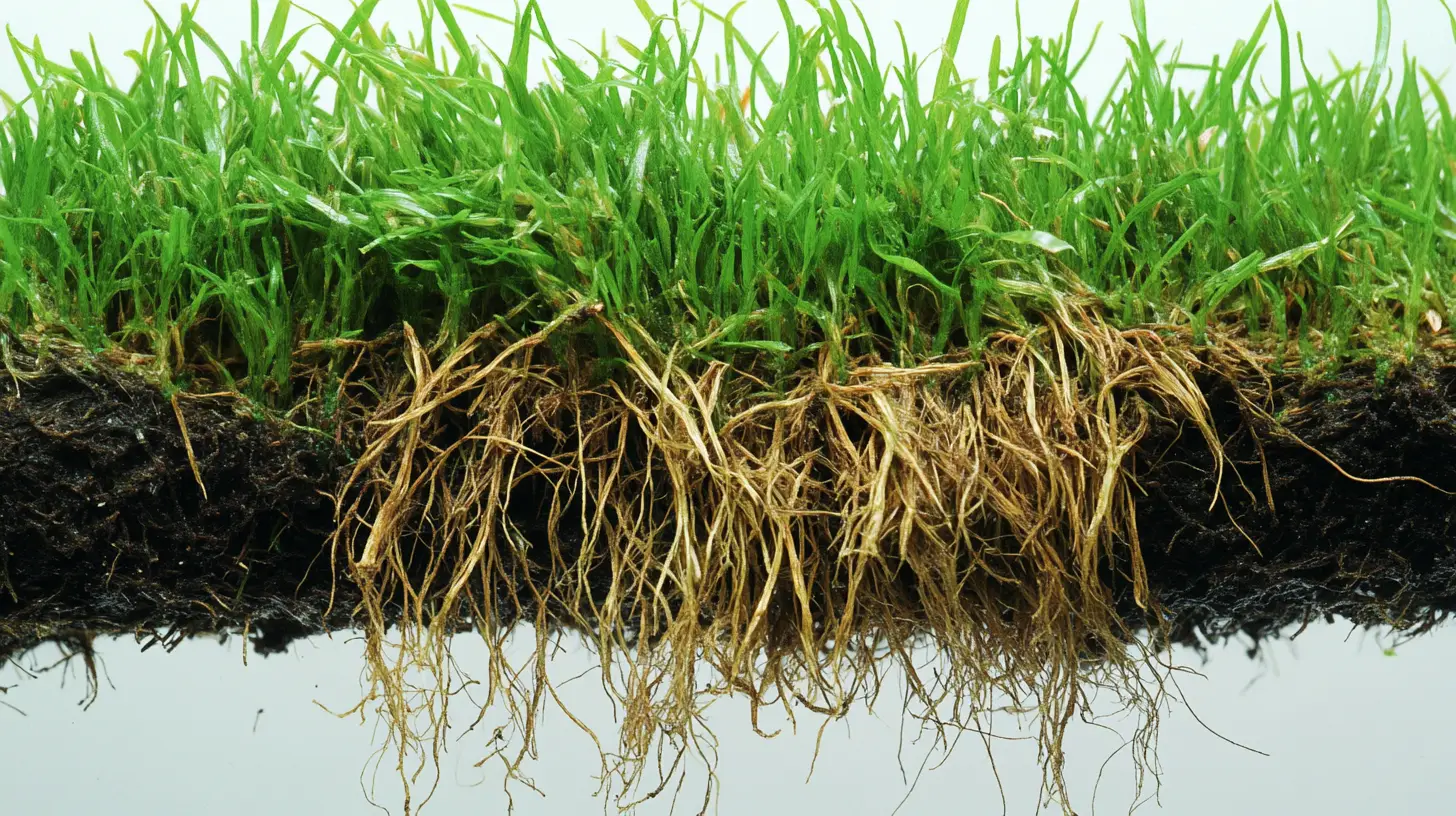
- Take 10 to 15 spots from the area, walking in a zigzag. For turf, UF/IFAS says to sample where most roots live, normally the top four inches.
- Clear plant material or mulch from each spot, drop the soil in the bucket, and mix it well.
- Let it dry. Spread the soil on newspaper or a paper bag until it is thoroughly dry.
- Pack about one pint into a soil sample bag, which UF/IFAS says is free from your local Extension office, or into a zip-top plastic bag.
Where to send a soil test in Parrish
The UF/IFAS Extension Soil Testing Laboratory accepts samples from the public with the Landscape and Vegetable Garden Test Form (SL136). UF/IFAS says to pay the fee by check or money order. Cash works only if you deliver the sample in person.
At this writing the lab lists a Soil pH and Lime Requirement test at $3 and a Standard Soil Fertility Test at $10, so check the lab page for current fees. UF/IFAS says results usually arrive within about 7 days, faster by email, and that a copy goes to your county Extension agent.
For sample bags and help reading the report, contact UF/IFAS Extension Manatee County in Palmetto. Call ahead to confirm they have bags in stock.
One caution about private labs: UF/IFAS says their methods “may or may not be calibrated to conditions in Florida,” and that UF/IFAS fertilizer recommendations may not be valid for results from other methods. Do not compare a private lab report with a UF report.
Reading the results
The lab reports its lime requirement only when soil pH is 6.0 or lower, according to the UF/IFAS turfgrass soil testing guide. So a St. Augustinegrass lawn at pH 6.1 to 6.4 can be below its target with no lime recommendation on the report. UF/IFAS says lime takes about six months to reach its maximum effect, and that lime need is based on the lab’s lime requirement test, not pH alone. If the pH is too high, UF/IFAS says to work out first whether the cause is the soil itself or earlier lime applications.
Follow the recommendation on the report, and apply any fertilizer or soil product as its label directs. UF/IFAS’s fertilization guide adds that phosphorus is “not always required” and to “depend on a recent soil test to determine if P is required.”
How a soil test connects to the Manatee County fertilizer rule
Manatee County restricts nitrogen and phosphorus products from June 1 through September 30, and it restricts phosphorus applications without a soil test that shows a phosphorus deficiency, according to the county’s fertilizer ordinance summary. So a soil test is how you document a phosphorus need.
The ordinance has more rules than those two. Read the county page before you fertilize, or see our Manatee County fertilizer blackout guide.
Test before you lay sod
UF/IFAS recommends a soil test before planting a lawn to determine fertilization needs and any pH adjustment. Our guide to watering and caring for new sod covers what comes next.
Lawn care in Parrish
Waves Pest Control’s lawn program covers turf fertility, weed, insect and disease control, and agronomic diagnosis. It does not include mowing, mulching, tree or large-shrub trimming, or irrigation-system repair. See lawn care in Parrish for details.
Frequently Asked Questions
Where can I get a soil test in Parrish?
Send a sample to the UF/IFAS Extension Soil Testing Laboratory. UF/IFAS Extension Manatee County in Palmetto is the local office for sample bags and help reading results.
Does the UF/IFAS soil test check nitrogen?
No. UF/IFAS says a reliable nitrogen soil test does not exist for Florida’s warm, humid climate, so the lab does not test for it.
How many samples do I need?
Take 10 to 15 spots from each area, mix them, and send about one pint. Sample turf, beds and problem areas separately.
Can one test cover my front and back yard?
Only if they look the same and are managed the same way. UF/IFAS says to sample problem areas separately and not to mix healthy and unhealthy turf.
Do I need a soil test to fertilize in Manatee County?
For phosphorus, yes. The county restricts phosphorus applications without a soil test indicating a deficiency. The county page lists the other rules.
How long do results take?
UF/IFAS says usually within about 7 days after the lab receives the sample.