Jump to a section (8)
- 01What you are seeing in your yard this August
- 02Sod webworm versus chinch bug, and the test that separates them
- 03The life cycle, and why the moths are not the problem
- 04Why shaded, damp, lush lawns take the worst of it
- 05What actually works on sod webworm
- 06Will the lawn bounce back, or does it become a fall problem?
- 07What a Waves inspection checks before we treat
- 08Frequently Asked Questions
If you mowed this week and a little cloud of dull tan moths puffed up out of the grass, you probably have tropical sod webworm moving in. Late summer is prime time for it around Sarasota, and the Sarasota lawn care calls we get this time of year tend to start the same way: ragged brown patches turning up in the shady, damp corners of an otherwise fine St. Augustine lawn.
I am Adam Benetti, the FDACS-licensed operator behind Waves, and the habit that saves Sarasota homeowners the most wasted effort is a simple one. Figure out what is actually eating the lawn before you treat anything. Sod webworm and chinch bug leave damage that looks alike from the driveway and show up in the same hot months, but they are not handled the same way. Our one-visit turf knockdown covers both, and confirming which one you have is still what decides where the product goes, when it goes down, and how urgently the lawn needs it.
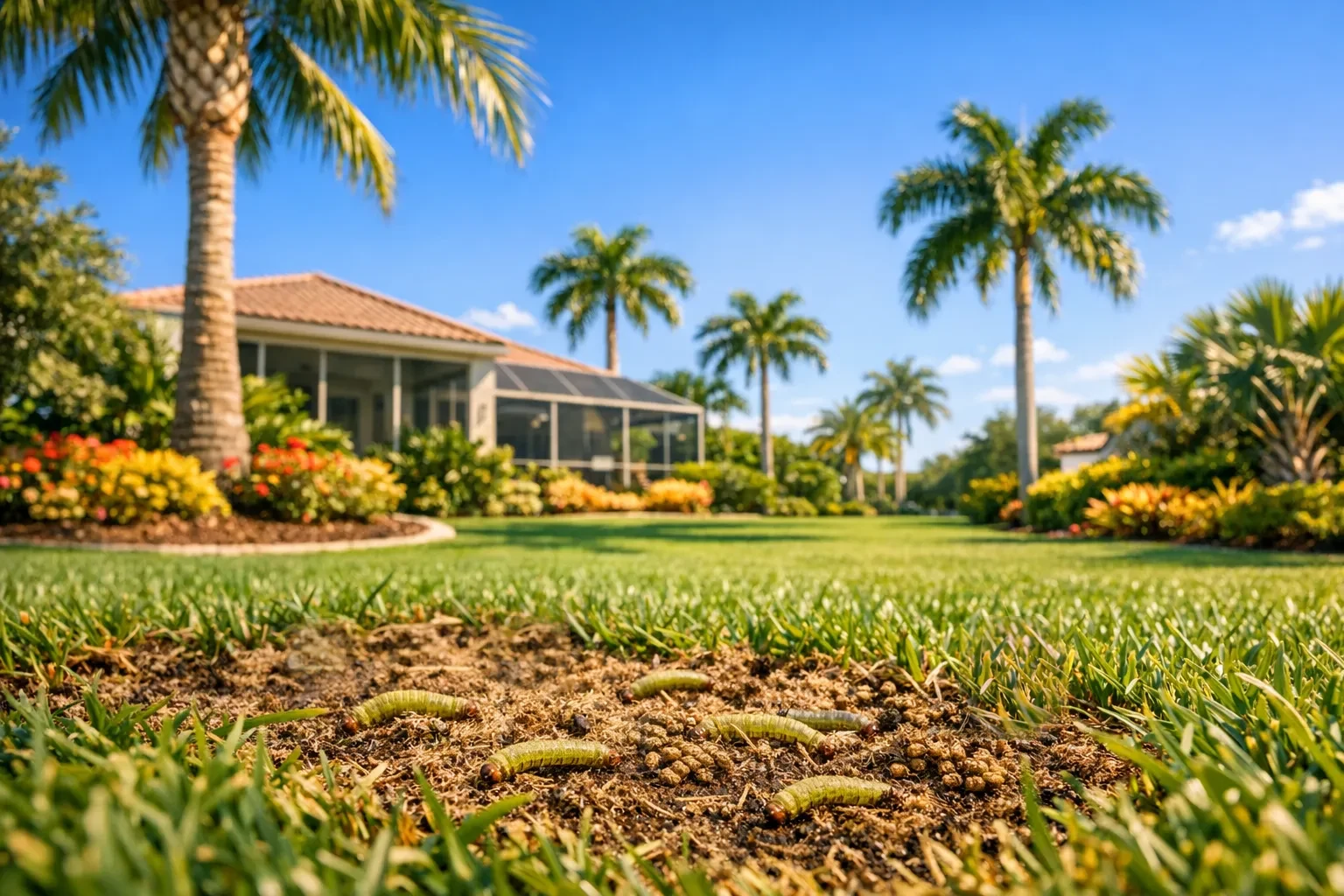
Here is the short version. Those small brown patches and chewed blade tips showing up in shaded Sarasota turf in late summer are usually tropical sod webworm. It is lower urgency than a chinch bug problem, which is the good part. It also gets misdiagnosed constantly, and the treatment is different from what you would do for chinch. If you would rather skip the detective work, you can request a quote and we will come confirm it.
What you are seeing in your yard this August
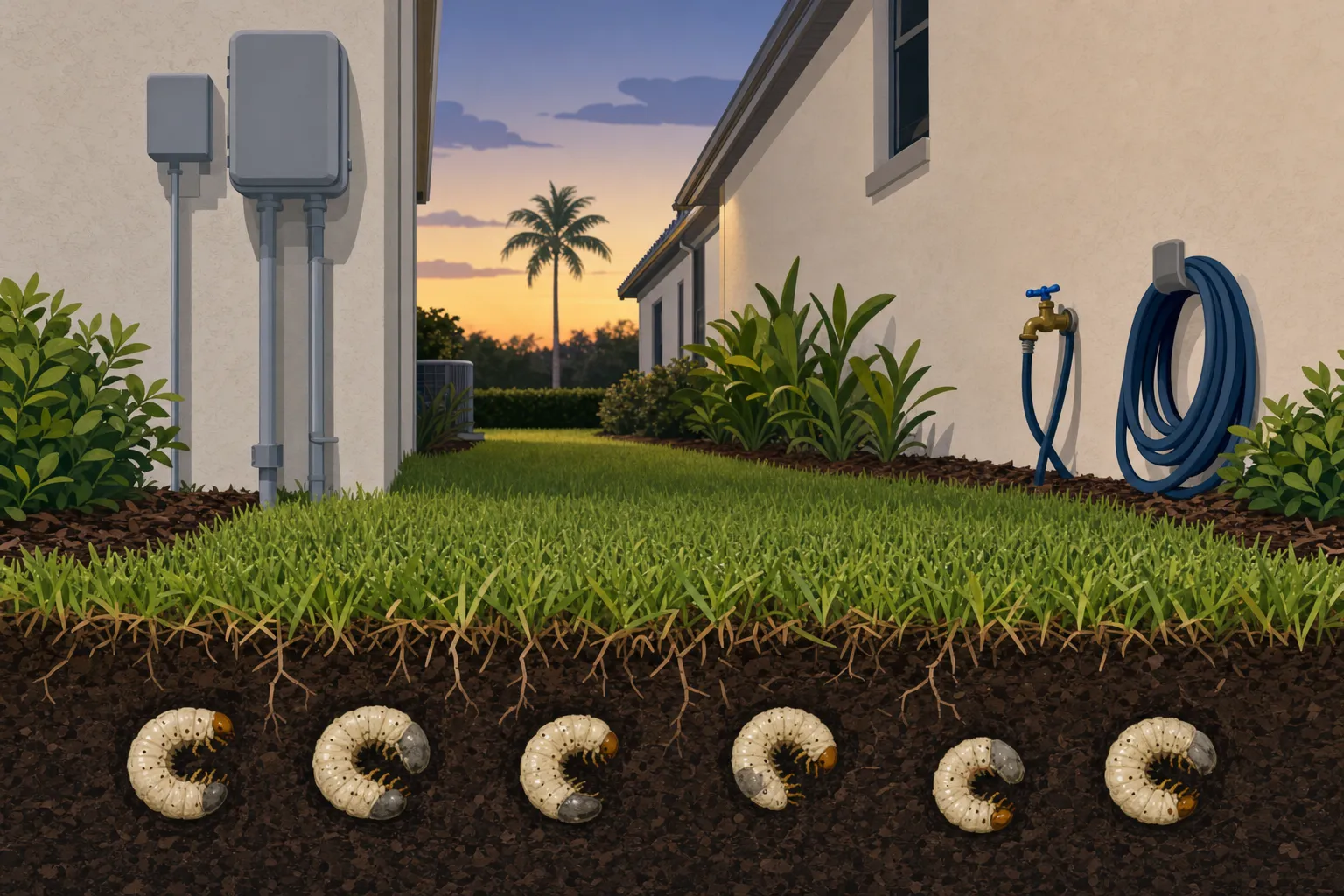
Get down close to the grass blades. Tropical sod webworm caterpillars chew on the blades and leave them looking ragged and notched, and as the feeding builds the turf thins out and small brown patches start to spread. That progression, from chewed blades to thinning to patchy brown, is the classic sod webworm signature that UF/IFAS describes (UF/IFAS Gardening Solutions).
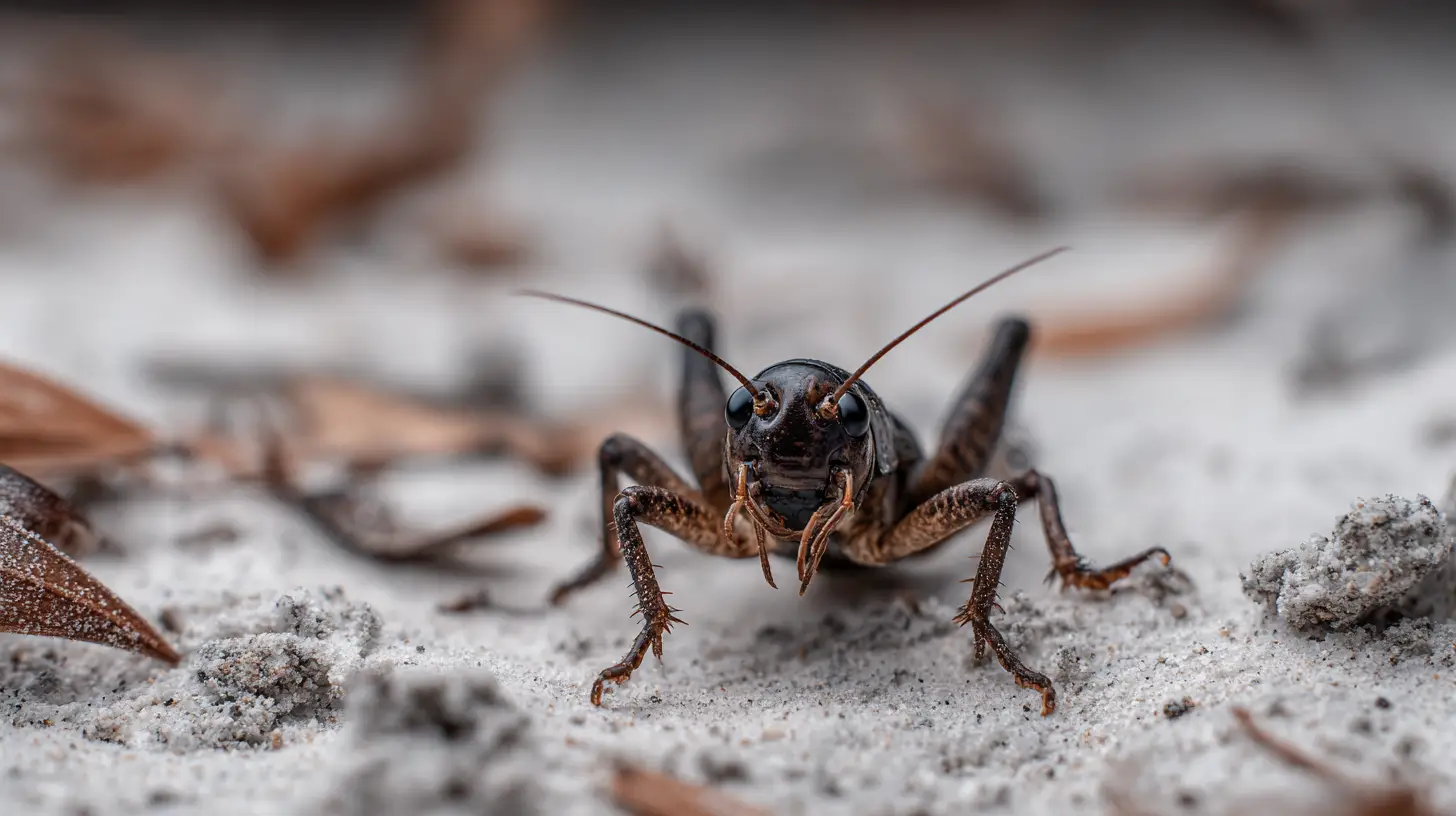
The moths are the part most people notice first. Per UF/IFAS, the adults are a dull, dingy brown, about three quarters of an inch across, and they rest with their wings folded into a triangle. You will see them flutter up a couple of feet when you mow or cross the lawn near dusk, then drop back into the turf. Seeing them is worth paying attention to. Those moths are laying the eggs for the next round of caterpillars.
Tropical sod webworm favors St. Augustinegrass, which is most of what grows in Sarasota yards, though it will also feed on bahia, bermuda, centipede and zoysia. Chinch bug, sod webworm and the fungal patches that flare up in our summer wet season all get mistaken for one another. The next section sets sod webworm against chinch bug, and if it turns out to be chinch, our chinch bug guide goes deeper on that one.
Sod webworm versus chinch bug, and the test that separates them
From the driveway, both problems read as brown patches in a St. Augustine lawn. Up close they are different animals. Chinch bug is the bigger worry in Sarasota. UF/IFAS calls the southern chinch bug the most important insect pest of St. Augustinegrass in Florida, and its feeding tends to kill the grass outright rather than just chew it.
| What you're checking | Tropical sod webworm | Southern chinch bug |
|---|---|---|
| What it is | Caterpillar of a small brown moth | Tiny sap-sucking true bug |
| Where damage starts | Shaded, damp, lush areas | Hot, sunny, dry spots near pavement and south walls |
| How the grass looks | Blades chewed ragged, thinning to brown patches | Yellow to burnt-reddish patches that spread outward |
| What happens next | Blades can regrow once feeding stops | Dead patches keep spreading and the grass dies |
| When it peaks locally | Peaks late summer into fall; adults present year-round in south Florida | Peaks June through August; active year-round in south Florida |
| The yard test | Soap flush brings the caterpillars up | Part the turf at a dry edge or float them out with a bottomless can |
Identification details per UF/IFAS Gardening Solutions and UF/IFAS EDIS; peak windows are what we see locally in Sarasota County, as of August 2026.
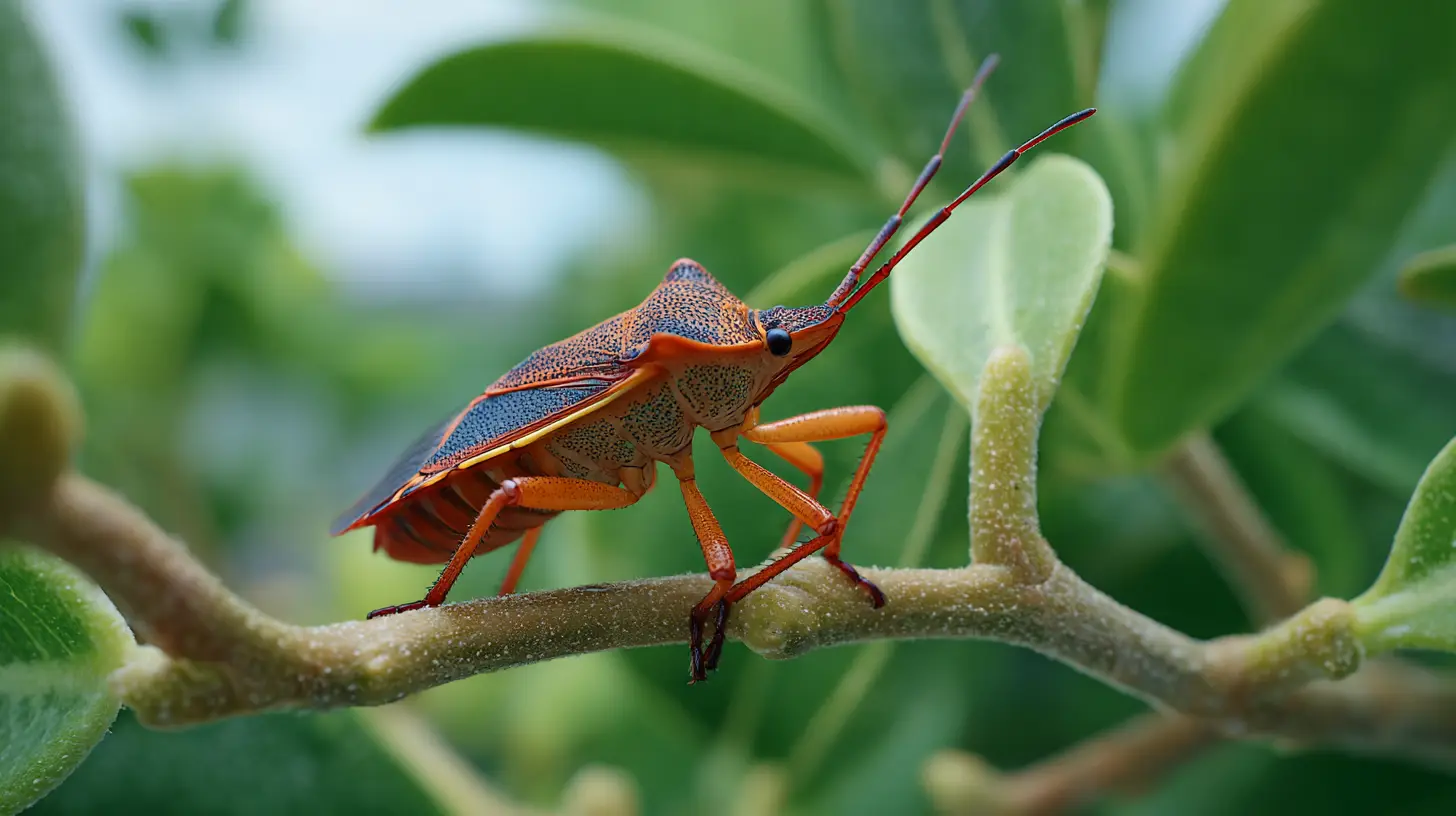
Here is the field test. Go to the edge of a bad patch where brown meets green, kneel down, and pull the turf back so you can see into the thatch. In a chinch bug patch you will find the bugs right there in the hot, dry edge. UF/IFAS describes the adults as about three sixteenths of an inch, black with white patches on the wings, with young nymphs that are reddish-orange and carry a pale band across the back. They scatter fast when you disturb the grass, so look sharp. UF/IFAS also likes the can trick for chinch: cut both ends off a metal can, press it into the soil at the patch edge, fill it with water, and watch for the bugs to float up.
Sod webworm will not show itself that easily, because the caterpillars spend daylight hours coiled down at the soil surface. To find them you flush them out. UF/IFAS recommends mixing about 1.5 fluid ounces of dish soap into two gallons of water and pouring it evenly over a four-square-foot patch at the edge of the damage. Within a few minutes the irritated caterpillars wriggle to the top, and what you pull up will be grayish-green and up to about an inch long. Rinse the patch with clean water afterward so the soapy solution does not scorch the turf, especially in full sun. This flush is the check worth running once you have been seeing the moths.
The life cycle, and why the moths are not the problem
Tropical sod webworm goes through complete metamorphosis: egg, caterpillar, pupa, then moth. Damage is a caterpillar job from start to finish. UF/IFAS states it plainly in its EDIS profile: control should target the feeding larvae, not the flying moths, and small larvae are easier to knock down than large ones.
The sequence runs like this. Moths are active mostly from dusk into the night. They mate and lay their eggs on the grass blades. Those eggs hatch into caterpillars that feed after dark and hide at the soil surface by day. A mature caterpillar reaches about three quarters of an inch to an inch and is grayish-green. Warm, wet Southwest Florida keeps the cycle turning, so you can get repeated rounds of caterpillars from spring right through fall.
So when a dozen moths puff out of the grass on an evening walk, that is your early warning. The chewing is being done by the caterpillars those moths are seeding into the lawn. Spending your afternoon trying to spray moths in mid-air does nothing for the damage.
Why shaded, damp, lush lawns take the worst of it
Two lawns on the same Sarasota street can get hit very differently. The stretches that suffer most are shaded, damp and lush: the St. Augustine under a big live oak, the fence line that never quite dries, the low corner where the sprinkler heads overlap and Sarasota’s afternoon storms keep everything moist. That is where we see tropical sod webworm doing its heaviest chewing in the lawns we service.
A few things pile up in those spots. The canopy keeps the turf tender and humid. Our sandy soil drains fast out in the sun but stays soft and moist in the shade. Turf that has been pushed with extra water and feed puts on soft, lush growth that gives the caterpillars more to work with. UF/IFAS makes the useful flip side of that point: a healthy, correctly maintained lawn, mowed at the right height and watered properly, is less susceptible to sod webworm damage in the first place.
You could not feed your way out of it in late summer anyway. Sarasota County’s ordinance restricts both nitrogen and phosphorus fertilizer from June 1 through September 30, so a summer feeding is off the table, and it would not help the webworm situation regardless. We broke down how that Sarasota County fertilizer blackout works if you want the specifics.
Pro tip: On shaded St. Augustine, raise the mower a notch and water deep and early in the morning instead of a little every day. Taller turf and morning watering keep the lawn healthier and let the blades dry through the day, and UF/IFAS ties a well-kept lawn to lower susceptibility.
What actually works on sod webworm
The whole game is aiming your effort at the caterpillar stage, after you have confirmed that is what you have. UF/IFAS is clear that spraying the adult moths accomplishes nothing, and that the treatments that matter go after the larvae while they are still small.
Start with identification. Do the soap flush, rule out chinch bugs at a dry sunny edge, and if you are still unsure you can send photos or a plug of turf to the UF/IFAS Extension office in Sarasota County. Once you know it is sod webworm, spot-treat the active areas rather than blanketing the whole yard. UF/IFAS lists options that range from lower-impact choices, such as beneficial nematodes and Bt-based products aimed at caterpillars, up to conventional lawn insecticides labeled for sod webworm.
If you treat it yourself, a few rules are not optional. Identify the pest first, since the wrong product on the wrong bug is money down the drain. Choose a product whose label actually lists sod webworm, and read and follow that label to the letter. Keep it off food-prep and food-contact surfaces and away from vegetable beds, and store it up and out of reach of children and pets.
Will the lawn bounce back, or does it become a fall problem?
Often it recovers on its own. UF/IFAS says outright that in some cases a lawn will come back from tropical sod webworm damage without treatment, and in our own Sarasota lawn work this stays a cosmetic problem far more often than chinch bug does. The caterpillars work on the blades, so an established, healthy St. Augustine stand can fill back in once the feeding stops. A vigorous lawn recovers faster than a stressed one.
Timing is where it gets dicey. Because the caterpillars keep coming in overlapping rounds through the warm season, a lawn that gets chewed, starts recovering, then gets chewed again can fall behind. Push into fall and growth slows as the days shorten, so there is less runway for the turf to fill in before cooler weather. That is the scenario where a small cosmetic patch in August becomes thin, ragged turf you are still looking at in October. Catching it while the damage is spot-sized is what keeps it cosmetic.
What a Waves inspection checks before we treat
When we come out, the visit is mostly about not treating the wrong thing. Here is what we look at before anything gets applied.
- The blade edges. Ragged, chewed tips point to a caterpillar rather than a sap-sucker.
- The dry, sunny edges. We check where the lawn bakes in full sun, because that is chinch bug territory.
- Grass, thatch and roots. Species, mowing height, thatch depth and root depth all change the plan.
- Shade and moisture. Canopy, drainage and sprinkler overlap explain why this spot got hit, so we note the irrigation schedule and watering day.
- How much is active. Spot-sized damage gets spot-treated rather than a blanketed yard.
- Photos. What we find goes into the service report so you can see it too.
If it turns out to be sod webworm, we target the caterpillar stage in the active areas. If it reads as chinch bug, that is a different and more urgent job. Worth knowing there: UF/IFAS notes that chinch bug populations have built up resistance to many over-the-counter products, which is part of why a DIY swing at them so often misses. Either way, if cost is on your mind, the honest answer depends on the lawn, so reach out through our contact page and we will talk specifics.
Frequently Asked Questions
Are the little moths in my grass the thing damaging my lawn?
No. The moths mate and lay eggs, and it is the caterpillars that hatch out and feed at night that chew the grass. Per UF/IFAS, control targets those larvae, so a cloud of moths on an evening walk is your cue to start checking for caterpillars.
How do I know it is sod webworm and not chinch bugs?
Look at where the damage is and how it behaves. Sod webworm hits shaded, damp areas and leaves the blades chewed ragged. Chinch bug hits hot, dry, sunny spots, and that grass dies and keeps spreading outward. Confirm with a soap flush for webworm caterpillars, or part the turf at a dry sunny edge and look for the small black-and-white chinch bugs. UF/IFAS backs both checks.
Will my Sarasota lawn recover from sod webworm?
Usually, if you catch it while the damage is still spot-sized and the lawn is otherwise healthy. UF/IFAS notes a lawn can recover from webworm damage on its own once feeding stops. The risk is repeated feeding heading into fall, when the turf grows slower and has less time to fill back in.
Tropical sod webworm is one of the more forgiving lawn problems in Sarasota when you catch it early and treat the right stage. If the brown patches in your yard have you second-guessing, Waves lawn care in Sarasota can confirm what is going on, and you can request a quote whenever you are ready.
Last reviewed August 2026 against UF/IFAS sources.