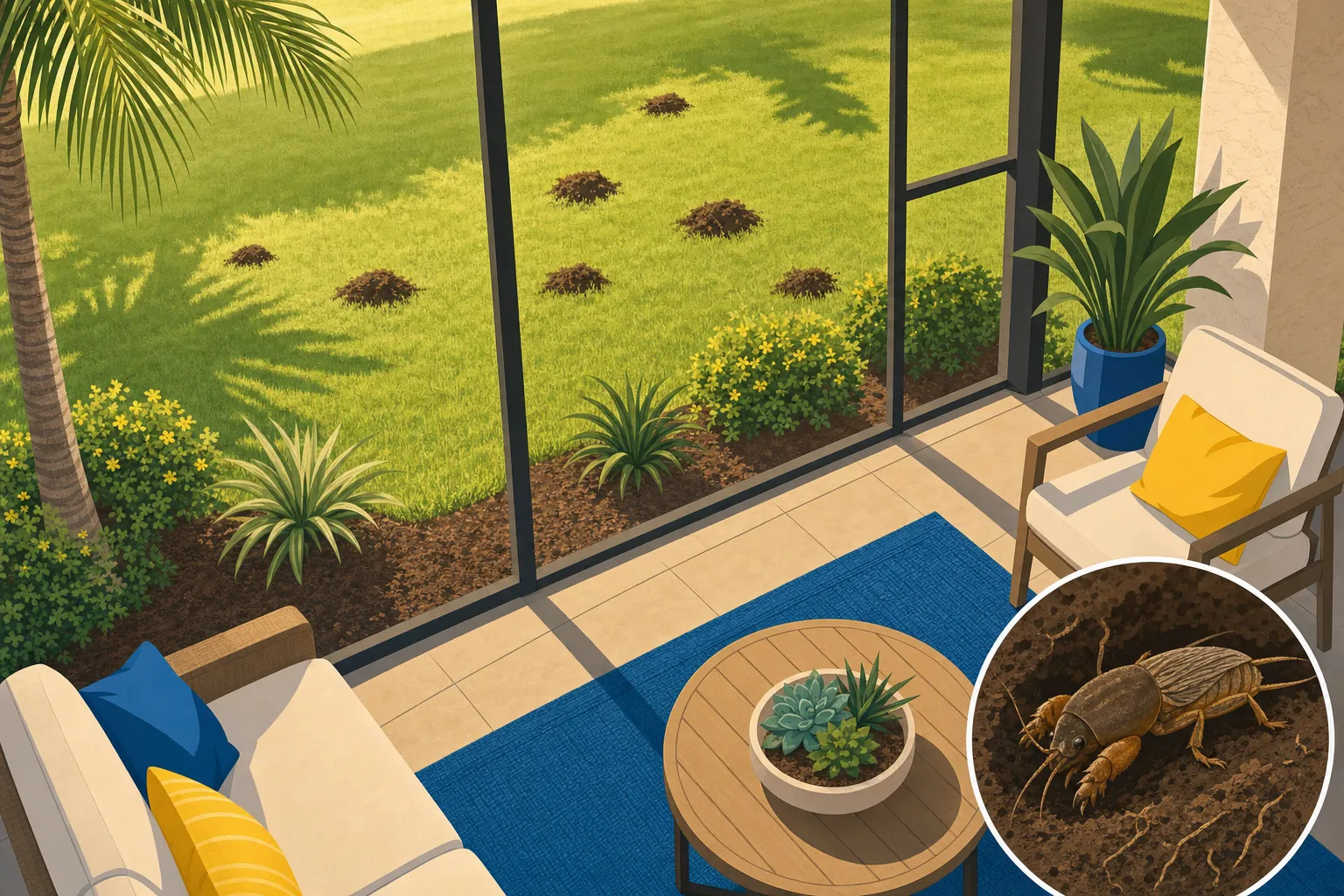
Mole cricket damage in bahia leaves two separate jobs: check whether insects are still damaging the roots, then decide what the surviving grass needs. For a Sarasota homeowner looking at thin patches after an infestation, a brown lawn alone does not tell you whether treatment failed or whether the turf simply needs repair.
This checklist focuses on the bahia lawn itself: documenting damaged areas, protecting remaining grass, and deciding where seed or sod may be needed. For pest-control options and seasonal monitoring, start with our guide to management options for mole cricket damage in bahia.
Map mole cricket damage in bahia before planning repairs
Walk the affected area and mark the edges of thin or bare patches. Take photographs from the same position on later visits. On a large bahia lot, give each patch a simple location name so that an inspection or repair estimate refers to the same places.
Keep three observations separate in your notes: fresh surface disturbance, grass that is still present, and ground that is already bare. A patch can have old damage without current insect activity. Equally, a few green blades do not establish that the roots are healthy.
On every inspection
A bahia damage-and-recovery record
- Fresh disturbance Record new raised trails separately from old bare patches. Collect and identify insects before attributing new damage to mole crickets.
- Surviving grass Photograph remaining bahia within each marked patch so later comparisons show whether grass cover is improving.
- Bare ground Measure areas with no remaining grass separately when discussing seed or sod repairs.
- Watering and mowing Record recent rainfall, irrigation and mowing height alongside the photos instead of judging recovery by color alone.
Use the same patch names and photo positions when you reassess the lawn.
Separate active insects from damage left behind
UF/IFAS explains that mole-cricket tunneling and feeding can reduce roots and limit water uptake. Damaged grass may therefore look dry even after adequate irrigation. More sprinkler time is not enough to establish or fix the cause.
If new trails appear or patches expand, collect a specimen for identification. The UF/IFAS guide includes a soap-drench sampling procedure; follow its measured method on moist soil and rinse the sampled grass afterward to reduce soap injury. Record the sampling location and result. One empty sample does not establish that an entire acreage property is clear.
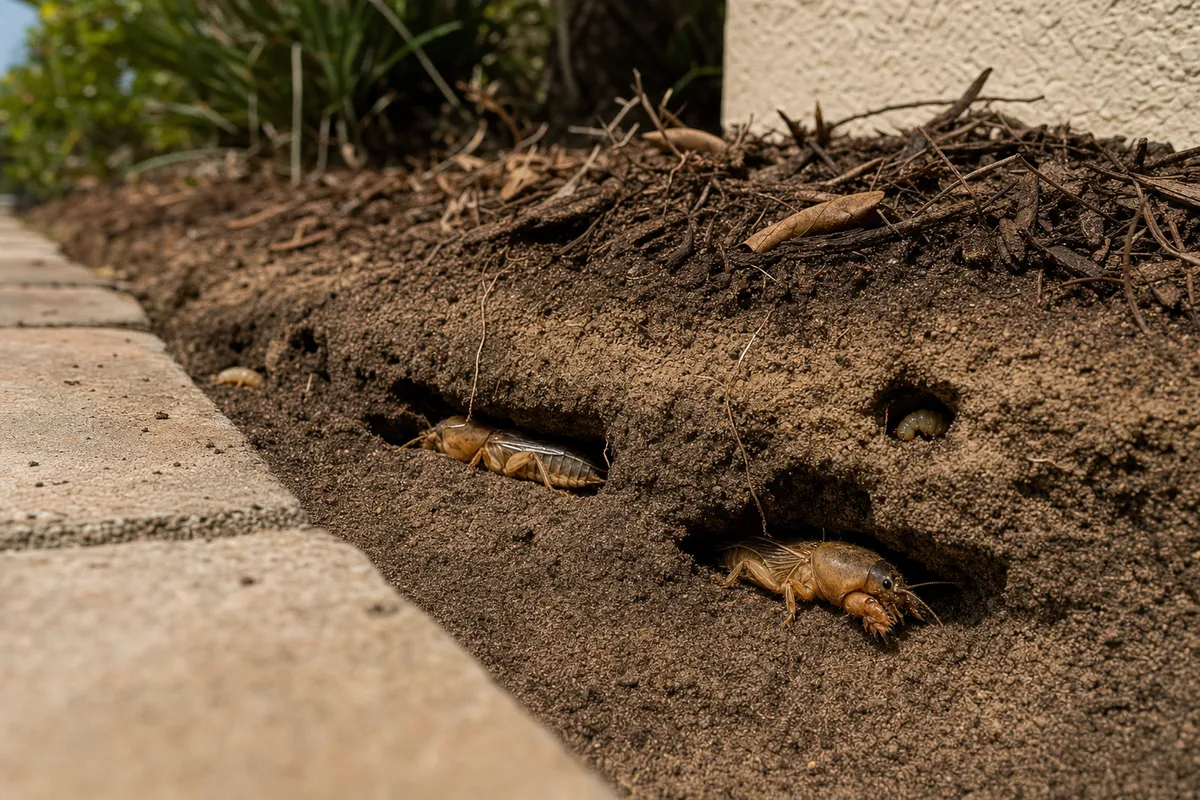
Illustrated comparison: the large brown insects are mole crickets; the small pale, curled larvae at the left edge and in the upper-right burrow are grubs. Grubs are not mole-cricket nymphs. This generated scene is not a species-identification reference; use a collected specimen and the UF/IFAS identification photographs.
If an inspection confirms ongoing pest damage, settle the management plan before investing in replacement turf. Treatment choices depend on the species, life stage and current damage. Any pesticide must be labeled for the pest and residential turf, with all application and re-entry directions followed.
Protect the bahia that remains
Bahia has its own maintenance needs. UF/IFAS recommends a mowing height of 3–4 inches and mowing every 7–14 days during active growth. Do not lower the deck just to make the damaged areas look more even.
Check the irrigation pattern around each marked patch. Note whether it is receiving rainfall, sprinkler coverage or runoff before changing the schedule. A dry-looking damaged patch and an actually dry root zone are different observations; have the root and soil conditions checked if the cause remains unclear.
Avoid turning a pest-recovery plan into a blanket fertilizer response. Sarasota County prohibits fertilizer containing nitrogen or phosphorus from June 1 through September 30. Our Sarasota summer fertilizer guide explains the local restrictions. Plan any later feeding around the lawn’s needs and applicable rules.
Decide which patches need seed or sod
For each marked area, ask whether living bahia remains and whether grass cover is improving on follow-up visits. Keep those areas separate from patches that are bare. This gives a lawn professional a useful starting point for deciding between continued care and re-establishment.
UF/IFAS lists both seed and sod as ways to establish bahiagrass. Before ordering either, confirm the grass type and discuss site preparation, establishment watering and the area to repair. Replacing turf is a separate decision from suppressing insects; a pest treatment does not supply new grass to a bare patch.
For larger east-county lots, ask for an estimate that identifies the affected sections and distinguishes pest management from turf repair. That makes it easier to compare the proposed work with your patch map and follow-up photographs.
What to record at the next visit
Return to the same marked locations and compare:
- Whether fresh trails or other new disturbance have appeared.
- Whether the edges of bare patches have expanded, stayed stable or gained grass.
- Whether mowing and watering have changed since the previous photographs.
- Whether an identified pest is still present where new damage is occurring.
Keep the map for future scouting. UF/IFAS recommends documenting previously infested areas because they can be infested again. A stable patch is useful evidence, but it is not a promise that mole crickets will never return.
Frequently asked questions
Does brown bahia after treatment mean the treatment failed?
Color alone cannot answer that. Check for fresh damage and identified insects, then assess the remaining grass and roots. Old injury and active feeding require different next steps.
Should I mow damaged bahia shorter?
Keep bahia within the recommended 3–4-inch mowing range. Cutting lower to disguise uneven patches adds a maintenance change without resolving the cause of the damage.
Should I seed every thin patch immediately?
Assess remaining grass and ongoing pest activity first. Discuss seed or sod for areas that need re-establishment, including the preparation and watering required. There is no single repair schedule that fits every damaged patch.
If you suspect ongoing insect damage in your marked areas, Request a Lawn Pest Control Quote. That estimate covers pest treatment; it does not quote seed, sod or turf-repair work. For broader maintenance information, see our Sarasota lawn care page.