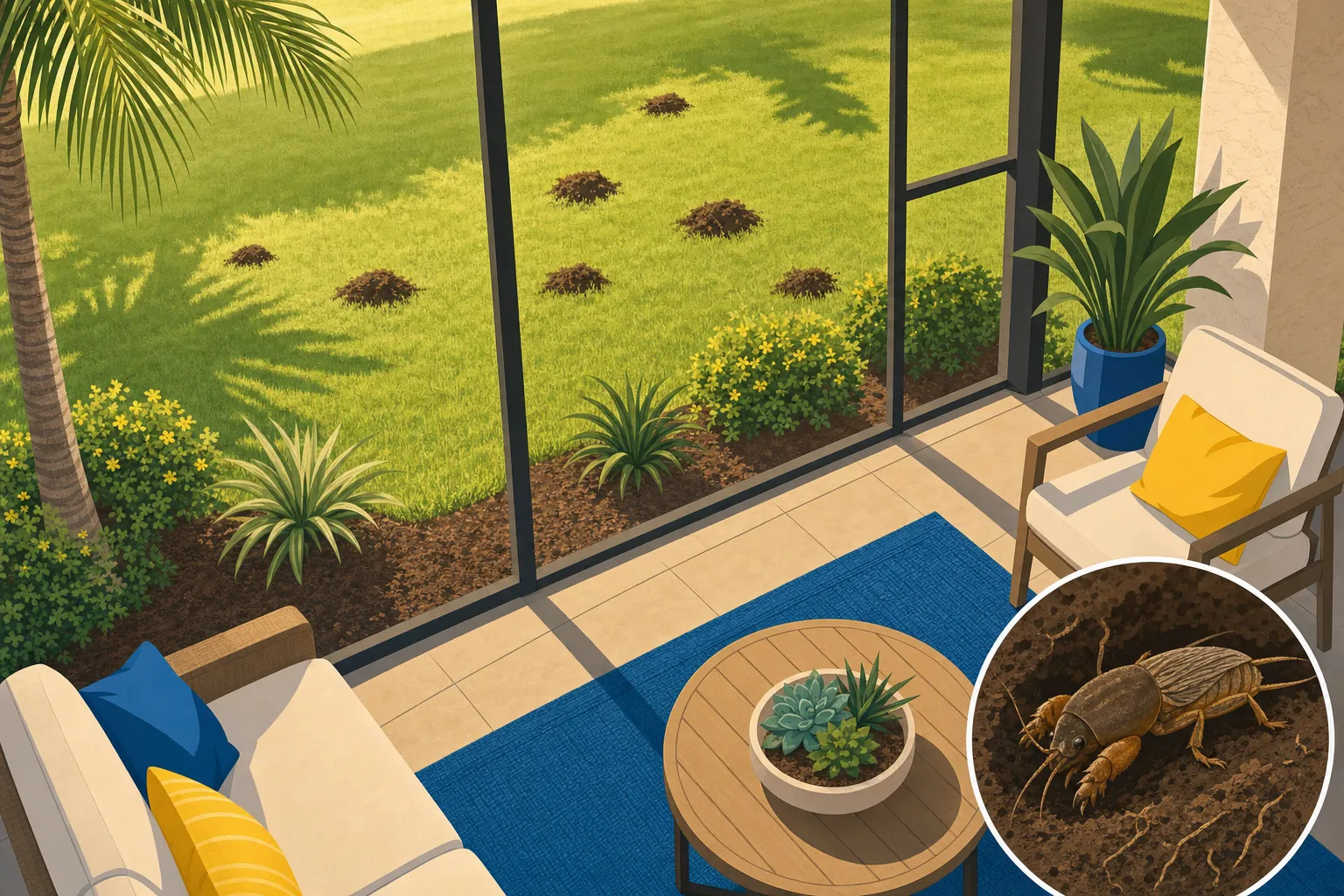
You head out to move the trash cans and the front yard looks like somebody worked it over with a garden fork overnight. Flipped-up chunks of St. Augustine, and sod you can peel back with two fingers. Before you declare war on whatever critter did it, get down and look at the roots. In most Bradenton yards, armadillos and raccoons tearing up the lawn after dark are hunting white grubs, the fat C-shaped beetle larvae chewing on grass roots a couple inches down. The animals doing the digging usually leave a bigger mess than the grubs ever would.
This one gets misread all the time. Folks go after the animal and never look at what pulled it into the yard. If you want eyes on it, Request a Lawn Care Quote, or see how we handle turf over on our Bradenton lawn care page. Everything below follows UF/IFAS guidance on reading the signs.
The tell: turf that lifts like loose carpet
Two things usually show up together: overnight digging, and grass that pulls up far too easily. UF/IFAS describes a quick check at the edge of a yellowing or thinning spot, where you cut down a couple inches and pull the sod back. If it lifts like a loose flap with barely any roots holding on, something has been eating those roots from below.
The animal signs point the same way. Foraging armadillos leave shallow, cone-shaped holes about one to two inches wide and up to six inches deep, scattered with no real pattern. UF/IFAS Extension notes that armadillos and raccoons frequently dig up lawns going after these protein-rich grubs, so the holes you see up top are really a symptom of what is happening at the roots.
On every inspection
What grub trouble looks like in a Bradenton lawn
- Turf lifts like carpet Roots are eaten away, so the sod peels back with no resistance
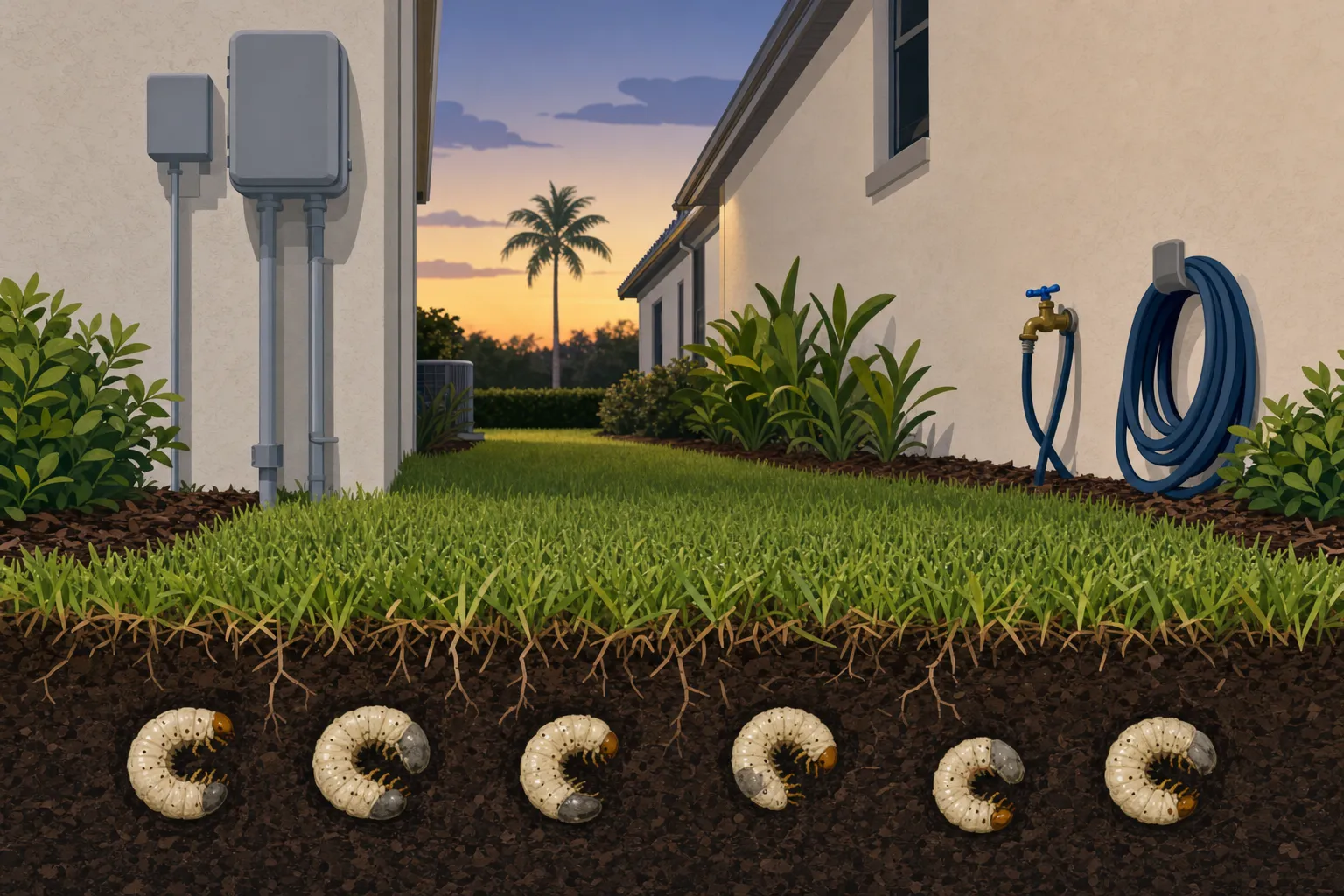
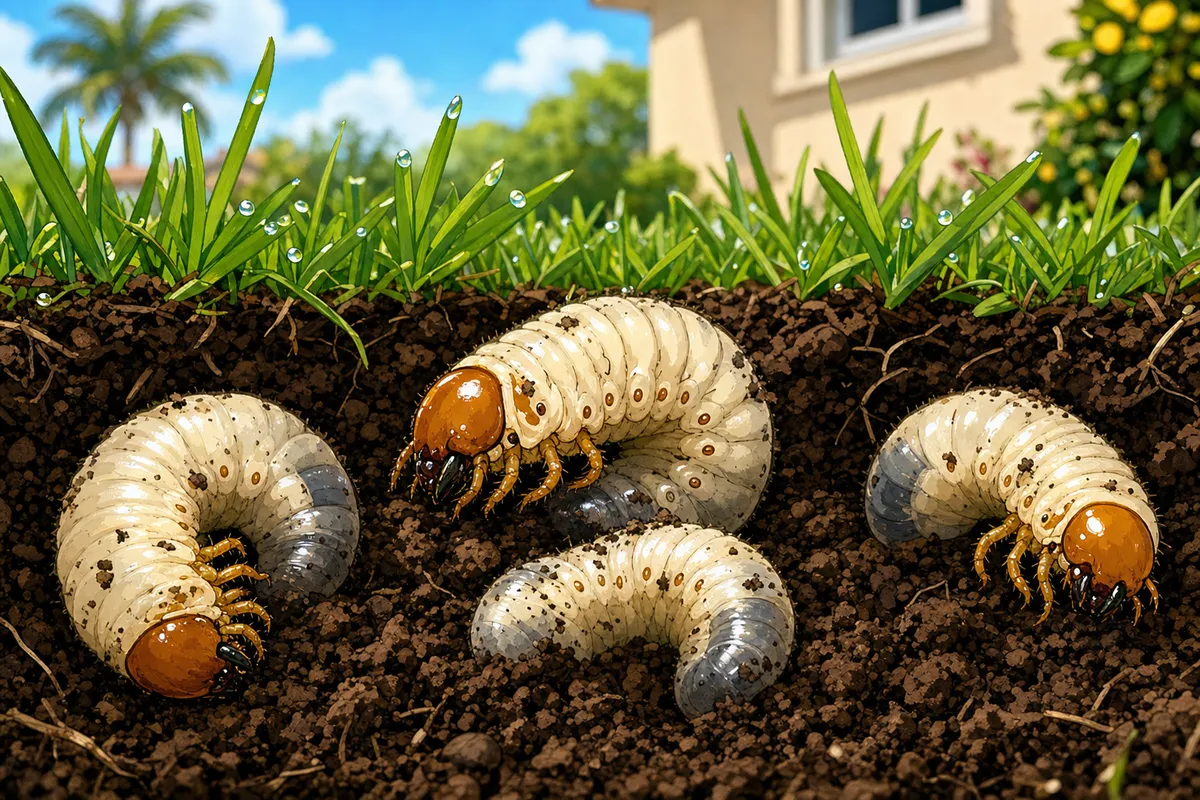
- C-shaped white grubs Cream body, brown head, three pairs of legs, curled into a C
- Overnight cone holes Armadillo diggings run about 1 to 2 inches wide and up to 6 inches deep
- Yellow then dead patches Show up in late summer to early fall, worse when the turf is drought-stressed
- Beetles at the porch light The adult May or June beetles and masked chafers you see at night lay the eggs
Signs to confirm before you treat anything. Source: UF/IFAS.
Grub damage is easy to confuse with drought or chinch bugs, which is why the pull test matters. Drought-stressed grass and chinch-bug damage keep their roots, so the sod stays anchored. Grub-fed turf comes up like a rug.
What white grubs actually are, per UF/IFAS
“White grub” is a catch-all name for the larvae of scarab beetles. In Florida lawns that mostly means masked chafers (Cyclocephala species) and May or June beetles (in the genus Phyllophaga), though a few other scarabs show up too. UF/IFAS describes the larvae as whitish, curled into a C-shape, with a brown head and three pairs of legs, running anywhere from about a half inch to two inches long. The chafer grubs common in our lawns sit on the smaller end of that range.
They live right at the soil and thatch line and feed on the roots of every turfgrass species, which is why the grass loses its grip on the soil. The adults you hear thunking against the porch light on a summer night are the egg-layers. Moist soil is what lets those eggs hatch and survive, and UF/IFAS points out that over-watering can invite egg-laying females in, especially when the ground nearby is dry. Between our sandy soil and the afternoon storms that soak the ground all summer, Southwest Florida gives them a comfortable nursery. You can read the underlying research at UF/IFAS Extension (EDIS).
The square-foot check: how many grubs actually justify treatment
Finding a grub or two does not mean you have a problem. Here is the check UF/IFAS recommends. At the edge of an off-color patch, cut three sides of a one-foot square about two inches deep, fold the flap of sod back, and count the grubs in that square. Do it in a few spots around the yard to get a fair average.
The number that matters: UF/IFAS Extension says healthy grass can tolerate roughly five to seven grubs per square foot. Below that, a healthy lawn shrugs them off. Once you climb past it, especially on turf that is already stressed, treatment starts to make sense.
Pro tip: Cut your test square at the edge of a thinning patch, not dead center. The middle is already gone. The living edge is where the grubs are still feeding, so that is where you get an honest count.
Timing: why this blows up in late summer and fall
White grubs run about a one-year cycle. Adult beetles emerge and lay eggs into the soil through early and mid summer. The eggs hatch, and the young grubs start feeding on roots. UF/IFAS notes the serious damage tends to become obvious in late summer to early fall, right when the turf is also fighting heat and any dry spells. That is also when the digging animals go to work, because the grubs are big and plentiful.
On timing of control, UF/IFAS splits it in two. Preventive products go down in spring, around April and May, ahead of the hatch. Curative products are the summer play, roughly June through August, aimed at grubs that are already feeding. The goal either way is to reach the grubs while they are young and near the surface, before they bulk up into large, tougher larvae. Whatever you use, read and follow the product label to the letter.
Seasonal pressure
White grub timing in Southwest Florida
- Spring Apr to MayBuilding
Beetles emerge and lay eggs. UF/IFAS preventive window.
- Summer Jun to AugActive
Eggs hatch in moist soil and young grubs feed. UF/IFAS curative window.
- Late summer to fall Sep to OctPeak
Dead patches and overnight digging show up.
- Winter Nov to MarLower
Cooler soil slows feeding, though some grubs hang on in mild winters.
Late summer to fall runs hottest. General Florida turf timing. Source: UF/IFAS.
Grub control is what eases the digging
Here is where people spin their wheels. Chasing the animal off does nothing about why it came. UF/IFAS describes armadillos as insectivores that get around 90 percent of their diet from soil insects, grubs included, and they sniff out the richest patches. Knock the grub population down and the yard gets a lot less interesting to them.
Two habits feed the whole cycle: heavy watering and heavy feeding. UF/IFAS advises watering and fertilizing sparingly to hold down the grubs and earthworms that draw armadillos in, and drier soil is harder for them to dig. Good news for us on the calendar. Here in Bradenton and the rest of Manatee County, the June 1 to September 30 restriction on nitrogen and phosphorus fertilizer already keeps you from piling on the food during the wet season. If you are fuzzy on those dates, we broke them down on our Manatee County fertilizer rules page.
Be straight with yourself about the ceiling here, though. UF/IFAS is clear that cutting the soil-insect buffet has not been proven to fully stop a determined armadillo. What it does is make your lawn a worse restaurant, which usually eases the pressure over time rather than promising a spotless yard.
Getting the lawn back: plugging or sodding
Once the grubs are under control, our long warm season does a lot of the healing for you, and thin spots often fill back in on their own. Bare, dead areas are a different story, since the roots are gone and there is nothing left to run.
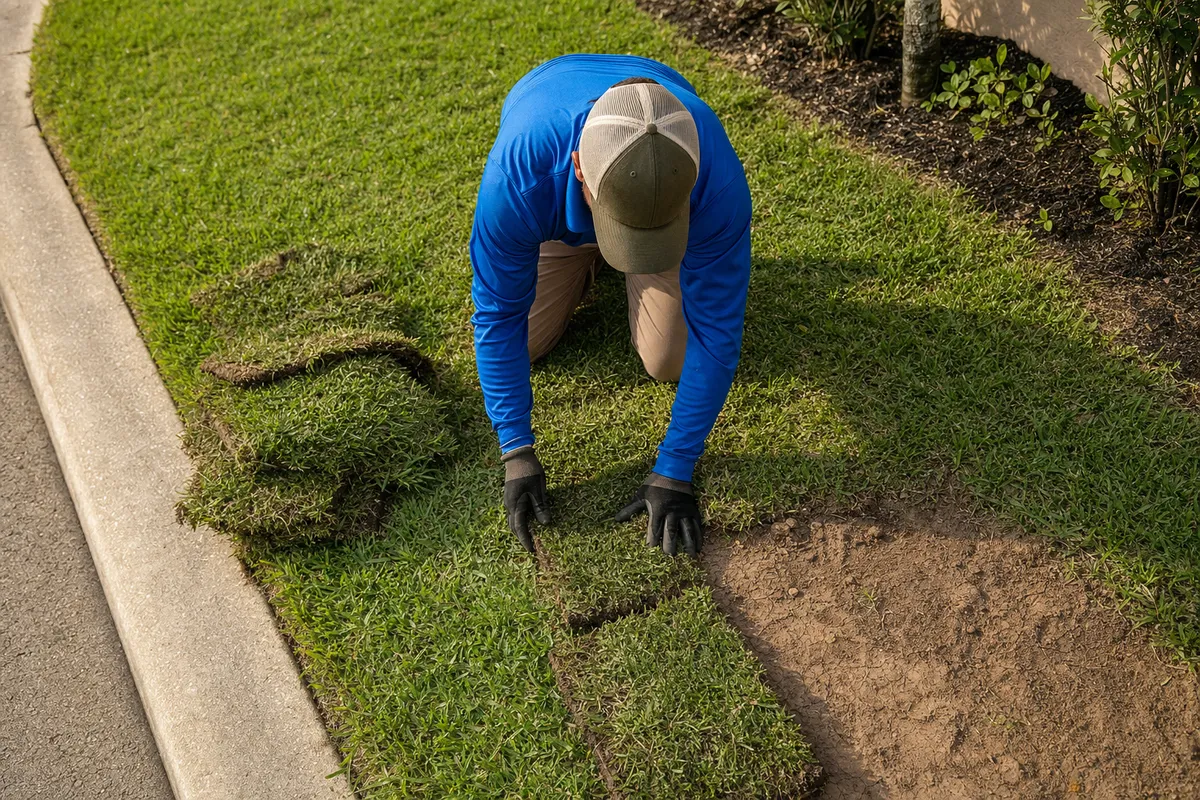
One thing that trips people up: you cannot fix St. Augustine with a bag of seed. UF/IFAS is blunt about it. St. Augustinegrass is established only by vegetative means, meaning sod, plugs, or sprigs. For small bare patches, plugging is the practical route, and we walk through it on our plugging St. Augustine in Bradenton guide. Bigger blowouts usually call for fresh sod. Either way, match the cultivar to what you already have so it blends, and keep the new material watered while it roots in. Costs swing with lawn size and how far the damage spread, so to get real numbers, Get a Lawn Care Estimate.
What not to do, and when to call for help
A few ways this goes sideways:
- Filling the holes and calling it done. The food is still under the grass, so the digging comes right back.
- Emptying a bag of grub killer over the whole yard before you have confirmed grubs. Identify the pest first with the square-foot check, then decide. If you do apply a product, follow the label, keep it off any surface where food is prepared, and store and place it out of sight and reach of kids and pets.
- Trying to seed the dead spots. St. Augustine will not grow from seed, so that is money down the drain.
Call in a pro when the same patches keep getting torn up night after night, when your square-foot counts are running past that five-to-seven range, or when dead areas are spreading faster than the lawn can recover. Our approach is boring on purpose: confirm the grubs with a square-foot check, match the treatment to where the grubs are in their cycle, and follow the label. Done right and paired with sensible watering, that reduces how often grubs come back, though no honest lawn person will promise you they are gone for good.
Frequently Asked Questions
How do I know it’s grubs and not drought or chinch bugs?
Do the pull test. Grub-damaged sod lifts up like carpet because the roots are eaten away, while drought-stressed and chinch-bug turf stays anchored. Confirm it by finding the cream-colored, C-shaped larvae in the top couple inches of soil, per UF/IFAS.
Do I have to treat every grub I find?
No. UF/IFAS says healthy grass tolerates about five to seven grubs per square foot without real harm. Treat when your counts climb past that, or when the turf is already stressed and struggling.
Will controlling the grubs stop the armadillos from digging?
It helps, but be realistic. Fewer grubs make your yard a less rewarding place to dig, and UF/IFAS pairs that with easing off water and fertilizer. UF/IFAS also notes it may not fully stop a determined armadillo, so treat it as reducing the pressure rather than flipping a switch.
If your Bradenton lawn keeps getting worked over at night and you would rather hand it off, Request a Lawn Care Quote and we will take a look at what is going on under the grass.