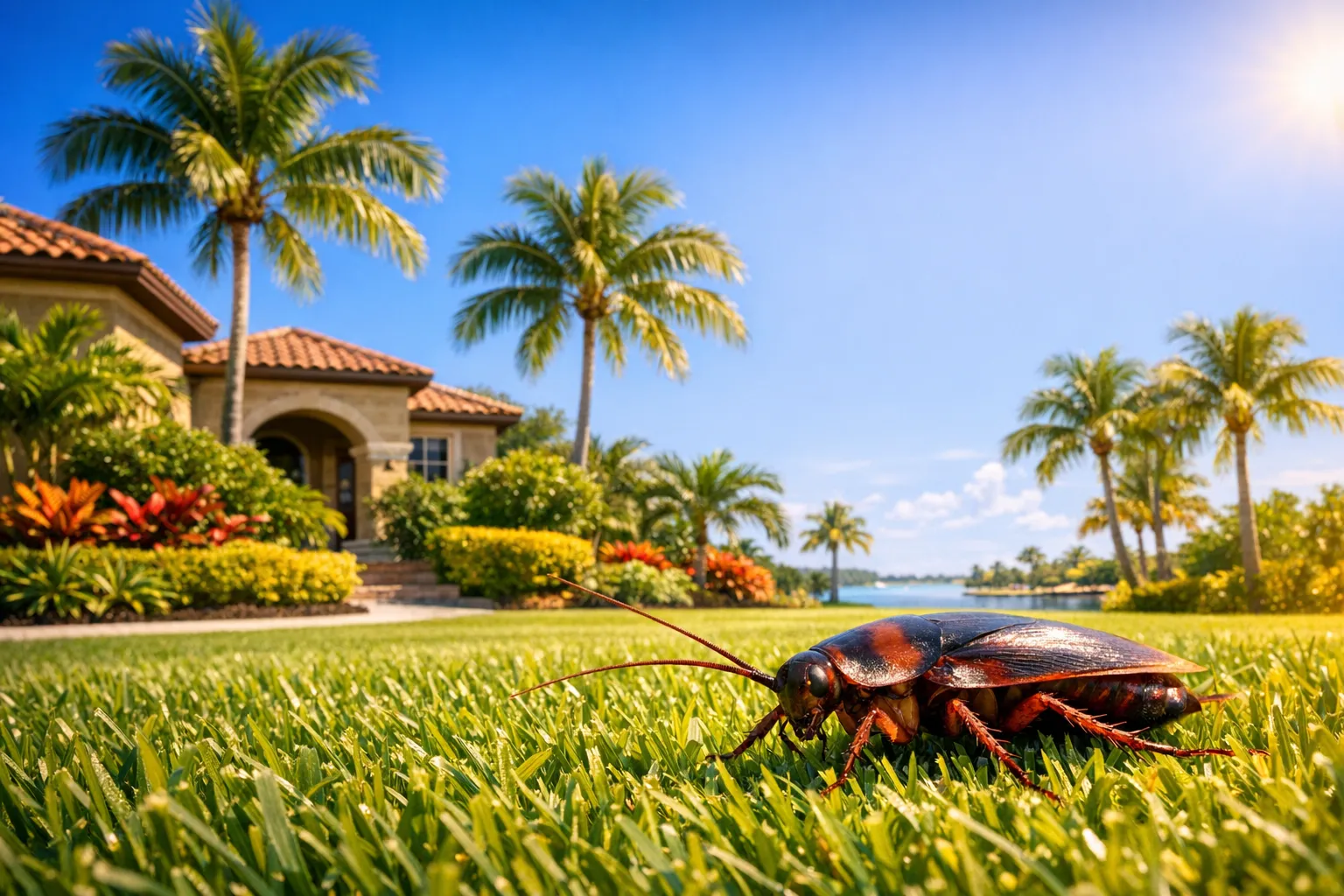
It’s 11 p.m., the kitchen light flicks on, and something shiny and brown makes a break for the baseboard. You get about half a second to decide: beetle, or cockroach? In Southwest Florida — where sandy soil, afternoon storms, and 90% humidity basically hand-deliver insects to your slab — that guess matters more than you’d think. Same silhouette, very different treatment plan.
This is the field guide we wish more homeowners had before they grabbed the OTC spray can. If you’d rather skip straight to a professional set of eyes, our pest control services team handles both critters (and the ones that just look like them) across Venice, North Port, Port Charlotte, and everywhere in between. Prefer to see what a plan looks like without a phone call? Punch your home details into the pest control calculator and you’ll get a range back in about a minute.
The 60-Second Beetle vs. Cockroach Check
Most of the time you can settle this argument from six feet away if you know what to look at. The five tells:
- The back. Beetles wear a hard shell with a seam straight down the middle — those are called elytra, and they’re basically armored wing covers. Cockroaches have leathery, overlapping wings that sit flat and shiny across the back with no seam.
- The antennae. Beetle antennae are short, often clubbed or elbowed at the tip. Cockroach antennae are long, thin, whip-like, and constantly twitching — often as long as the whole body.
- The legs. Cockroaches are built like sprinters: long, spiny, and set out to the sides for lightning takeoffs. Beetle legs are shorter, tucked closer under the body, built for walking.
- The head. A cockroach’s head is tucked under a shield-shaped plate called the pronotum, so from above you mostly see the shield. A beetle’s head is out in front, visible, and usually distinct from the thorax.
- The gait. Cockroaches sprint, freeze, then sprint again. Beetles bumble. If it looked like it was doing math while it ran, it was probably a cockroach.
| What you see | Beetle | Cockroach |
|---|---|---|
| Back / wings | Hard shell with a straight center seam (elytra) | Leathery, overlapping wings, no seam |
| Antennae | Short, often clubbed or elbowed | Long, thin, whip-like — often body-length |
| Legs | Shorter, tucked under the body | Long, spiny, splayed out for sprinting |
| Head | Visible, out in front | Hidden under a shield (pronotum) |
| Movement | Slow bumble, sometimes flies clumsily | Sprint, freeze, sprint — hugs baseboards |
| Where you find it | Porch lights, mulch, stored grain, wood | Kitchens, bathrooms, drains, palm trees, sewers |
Quick-glance ID chart — most SWFL homeowners can settle this from across the room.
The Usual Suspects in Southwest Florida
Now the fun part. A handful of local species get misidentified constantly, and each one shifts the treatment plan.
The ones that are actually cockroaches
- American cockroach (a.k.a. “palmetto bug”). Big, reddish-brown, up to two inches. Lives outside in palm boots, mulch, meter boxes, and sewers. Comes indoors after heavy rain or a cold snap. This is the one that flies at your face on the lanai.
- Smokybrown cockroach. Same general size as the American, but a uniform dark mahogany with no lighter shield markings. Loves gutters, palm fronds, and attic soffits.
- German cockroach. Small (about half an inch), tan, with two dark stripes behind the head. Almost always indoors, almost always in the kitchen or bathroom, and almost never alone. This is the one that turns into a real infestation fast.
- Florida woods cockroach. Native, dark, glossy, and notably slow-moving — another one homeowners commonly call a “palmetto bug.” An occasional home invader that also gets mistaken for a beetle. See below.
The ones that are actually beetles
- June beetles / May beetles. Chunky brown scarabs that swarm porch lights in early summer. Bumble into windows, land on their backs, look like clumsy little tanks. Larvae (white grubs) can chew St. Augustine roots, which is a lawn problem, not a house problem.
- Ground beetles. Shiny black, fast walkers, often show up in garages after storms. Beneficial outside — they eat other pests — but nobody wants them in the laundry room.
- Click beetles. Long, narrow, and famous for the audible click they make when they flip themselves off their backs. Harmless.
- Powderpost beetles. These are the ones you do want identified fast. Tiny exit holes in bare wood — think joists, subfloor, hardwood furniture — plus a fine flour-like frass underneath. That’s a wood-destroying-organism call.
- Pantry / cigarette / drugstore beetles. Small, reddish-brown, found in flour, dog food, spices. Different problem entirely.
The one that fools everybody
The Florida woods cockroach is the classic beetle look-alike. It’s dark, glossy, native, walks (doesn’t sprint), and sits low. Homeowners find them around mulch beds, A/C condensate lines, and garage floor drains and swear they’ve got a beetle problem. (The less common Oriental cockroach fools people the same way.) Nope — that’s a moisture-loving roach, and it needs cockroach protocols.
Why the Right ID Actually Changes the Treatment
Here’s where most DIY plans go sideways. Beetles and cockroaches don’t just look different — they get controlled very differently, and using the wrong product can make things worse.
- German cockroaches get a bait-first, non-repellent approach. Repellent pyrethroid sprays (which is what most grocery-store cans are) actually scatter the population and contaminate bait placements, so you end up with more roaches in more rooms. That’s the exact wrong move.
- American, Smokybrown, and Florida woods cockroaches — the “palmetto bug” crowd — are moisture and access driven. Control lives on the perimeter: exclusion, harborage removal, and a treated barrier around the slab. Treating them like an indoor German roach problem wastes product.
- Beetles are usually a one-off intruder or a stored-product / structural issue. A June beetle on the porch doesn’t need a home treatment. A powderpost beetle in a floor joist absolutely does, and it’s a wood-destroying-organism inspection, not a general pest visit.
Pro tip: If you see the same “beetle” two nights in a row in the same spot — especially near a drain, water heater, or A/C air handler — assume it’s a moisture-loving cockroach until proven otherwise. Moisture is the tell.
Not sure which camp yours falls into? WaveGuard memberships roll quarterly exterior work, interior touch-ups, and free re-services into one plan, and the first visit is basically a full ID and pressure assessment.
Safe Homeowner Checks Before You Call
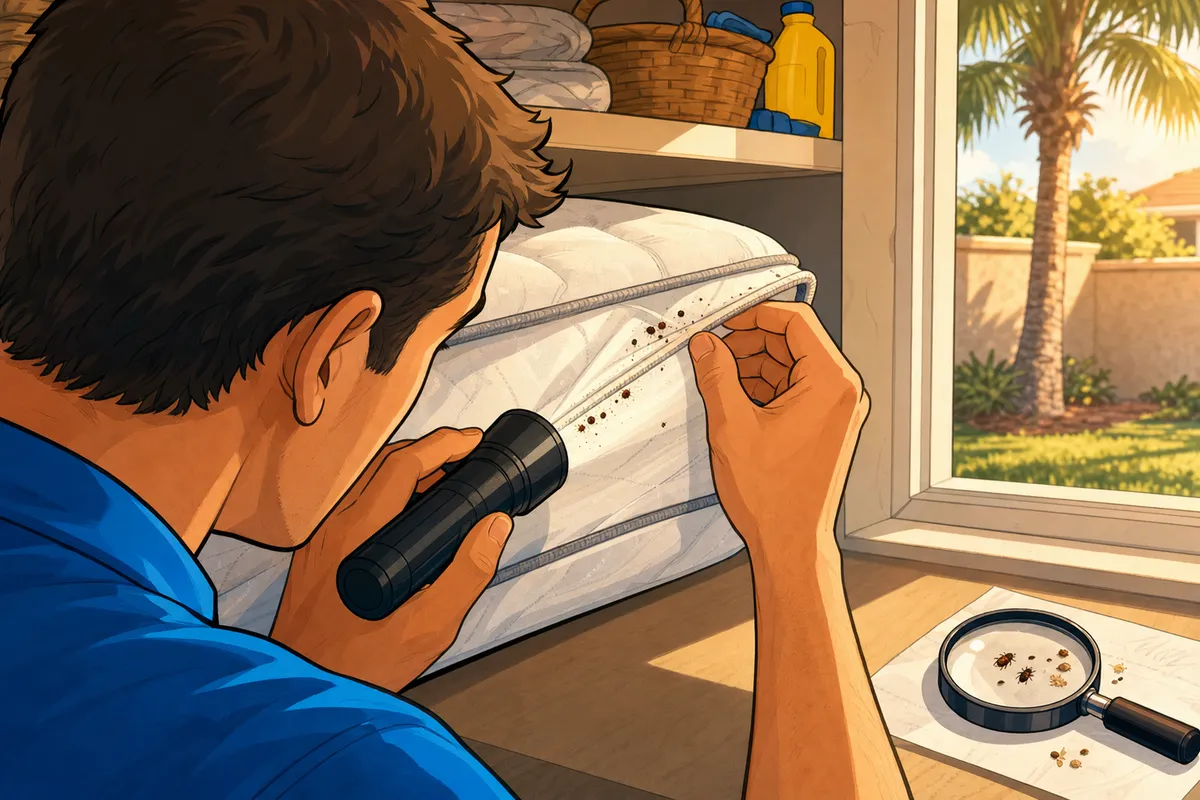
You can do a surprising amount of triage yourself before anyone shows up. Grab a flashlight and check the following.
On every inspection
What a tech looks for — and what you can spot too
- Droppings Cockroach droppings look like coarse pepper or coffee grounds (small species) or dark rice grains with blunt ends (American). Beetle frass is finer and often powdery.
- Egg cases (oothecae) Purse-shaped, dark brown, about the size of a kidney bean. Only cockroaches leave these. Common spots: under sinks, behind fridges, in cardboard.
- Shed skins Cockroach nymphs molt several times. Papery, translucent skins near warm appliances are a dead giveaway.
- Greasy trails Heavy German roach traffic leaves dark smears along baseboards and cabinet edges.
- Exit holes in wood Pin-sized round holes with fine sawdust below = powderpost beetle. This is a WDO call, not general pest.
- Porch-light pile Dozens of chunky brown bugs under the porch light after a storm are almost always June beetles. Annoying, not dangerous.
Snap a photo of anything on this list before you clean it up — it saves the tech 20 minutes on the first visit.
What Not to Do
- Don’t squish it. Two reasons. Crushed roach bodies release allergen proteins that trigger asthma and allergy symptoms — a real issue in tight, air-conditioned SWFL homes. And crushing a cockroach can leave an intact egg case behind that goes on to hatch anyway. Vacuum instead, then empty the canister outside.
- Don’t fog the kitchen. Bug bombs and aerosol foggers push German roaches deeper into wall voids and coat every surface with repellent, which sabotages any bait you (or a pro) put down later.
- Don’t ignore repeat sightings. One adult cockroach in the daytime almost always means more you’re not seeing. One June beetle on the lanai in July? That’s just summer in SWFL.
- Don’t spray a suspected powderpost beetle infestation with hardware-store product. You’ll mask the evidence without touching the larvae eating the wood. Get an inspection.
When to Call a Pro
Time to stop guessing and get help when:
- You’ve had multiple sightings in 48 hours, especially indoors.
- You see cockroaches during daylight hours (usually means the harborage is full).
- You spot a German cockroach — any German roach, ever, means a treatment plan.
- You find oothecae, molts, or greasy trails.
- You see pin-sized exit holes and fresh sawdust in structural wood or hardwood furniture.
- Your quarterly barrier is more than 90 days old and afternoon storms have been hammering the perimeter.
If you’re still not sure what you’re looking at, our pest library has photo references for the local species, and any Waves tech can confirm ID from a decent phone photo before we ever roll a truck.
How Waves Handles It
Our approach depends entirely on what you actually have:
- ID first. Photo, sample, or on-site inspection. We don’t guess — wrong ID wastes your money and our product.
- Species-specific protocol. German roach cleanouts get bait, IGR, and a 10–14 day follow-up. Palmetto bug pressure gets a perimeter and exclusion focus. Beetles get whatever their situation actually calls for — often nothing beyond exclusion advice.
- Documented conditions. Moisture, sanitation, harborage, entry points. We write it down so the next visit isn’t starting from zero.
- Follow-up baked in. WaveGuard plans include free re-services between quarterly visits, because SWFL pest pressure doesn’t respect a 90-day calendar.
Frequently Asked Questions
Are cockroaches bugs or beetles?
Neither, technically. Cockroaches belong to the order Blattodea — the same order as termites, which is a family tree most people find deeply unsettling. Beetles are in a completely separate order called Coleoptera. “True bugs” (order Hemiptera) are a third group entirely. Both lineages are ancient, and cockroaches and beetles alike show up in the fossil record going back hundreds of millions of years — not a fun fact you needed at bedtime, but there it is.
Is there a cockroach that looks like a beetle?
Yes — the Florida woods cockroach is the usual culprit (with the less common Oriental cockroach a close second). They’re dark, glossy, walk instead of sprint, and hang out around mulch beds, A/C condensate lines, and garage drains. Sarasota-area homeowners misidentify these all the time as a “big shiny beetle.” The tell: check the antennae. Long and whip-like = cockroach. Short and clubbed = beetle.
Why should I not squish cockroaches?
Two reasons worth knowing. First, cockroach body proteins are a documented allergen and asthma trigger — crushing them aerosolizes those proteins across your counter or floor. Second, cockroach egg cases (oothecae) are tough, and a female may drop or deposit one that survives being disturbed and hatches later anyway. Vacuum, empty the canister into an outdoor trash can, done.
Ready to Stop Guessing?
If you’re staring at something on the baseboard right now and this article didn’t fully settle it, that’s what we’re here for. Send a photo, book a first visit, or price out a quarterly plan on the pest control calculator — no hardcoded pricing games, just a real range based on your home. Or go straight to pest control services and we’ll get you on the schedule. Either way, you can put the flip-flop down.