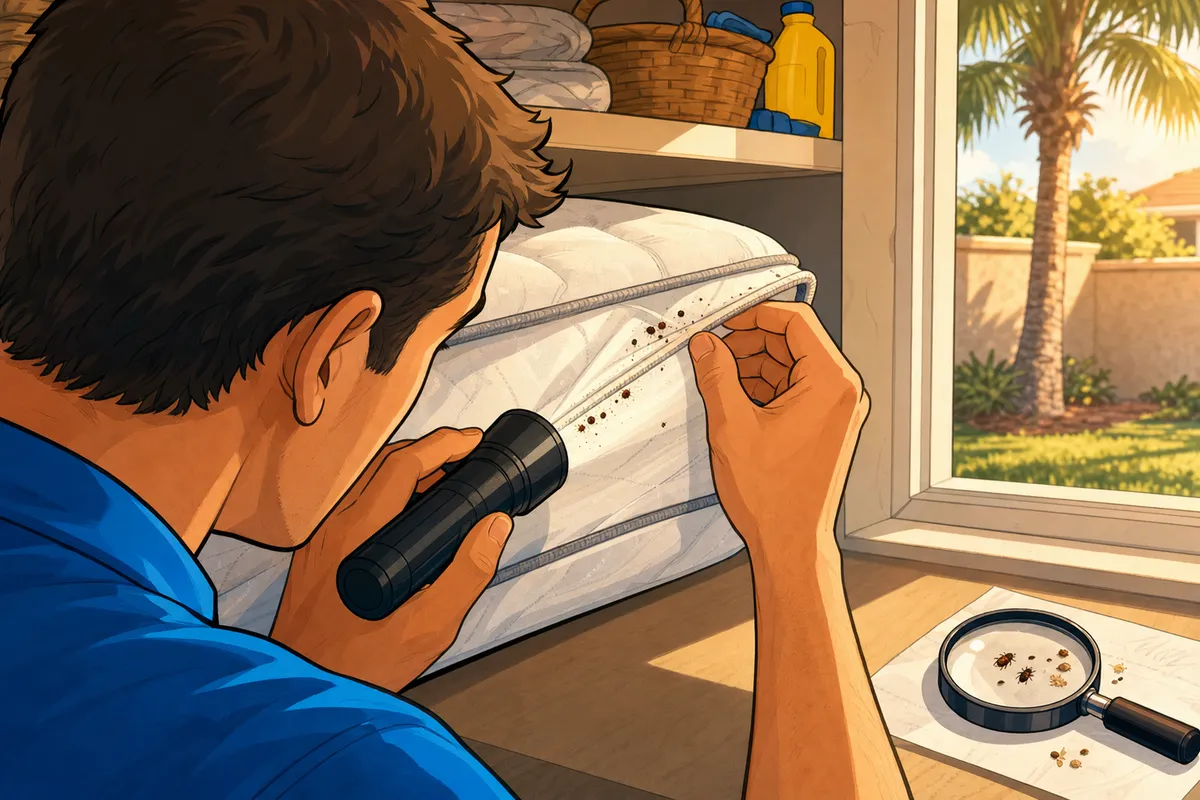
You found a suspicious bug along your mattress seam, and the bleach under the sink starts to look like a quick fix. Do not use household bleach as a bed bug treatment. Killing a visible insect would not tell you whether hidden bugs or eggs survived. A disinfectant label is not evidence that a product controls bed bugs.
For help deciding what to do next, request a pest control quote. Describe the signs you found and which rooms are affected.
Can bleach kill bed bugs or their eggs?
Even if bleach kills an exposed bug, that is not the same as controlling an infestation. We do not recommend a bleach concentration, contact time, or recipe for bed bugs or their eggs. Claims that bleach reliably destroys eggs in a mattress or wall crack should not guide treatment.
The practical test is the product label: it must permit use against bed bugs and on the surface being treated. EPA’s pesticide safety guidance explains why both the target pest and application location matter. A cleaner intended for a hard surface should not become a mattress spray.
Identify the pest before treating
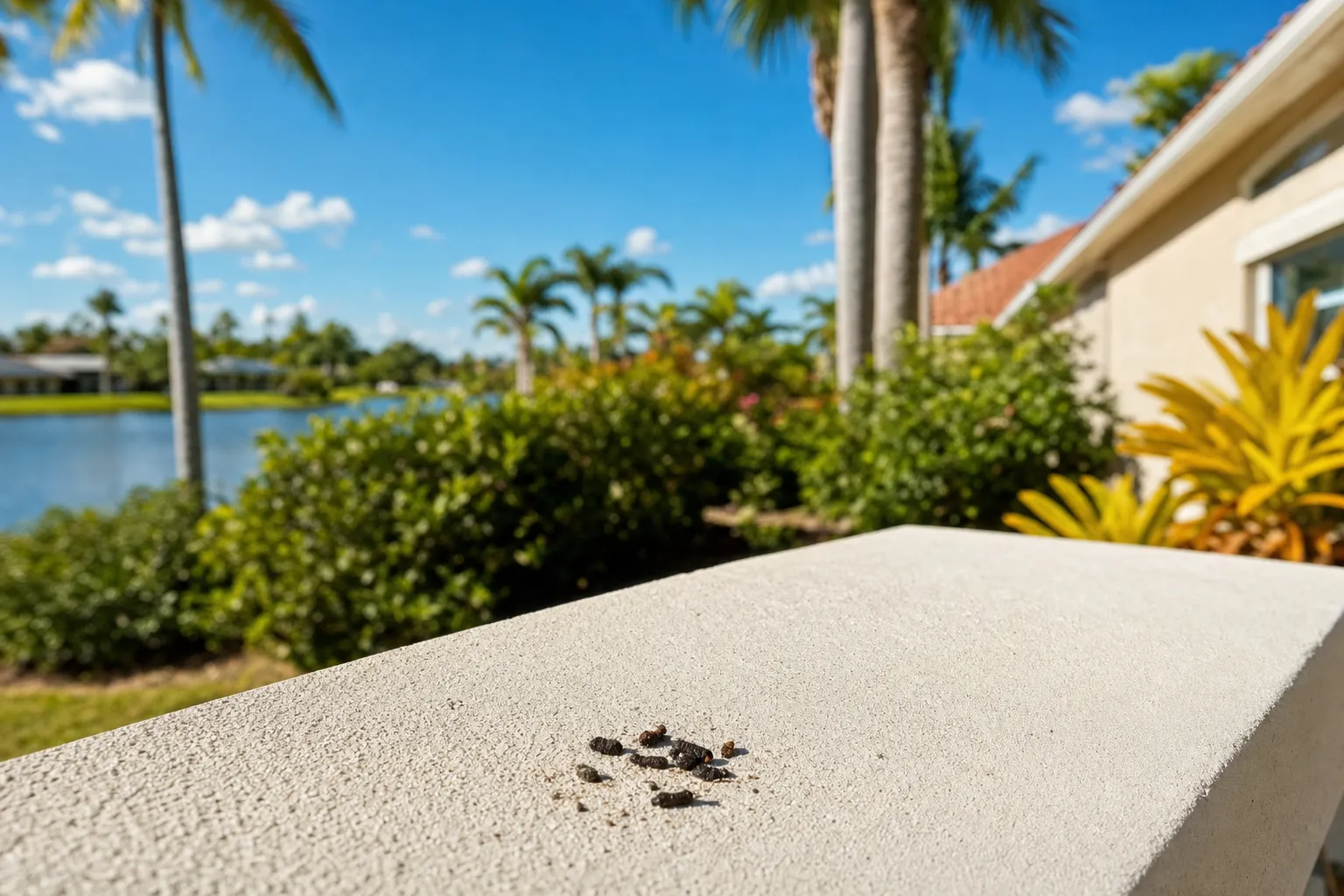
Use a flashlight to examine mattress piping, box-spring seams, and accessible bed-frame joints. Look for live bugs, shed skins, and dark or rusty marks. Photograph what you find or contain a specimen for identification. Avoid dismantling electrical fixtures or spraying into outlets.
Bites alone cannot confirm bed bugs, even when they appear in a line. EPA’s guide to finding bed bugs describes physical evidence and common hiding places. Our pest library can also help you compare common household pests before choosing a treatment.
Bed bugs hide in narrow gaps and furniture seams. Treating a visible patch on a sheet misses those spaces. That is why an inspection matters more than watching one exposed bug stop moving.
Why this matters in Southwest Florida homes
A Sarasota house, Bradenton rental, or Venice vacation condo can all have the same problem: bed bugs arriving with belongings. Travel and secondhand furniture deserve attention; a clean room does not rule out an infestation. University of Minnesota Extension’s bed bug guide explains their hitchhiking behavior and the difficulty of eliminating them without professional help.
Florida sunshine is not a treatment guarantee. A bag in a hot car can have cooler areas inside its contents. EPA cautions that success depends on conditions and DIY heat can fail. Keep non-dryer-safe items contained while arranging a suitable treatment; do not assume an afternoon outside has cleared them.
Safe homeowner checks and preparation
These steps support a treatment plan; they do not prove that the whole room is clear.
- Use the dryer for suitable fabrics. EPA recommends 30 minutes on high heat for items that can withstand it. Washing alone may not kill bed bugs. Check care labels and appliance instructions; do not put heat-sensitive items through a hot cycle.
- Contain laundry during transport. Bag affected items before carrying them through the home. Place treated items in clean, sealed bags or containers so they do not return to the same exposure.
- Reduce clutter carefully. Keep belongings from an affected room from spreading into other rooms. Make the bed and nearby furniture accessible for inspection.
These preparation steps follow EPA’s treatment-preparation guidance. Ask your provider for instructions specific to the method they plan to use.
Vacuum accessible seams and joints, then seal collected debris and dispose of it outdoors. Bed-bug-rated encasements and interceptor traps can support containment and monitoring. Encasements do not treat bugs elsewhere in the room, and their outer surfaces still need inspection. Continue checking for activity after cleanup, using EPA’s DIY control guidance as a starting point.
What not to do
Do not soak mattresses or furnishings in bleach. It can damage materials and create unnecessary chemical exposure. Never mix bleach with ammonia, vinegar, or other cleaners; CDC’s bleach guidance warns that mixtures can release dangerous vapors.
Avoid rubbing alcohol as a bed bug remedy because it is flammable. Do not try to heat a room with space heaters or a raised thermostat. Foggers cannot reliably reach concealed bugs and should not be relied on to clear an infestation.
If a pesticide is part of the plan, use an EPA-registered product labeled for bed bugs and follow every application, protective-equipment, and re-entry instruction. Keep children and pets away as directed. More product is not a substitute for reaching the right locations.
| What to weigh | Household bleach | Dryer treatment | Professional treatment plan |
|---|---|---|---|
| Appropriate role | Not recommended for bed bugs | Heat-tolerant belongings | Confirmed infestation |
| Main limitation | No reliable infestation control | Does not treat the room | Requires preparation and monitoring |
| Egg control | Do not rely on it | Effective with the recommended cycle | Depends on method and exposure |
| Ongoing protection | Do not rely on it | No residual effect | Depends on products and follow-up |
Choose a method by what it can treat. No single cleanup step proves an infestation is gone.
When to call a pro and our approach
Contact a professional when you find a suspected bed bug, see repeated physical evidence, or cannot inspect the affected furniture safely. For a condo or apartment, notify the property manager so inspection of nearby units can be coordinated. Do not wait for every resident to report bites.
Our pest control services start with identifying the problem and choosing an appropriate response. For bed bugs, discuss the affected rooms, preparation requirements, treatment options, and follow-up plan before work begins. Ask what evidence will be used to judge progress and what happens if activity continues. Treatment choice and price depend on the property and findings; a general household-pest estimate should not be treated as a bed bug quote.
Frequently asked questions
Should I spray bleach on my mattress for bed bugs?
No. Household bleach is not a reliable infestation treatment and can damage the mattress. Start with pest identification, contain affected belongings, and discuss treatment of the bed and surrounding room with a professional.
Does bleach kill bed bug eggs?
Do not rely on bleach to eliminate eggs. Hidden eggs are difficult to locate and reach, and a disinfectant claim does not establish bed bug control. Follow a plan that addresses both bugs and eggs, with checks for continuing activity.
Can a hot car kill bed bugs in my belongings?
Do not assume it will. Heat may not reach every part of a packed bag or object. Use a recommended dryer cycle only for suitable items, and ask about appropriate treatment for everything else.
Do bed bug bites prove I have an infestation?
No. Skin reactions can have other causes, and some people do not react to bed bug bites. Look for physical evidence and have a suspected insect identified before treating your home.
Get help with the next step
Skip the bleach experiment. Request a pest control quote and tell us what you found, where you found it, and whether the property shares walls with other units.