Jump to a section (8)
- 01Is a dead rat harmful?
- 02What to do first when you find a dead rat
- 03How to pick up and bag a dead rat
- 04What not to do with a dead rat
- 05Does a dead rat mean you have rats?
- 06What draws rats into a Southwest Florida yard
- 07Smell a dead rat but can’t find it?
- 08When to call a professional, and how Waves Pest Control approaches it
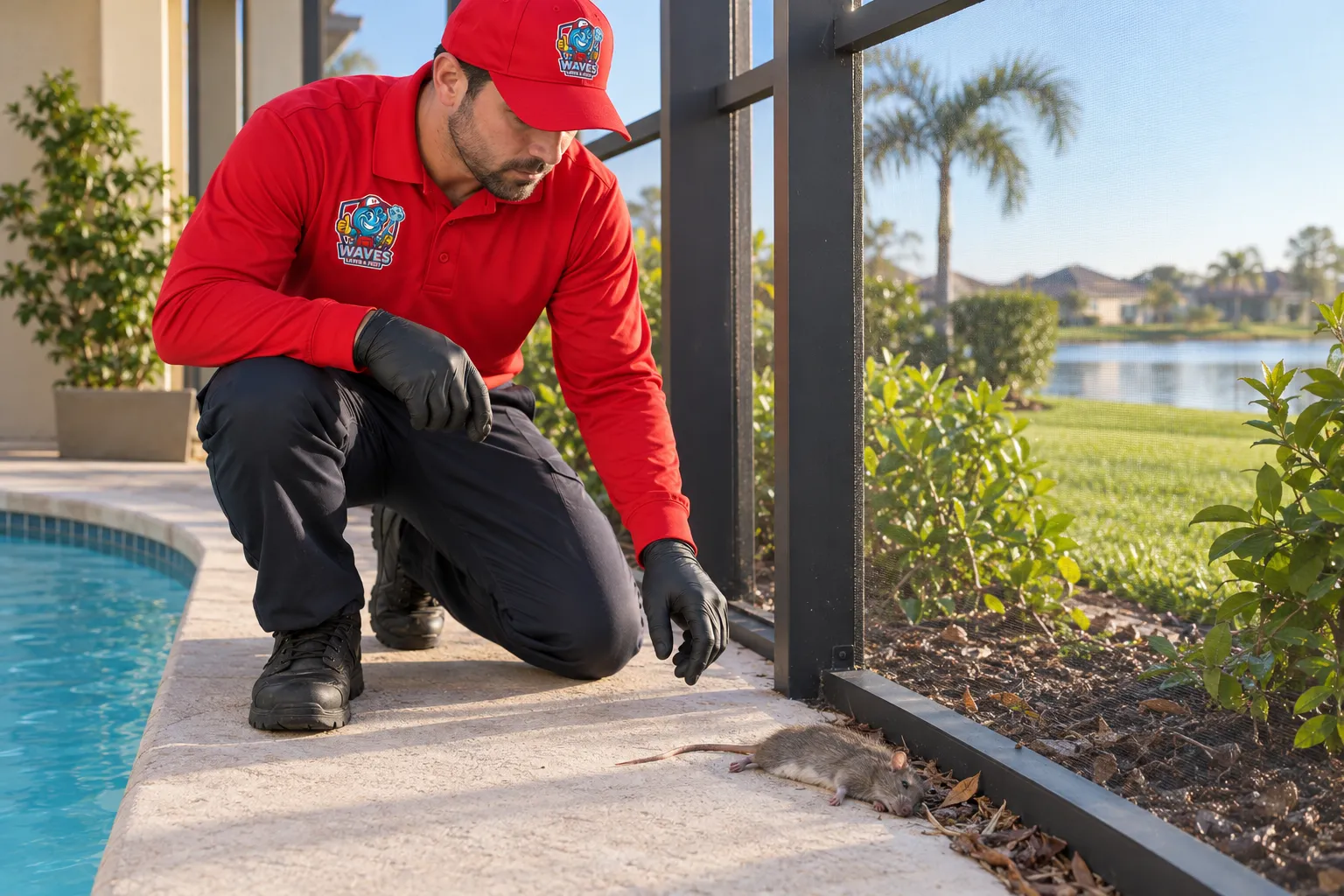
Finding a dead rat on the pool deck, in the St. Augustine or behind the garage trash cans is gross, and it raises two quick questions: how do you get rid of it without touching it, and does it mean more rats are living nearby? This guide walks through both, using the CDC’s cleanup steps and the EPA’s rodent guidance. For everything a visit can cover, see our pest control services page.
Is a dead rat harmful?
It can be, so treat it as a health risk and never pick it up bare-handed. The CDC says rodents are known to carry many diseases, and you cannot tell if a rodent is carrying a disease just by looking at it. Fleas are common on rodents too.
Pets are the other worry. The EPA tells homeowners to promptly remove and dispose of dead rodents to prevent accidental poisoning of wildlife and pets that might eat a dead animal. A rat that died after eating bait can still be a problem for a dog that finds it first.
What to do first when you find a dead rat
Keep kids and pets away from it, then pick it up with gloves, soak it with disinfectant and double-bag it. The steps below come straight from the CDC.
Seeing rats more than once, or finding droppings near the house? Get a rodent control estimate and have the entry points checked.
Pro tip: Before you bag it, take a quick photo of the rat and the spot where it was lying. Size, the place you found it and any droppings nearby help a technician tell a roof rat from a Norway rat later.
How to pick up and bag a dead rat
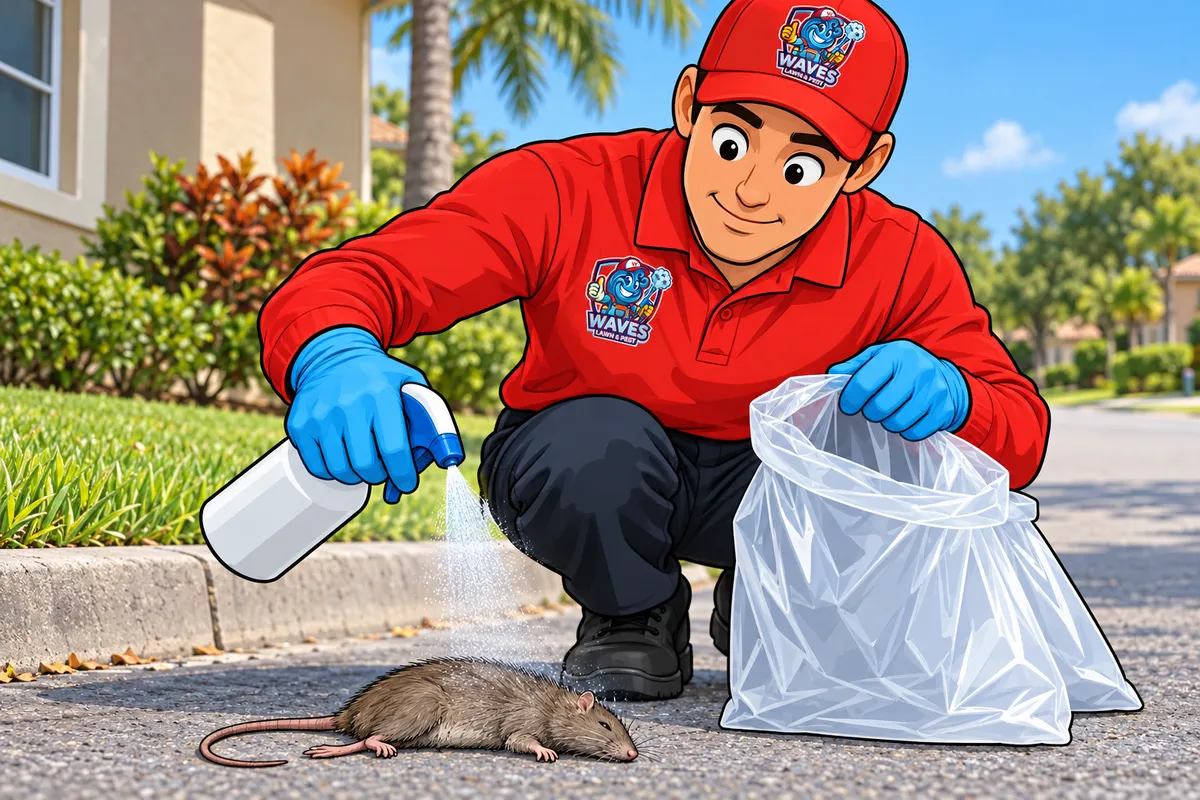
Wear rubber or plastic gloves, spray the rat with disinfectant, and seal it in two plastic bags. These are the CDC’s steps for cleaning up dead rodents:
- Put on rubber or plastic gloves.
- Spray the dead rat, any nest material and the area around it with a disinfectant. The CDC’s bleach mix is 1.5 cups of household bleach in 1 gallon of water (1 part bleach to 9 parts water), made fresh. Let it soak for 5 minutes, or as long as the disinfectant label says.
- Put the rat in a plastic bag, along with any used trap you plan to throw out.
- Tie the bag shut, put it in a second plastic bag, and tie that one shut too.
- Throw the bag into a covered garbage can that is emptied regularly. The CDC says your state health department can tell you about other ways to get rid of dead rodents.
- Wash your gloved hands with soap and water or a disinfectant, take the gloves off, then wash your hands with soap and warm water.
The CDC adds one step people skip. Since fleas are common on rodents, it suggests insect repellent on your clothing, shoes and hands while you pick up a dead rodent or its nest, and it names DEET or another EPA-registered repellent.
If the rat is in a snap trap you want to reuse, the CDC says to sink the trap and rat in a bucket of disinfectant for 5 minutes while wearing rubber gloves. Then hold the trap over a plastic bag, lift the metal bar so the rat drops in, rinse the trap well with water and let it dry completely.
What not to do with a dead rat
- Don’t grab it with bare hands or a kitchen towel you plan to keep using.
- Don’t sweep or vacuum droppings or nest material near it. The CDC says diseases spread from rodents to people mainly when people breathe in contaminated air, and sweeping or vacuuming can put tiny droplets containing viruses into the air.
- Don’t leave it for later where a dog, cat or wild animal can reach it.
- Don’t put out loose poison bait to “get the rest of them.” The EPA warns that rat and mouse poison products, if misused, can harm you, your children or your pets. If anyone in your house uses a bait product, read and follow the product label, keep it off food-preparation surfaces, and place it out of sight and reach of children and pets.
If your dog or cat chewed on a dead rat, call your veterinarian and mention that the rat may have eaten poison bait. If you touched the rat or its droppings and a recent illness has you wondering, the CDC says to talk to a healthcare provider and tell them about the rodent exposure.
Does a dead rat mean you have rats?
Not by itself, but it does mean rats are moving through your yard. A single dead rat does not tell you how many are left, so look for the signs of live rodents before you decide anything.
Here is how to tell if rats are active around your house. The CDC lists droppings and gnaw marks as two signs of rodents, and it notes that rodent droppings are pointed at one end and often contain hair. The EPA adds these signs inside a home:
- Droppings around food packages, in drawers or cupboards, and under the sink
- Nesting material such as shredded paper, fabric or dried plant matter
- Chewing on food packaging
- Holes chewed through walls and floors
- Stale smells coming from hidden areas
The CDC also gives a simple test: clean the droppings up the way it describes, then check the spot again. Droppings that show up after the cleanup mean rodents are still active there.
Which rat is it likely to be?
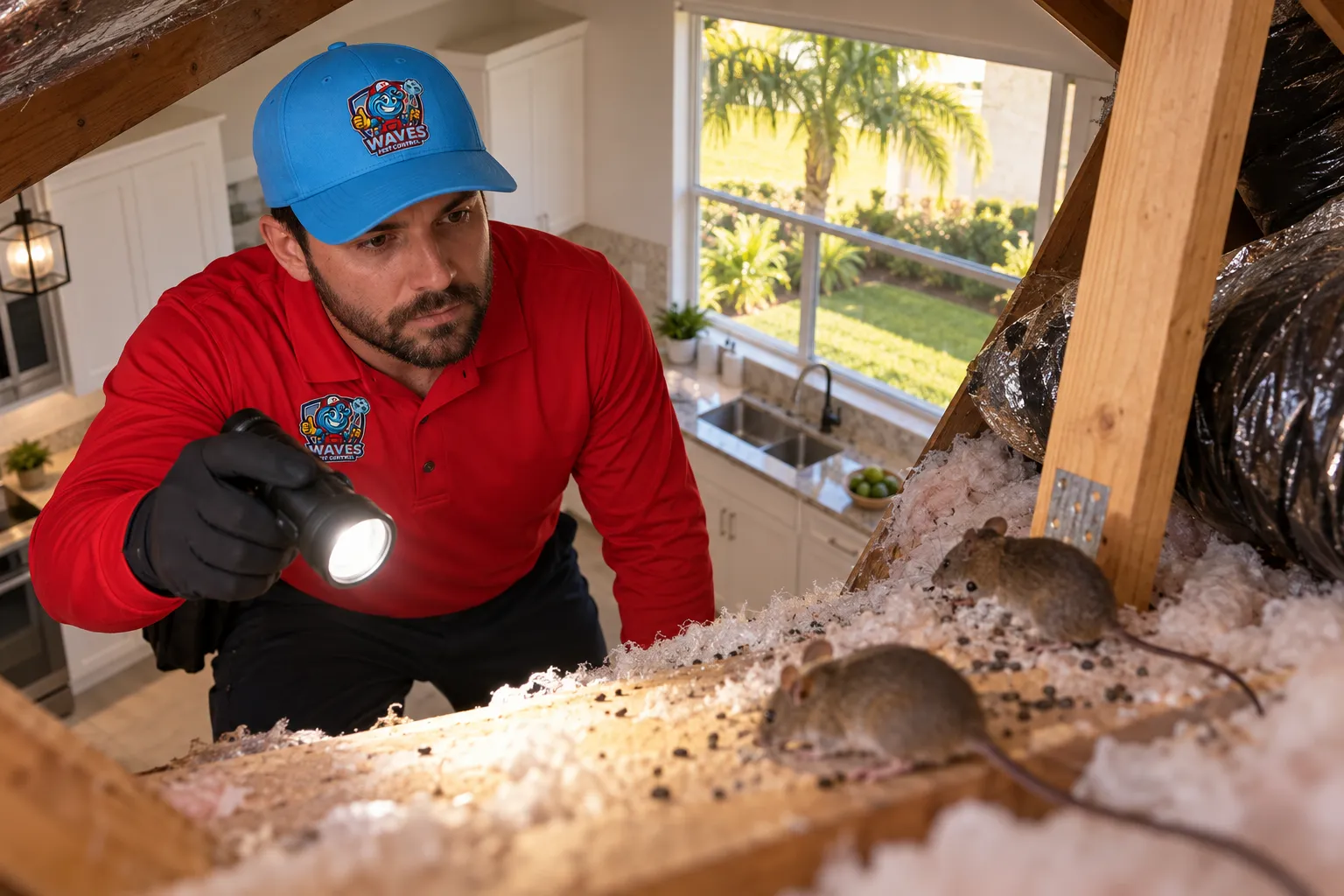
The dead rat in a Southwest Florida yard is most likely a roof rat, the dominant rat here. Roof rats climb oak canopy, fences and utility lines, and they get into attics through gaps at the roofline and soffits. Scratching in the attic or walls at night is the classic sign of roof rats. Norway rats are less common here and live on the ground, burrowing along foundations and near trash areas, woodpiles and water.
Indoor rodent pressure here peaks in the cooler months, roughly October through February, as rats and mice move into attics and wall voids. So a dead rat in the yard in November is a good reason to look up at the roofline too.
What draws rats into a Southwest Florida yard
Food, water and shelter draw rats in, and a lot of Florida yards offer all three. Mature oak canopy, fruit and citrus trees and dense landscaping sustain roof rats year-round and give them a route onto the roof.
The EPA’s prevention list is a good place to start:
- Remove nesting spots such as leaf piles and deep mulch.
- Clean up food and water sources in and near the house.
- Keep kitchen garbage in containers with tight-fitting lids.
- Turn compost piles to cover newly added food scraps.
- Stop feeding outdoor birds while you deal with the rats.
- Seal holes inside and outside the house, from plugging small holes with steel wool to patching holes in walls.
Fallen fruit under a citrus tree and pet food left on the lanai overnight count as food sources too. Trimming tree limbs back off the roof takes away one of the roof rat’s routes in.
Smell a dead rat but can’t find it?
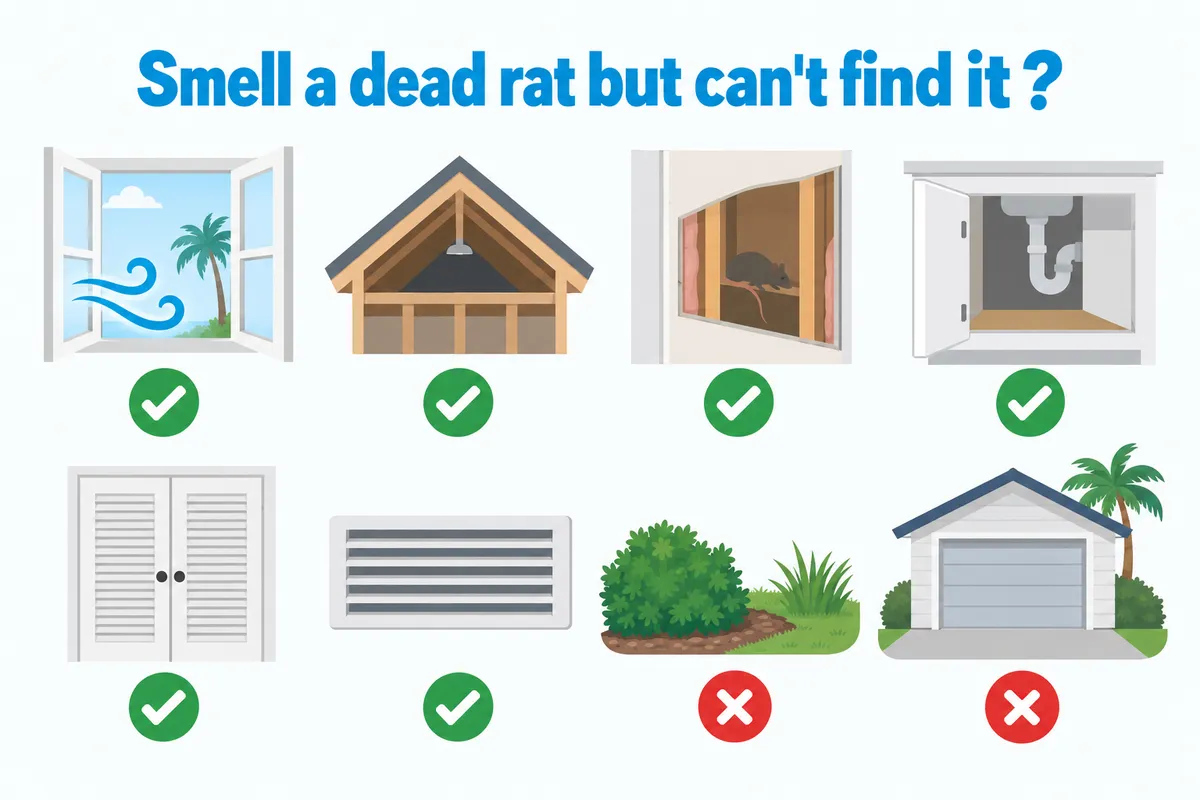
A rotten smell indoors with no body in sight can mean a rat died somewhere hidden, like inside a wall, the attic or a cabinet base. The EPA lists stale smells from hidden areas as a sign of rodents. Open the windows, follow the smell to where it is strongest, and check the hidden spots near it, such as under the sink and where pipes and A/C lines come through the wall.
If the smell is strongest at a closed wall or ceiling, hold off on cutting drywall at random. A pro can narrow down the spot first and look for the gap the rat used to get in.
When to call a professional, and how Waves Pest Control approaches it
Call a professional when you find more than one dead rat, see droppings or gnaw marks after a cleanup, hear scratching at night, or smell a dead animal you can’t reach. Those signs point to live rats still getting in.
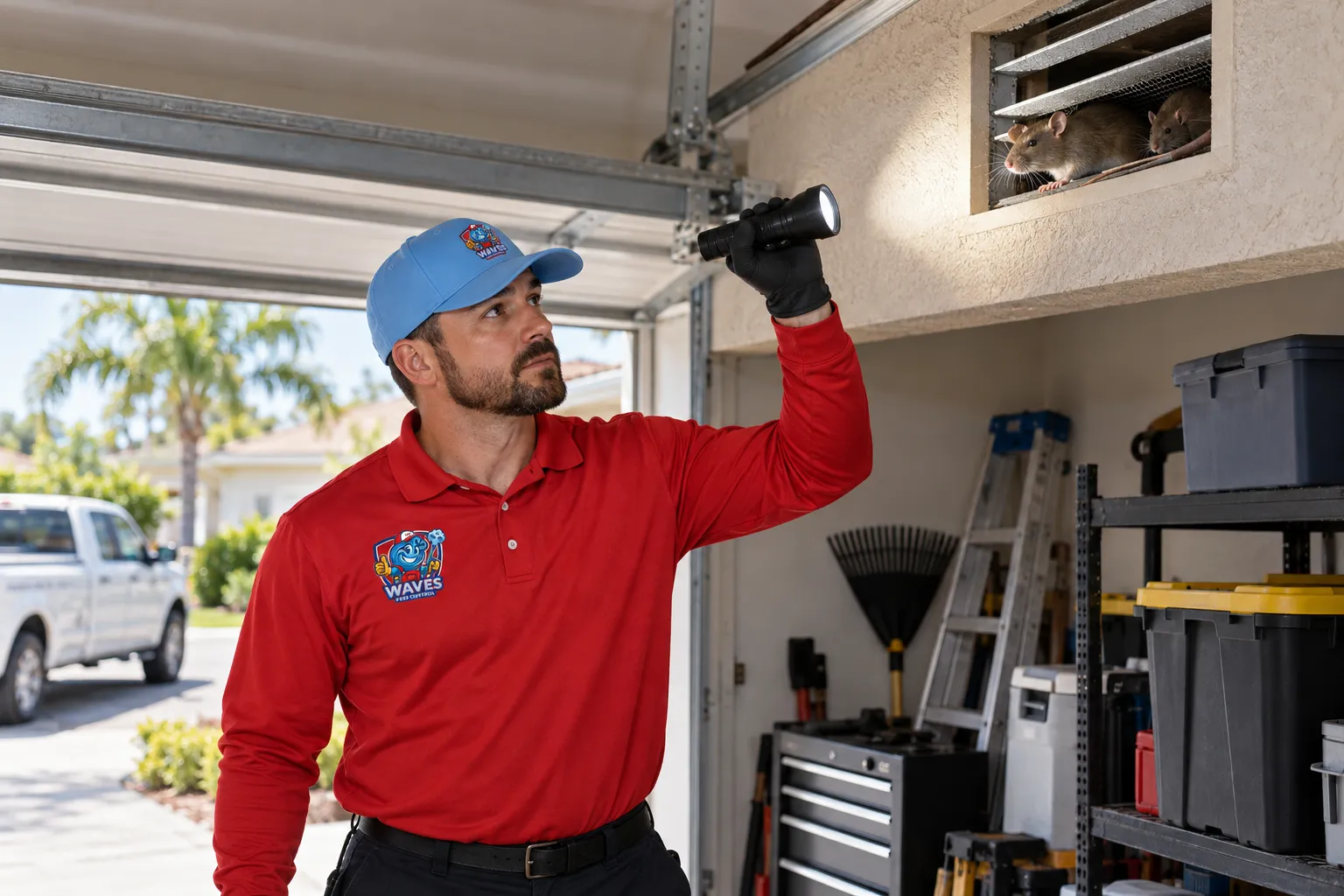
Here is our approach. Waves Pest Control starts a rodent job with an inspection: a full walk of the roofline, soffits, gable, dryer and plumbing vents, A/C line penetrations, the garage and the door sweeps, plus the attic for runways, droppings and nesting. We photograph what we find, and that drives the plan. Exclusion is the core of the work: we seal entry points with rodent-proof materials like hardware cloth, sealant, vent covers and door sweeps, because rats need only about 1/2 inch to get in. Rats already inside are removed with interior traps, not loose bait near your living space, and the outside of the house gets tamper-resistant bait stations to monitor pressure. Sealing the gaps lowers the odds of the next rat following the last one in, though no one can promise it never happens again.
If a dead rat turned up at your Sarasota home, see our rodent control in Sarasota page. In Manatee County, start with rodent control in Bradenton. Want a number before anyone visits? Get a rodent control estimate online, or browse the pest library to compare roof rats and Norway rats.