Jump to a section (8)
Scratching above the ceiling at night, a chewed corner on a soffit screen, a few dark droppings near the eaves: that combination usually means something climbed up and found a way into your attic. In Southwest Florida the climber is most often a roof rat, and the attic vents are among the first openings worth checking. This guide covers which vents to check, the signs that point to a vent, how vents get rat-proofed and when to hand the job off. For everything a visit can cover, start with our pest control services page.
Want a number before you climb a ladder? Get a rodent control estimate online.
Can roof rats get in through attic vents?
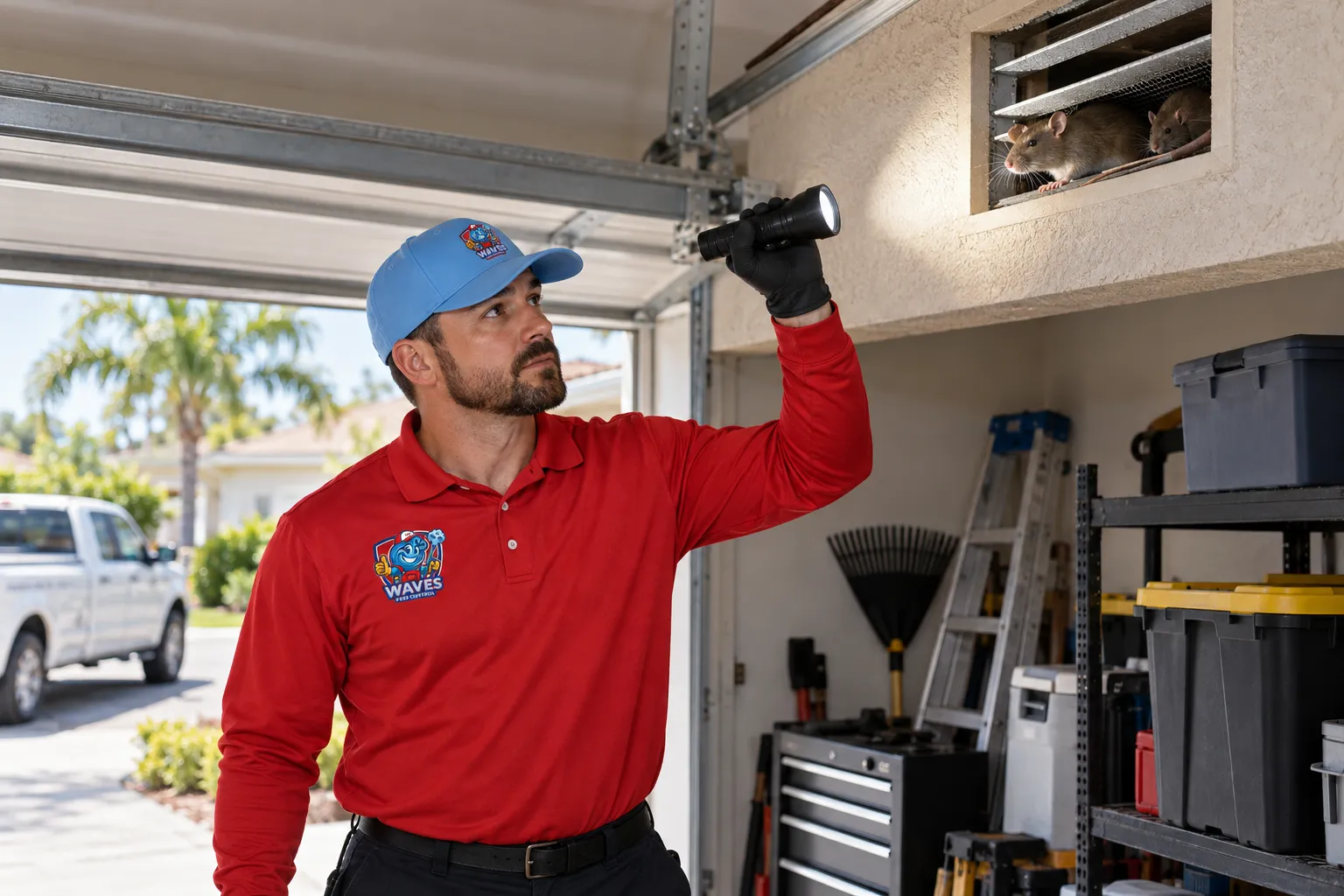
Yes. The CDC’s How to Seal Up to Prevent Rodents page tells homeowners to check the roof among the rafters, gables, eaves and soffits, and to check around attic and crawl space vents. For a skilled climber like the roof rat, all of those are within reach.
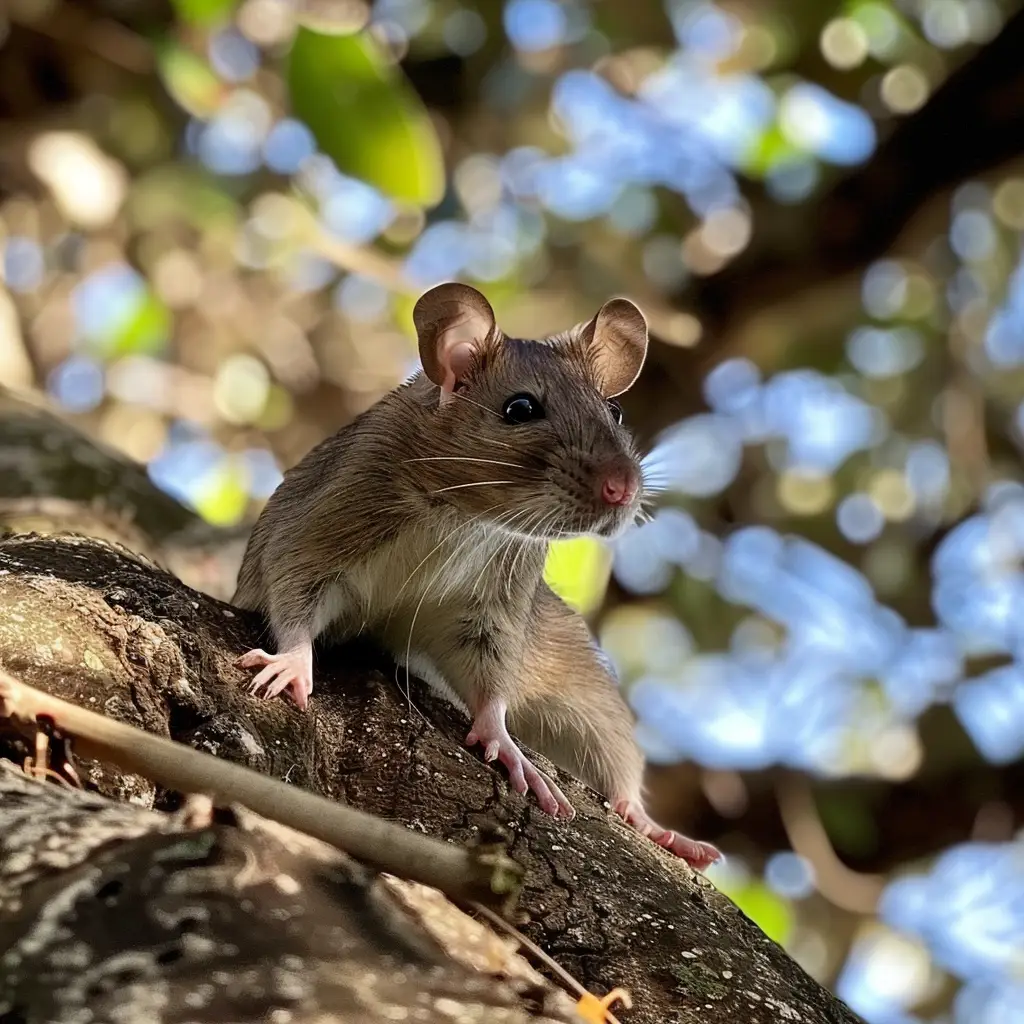
Roof rats are the dominant rat in Southwest Florida. They travel oak canopy, fences and utility lines, and they come in through gaps at the roofline and soffits. A gap of about half an inch is enough room for a rat, so a torn vent screen or a soffit panel that sagged out of its track is plenty.
UF/IFAS Extension in Sarasota County describes the roof rat in its 2026 article Wondering About Wildlife: What to Do About Rodents as a skilled climber found mainly in trees and in the upper levels of homes and buildings.
Which attic vents to check
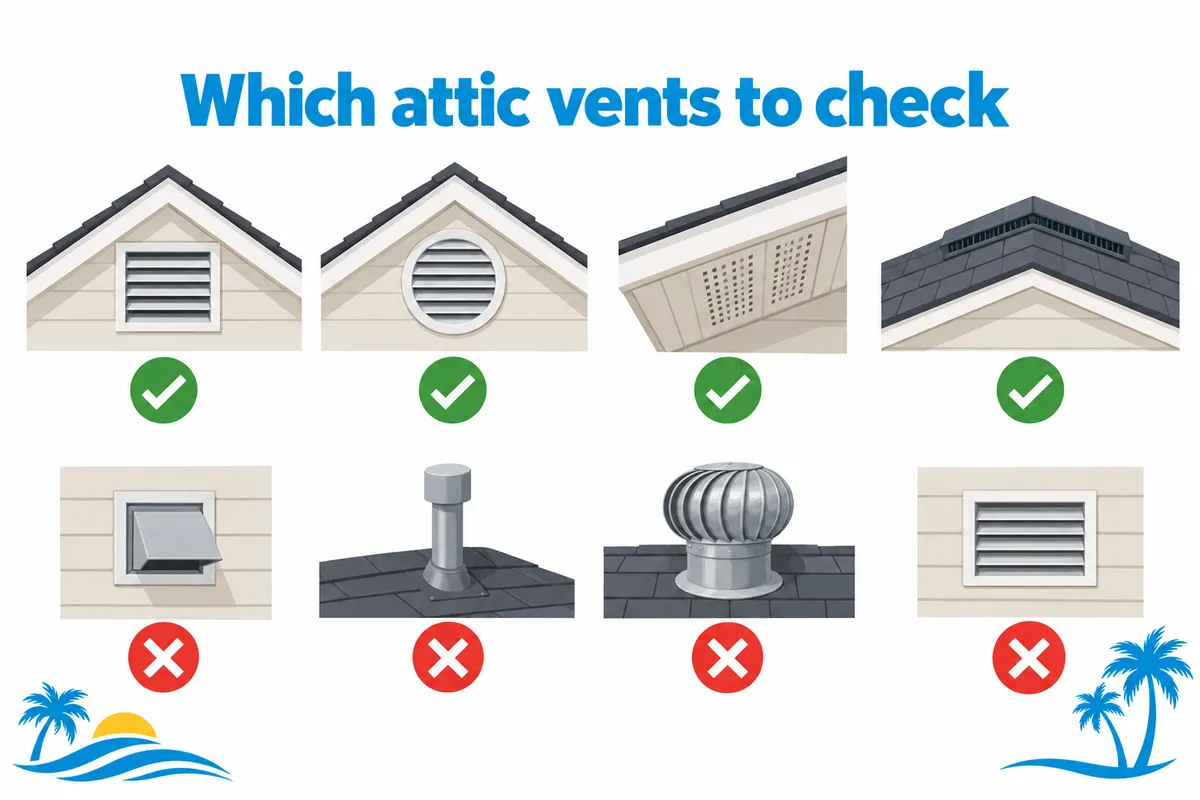
Walk the outside of the house in daylight and look up. Check these vents and roofline openings:
- Soffit vents. The screened or perforated panels under the roof overhang. Look for torn screen, bent slats and panels pulled loose at the corners.
- Gable vents. The louvered vents high on the end walls. The screen behind the louvers is what keeps animals out, so a missing or rusted screen leaves the louvers wide open.
- Roof and ridge vents. Box vents on the roof surface and the vent strip along the peak. Check the edges where the vent meets the shingles or tile.
- Plumbing vent pipes and other roof penetrations. The CDC lists holes around electrical, plumbing, cable and gas lines as places to seal, and the gap where a pipe passes through the roof counts.
- Dryer and exhaust vents. The CDC page lists dryer vents among the gaps to check. A flap that no longer closes is an opening.
Trees matter as much as the vents. A limb that touches the roof or hangs over it gives a rat a bridge to every vent on that side of the house. The Sarasota County Extension article says that because roof rats climb trees easily, you should make sure limbs are not overhanging the roof.
Signs of a vent rats are using
A noise in the attic tells you something is up there, but not how it got in. These clues help you identify the vent:
- Chewed or torn screen, or gnaw marks on the edge of a vent cover.
- Droppings on the ground or a ledge under one vent, or just inside it in the attic.
- Scratching that starts near the eaves after dark. Nighttime noise in the attic or walls is the classic roof rat sign.
- A tree limb, vine or palm that reaches the roof right beside the damaged vent.
Pro tip: Take a photo of every vent you check, damaged or not, before you change anything. If you call someone later, those photos show where to start and keep anyone from guessing.
When are roof rats most active in the attic?
Indoor rodent pressure in Southwest Florida peaks in the cooler months, roughly October through February, as rats and mice move into attics and wall voids for warmth and shelter.
Florida’s mild climate keeps rodents active all year, though, so a quiet week does not mean the opening closed itself.
Do roof rats stay in the attic?
Not always. The Sarasota County Extension article places roof rats mainly in trees and in the upper levels of buildings, so your attic and the trees around your house are both roof rat territory. Much of what they eat is outside, too. The same article says rodents eat insects, nuts, seeds, plant matter and grains, and it tells homeowners to pick up fallen birdseed and ripe fruit, keep pet food in overnight and secure the trash. UF/IFAS Extension in Pinellas County, in Rodent management options in and around the home, advises removing garbage, pet food, bird feed and fallen fruit, so take those away along with fixing the vent.
How to rat-proof an attic vent
Fixing the vent is the part that lasts. Setting a trap or bait while the opening stays open leaves the door ready for the next rat. Work in this order:
- Confirm the entry. Match the damage, rub marks and droppings to one vent or gap before you buy materials.
- Trim the bridge. Cut limbs back so they no longer touch or hang over the roof, and clear vines climbing toward the eaves.
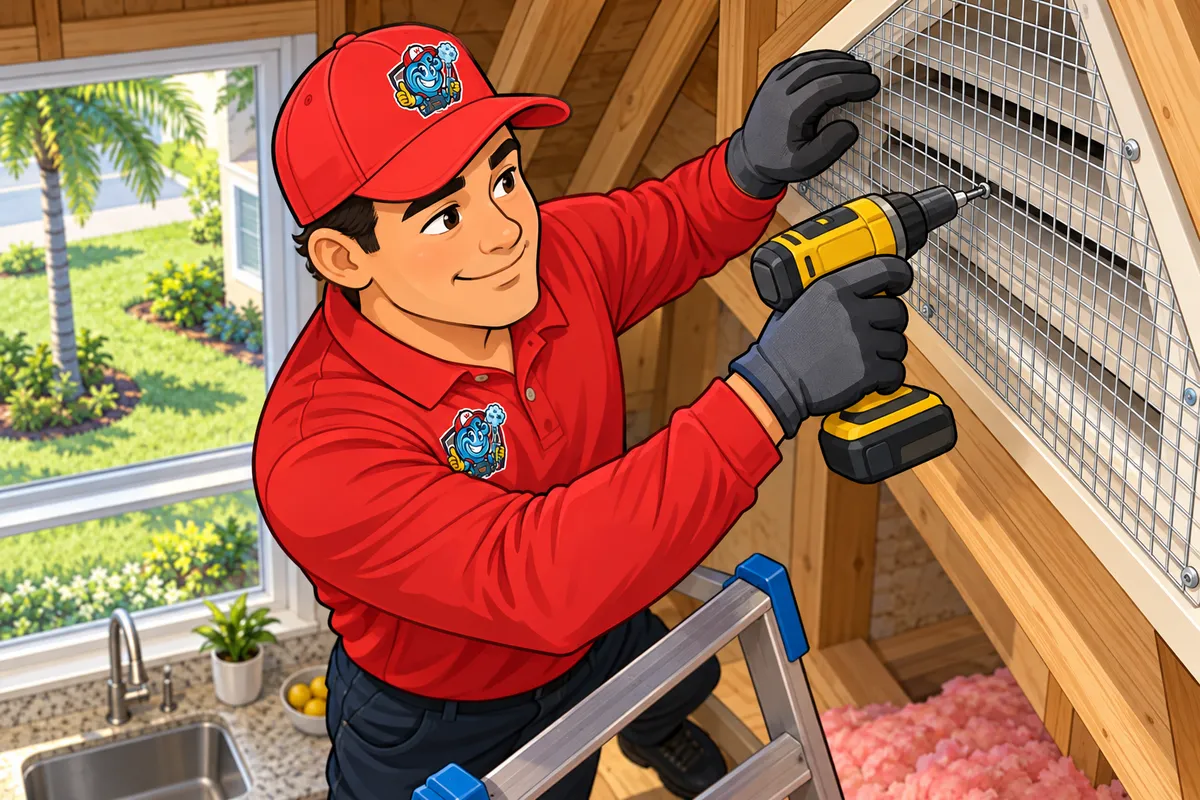
- Screen, do not block. Cover a damaged vent with hardware cloth or a metal vent cover. Attic vents are there to move air, so the goal is a chew-resistant screen over the opening. The Sarasota County Extension article names hardware cloth and steel mesh as rodent-proof materials.
- Seal the small gaps. For holes around pipes and lines, the CDC says to fill small holes with steel wool and put caulk around it or use spray foam to hold it in place. For larger holes, it lists lath screen or metal, cement, hardware cloth and metal sheeting.
- Fix storm damage promptly. The Sarasota County Extension article tells homeowners to repair storm damage quickly. After a stretch of afternoon storms or a tropical system, walk the roofline again and look for loose soffit panels and bent vent covers.
- Trap the rats already inside. The CDC recommends traditional snap traps, set with the baited end against the wall so the trap forms a “T” with it. Keep traps out of reach of children and pets, and check them daily.
If you find droppings while you work, clean them up the way the CDC’s How to Clean Up After Rodents page describes: wear rubber or plastic gloves, air the space out first, spray the droppings with a bleach solution or an EPA-registered disinfectant until very wet, let it soak as long as the disinfectant label directs, then wipe up with paper towels. The CDC explains that rodents spread disease through contact with their droppings, urine or saliva, through bites, and through breathing air or eating food contaminated with rodent waste.
What not to do
- Skip glue traps and live traps. The CDC says these can scare rodents into urinating, which raises your chance of getting sick.
- Skip loose poison in the attic. The CDC warns that poison baits can be dangerous for people and animals. The Pinellas County Extension article explains that owls and other predators that eat poisoned rats can be exposed themselves, and that cats and dogs can be affected by eating poisoned rodents or the bait.
- Do not sweep or vacuum droppings. The CDC says this can put tiny droplets containing viruses into the air.
- Do not handle a dead rat or nesting material bare-handed. The Sarasota County Extension article says never to handle rodents or rodent-contaminated materials with bare hands.
- Do not assume every attic noise is a rat. Waves Pest Control works on rats and mice and refers squirrels, raccoons, opossums and other wildlife to a licensed wildlife trapper. Compare photos in the Waves pest library if you are not sure what you are dealing with.
How Waves Pest Control handles roof rats at the vents
Our approach starts with finding the way in. A Waves Pest Control rodent inspection walks the whole exterior roofline, including the soffits, gable, dryer and plumbing vents and the A/C line penetrations, then checks the attic for runways, droppings and nesting. Every entry point we find is photo-documented, and those photos drive the exclusion plan.
Exclusion is the core of the service. Entry points get sealed with rodent-proof materials such as hardware cloth, sealant, vent covers and door sweeps. Rats already inside are removed with interior trapping, not loose bait near living space, and the exterior uses tamper-resistant bait stations to monitor for new pressure. On roof rat jobs we also tell you which tree limbs to cut back so the rats lose their route to the roof.
The standard trapping service includes a setup visit and one follow-up trap check. If activity continues after that, more trap checks are scheduled and billed separately. Final verification comes after the activity stops: the seals held, and there are no new droppings, fresh gnaw marks or nighttime attic noise.
Hearing scratching near the eaves? Start with rodent control in Sarasota or rodent control in Bradenton, or get a rodent control estimate for your home.