Jump to a section (9)
- 01Is it mice, or something bigger?
- 02Signs of mice in the attic
- 03How mice get into an attic
- 04Will mice leave the attic on their own?
- 05Getting mice out of the attic, step by step
- 06Cleaning up droppings in the attic
- 07What not to do
- 08When to call a professional
- 09How Waves Pest Control handles mice in the attic
Scratching above the ceiling after dark sends a lot of people up the attic ladder with a flashlight. This guide walks through what UF/IFAS Extension, the CDC and the EPA publish on rodents, so you can tell what is up there, find where it gets in, clear it out and clean up afterward in a Southwest Florida home. If you would rather hand the whole job off, our pest control services page explains what a visit covers.
Want a number before you decide? Get a rodent control estimate online.
Is it mice, or something bigger?
A noise in the attic is a clue. It does not tell you which animal is making it, so start by finding what it left behind.
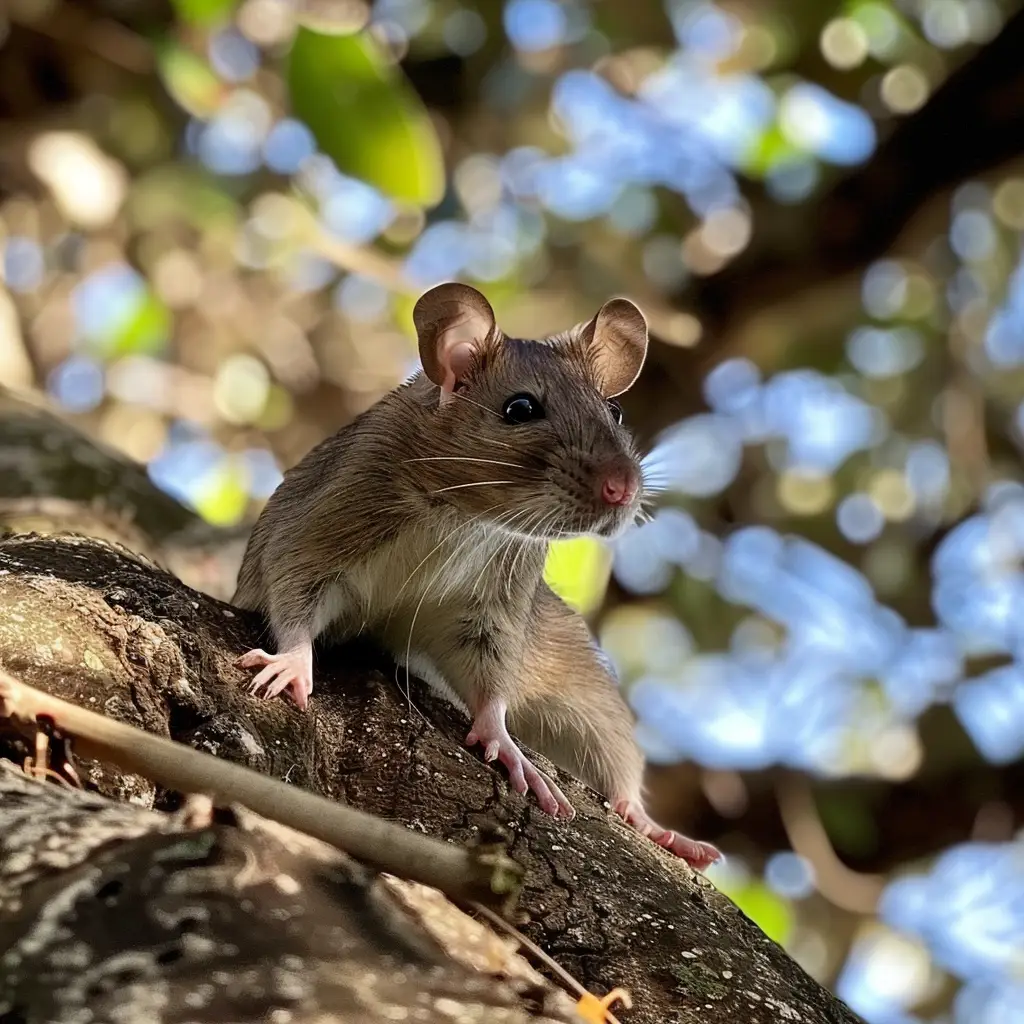
UF/IFAS Extension in Sarasota County describes the house mouse in its 2026 article Wondering About Wildlife: What to Do About Rodents as having a short body, a long tail and relatively large ears. The same article says roof rats have sleek, dark fur and live mostly in trees and in the upper levels of homes and buildings. That makes a roof rat a real possibility any time the sound comes from overhead.
Roof rats are the dominant rat in Southwest Florida. They climb well, travel oak canopy, fences and utility lines, and come in through gaps at the roofline and soffits. Scratching or scurrying in the attic at night is the classic roof rat sign, so a nighttime noise alone does not prove you have mice.
If the culprit turns out to be a squirrel, raccoon, opossum or other wildlife, that is a job for a licensed wildlife trapper. You can compare photos of common Florida pests in the Waves pest library before you guess.
Signs of mice in the attic
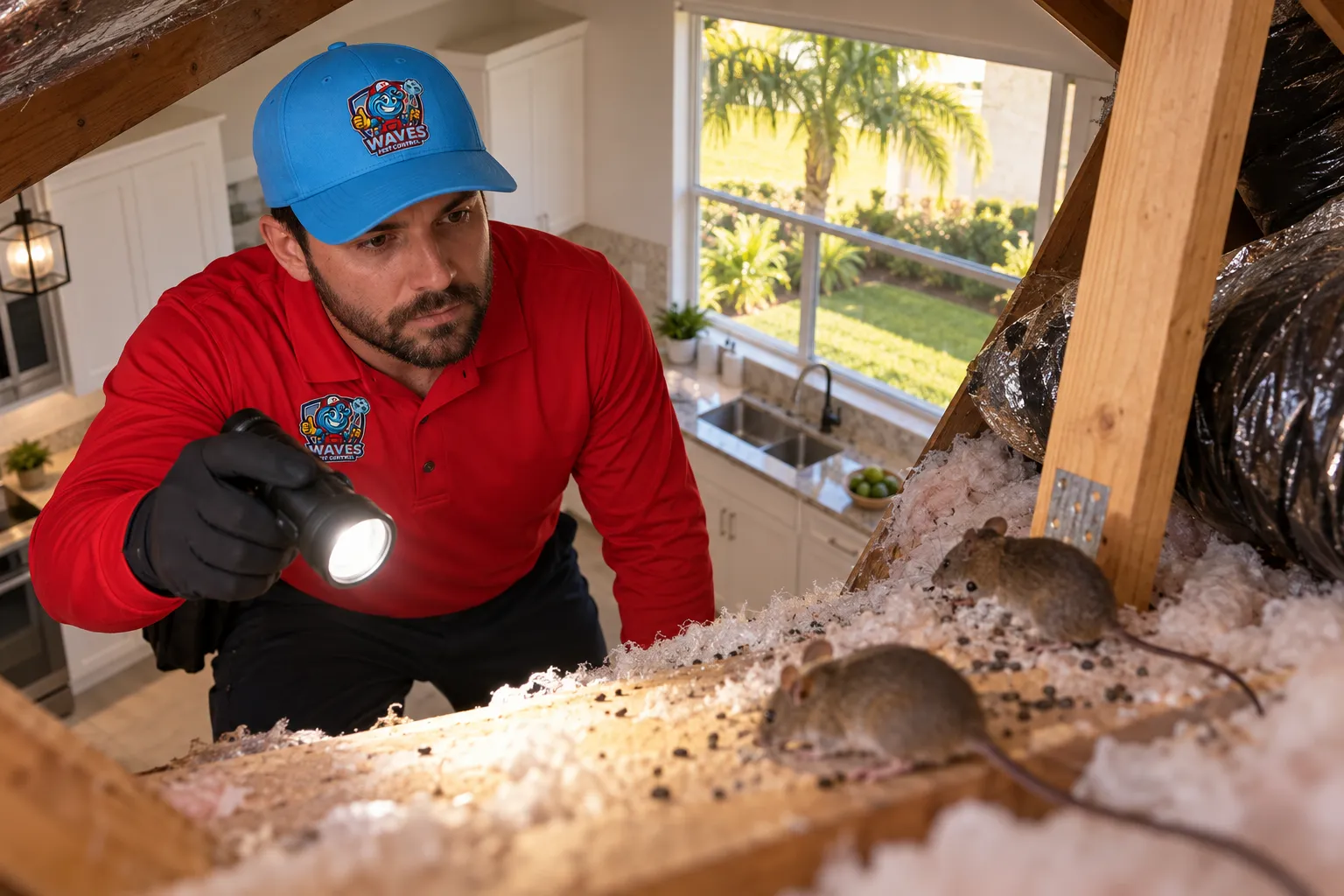
Look from the attic hatch with a flashlight before you climb in, and wear rubber or plastic gloves if you plan to touch anything. Watch for these signs:
- Droppings. Small droppings near stored food, pet food or boxes are the usual sign of house mice. In an attic, check the edges of the floor, the tops of stored boxes and the insulation.
- Gnawed packaging. Chewed corners on cardboard boxes, bags of holiday decorations or anything stored in paper.
- Nesting material. Shredded paper, fabric or insulation pulled into a loose pile in a protected corner.
- Runways. Paths along the edges of the attic, beside walls and rafters, where droppings and rub marks line up.
Pro tip: Take photos of every spot where you find droppings before you clean anything. The pattern points toward the way in, and it saves whoever seals the house from guessing.
How mice get into an attic
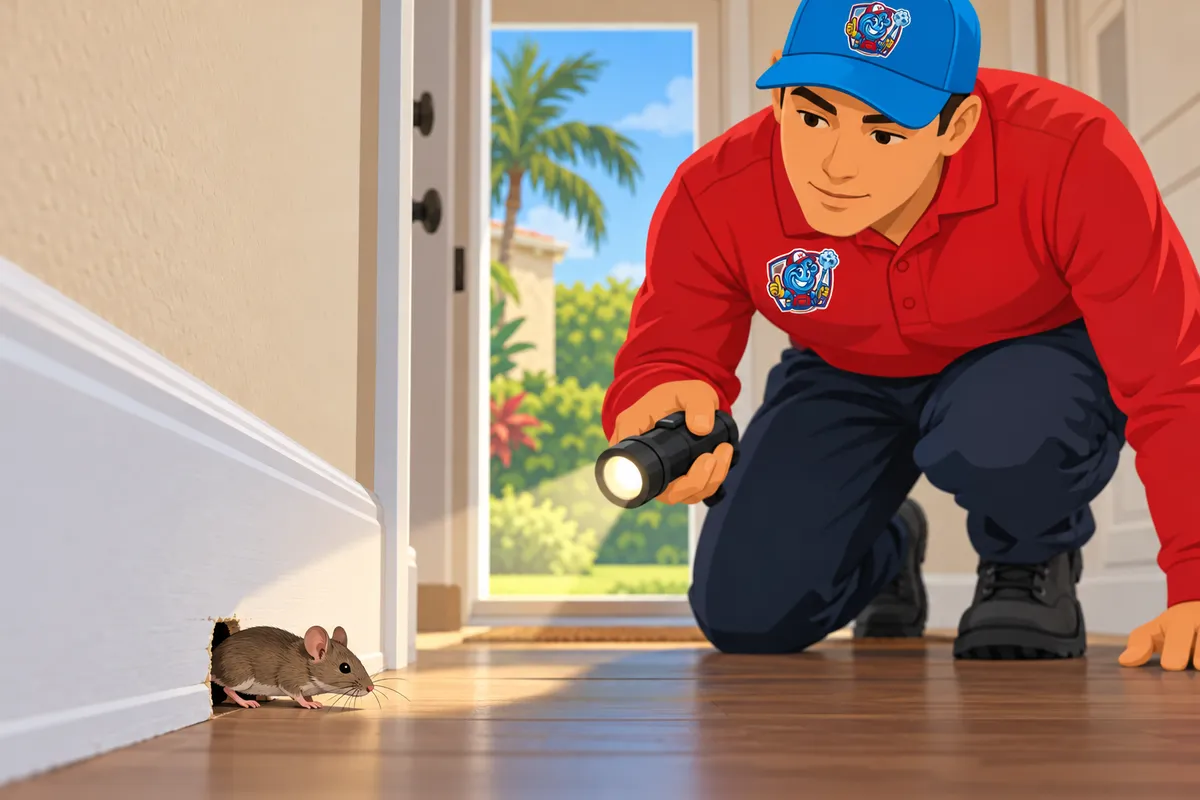
Mice need very little room. The CDC’s Seal Up page says a mouse can fit through a hole the width of a pencil, about 1/4 inch or 6 millimeters across.
The CDC tells homeowners to check the outside of the house at the roof, door and window frames, foundation gaps, vents and the places utility lines come in. Inside, it lists attics, vents and the spots around utility pipes. UF/IFAS Extension in Sarasota County adds the cracks beneath and around doors and windows, gaps where pipes and wires enter and exit, and any structural damage or holes.
Trees count too. The UF/IFAS publication Landscaping Methods to Prevent Pests from Entering Your Home says rodents such as rats and squirrels use overhanging limbs as a highway into the house. It recommends pruning limbs that hang over or touch the house, and keeping plants at least two feet from the house at maturity. Mature oak canopy, fruit trees and dense landscaping around Southwest Florida homes give roof rats a way up.
Will mice leave the attic on their own?
Do not plan on it. Indoor rodent pressure in Southwest Florida peaks in the cooler months, roughly October through February, as rats and mice move into attics and wall voids for warmth and shelter. Florida’s mild climate keeps rodents active all year, so a warm spell does not send them back outside.
House mice also breed quickly. One mouse sighting is a reason to look for more signs, not a reason to wait.
Getting mice out of the attic, step by step
The CDC breaks rodent control into sealing, trapping and cleaning up. Here is how that looks for an attic.
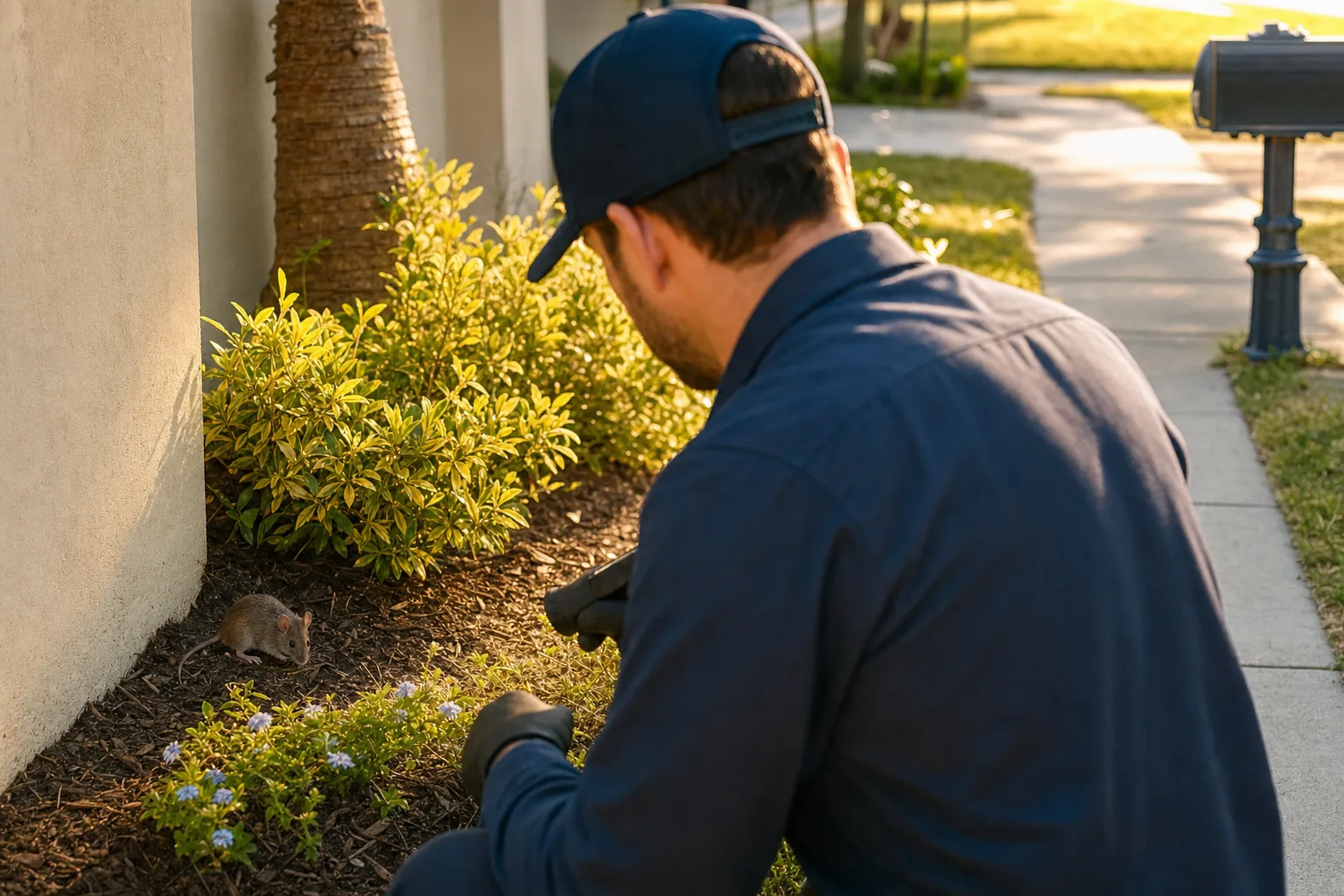
- Find and mark the entry points. Walk the outside with the CDC checklist above. Look up at the roofline, the soffits, every vent and any limbs touching the roof.
- Seal the gaps. The CDC lists steel wool with caulk, lath screen, metal hardware cloth, cement and metal sheeting, depending on the size of the hole. UF/IFAS Extension in Sarasota County recommends rodent-proof material such as hardware cloth or steel mesh. Anything on a roof or a second story is a job for a professional or a roofer, not a ladder balanced on the lanai.
- Trap the mice already inside. The CDC’s Trap Up page recommends traditional snap traps and advises against glue traps and live traps. UF/IFAS Extension in Sarasota County also calls spring-loaded snap traps the recommended method for homeowners. Set each trap on the floor against a wall with the baited end touching the wall, so the trap and the wall form a “T”. The CDC names attics as one of the places to set traps and suggests peanut butter as bait.
- Check the traps every day. The CDC says to check traps daily and dispose of dead rodents right away. Keep traps out of reach of children and pets.
- Clean up the droppings and nests. Follow the CDC steps in the next section.
Cleaning up droppings in the attic
The CDC’s Clean Up page gives the steps:
- Open doors and windows for 30 minutes before you start, to air out the space.
- Wear rubber or plastic gloves.
- Spray urine and droppings with a bleach solution (1.5 cups of household bleach in 1 gallon of water, or 1 part bleach to 9 parts water) or an EPA-registered disinfectant until very wet. Let it soak for 5 minutes, or as long as the product label says.
- Do not sweep or vacuum droppings, urine or nesting material. The CDC says that can put tiny droplets containing viruses into the air.
- Put exposed insulation that has urine and droppings on it into plastic bags for removal.
The CDC says to contact a professional rodent control service when rodents have reached the heating and cooling ventilation system.
What not to do
- Do not scatter loose poison bait in the attic. The UF/IFAS publication Rodenticides says to put traps or baits only where children and pets cannot reach them, or inside tamper-proof bait stations. It also says to remove dead rodents promptly so wildlife and pets do not eat a poisoned carcass. If you use a rodenticide at all, read and follow the product label, keep it off food-preparation surfaces, and keep it in a tamper-resistant station out of sight and reach of children and pets.
- Do not rely on bait alone. Baiting without sealing the house leaves the openings in place for the next rodent.
When to call a professional
Call a pest control company when any of these apply:

- You keep finding fresh droppings or hearing noise after a week or two of trapping.
- You cannot find the entry point, or it is on the roof or a second story.
- Rodents have reached the air conditioning ducts or the air handler.
- The attic is heavily contaminated with droppings and nesting material.
- The noise sounds larger than a mouse, or you see a squirrel or raccoon. That one goes to a licensed wildlife trapper.
How Waves Pest Control handles mice in the attic
Waves Pest Control starts every rodent job with an inspection to identify the species and the entry points. The technician walks the whole exterior, including the roofline, the soffits, the gable, dryer and plumbing vents, the A/C line penetrations, the garage and the door sweeps. Then the technician checks the attic for runways, droppings and nesting. Findings are photo-documented and drive the exclusion plan.
Exclusion is the core of the service. Entry points are sealed with rodent-proof materials such as hardware cloth, sealant, vent covers and door sweeps. Rodents already inside are removed with interior trapping, and loose bait is kept away from living space. Outside, tamper-resistant bait stations intercept and monitor rodent activity around the perimeter. Roof rat jobs also get advice on trimming tree limbs back off the roof.
The standard trapping service includes the setup visit and one follow-up trap check. Final verification comes after activity stops: the technician checks that the seals held and that there are no new droppings, fresh gnaw marks or nighttime attic noise. If the attic is heavily contaminated, optional attic sanitation is quoted after the inspection.
Sealing the house lowers the odds of the next rodent getting in. To see what that costs for your house in Sarasota, Bradenton, Venice or nearby, get a rodent control estimate, or read more on our rodent control page for Sarasota and our rodent control page for Bradenton.