To get rid of bed bugs, you have to find where they’re hiding, kill them there, and keep them from spreading while you work. You can start today: dry your bedding on high heat, vacuum the bed and nearby furniture, encase the mattress, and put interceptors under the bed legs. For anything beyond a few bugs caught early, a professional heat or chemical treatment is usually what finishes the job.
Here’s how to confirm you have bed bugs, what to do right now, and when to call for help in Lakewood Ranch.
First, make sure it’s bed bugs
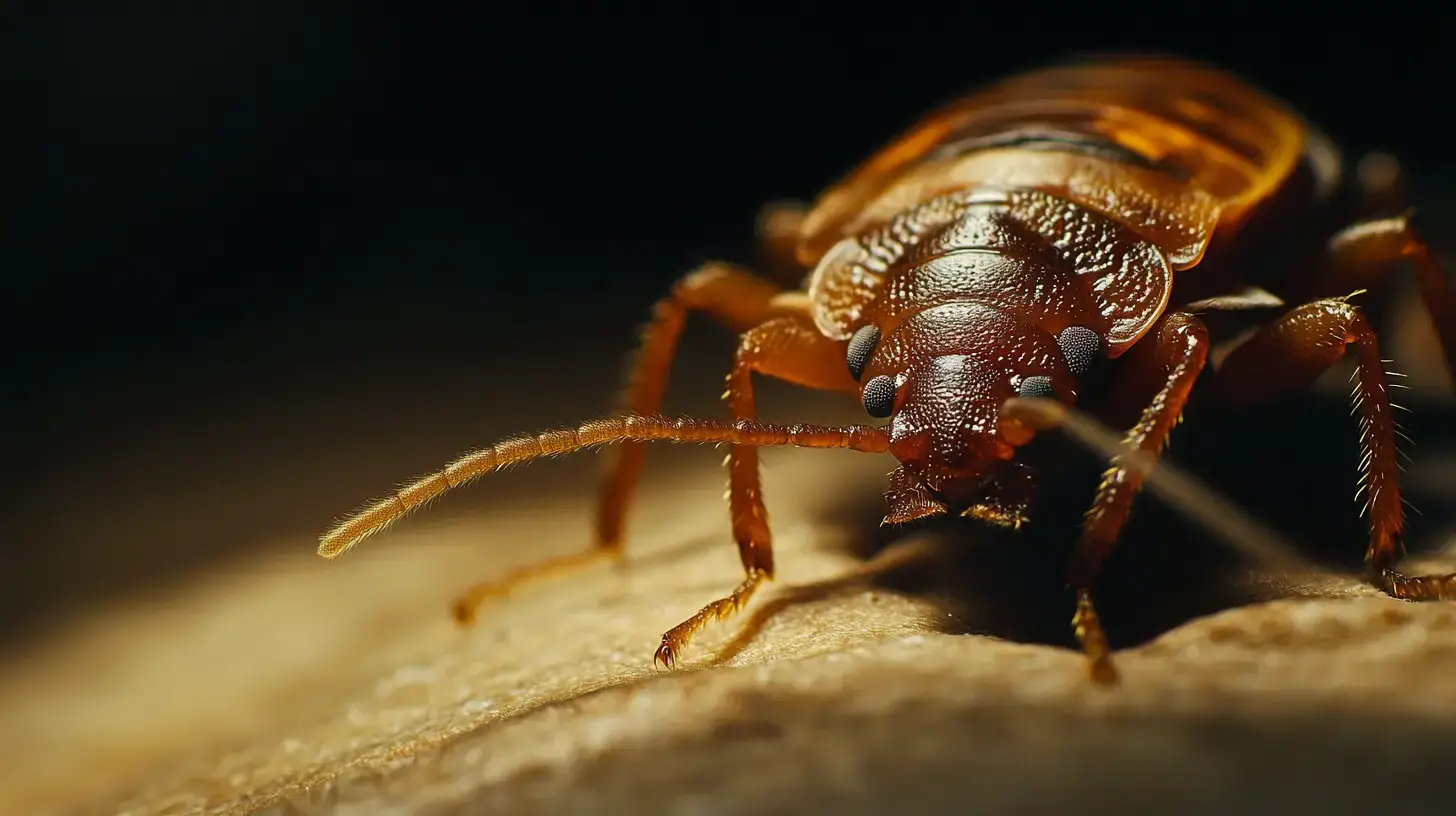
Adult bed bugs are flat, oval, and brown, about the size of an apple seed (5 to 7 mm, or 3/16 to 1/4 inch). After feeding, they swell and turn reddish-brown. Young bed bugs are smaller and pale, and the eggs are pearl-white and about the size of a pinhead (EPA).
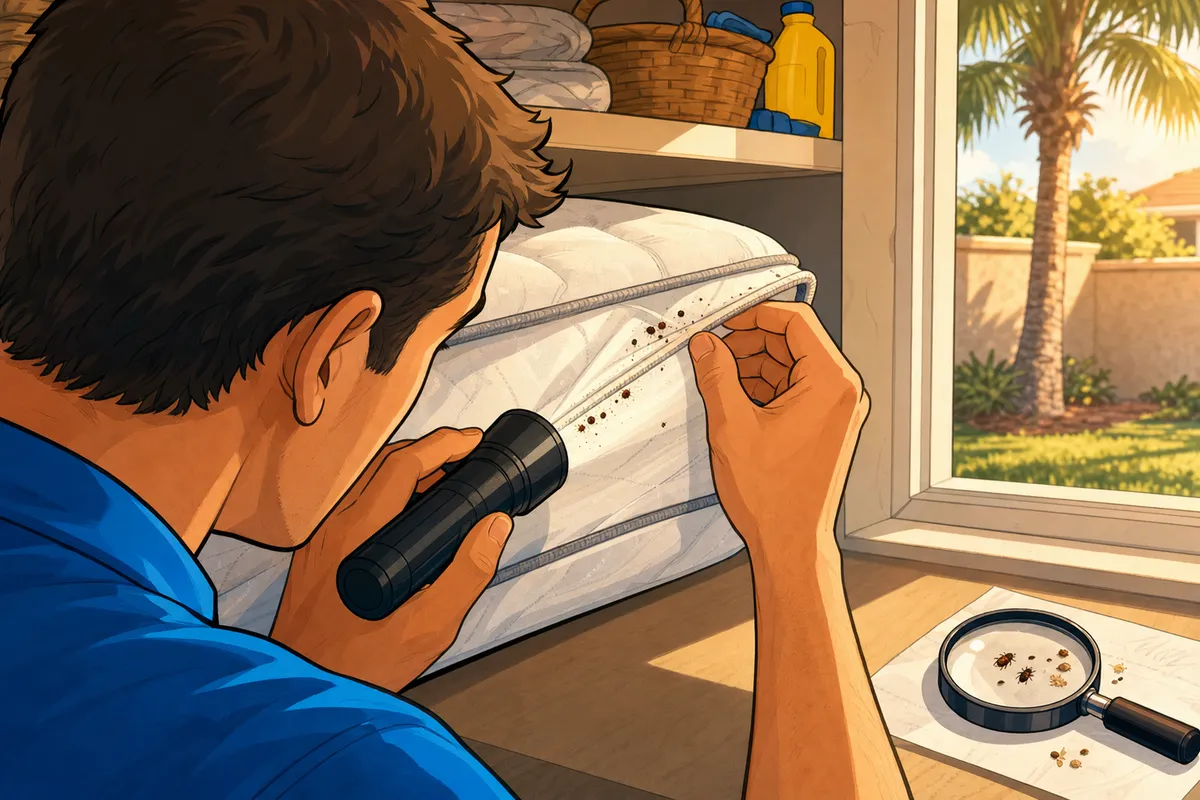
Look for these signs in mattress seams, box springs, the bed frame, and the headboard (EPA):
- Rusty or reddish stains on sheets or the mattress, from crushed bugs.
- Tiny dark spots, about the size of a printed period, that bleed into fabric like a marker. That’s bed bug droppings.
- Pale shed skins and tiny eggs or eggshells.
- Live bugs, especially along seams and tags.
Bed bugs are thin enough to fit into a crack the width of a credit card, so they also hide in couch seams, drawer joints, outlets, and behind loose wallpaper.
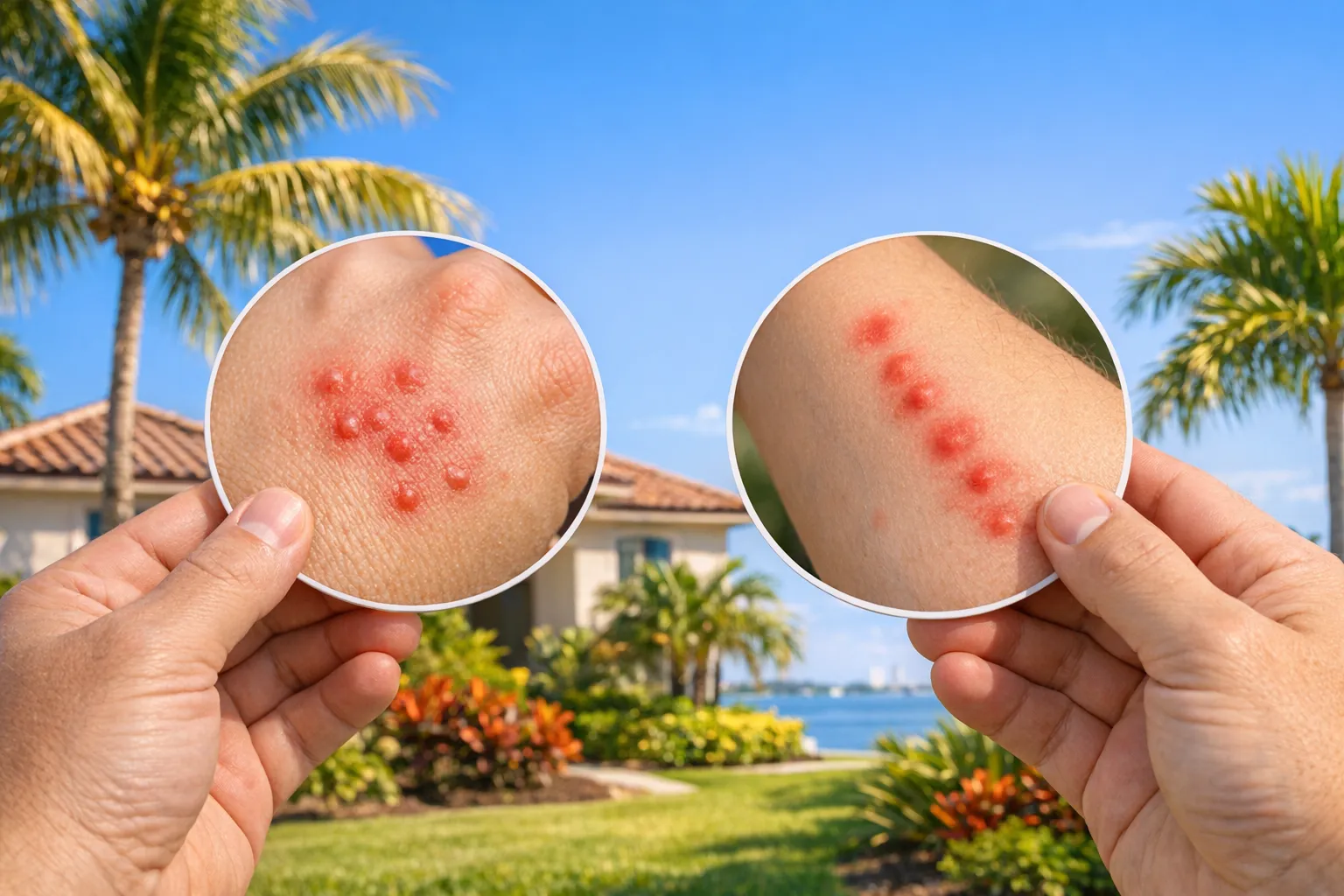
Bites alone don’t prove bed bugs. Plenty of other insects bite, and people react differently. If you’re not sure, see our guide to chigger bites vs. bed bug bites.
What you can do today
- Strip the bed. Bag the sheets and blankets, carry the bags straight to the laundry, and dry everything on high heat.
- Vacuum mattress seams, the bed frame, the headboard, baseboards, and nearby furniture. Empty the vacuum into a sealed bag and put it in an outside trash can.
- Encase the mattress and box spring in covers made for bed bugs. EPA notes that bugs sealed inside die there (EPA).
- Isolate the bed. Pull it a few inches from the wall, keep bedding off the floor, and set interceptor cups under each leg.
- Cut the clutter around the bed so bugs have fewer places to hide. Bag items before you move them to another room.
- Stay put if you can. It’s tempting to sleep on the couch, but that can carry bugs to a new room.
For things you can’t wash, EPA suggests a few options:
- Dryer: run items on high heat.
- Freezer: seal items in a bag and leave them at 0°F for at least four days. Check the temperature with a freezer thermometer, since some home freezers run warmer than 0°F.
- Steam: use a steamer that reaches at least 130°F, without a strong blast of air that scatters bugs.
What not to do
- Don’t set off bug bombs. UF/IFAS cites a study finding that over-the-counter foggers don’t control bed bugs (UF/IFAS), and EPA says foggers should never be your only method (EPA).
- Don’t use pool or food-grade diatomaceous earth. EPA warns it can harm you when you breathe it in. If you use a desiccant dust, use one labeled as a pesticide. Desiccants can work, but they may take months.
- Don’t spray rubbing alcohol or other flammable liquids on furniture and bedding. It’s a fire hazard.
When to call a professional
Call a pro if:
- You’re finding bugs in more than one room.
- New bites or bugs show up after a week or two of the steps above.
- You live in a condo or apartment, where bugs can move between units.
- You need it solved quickly.
A professional has two main tools. Heat can kill bugs and eggs in one long treatment day, but leaves no residual. A chemical program takes two or three visits over several weeks and leaves a residual in cracks and crevices.
Waves offers both heat and chemical treatment in Lakewood Ranch. See bed bug control in Lakewood Ranch.
Keeping bed bugs from coming back
- After travel, check your luggage before it goes into the bedroom, and dry travel clothes on high heat.
- Inspect secondhand furniture before it comes inside, especially beds and couches.
- Keep the encasements and interceptors in place. Interceptors double as an early warning.
Frequently Asked Questions
How do I know if I have bed bugs?
Look for live bugs, rusty or reddish stains, tiny dark spots, shed skins, or eggs in mattress seams, box springs, and the bed frame. Adults are flat, oval, and about the size of an apple seed. Bites alone aren’t proof, because many insects bite and people react differently.
Can I get rid of bed bugs myself?
You can do a lot yourself: dry bedding on high heat, vacuum, encase the mattress, and use interceptors. Those steps can handle a small problem caught early. Once bugs have spread through a room or beyond, professional heat or chemical treatment is usually needed.
What kills bed bugs on contact?
High heat does. A clothes dryer on high heat and a steamer that reaches at least 130°F both kill bed bugs they reach. The hard part is reaching every hiding spot, which is why professional treatments cover the whole room.
Should I throw out my mattress?
Usually not. A bed bug encasement seals the mattress and box spring, and any bugs trapped inside die there. Ask your pest control company before you throw out furniture.
Do bug bombs work on bed bugs?
No. UF/IFAS cites research showing over-the-counter foggers don’t control bed bugs. They also coat every surface in the room with insecticide without reaching the cracks where bed bugs hide.
How long can bed bugs live without feeding?
Several months, according to the CDC (CDC). That’s why leaving a room empty for a while won’t starve them out.
How long does it take to get rid of bed bugs?
A heat treatment takes about a day, plus a follow-up check. A chemical program usually runs two or three visits about two weeks apart. Either way, keep the encasements and interceptors in place for several months to make sure they’re gone.