Small moths fluttering around the kitchen, or fine webbing in a bag of flour or rice, often mean an Indianmeal moth problem. These are the “pantry moths” most people find. They are an indoor stored-food pest, not a lawn or garden insect, and the way to get rid of pantry moths is mostly finding the infested food and cleaning up, not spraying.
Here is what UF/IFAS says about the moth, how to find the source, and the cleanup steps it recommends. This is a kitchen and food issue, so this guide does not recommend putting pesticide on food or on any surface where food is stored or prepared.
What a pantry moth is
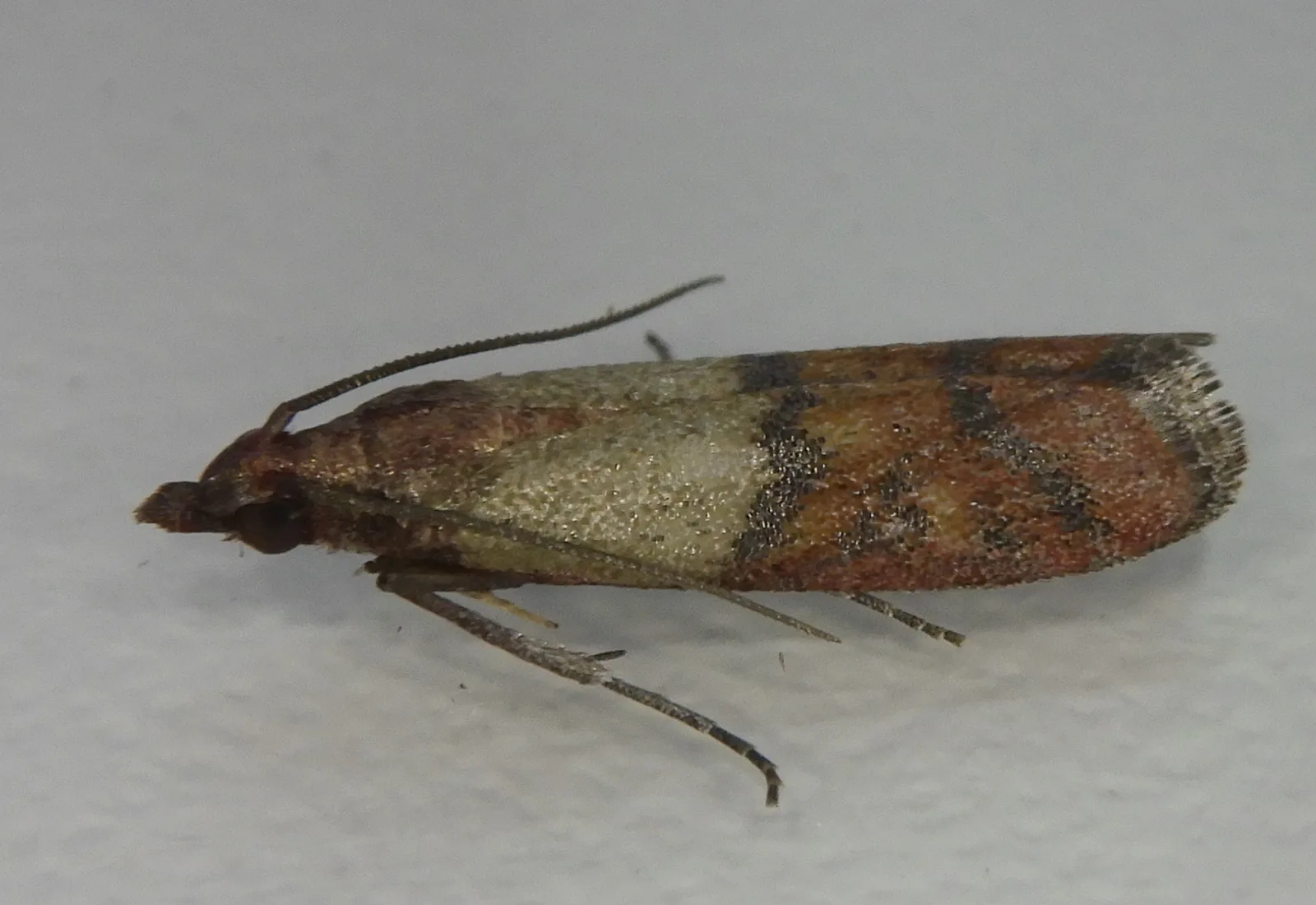
The Indianmeal moth (Plodia interpunctella) is what UF/IFAS calls a very common household pest of stored food. According to the UF/IFAS Featured Creatures profile (UF/IFAS):
- Adults are about half an inch long, with a wingspan of roughly two thirds to three quarters of an inch. The forewings are reddish-brown with a copper sheen on the outer part and gray on the inner part, and the wings are held roof-like at rest.
- Adults do not feed. They flutter around, and the profile notes the flight often looks like fluttering rather than a straight line.
- The larvae are the feeding stage. They are typically off-white, up to about half an inch long, and feed on grain products, seeds, dried fruit, dog food and spices.
How you know you have them
UF/IFAS says most of the “damage” happens when larvae spin large amounts of silk that collect droppings, cast skins and eggshells. So look for:
- Webbing or clumped silk in flour, cereal, rice, pasta, dried fruit, nuts, pet food or bird seed
- Small off-white larvae, which UF/IFAS calls the tell-tale “white worms”
- Moths flying near the pantry, especially in the evening
UF/IFAS also says that pupation takes place away from the infested material. In one pantry example in the profile, a larva pupated on the bottom edge of a soup can two shelves above the actual infestation. If you see larvae or cocoons on a shelf, a wall or a can, the source may be somewhere nearby, not right there.
Where pantry moths come from
UF/IFAS says most pantry pests are introduced into homes in infested food (UF/IFAS pantry pest publication). The moth profile adds that dog food and bird seed are often overlooked as infestation sites. So the source can be a bag of pet food or bird seed as easily as a box in the pantry. UF/IFAS says Indianmeal moth is found in stored products and food storage facilities in a wide range of climates around the world, so a Southwest Florida kitchen is no exception.
How to get rid of pantry moths: cleanup steps from UF/IFAS
The UF/IFAS pantry pest publication says the first step is to locate the source. Then it points to these steps:
- Inspect everything susceptible. Check all susceptible foods, including pet food and bird seed, and throw away badly infested items.
- Discard or treat what you want to keep. UF/IFAS says infested food of value may be placed in a freezer at 0°F for four days, or in an oven at 130°F for 30 minutes, to kill the insects.
- Clean the shelves. UF/IFAS says to vacuum cabinets and shelves to pick up loose infested material, then wash with warm, soapy water. It also says to caulk cracks to limit places insects can hide.
- Seal what stays. Keep containers tightly closed, and put susceptible foods into tight containers or screw-top jars.
- Check new groceries. Look at food brought home from the store for the tell-tale white worms and webbing.
- Use traps to monitor. UF/IFAS says pheromone sticky traps can be used for monitoring and sampling. Treat them as a way to see whether moths are still around, not as the cleanup itself.
What not to do
Do not spray insecticide on food, or on shelves, dishes or counters where food is stored or prepared. UF/IFAS says many insecticides have been used against Indianmeal moth, but their effectiveness is limited. Its emphasis is on finding and removing or treating the infested food. If you are considering any chemical product, read the full label and ask a licensed pest professional first.
Why moths can keep showing up
The UF/IFAS profile says development from egg to adult can take anywhere from 27 to 305 days, depending on conditions, and that one female can lay up to 400 eggs after mating. Larvae can also move away from the food before pupating. So one missed bag, a stray box or an infested pet food container can keep the cycle going. If moths keep appearing after a cleanup, go back and check more of the shelves, the pet food and anything stored nearby.
Is it really a pantry moth?
Not every pantry insect is a moth. UF/IFAS lists many other pantry pests, including flour beetles, sawtoothed grain beetles, cigarette beetles, drugstore beetles, granary and rice weevils, and several others. The UF/IFAS publication gives the same general approach for stored-food pests: find the infested items, then discard or disinfest them. Our weevil guide covers the weevils.
When to call a pro
If you have cleaned out the pantry, checked pet food and stored goods, and moths or larvae keep showing up, a licensed pest professional can help look for the source. Learn about pest control in Lakewood Ranch or pest control in Sarasota, or use our pest control calculator for pricing.
Header photo: an adult Indianmeal moth (Plodia interpunctella), by alexey_yabs via iNaturalist, public domain under CC0, cropped.
Frequently Asked Questions
What are pantry moths?
Pantry moths are often Indianmeal moths, which UF/IFAS describes as a very common pest of stored food. The adults are about half an inch long with reddish-brown and gray wings, and the larvae feed on grain products, seeds, dried fruit, dog food and spices.
Do the moths I see eat my food?
No. UF/IFAS says adult Indianmeal moths do not feed. The larvae feed, and they leave silk, droppings and cast skins in the food.
How do I find where pantry moths are coming from?
Inspect every susceptible food, including pet food and bird seed, for webbing and small off-white larvae. UF/IFAS says most pantry pests are introduced into homes in infested food, and that larvae may pupate away from the food they fed on.
Does freezing infested food work?
UF/IFAS says freezing food at 0°F for four days, or heating it in an oven at 130°F for 30 minutes, can kill the insects. Discard badly infested items instead.
Should I spray for pantry moths?
Do not spray on food or food surfaces. UF/IFAS says insecticide effectiveness against Indianmeal moth is limited and that the key is to find and remove or treat the infested food and clean the shelves.