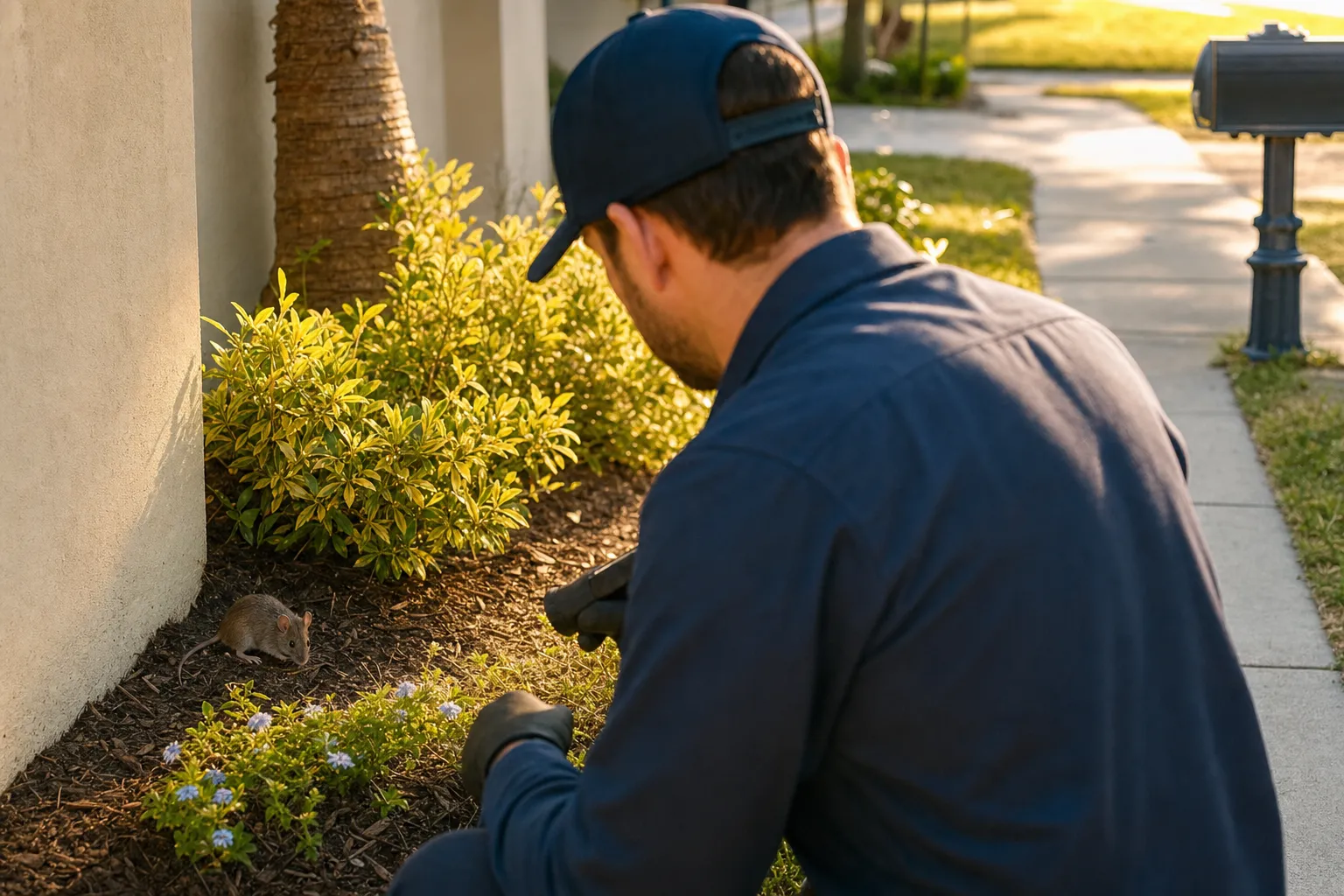
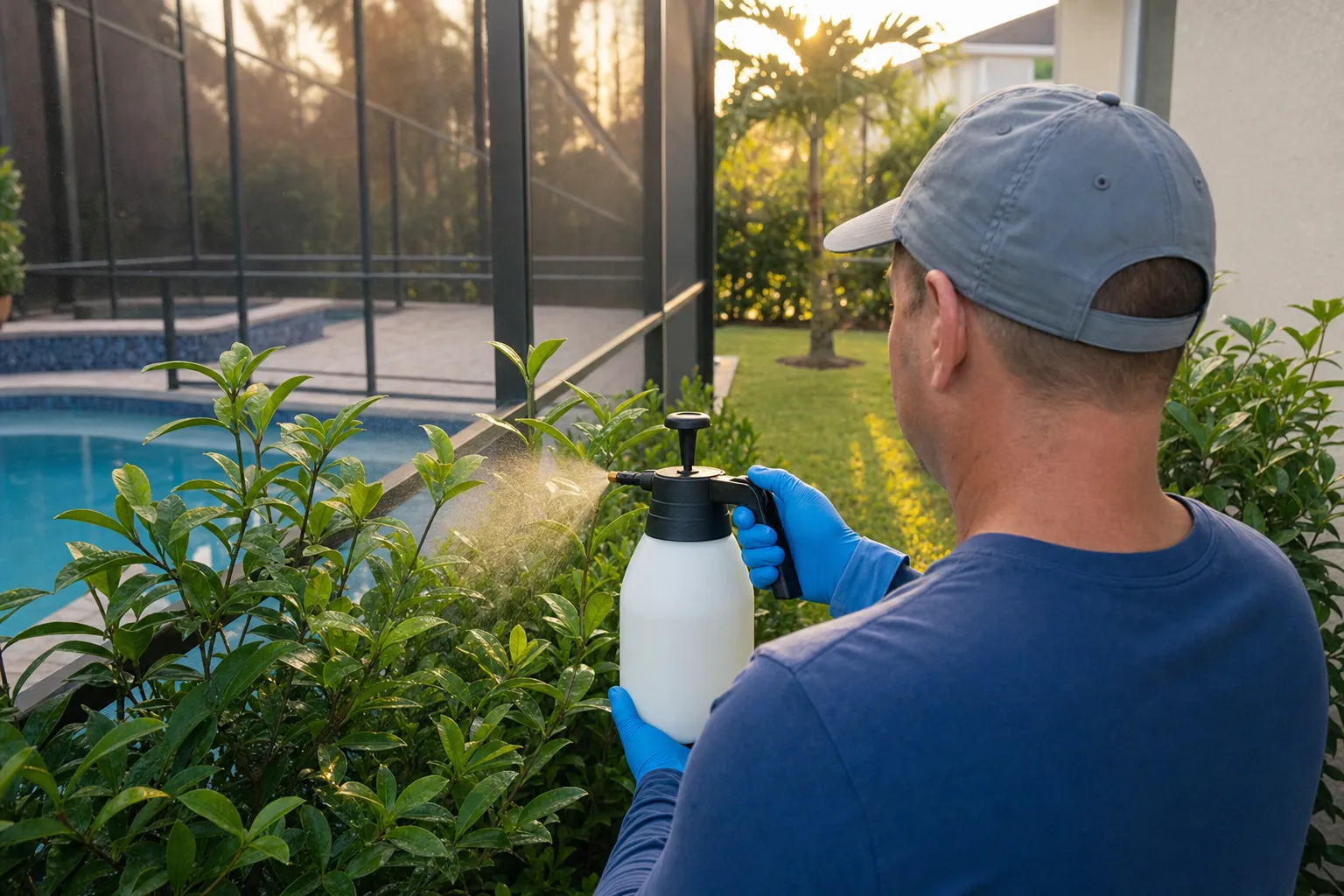
Brush a hibiscus or hedge and a little cloud of white insects lifts off, then settles again. That is a useful whitefly clue, but the adults alone do not tell you which species is present or whether treatment is justified. Check the leaf undersides for immature stages and damage before reaching for a sprayer.
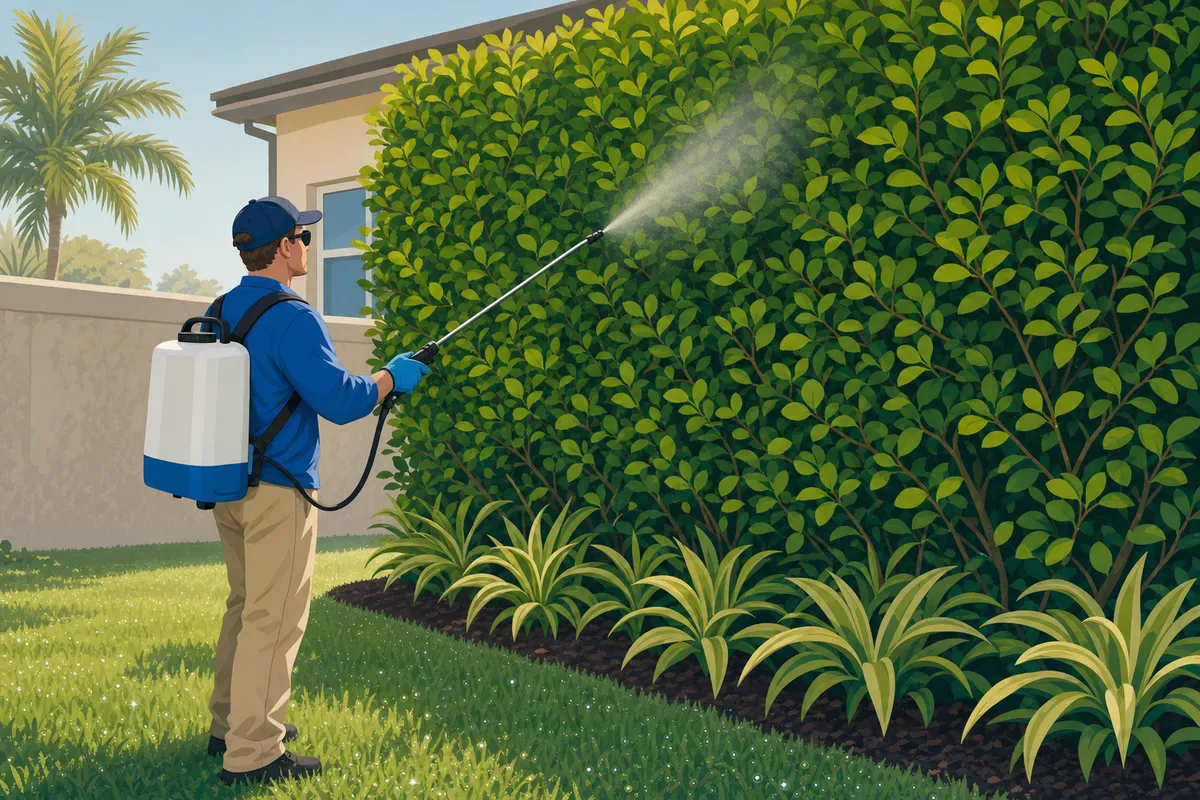
Neem can reduce whitefly numbers when the product label lists both whiteflies and the plant you want to treat. It depends on direct contact and thorough coverage, so it is better suited to a reachable shrub than a tall, dense hedge. If the canopy is out of reach or the plant is dropping leaves, request a tree and shrub estimate before trying to soak it from a ladder.
First, make sure you actually have whiteflies
Match the treatment to the insect or you are just spraying oil at a symptom. Adult whiteflies are tiny, white, winged sap-feeders; some species have darker wing markings. The scale-like nymphs are much less obvious and are usually found on leaf undersides. UF/IFAS whitefly guidance recommends inspecting adults, eggs, nymphs, and pupae because the life stage matters to control.
On every inspection
Signs you are dealing with whiteflies
- A white cloud on contact Bump a branch and a haze of tiny white insects lifts off, then resettles under the leaves.
- Undersides of leaves Flat, pale, scale-like nymphs cling to the bottom of the leaf, exactly where careless sprays miss.
- Sticky honeydew Leaves and anything under the plant feel tacky. That shine is excreted plant sugar.
- Black sooty mold A charcoal-colored film grows on the honeydew and blocks light from the leaf surface.
- Pale, mottled leaves Constant feeding drains the plant, so foliage looks speckled, yellowish, or drops early.
Quick field check before you mix a drop of anything.
Mealybugs look cottony, aphids are pear-shaped, and spider mites can leave stippling or fine webbing. A hand lens helps with the immatures. If the evidence does not line up, our pest library can help you narrow the possibilities before you treat.
How neem oil actually works on whiteflies
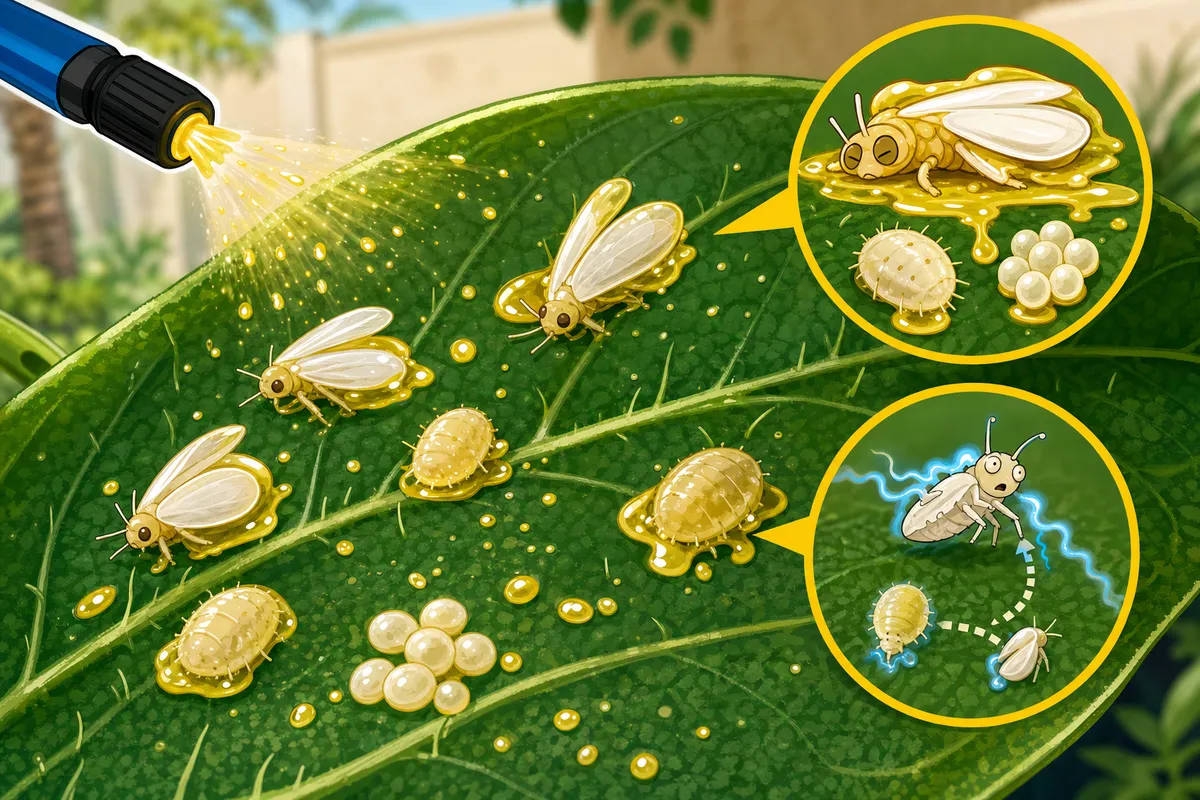
“Neem” is a product family, not one formula. Cold-pressed neem oil contains azadirachtin and other compounds. Many garden-center products instead contain clarified hydrophobic extract of neem oil, from which most azadirachtin has been removed. Those products act mainly as contact oils: they must coat the insect or egg to interfere with respiration. Concentrated azadirachtin products work differently and can disrupt feeding, egg-laying, or development.
That distinction is why the active-ingredient panel matters. UF/IFAS explains that neem formulations vary considerably, and oil products have little or no residual effect after drying. They may reduce a whitefly population, but they do not create a barrier against adults that arrive later. Coverage and follow-up monitoring matter more than choosing the bottle with the biggest “natural” claim.
How to use neem oil on whiteflies, step by step
- Choose a pesticide product for the actual use. Look for an EPA registration number and confirm that the label allows use on your plant and against whiteflies. A cosmetic or personal-care neem oil is not a substitute for a registered pesticide.
- Follow the label’s rate and mixing order. Measure the amount stated for your sprayer volume and use the required protective equipment. Do not add dish soap, detergent, a surfactant, or another pesticide unless the label specifically permits that mixture.
- Check the plant and weather. Do not apply oil to a drought-stressed or wilted plant. UF/IFAS advises avoiding horticultural oils above 90°F; also follow any tighter temperature, sun, wind, or rain restriction on your product. In Southwest Florida, that often makes a calm evening the practical window.
- Protect pollinators and nearby water. Inspect for open blooms and active bees, then follow the label’s pollinator and environmental-hazard directions. Keep spray out of pools, ponds, storm drains, and other off-target areas.
- Cover the target, especially underneath. Aim at the leaf surfaces where you confirmed whitefly eggs or nymphs. Follow the label’s coverage direction while preventing drift and runoff. A contact oil cannot control insects the spray never reaches.
- Recheck before repeating. Inspect the same marked leaves after the label’s stated evaluation or reapplication interval. Repeat only as often as the label allows; do not raise the concentration when results are slow.
Keep people and pets out of the application area while you mix and spray. Follow the product’s reentry direction; if it gives no specific interval, the EPA applicator manual advises waiting until the spray has dried. Store the product in its original container away from children, pets, food, and feed. On herbs, vegetables, or fruit, use the product only if that crop appears on the label and observe any preharvest interval.
Pro tip: Mark three or four infested leaves with loose flagging tape before treatment and inspect those same leaves with a hand lens later. Count live nymphs instead of judging success by the adults that fly when a branch is bumped.
What not to do
- Do not add household soap to improvise an emulsifier. A pesticide label is a complete set of directions, and an unlisted additive can injure foliage or change how the spray behaves.
- Do not spray every insect on sight. Lady beetles, lacewings, predatory bugs, and tiny parasitoid wasps can suppress whiteflies. Broad-spectrum treatments can remove those natural enemies and make long-term control harder.
- Do not spray a hot, wilted, or otherwise stressed plant. Oils can pit, spot, or burn sensitive foliage, especially in hot sun or when applied too strongly or too often.
- Do not treat open flowers or active pollinators contrary to the label. “Natural” does not mean harmless to every insect. Direct spray can still affect beneficial species.
- Do not guess at a calendar. Product rates, application intervals, crop restrictions, and reentry directions differ. The container label controls each one.
Build an IPM plan around the spray
Neem works best as one part of integrated pest management, especially when whitefly numbers are still low to moderate. UC’s statewide IPM guidance pairs soaps and oils with monitoring, natural-enemy conservation, and correction of conditions that favor outbreaks.
- Monitor rather than calendar-spray. Check leaf undersides weekly and use yellow sticky cards only to track adult activity; traps do not control the nymphs already feeding on the plant.
- Remove the worst material when practical. Prune heavily infested leaves only if the plant tolerates pruning, bag the cuttings, and do not strip a stressed shrub bare.
- Manage ants and dust. Ants may protect honeydew-producing insects, while dusty foliage can interfere with natural enemies. Correct those conditions without blanket pesticide applications.
- Avoid pushing excessive tender growth. Follow plant-specific fertilizer guidance. Lush new growth can be attractive to sap-feeding pests, and fertilizer is not a whitefly treatment.
- Judge the plant, not just the bug count. New growth, leaf color, honeydew, and sooty mold tell you whether the infestation is still causing meaningful damage.
When to call a professional
Stop the DIY spray plan when you cannot safely reach the canopy from the ground, when coverage would drift toward a pool or waterway, or when the plant keeps yellowing or dropping leaves despite correctly labeled applications. It is also time for help when you cannot confirm the pest, several plant species are affected, or the treatment area includes flowering plants or edible crops with complicated label restrictions.
Our approach to ornamental whiteflies
Our tree and shrub service starts with identification and a look at the whole plant. We inspect the affected foliage, the reachable canopy, plant stress, nearby blooms and water, and signs that natural enemies are already active. If a treatment is appropriate, the recommendation should match the identified pest, plant, site, and pesticide label rather than defaulting to neem or a calendar spray.
That assessment is the useful part when a hedge is too dense for complete contact coverage or when sooty mold is hiding the original cause. See what our tree and shrub care service covers, or request a tree and shrub estimate for your property.
Why whiteflies love Southwest Florida
Florida’s long growing season supports whiteflies on many landscape and food plants, but “whitefly” covers multiple species with different hosts. Ficus whitefly, for example, is primarily a pest of Ficus species, and UF/IFAS notes that even those hosts differ in susceptibility. Other whiteflies may be associated with different ornamentals or vegetables. Identifying the host and immature stage is more useful than assuming every white cloud needs the same treatment.
Southwest Florida weather also narrows the safe application window. Temperatures above 90°F are common, afternoon rain can arrive quickly, and many yards place hedges beside pools, canals, or blooming landscape beds. Check the weather against the label, keep the application on target, and postpone if the spray cannot dry as directed.
Frequently Asked Questions
Can neem oil get rid of regular house flies?
Do not assume it will. A neem pesticide controls only the pests and use sites listed on its label. A foliar product labeled for whiteflies on ornamentals is not automatically labeled for house flies indoors. Use sanitation, sealed trash, and screens for indoor fly prevention, then choose any pesticide only by its indoor-use label.
What plants should you not spray with neem oil?
The label’s plant restrictions come first. UF/IFAS specifically warns that oils can injure sensitive plants and waxy succulents, with greater risk on stressed plants and in hot, sunny conditions. If the label permits a small test application, treat a limited area and wait for the label’s stated observation period before covering the plant.
Is neem oil safe around bees, children, and pets?
Risk depends on the formulation, exposure, and label directions. Keep people and pets out while mixing and spraying and until the label permits reentry. Avoid direct spray on bees and other beneficial insects, and follow every pollinator restriction. “Organic” or plant-derived is not permission to ignore pesticide precautions.
What is the best insecticide for whiteflies?
There is no single best active ingredient for every whitefly, plant, and setting. Correct identification, natural-enemy activity, plant condition, reachable coverage, and the product label all affect the choice. Oils and insecticidal soaps can reduce directly contacted whiteflies, but even those options may require repeat applications at label intervals. If the plant continues to decline, get a species and plant-health assessment instead of escalating the rate.
The bottom line
Neem oil can be a useful contact treatment for whiteflies on a reachable, label-approved plant. Read the active ingredient, confirm the use site, protect beneficial insects, cover the leaf undersides, and let monitoring decide whether another label-allowed application is needed. When safe coverage is not realistic or the plant keeps declining, request a tree and shrub estimate instead of making the mix stronger.