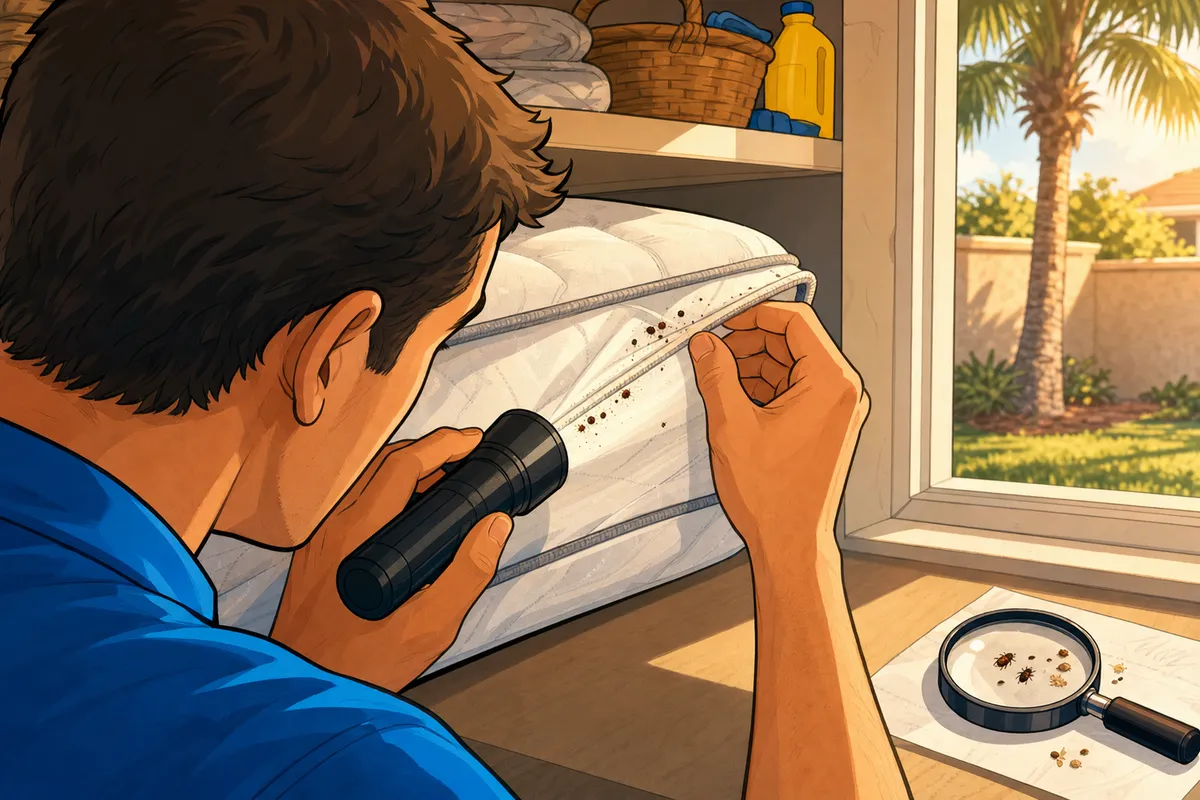
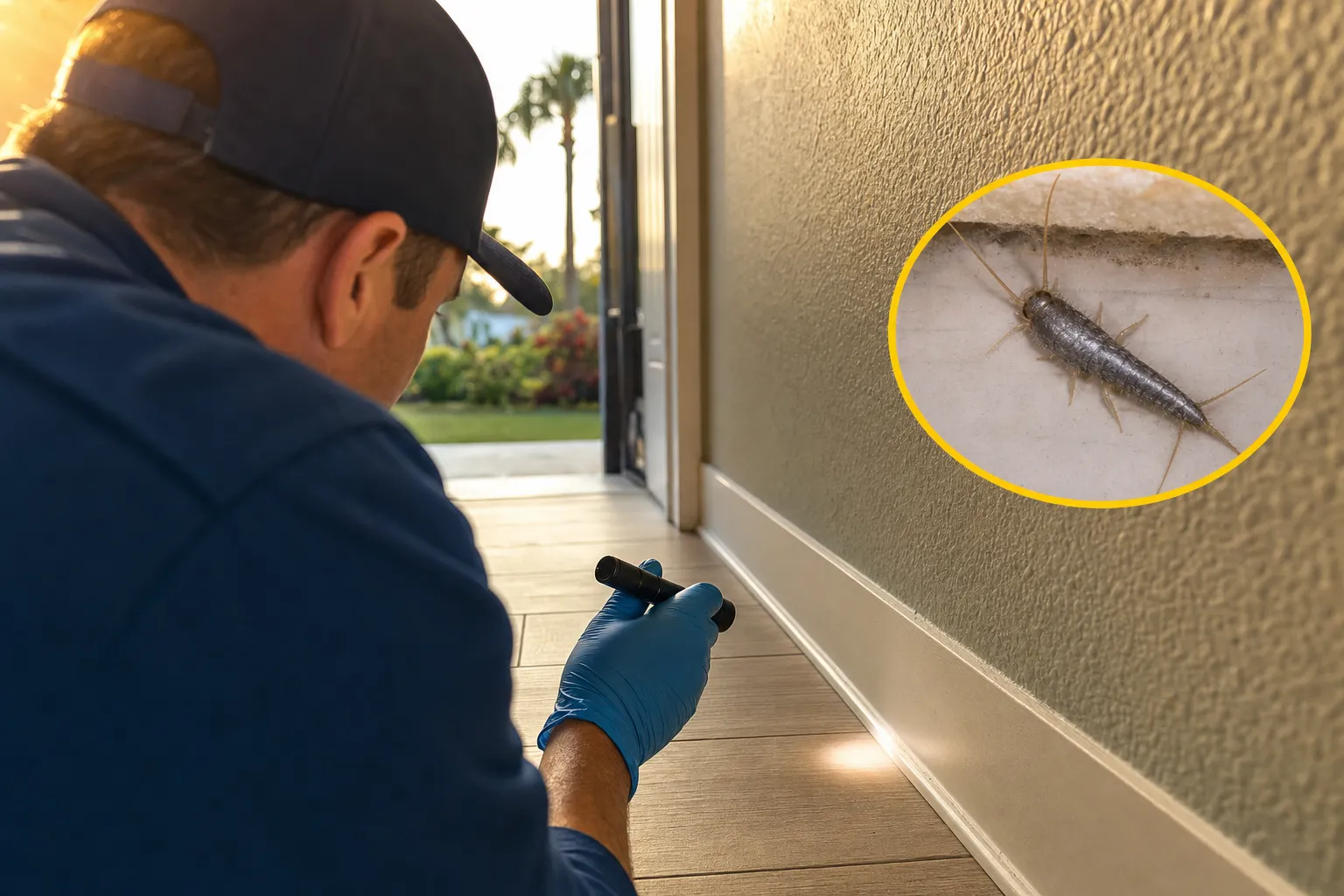
You flip on the bathroom light and something silver darts under the baseboard. Or you spot a little brown pincer-tailed thing by the shower drain. Maybe it’s a scatter of pale specks on a damp windowsill that you first read as dust. All three can turn up around Southwest Florida homes, but they do not always come from the same place.
Silverfish and booklice are strong clues to sustained indoor moisture. Earwigs are more often outdoor visitors from damp mulch, leaf litter, or irrigated beds that enter through a door gap or another opening. Telling them apart helps you decide whether to investigate indoor humidity, outdoor harborage, or both.
The identification details below come from the UF/IFAS guides to booklice and silverfish, ringlegged earwigs, and other earwigs found around Florida homes. We handle these insects as part of general pest control. If the count is climbing and you would rather hand it off, you can request a pest-control quote any time.
Why they show up near bathrooms and doors
Bathrooms, laundry rooms, and closets against exterior walls can hold moisture when ventilation is poor or a leak or condensation goes unnoticed. During Southwest Florida’s wet season, mulch and irrigated planting beds near thresholds can also remain damp enough to shelter outdoor insects.
Silverfish live and develop in damp, cool places, according to UF/IFAS. Booklice prefer warm, humid areas and feed on fungi and other organic material. Earwigs are active at night and hide by day in cracks, leaf litter, debris, and mulched beds before occasionally wandering indoors.
Repeated silverfish or booklouse sightings justify checking indoor humidity, plumbing, and damp stored materials. Repeated earwig sightings call for an outdoor check around mulch, leaf litter, irrigation, door sweeps, and other entry points; they do not by themselves prove that indoor humidity is high.
Pro tip: Use a hygrometer instead of guessing. UF/IFAS recommends reducing indoor humidity below 50 percent to slow the mold growth that supports booklice. Drying damp harborage also makes the area less suitable for silverfish.
Silverfish: the silver, carrot-shaped one
Silverfish are easier to recognize once you know the outline. The body is carrot-shaped, wide at the head and tapering toward the back end, with fine silver to pearl-gray scales that catch the light. UF/IFAS lists adults at about one-third to one-half inch long (8 to 13 millimeters), excluding the long antennae and tail filaments.
The giveaway among the three insects compared here is the tail. UF/IFAS describes three long, bristly appendages at the rear: one points straight back and the other two angle out to the sides. Firebrats are an important look-alike because they have the same three-filament arrangement, but they are mottled gray or brown instead of shiny silver. Silverfish are wingless and nocturnal, so they are most often noticed after their hiding place is disturbed.
Earwigs: the ones with the pincers
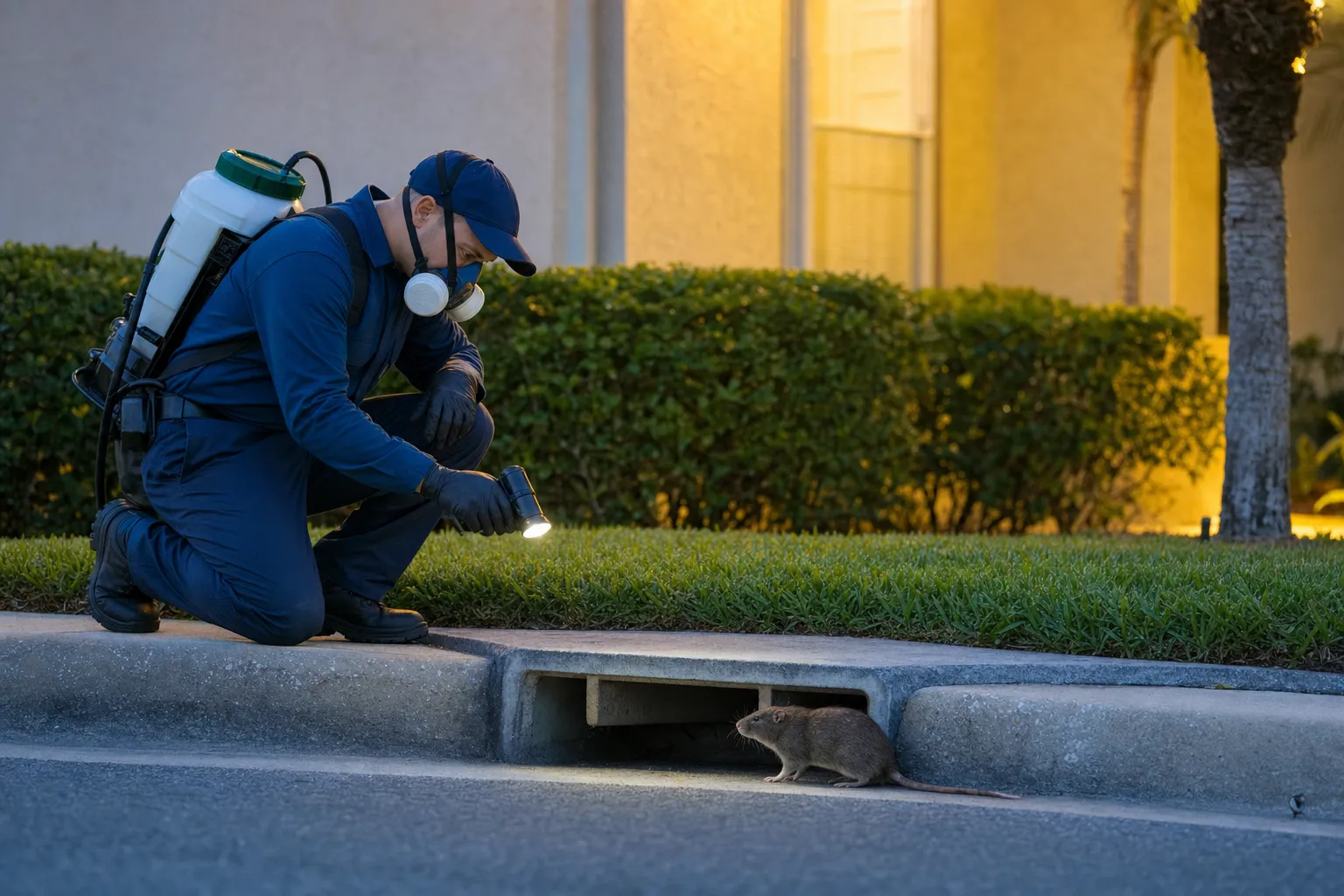
Earwigs are the ones with a pair of pincer-like cerci at the tip of the abdomen. UF/IFAS describes the ringlegged earwig as Florida’s most common earwig and primarily a nuisance that rarely builds to high numbers. Adults are dark brown, wingless, and roughly one-half to two-thirds of an inch long, with pale legs marked by dark bands.
The male ringlegged earwig has more curved cerci, including a sharply inward-turned tip on the right branch, while the female is slightly larger on average. Earwigs can pinch if handled, but UF/IFAS classifies the household problem mainly as a nuisance rather than structural damage.
Booklice: the tiny specks on damp paper and walls
Booklice are the ones most people never manage to identify, because they’re so small. UF/IFAS puts indoor booklice at usually under a sixteenth of an inch, around 1.5 millimeters, so they read as moving grains of pale dust. The color ranges from translucent white to gray to light brown. Up close they’ve got long, thread-like antennae, chewing mouthparts, and a rounded bulge on the front of the head between the eyes.
They aren’t lice, and the name trips people up. UF/IFAS points out that none of these are parasites and few even look louse-like. Indoors they go by booklice; the outdoor cousins that live on tree bark are called barklice. What draws them in is mold. They graze on the microscopic fungi that bloom on damp paper, book bindings, cardboard, and drywall, so a bloom of booklice is really a bloom of mold you maybe can’t see yet.
What each one actually eats, and what damage is real
This is where the fear tends to outrun the facts.
Silverfish can damage stored materials. UF/IFAS lists them feeding on paper with glue or paste, the sizing in book bindings, starch in clothing, cereals, and rayon. That is why libraries and museums monitor for them.
Earwigs get blamed for more than they do. Ringlegged earwigs eat plant and animal material, but UF/IFAS reports that much of their plant food is detritus and that they also prey on caterpillars, beetle larvae, leafhoppers, and other arthropods. Their plant injury is usually minor. Indoors they are mainly a nuisance.
Booklice are usually a nuisance or contamination pest, but large numbers can damage the starch sizing in book bindings and page edges. Their presence also points to the humidity and fungal growth supporting them. Booklice are not parasitic lice.
Silverfish vs. earwig vs. booklouse at a glance
When you’re standing over one with your phone flashlight, this is the quick sort.
| What to check | Silverfish | Earwig | Booklouse |
|---|---|---|---|
| Adult size | About 1/3 to 1/2 inch (8 to 13 mm), minus antennae and tails | Roughly 1/2 to 2/3 inch, minus the pincers | Usually under 1/16 inch (about 1.5 mm) |
| Shape and color | Carrot-shaped, silver to pearl-gray, fine scales | Flattened, dark to reddish brown | Soft-bodied, translucent white to gray or light brown |
| Back end | Three long bristly filaments, one straight and two angled out | A pair of pincers (cerci), strongly curved in males | No pincers or tails, just long thread-like antennae |
| Where you find them | Damp baseboards, closet shelves, stored paper | Dark, damp harborage by day; in from mulch beds at night | Damp paper, book bindings, and walls where mold grows |
| What the numbers hint at | Chronic dampness and starchy clutter | Moist mulch and leaf litter against the house | High indoor humidity feeding mold |
Identification details per UF/IFAS Featured Creatures and UF/IFAS Extension (ENY-225, EENY-705, EENY-483, EENY-088).
A few UF/IFAS facts worth knowing
Some trivia that actually helps you remember which is which.
Silverfish are wingless members of the insect order Zygentoma and develop without a dramatic change in body form. The UF/IFAS silverfish profile reports that adults continue molting throughout life, with 25 to 66 molts recorded over a lifespan that can reach four years under favorable conditions. A lost tail filament or antenna can regrow in two to four weeks.
UF/IFAS describes a female ringlegged earwig protecting her egg clutch from mites, fungi, and intruders, and cleaning or relocating the eggs when needed. Her maternal care decreases soon after the nymphs hatch.
Booklice run a quiet operation. Despite the name, UF/IFAS notes they aren’t lice or parasites, and the indoor ones are mostly wingless. They can go from a couple of specks to spread through a whole building once humidity stays high, which is precisely why they make such a useful early warning.
When repeated sightings point to moisture or entry
One sighting does not reveal the source by itself. Repeated silverfish sightings or booklice spreading across a wall are reasons to look for sustained indoor moisture. Repeated earwig sightings are more likely to point to an outdoor population and an entry gap.
Here’s the homeowner checklist before you call anyone:
- Confirm the ID with the notes above so you aren’t chasing the wrong bug.
- For silverfish and booklice, check under sinks, around plumbing, along bathroom baseboards, on closet shelves, and in damp paper or cardboard.
- Use the exhaust fan during and after showers, and look for slow leaks, condensation, water-damaged materials, or poor airflow.
- Measure indoor humidity. For booklice, the UF/IFAS target is below 50 percent.
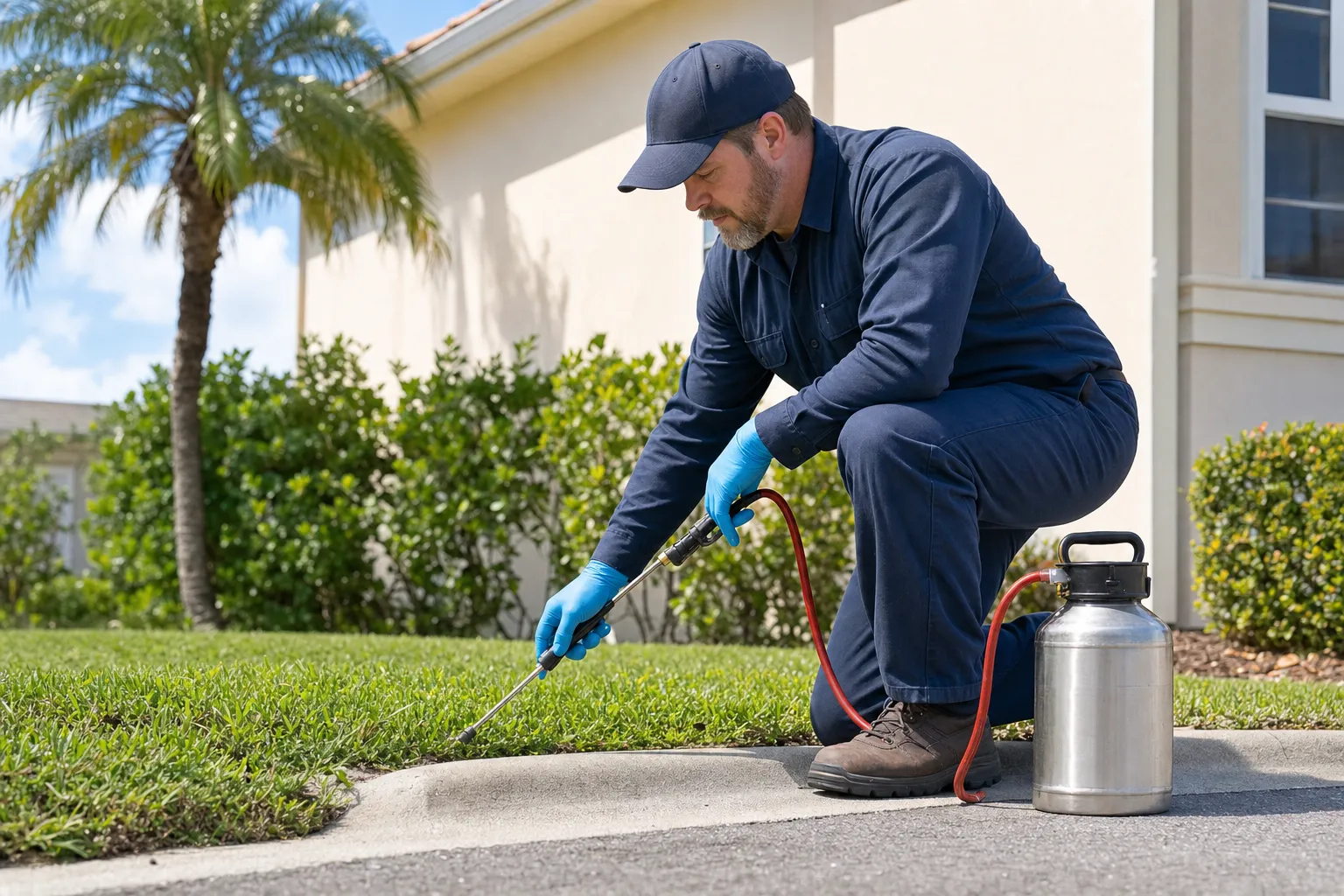
- For earwigs, inspect mulch, leaf litter, compost, potted plants, door sweeps, screens, and cracks around the nearest exterior wall.
Do not treat the visible insects without addressing their source. A broad baseboard spray does not correct damp paper, a plumbing leak, outdoor leaf litter, or a gap under a door. If you use any pesticide yourself, use only a product labeled for the pest and site and follow every label direction.
What a targeted pest-control visit should include
The EPA’s integrated pest-management guidance starts with monitoring and accurate identification, then prevention, and then the least-risk control that fits the evidence. For these insects, that means the findings should determine the work:
- Confirm the insect and map the activity. Inspect the rooms where it was found and nearby cracks, plumbing penetrations, stored materials, and exterior entry points. Sticky monitors can help show where activity continues instead of relying on one sighting.
- Correct the conducive conditions. For silverfish and booklice, reduce humidity, repair leaks, improve airflow, remove damp cardboard or infested materials, and vacuum shelving or cracks. For earwigs, reduce wet leaf litter and excessive mulch near the structure, correct irrigation that keeps the edge wet, and repair door sweeps or screens.
- Match treatment to the site. Physical removal and moisture or harborage correction may be enough. When a pesticide is warranted, it should be labeled for the target pest and application site and placed only where the inspection supports it, such as an appropriate crack-and-crevice or spot treatment.
- Recheck the result. Follow-up monitoring should show whether activity is declining and whether a leak, entry point, or harborage still needs attention.
If sightings continue after moisture and entry corrections, a licensed pest-management professional can confirm the species and choose a targeted treatment. For current recurring-service coverage and terms, review WaveGuard memberships. You can also get a pest-control estimate for your property.
This guide is about telling them apart. If you already know it’s silverfish and you just want them gone, our walkthrough on how to get rid of silverfish covers the cleanup. Want to browse the other household invaders you might run into around Venice or North Port? The Waves pest library has the rest.
Frequently Asked Questions
Are silverfish, earwigs, or booklice dangerous to people or pets?
They are primarily nuisance pests rather than parasites. Earwigs can pinch if handled, while silverfish can damage starchy paper or fabrics and booklice can contaminate food or damage book bindings when numerous. Silverfish and booklice also justify checking for excess indoor moisture; earwigs more often point to outdoor harborage and an entry gap.
How do I tell a silverfish from an earwig?
Look at the back end. A silverfish is silver to gray, carrot-shaped, and trails three long bristly filaments, with no pincers. An earwig is browner, flatter, and carries one pair of pincers (cerci) at the tip of the abdomen. Size helps too: UF/IFAS gives silverfish a range of about one-third to one-half inch and adult ringlegged earwigs a range of about one-half to two-thirds of an inch, excluding antennae and rear appendages.
What are booklice telling me about my home?
Moisture. Booklice graze on microscopic mold, and mold needs humidity, so a spreading group usually means the air or the materials in that room are staying too damp. UF/IFAS notes that holding indoor humidity under 50 percent slows the mold they depend on, which is the real lever for clearing them out.
Does finding an earwig mean my indoor humidity is too high?
Not necessarily. Earwigs usually live outdoors in soil, debris, leaf litter, or mulch and may enter through gaps while roaming at night. Check the nearest exterior harborage and entry points first. Indoor moisture can make a hiding place more suitable, but an earwig sighting alone is not a reliable indoor-humidity reading.
Still not sure what’s crawling around your baseboards, or just tired of finding them in the tub? Request a Pest Control Quote and we’ll identify the insect and investigate its source.
Identification details reviewed September 2026 against UF/IFAS Featured Creatures and UF/IFAS Extension publications.