Spiders in Southwest Florida homes call for a calm decision: leave a beneficial outdoor spider alone, clear an abandoned web, or step back from a possible widow. This is a response and prevention plan for a spider you have already found. If your main question is which species you are seeing, use the UF/IFAS Florida spider identification resource first, then return here for the safe next step.
Want a ballpark before you talk to anyone? Get a Pest Control Estimate and you will have a real number without a phone call. Our pest control services for spiders in Southwest Florida homes focus on active harborage, entry points, and the insects that keep spiders fed.
Start with a safe spider check
You do not need to identify every leg or marking before deciding what to do. Check the location and web from several feet away, keep children and pets out of the area, and look for these practical signals:
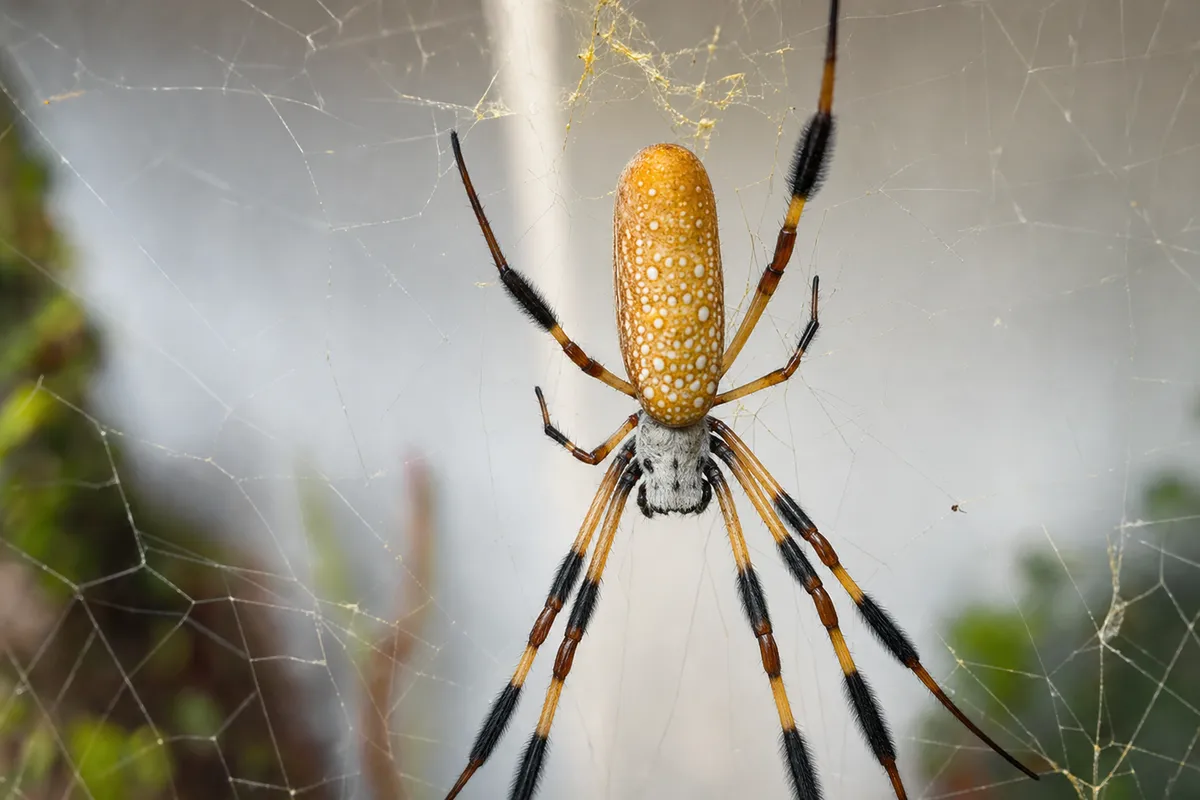
- An open orb web away from doors and walkways: the spider is usually controlling flying insects outdoors. Leave it in place when it is not creating a contact risk.
- An abandoned web with no spider or egg sac: this is the reasonable DIY-cleanup case. Vacuum the web, empty the canister outdoors, and wash your hands afterward.
- A messy web in a protected recess: do not reach into it. Widows favor quiet spots such as meter boxes, the undersides of patio furniture, garage corners, and sheds.
- A spiky, sandspur-textured egg sac: treat it as a suspected brown-widow sac. Do not vacuum, sweep, crush, or handle it; keep away and arrange professional removal.
- A spider you cannot identify in a play area or other high-contact spot: take a photo from a safe distance if you can do so without disturbing it, then ask for identification or removal.
Widows are shy and usually bite when trapped against skin, which is why hands-off distance matters more than a perfect phone photo. Recluses are uncommon here: UF/IFAS reports no breeding populations in natural Florida habitat, while isolated indoor introductions have occurred. Do not rule out an unfamiliar spider based on location alone. The UF/IFAS resource covers identification in detail; this page stays with the action plan.
Why spiders in Southwest Florida homes keep returning
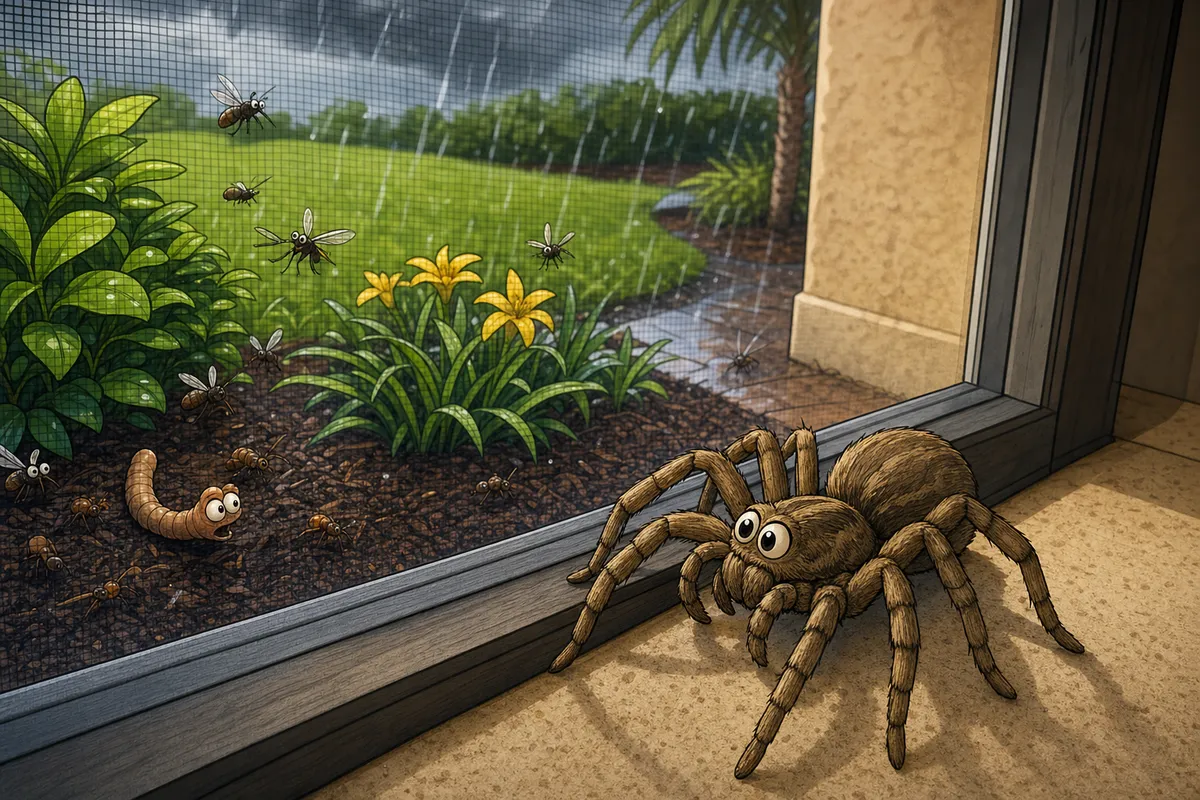
Recurring webs point to two practical conditions: a protected place to build and insects to eat. Around a Southwest Florida home, check exterior lights, lanai corners, eaves, garage and shed clutter, and stored materials against the wall. Those are the conditions you can change without guessing at a species-wide calendar.
Spider activity and life cycles vary by species, so a calendar should not decide whether DIY removal is safe. The web location, presence of an egg sac, and your confidence in the identification are the useful signals.
What you can do about spiders in Southwest Florida homes yourself
Cleaning up does most of the heavy lifting here, and UF/IFAS agrees. The homeowner playbook, roughly in order of payoff:
- On a confirmed abandoned web with no spider or egg sac, vacuum the web and empty the canister outdoors. If a spider or egg sac is present, stop and identify it from a safe distance before deciding what comes next.
- Cut the clutter in garages, sheds, and closets. Fewer hiding spots means fewer spiders.
- Move woodpiles, pavers, and building debris away from your exterior walls so widows lose their favorite outdoor harborage.
- Repair damaged window screens and weather-stripping around doors. Ask a qualified professional about other entry gaps while preserving required drainage and ventilation. Never screen a dryer exhaust: mesh can trap lint and restrict airflow; it needs an appropriate dryer-exhaust hood instead.
- Rethink your outdoor lighting. Aim fixtures away from doors, or switch to warmer bulbs that pull in fewer insects.
- Do not reach blindly into meter boxes, furniture undersides, or stored materials. Check from a safe distance first, and leave an occupied protected recess alone.
Pro tip: A spiky, sandspur-textured egg sac is the hallmark of a brown widow. Never vacuum, sweep, crush, or handle one yourself. Keep people and pets away from the area and call a professional for removal.
Where a spider inspection starts
- Foundation perimeter: sheltered slab edges and nearby debris can hold tangled webs.
- Doors and windows: gaps and insect activity help explain recurring spiders near living spaces.
- Eaves and soffits: accessible corners may hold webbing; occupied webs and egg sacs stay undisturbed until assessed.
- Exterior cracks and weep holes: openings can provide routes for prey insects and wandering spiders.
- Garage and shed corners: undisturbed storage edges provide shelter.
- Lanai and screen enclosure: frames, furniture undersides, and corners are places to check for recurring webs.
These are potential inspection areas, subject to safe access. Findings determine whether web removal, exclusion, prey reduction, or targeted treatment is appropriate.
What not to do
Do not pick up a spider you cannot identify, and do not let a kid do it either. If you think you are looking at a widow, keep your hands off it and off the egg sac. Do not spray an unidentified spider or egg sac. If a professional recommends a pesticide, follow its label for the pest, site, application, and re-entry instructions. An unfamiliar brown spider should be identified from a safe distance; neither its color nor its Florida location settles the question.
When it is time to call a pro
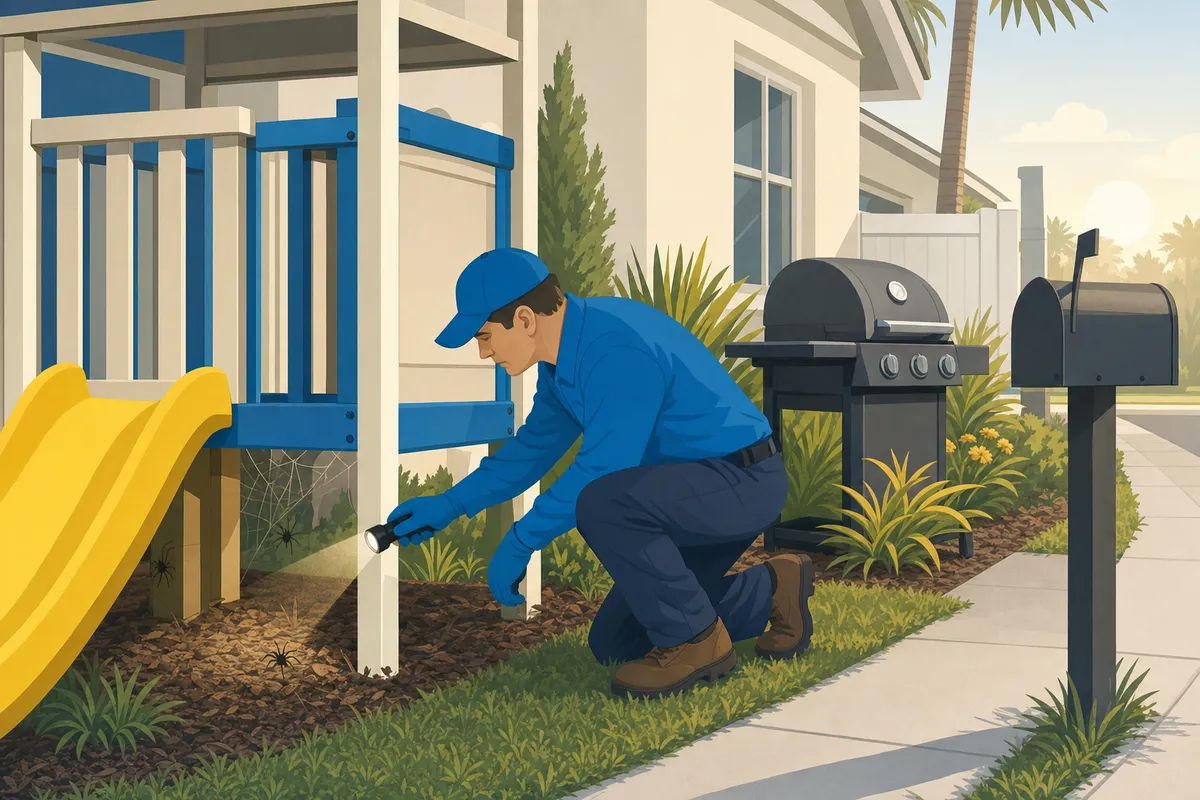
DIY handles the occasional web on the porch. Bring in help when you keep finding widows around a play area or grill, when they show up faster than you can clear them, or when you genuinely cannot tell what you have. Naming it correctly comes first, since the right move depends on which spider you have, and that is hard to nail from a phone photo.
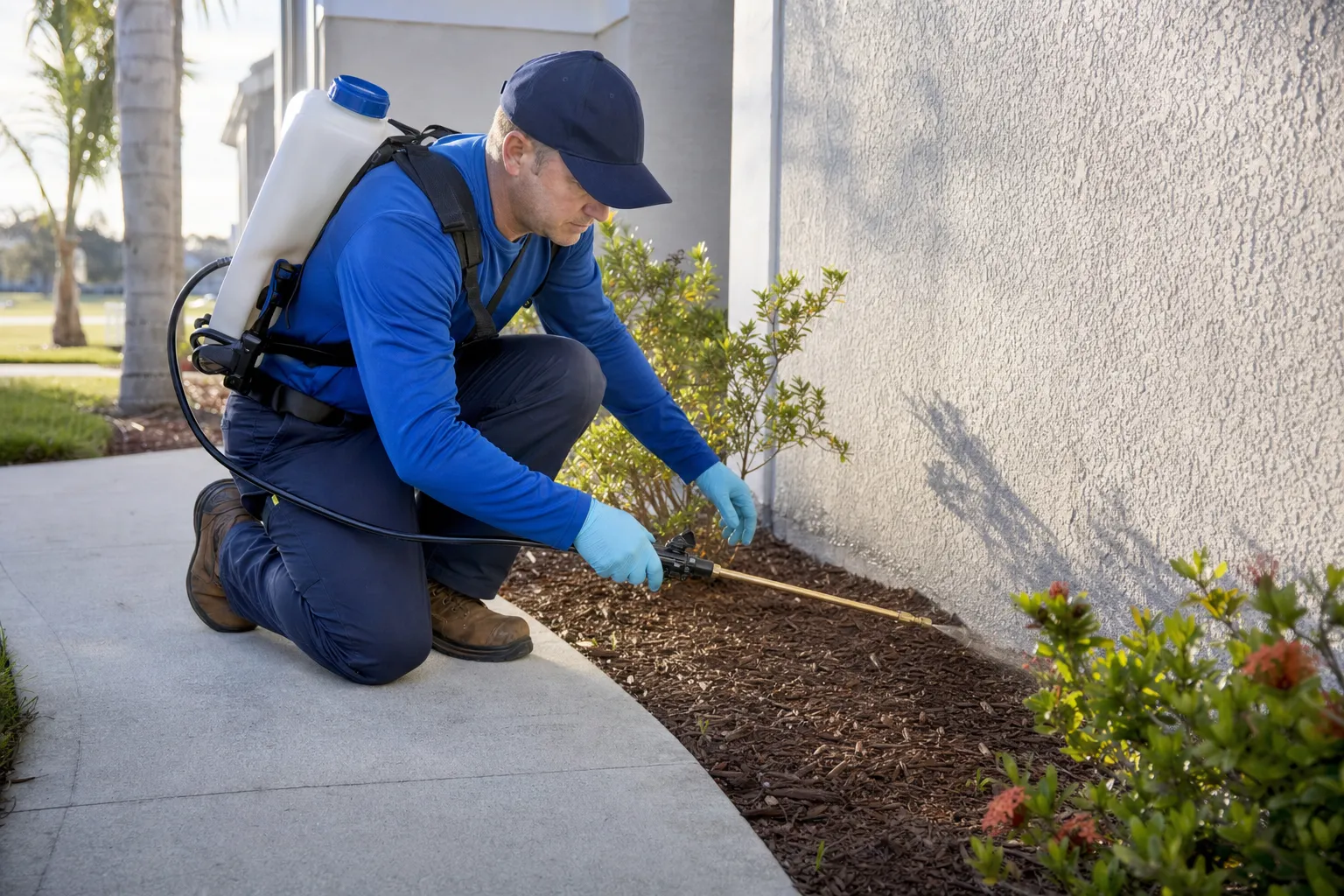
We start by identifying what is actually there and checking the places where the webbing returns. We inspect accessible cracks, eaves, screens, and sheltered harborage; remove webs and egg sacs when it is safe to do so; and treat only the areas the findings support. We also look for the insects feeding the activity and for entry gaps that can be corrected. That approach reduces the conditions spiders use without pretending that one visit can keep every outdoor spider away forever.
A recurring plan is what keeps that pressure from creeping back. Our WaveGuard memberships include unlimited callbacks between your scheduled visits at no extra charge, so if covered pests come back before your next service, we come back free.
UF/IFAS classifies widow venom as medically significant, meaning a bite may require medical care. Its southern black widow profile notes that prompt treatment matters when a severe reaction requires antivenin.
Ready to hand off the eight-legged tenants? Get a Pest Control Estimate, or see what coverage looks like for your address on our Sarasota pest control and Bradenton pest control pages.