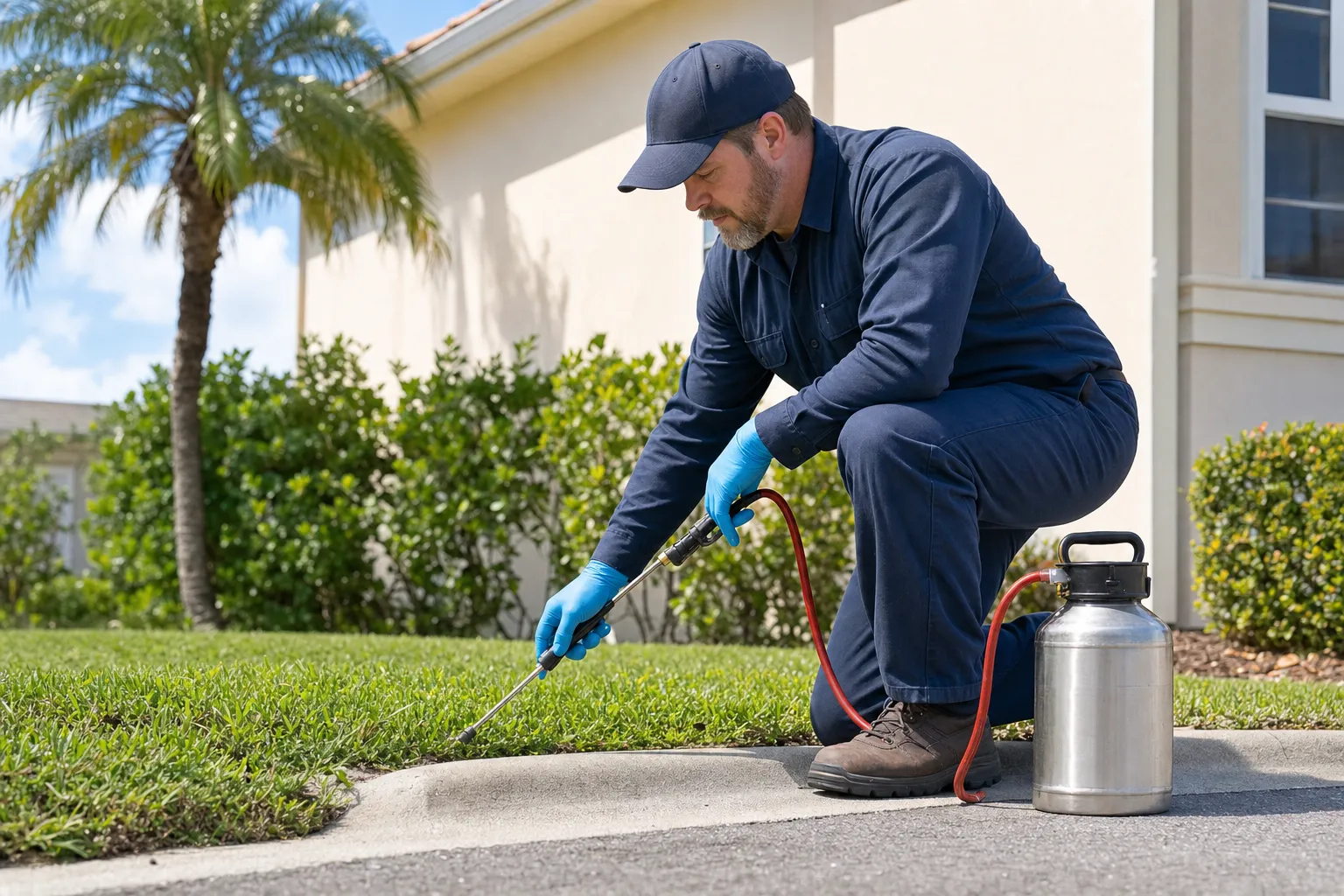
You found something with too many legs parked in the corner of the lanai, and now you’re weighing a shoe against listing the house. Ease up. Most spiders living in your Southwest Florida home are on your side, quietly clearing out the bugs that our humidity and afternoon storms keep pushing indoors. Florida has more than 250 spider species, per UF/IFAS, and the ones you meet around the house are mostly web-spinners and daytime hunters that would rather avoid you than bite you. The crew running Waves pest control services sees the same short list in homes from Bradenton to Venice, so let’s sort out who’s who and where they hide, plus the one spider that earns a closer look.
Want a number before you talk to anybody? Get a Pest Control Estimate and you’ll have a ballpark in about a minute.
The house spiders you keep seeing in SWFL homes
Nearly all of your indoor sightings come down to a handful of regulars:
- Long-bodied cellar spider, the “daddy longlegs” with thread-thin legs and a wispy web in the ceiling corner of a bathroom or garage. It hunts other spiders and small insects for a living. That old line about it being the most venomous spider alive with fangs too small to bite you is a myth with no science under it.
- Common house spider, the roundish tan-to-brown one that strings a messy cobweb across a window frame, a garage rafter, or a shed. It won’t bother you, and it’s mostly interested in whatever flies into its web.
- Southern house spider, fast and flat and brown, the one that comes charging out of a car door frame, a shutter, or a garage light fixture. Males have long legs and get mistaken for a brown recluse more than any spider in the state. Count the eyes if you can get a photo: this one has eight, a recluse has six.
- Jumping spider, small and fuzzy with big front eyes, out hunting in daylight, and sometimes it swivels to look right back at you. The regal jumping spider is one of the biggest in the country and a cat-like little predator, per UF/IFAS. It won’t hurt you, and it’s kind of likable.
- Huntsman spider, big, flat, and long-legged, fond of garages and the space behind a hung picture. Alarming the first time it scoots across a wall, and still no danger to you.
- Wolf spider, a ground hunter in brown and gray that bolts the second the porch light snaps on. Females haul their egg sac around and then carry the hatched babies on their backs for a while. One of them will eat roaches, silverfish, palmetto bugs, and mole crickets by the dozen.
Where they hide, and why they picked your place
Spiders go where the food is, and Southwest Florida runs a year-round buffet. Sandy soil drains fast and stays warm. The humidity never quits, and every afternoon storm leaves behind puddles that hatch the next round of insects. A thick St. Augustine lawn and the mulch beds along your foundation hold moisture and bugs, and that pantry sits right up against the house. Screens, soffits, and an attached garage give spiders a dry place to wait it out.
So, do spiders mean your house is dirty? Not really. A spider indoors usually means there’s something in there for it to eat. Your housekeeping isn’t on trial. Clear out the prey and you clear out the reason they came.
Your home, zone by zone
Where we inspect & treat
A typical Southwest Florida home — the numbered zones a local tech walks on every visit.
On a spider inspection we check the sheltered spots where webs and egg sacs turn up, then target treatment to what we find.
They also don’t punch a clock. Pressure stays up all year here, with a noticeable bump in fall when a lot of species mature and go looking for mates, which is when you start spotting the big ones on the porch.
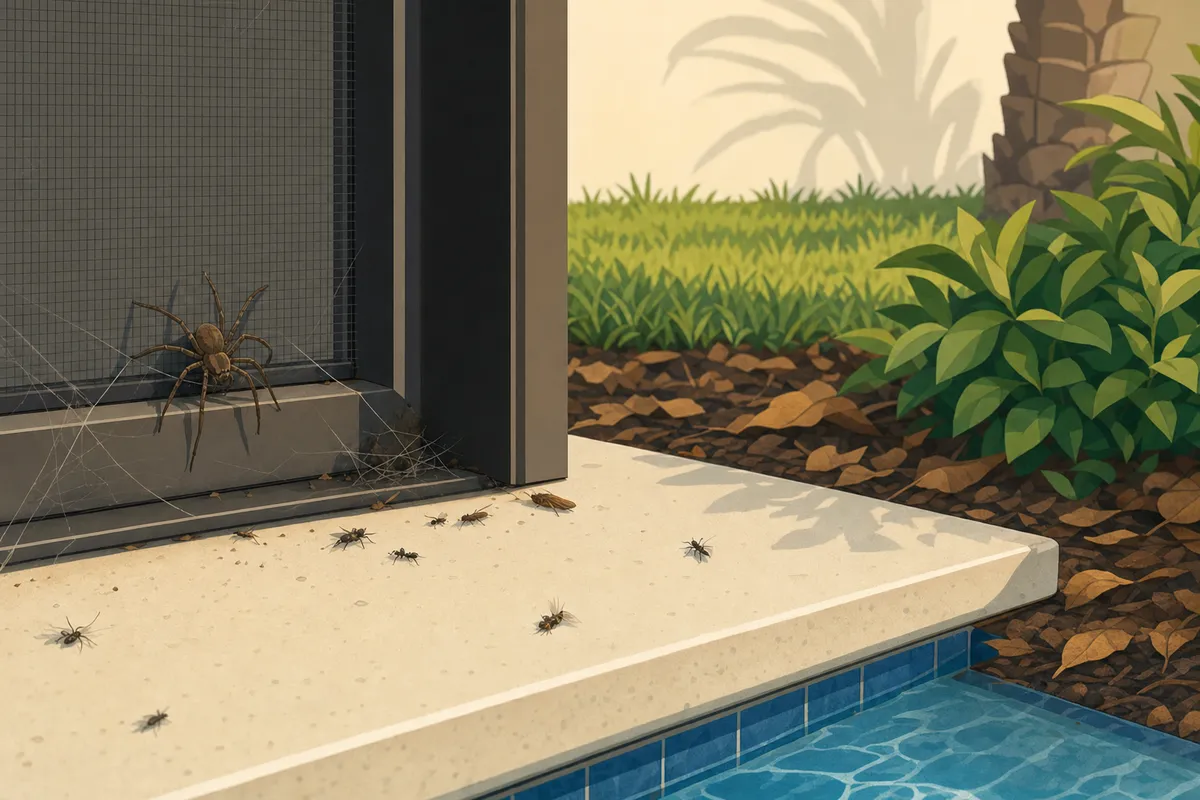
Seasonal pressure
Southwest Florida pest pressure through the year
- Moderate
Juveniles from last year's egg sacs spread out as the weather warms and insect prey picks up.
- Steady
Humidity and afternoon storms keep the insect buffet full, so webs stay active all season.
- High
The noticeable bump: many species mature and males roam looking for mates, so you spot the big ones on the porch.
- Low
Activity eases with cooler nights, though sheltered garages and sheds stay occupied year-round.
Spider pressure holds up all year in SWFL, with the noticeable peak in fall as species mature and seek mates.
The one group worth respecting: widow spiders
Widows are the only spiders with an established Florida population whose bite can land you at a doctor. Two of them show up around SWFL homes. The brown widow is invasive, established across the state since the mid-to-late 1990s, and the widow you’re most likely to find near a home down here. The southern black widow is the classic shiny black one with the red hourglass on her underside, and she turns up in just about every county.
Both like the same quiet, sheltered spots: garages, sheds, the underside of patio furniture, grill covers, and inside the water meter box. They are shy and only bite when they get pressed against skin, so the fix is knowing where they sit and keeping a bare hand out of it. A brown widow gives herself away with a tan, spiky egg sac that looks like a tiny sea mine.
The brown recluse question
Every pest control company in the region gets the “I have a brown recluse” call, and almost none of them turn out to be one. UF/IFAS has been steady on this for decades: no breeding population of any recluse species has been found in a natural Florida habitat. The couple dozen verified specimens ever recorded here rode in on moving trucks, cargo, or luggage from somewhere else. In one Florida study, 74 spiders got mailed in as suspected recluses, and not a single one was a recluse. Most were wolf spiders, huntsman, and southern house spiders. If you have a wound you think came from a bite, see a physician instead of diagnosing it off a search result.
Simple checks you can do this weekend
Figure out what you’ve got before you do anything about it, because a widow behind the grill and a cellar spider over the shower call for different moves.
- Take a photo instead of the spider. A clear phone shot beats a bare-handed grab for getting an ID.
- Walk the garage, the shed, and the lanai, and look low and in sheltered corners for messy webbing and egg sacs.
- Check the water meter box and behind the grill cover with a flashlight, never a bare hand.
- Vacuum up abandoned, non-widow webs and any harmless spiders you find, then empty the canister into an outdoor bin. Leave suspected widow egg sacs and any egg sac you can’t identify alone, since disturbing one can scatter spiderlings, and have a pro remove occupied webs.
- Notice where they keep turning up. A steady trickle in one room usually points to an insect problem feeding them.
On every inspection
What tells you spiders have moved in
- Cobwebs in corners Fresh, messy webbing in window frames, garage corners, and soffits.
- Egg sacs Papery or spiky little balls tucked into sheltered spots, a widow tell.
- Shed skins Pale, spider-shaped husks left behind as they grow.
- Dead-bug litter Wing bits and drained insect shells under a web, proof there is a food supply.
A quick walk-through tells you whether one spider wandered in or a whole crowd is settling.
What not to do
Pro tip: A wolf spider on the porch is doing you a favor. One of them clears roaches and mole crickets all night long, so relocating it beats killing it almost every time.
A few ways people make spider season worse for themselves:
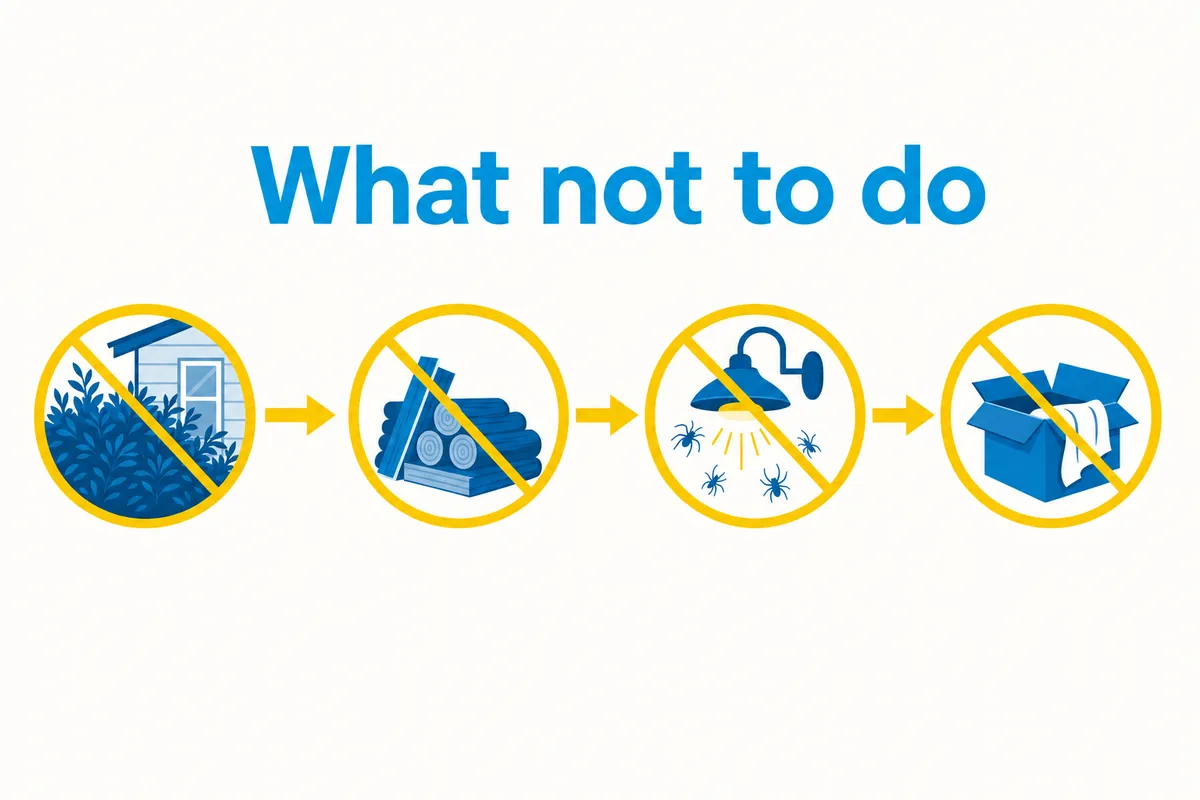
- Skip the barefoot stomp on a wolf spider, and think twice about squashing an egg-carrying female unless you want spiderlings scattering across the floor.
- Leave the can of Raid in the garage. Blasting the baseboards wipes out the hunters eating your roaches and leaves the buffet wide open for the pests you didn’t want.
- Keep a bare hand out of dark boxes, wall voids, and the space under stored furniture where a widow might be sitting.
- Don’t treat the whole house over a recluse you almost certainly don’t have.
When to call a pro, and how Waves handles it
Call someone in when any of these keep happening:
- You keep finding widows near a door you use, on the everyday side of the garage, or where kids and pets play.
- Egg sacs come back after you clear them.
- Spiders return no matter how much you vacuum, which usually means a bug problem underneath is feeding them.
Here’s the Waves approach. We start with an ID and walk the zones above, knock down the webs and egg sacs, and put a targeted perimeter treatment where spiders get in and hide. The part that matters most is going after the prey, because a spider with nothing to eat has no reason to stick around. We’ll also flag the gaps worth sealing, like a worn door sweep or a torn lanai screen. No treatment makes a house permanently off-limits to spiders, and anybody promising that is selling you something; what a solid plan does is knock the numbers down and make your home a lousy place to be a spider, so you see them far less. On a WaveGuard plan, if covered pests turn up between your scheduled visits, we come back and re-treat at no extra charge, as many times as it takes.
Want to put a name to something else you turned up? The Waves pest library is a solid place to start. Homeowners from North Port to Punta Gorda deal with this same lineup, so when you want a set of eyes on the place, book a visit for your Sarasota-area home or Get a Pest Control Estimate first.