Jump to a section (8)
- 01Spot it in ten seconds
- 02Yellow or purple: Florida’s two troublemakers
- 03Why pulling it just makes more
- 04Why your weed-and-feed never touches it
- 05Wet spots and Parrish’s construction dirt
- 06What a realistic season of control looks like
- 07What you can do this weekend, and what to skip
- 08Frequently asked questions
Grab a stem in the pale, spiky patch of your lawn and the whole mystery usually solves itself. If it reads as grass from the driveway but shoots up faster than everything around it a day after you mow, you’re almost certainly looking at nutsedge. Parrish lawns see plenty of it.
I run the lawn side of Waves, and nutsedge is the weed that taught me humility. Mowing won’t beat it, and the weed-and-feed in your garage does nothing to it. Pulling it, which feels like progress, quietly makes things worse. This is the field guide I wish every Parrish homeowner had before losing a summer to it. When it’s time for treatment, our weed control in Parrish service handles sedges specifically.

Want a licensed set of eyes on a patch before it spreads? You can request a quote and we’ll take a look.
Spot it in ten seconds
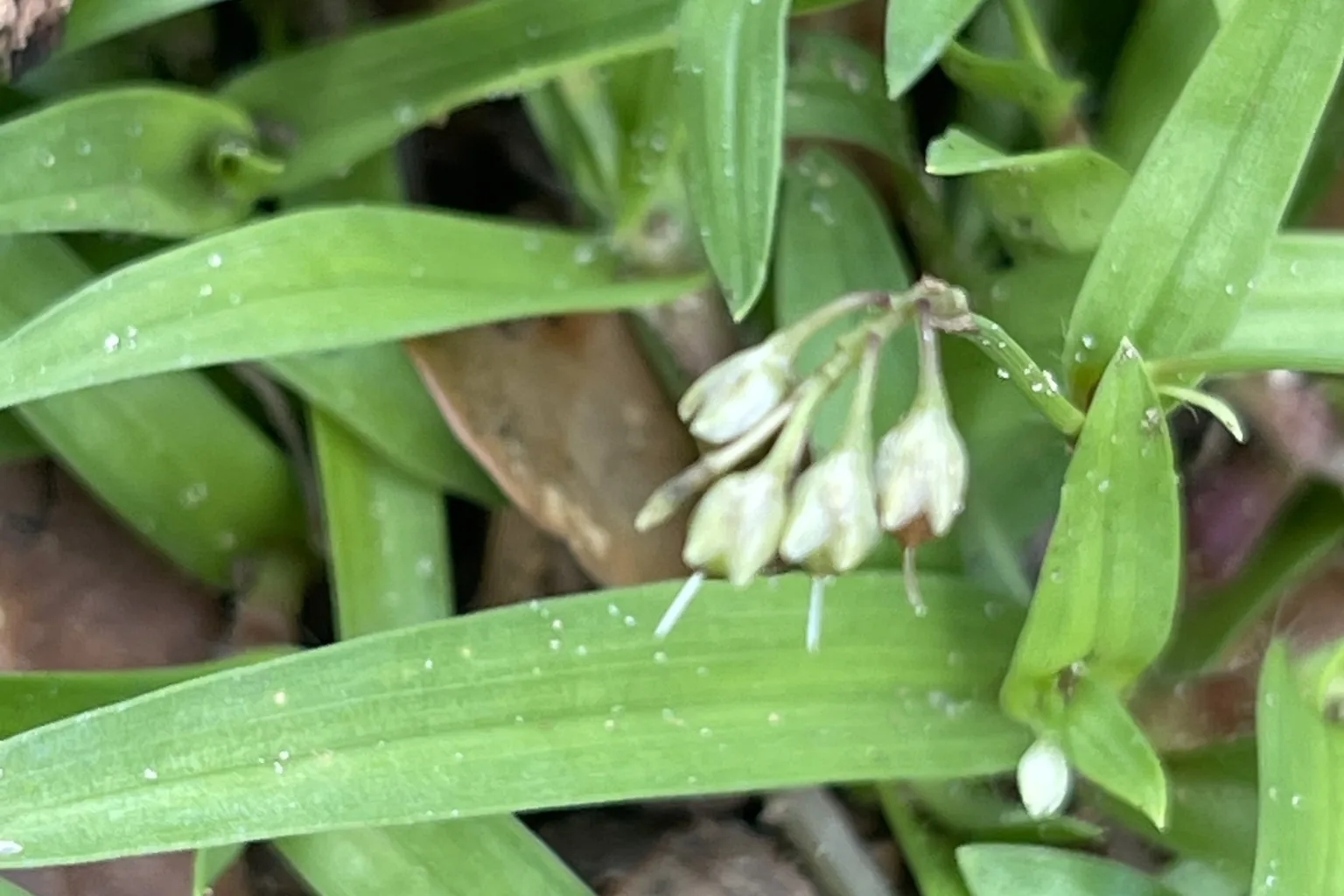
Reach down, pinch one stem, and roll it between your thumb and finger. Feel three distinct edges and you’ve got a sedge. Grass stems roll round or flat. Old turf hands say it as “sedges have edges,” and UF/IFAS leans on the same tell. One caveat before you reach for a nutsedge-specific plan: the roll test only proves sedge, and Florida lawns also host kyllinga and globe sedge. To pin it to nutsedge, dig up a plant and look for the underground tubers on yellow nutsedge’s root ends (purple nutsedge chains several together), or check the seed head color — yellow-tan spikes for yellow nutsedge, reddish-purple for purple.
The blades back it up. Nutsedge leaves come off the base in ranks of three, fold into a shallow V down the midrib, and carry a glossy, waxy sheen that plain turf lacks. Yellow nutsedge runs pale yellow-green.
Then there’s the speed. A sedge keeps its growing point down below the soil line, so your mower clips the top and leaves the engine running. UF/IFAS notes that mowing barely suppresses it for exactly that reason. Two days later it’s standing taller than the lawn around it, which is why your neighbor swears you’ve got a patch of fast grass.
Pro tip: Run the roll test in the morning, while the blades are firm. A stem wilted in the afternoon heat can feel flat even when it’s a sedge.
Yellow or purple: Florida’s two troublemakers
Florida deals mostly with two species, yellow nutsedge (Cyperus esculentus) and purple nutsedge (Cyperus rotundus). UF/IFAS lays out the differences in its EDIS publication on the biology and management of yellow and purple nutsedge, and a couple of them help you tell which one you’re fighting.
Yellow nutsedge runs lighter green with leaf tips that taper to a long, fine point, topped by a tan-to-golden seed head. Purple nutsedge shows darker blades that end more bluntly, close to boat-shaped, with a reddish seed head. Underground they differ too: yellow nutsedge makes fewer, larger tubers, one at the tip of each rhizome, while purple nutsedge strings smaller tubers in chains. That matters because UF/IFAS notes purple nutsedge is generally the harder of the two to knock back. Both are perennials that run hardest through the warm months, though they can green up in any season here.
Why pulling it just makes more
Nutsedge doesn’t live and die by what you can see. UF/IFAS explains that it reproduces mostly through tubers, little starch bombs strung along underground stems. A bud on a tuber sends up a rhizome, that forms a basal bulb near the surface, and from the bulb comes the shoot you’re staring at. Those basal bulbs usually sit within about three inches of the surface, and purple nutsedge can bury them four to eight inches down. A single plant can widen into a patch ten feet across or more.
Here’s the trap. Yank the visible shoot and the tubers stay behind, and the buds on the ones you missed sprout right back, often throwing up more shoots than you pulled. UF/IFAS’s guidance on hand-pulling comes with a warning that you have to lift every rhizome and tuber and keep rechecking the same spot for weeks. On a few plants in a flower bed, doable. Across a whole lawn, it’s a losing errand.
Why your weed-and-feed never touches it
Read the label on a typical weed-and-feed and you’ll find broadleaf weed killers, built for plants with wide leaves and branching veins. Nutsedge sits in its own plant family, the sedges, so that chemistry slides right off it. This is the part that drives people nuts. You spray, the dollarweed dies off, and the sedge doesn’t even flinch.
Knocking back a sedge takes a product labeled specifically for sedge or nutsedge. UF/IFAS points homeowners toward those sedge-specific herbicides, sold on their own or blended into a mixed product, and even then it’s rarely one and done. UF/IFAS’s Charlotte County office puts it plainly: even with good coverage, regrowth from the roots and tubers is normal, and repeat applications are usually part of the deal. If you do reach for a sedge product, read and follow the label to the letter — including its reentry directions: keep kids and pets off a liquid application until it has fully dried, and off a granular one until it has been watered in and the grass has dried, storing the leftover product sealed and out of their reach.
Wet spots and Parrish’s construction dirt
Nutsedge is picky about where it thrives, and that pickiness is a clue. UF/IFAS notes that sedges do well in soil that stays wet or compacted, and that a flush of them often signals overwatering or poor drainage. UF/IFAS even recommends correcting continuously wet sites before you bother going after individual plants. Fix the water and you stop feeding the weed.
That’s where Parrish comes in. Much of the area was ranch and agricultural land before the recent building boom, and new-construction yards here commonly sit on fill that heavy equipment compacted during the build. Add sandy topsoil that drains fast, low corners that hold water after every afternoon storm, and you’ve built a nutsedge buffet. If a patch keeps returning in the same low spot by a downspout or an irrigation head, the sedge is telling you something about your grading. The same story runs across northern Manatee County, from Parrish over to Palmetto. Reading the grading and soil is a smarter first move than another bag of chemical, and it’s where our Parrish lawn care crew starts.
What a realistic season of control looks like
Nobody fixes nutsedge in a weekend, and anyone who tells you otherwise is selling something. UF/IFAS frames it as year-round management, because the tubers already in your soil keep the plant coming back long after the tops are gone.
Seasonal pressure
Nutsedge pressure across a Southwest Florida year
- Winter Dec–FebLower
Growth slows in the cool months; a hard freeze is rare here, so tubers sit tight and wait.
- Spring Mar–MayBuilding
Warming soil wakes the tubers, new shoots push up, and patches start to widen.
- Summer Jun–AugPeak
Heat, humidity, and daily storms send growth into overdrive.
- Fall Sep–NovActive
Still growing and loading tubers for next year before it eases off.
Summer runs hottest. Nutsedge grows most in the warm, wet months, per UF/IFAS, and can green up in any season in Southwest Florida.
Warm-season growth is the time a sedge is moving water and product down into those tubers, so that’s the window that counts. UF/IFAS’s Charlotte County office adds a practical note: hold off on postemergence treatment in the worst heat, wait for temperatures under the mid-80s, and spot-treat rather than blanket the yard. Plan to come back to it more than once, and to carry the fight across a season or two before the patches thin out and stay down for long stretches.
One Parrish wrinkle: a thick, healthy stand of St. Augustine crowds sedge and slows it, but summer is exactly when you can’t push turf with fertilizer here. Manatee and Sarasota counties restrict nitrogen and phosphorus from June 1 through September 30, so a summer feeding plan is off the table. Our rundown on the county fertilizer restriction walks through what that means for your grass. Lean on mowing height, watering habits, and drainage through the restricted months, and save the feeding for the shoulder seasons.
What you can do this weekend, and what to skip
Start with the ID, because the fix hangs on getting the plant right. Run the roll test, and if you can, dig up one shoot to confirm the tuber underneath. Walk the yard after a storm and mark the spots that stay soggy. Those two checks cover most of what a tech would want to know.
What to skip matters as much. If you pull the tops and walk away, the tubers just get a fresh start. More broadleaf weed-and-feed gets you the same nothing it got you last time. The worst move is spot-killing a patch with a nonselective like Roundup: UF/IFAS notes glyphosate hits the top growth while the tubers ride it out and resprout, and you’re left staring at a dead hole in your St. Augustine while the sedge comes back anyway.
A few plants in a bed, you can stay after by hand and lift every tuber. Once it’s spreading across the turf, tied to a wet spot, or you’re unsure which sedge you’re dealing with, that’s the point to bring in a licensed hand. We start by identifying the species and reading where water sits on your lot, then time a sedge-specific treatment to active growth instead of guessing. Curious what a season of that runs for your yard? Run your numbers on the pest control calculator.
Frequently asked questions
Is nutsedge the same thing as nutgrass?
Pretty much. “Nutgrass” is the old nickname, and it sticks because the plant looks grassy and grows from little nut-like tubers. UF/IFAS is clear that it isn’t a grass at all. It’s a sedge, which is why grass products and broadleaf products both miss it.
If I pull every plant I can see, will it die off?
Usually not. The plant lives mostly underground as tubers, and UF/IFAS warns that hand-pulling only works if you remove every rhizome and tuber and keep rechecking the spot for weeks. Miss a few and they sprout right back, often more than you pulled.
Does nutsedge mean my Parrish lawn has a drainage problem?
Often, yes. UF/IFAS ties heavy sedge pressure to soil that stays wet or compacted, so a patch that keeps returning in the same low corner is worth reading as a drainage flag. On Parrish’s newer fill-dirt lots, that’s a common story. Sort out the water and your turf competes a lot better.
Nutsedge is a slow grind, and you don’t have to run it solo. If that spiky patch is winning, request a quote and we’ll get a licensed tech on it.
Last updated: August 2026.