Jump to a section (7)
- 01Why you don’t spot doveweed until August
- 02How to tell doveweed apart from St. Augustine
- 03Doveweed is basically a map of your water problems
- 04Why doveweed is so hard to knock out
- 05The control calendar: what works now versus next spring
- 06Fixing the conditions so it doesn’t come roaring back
- 07Frequently Asked Questions
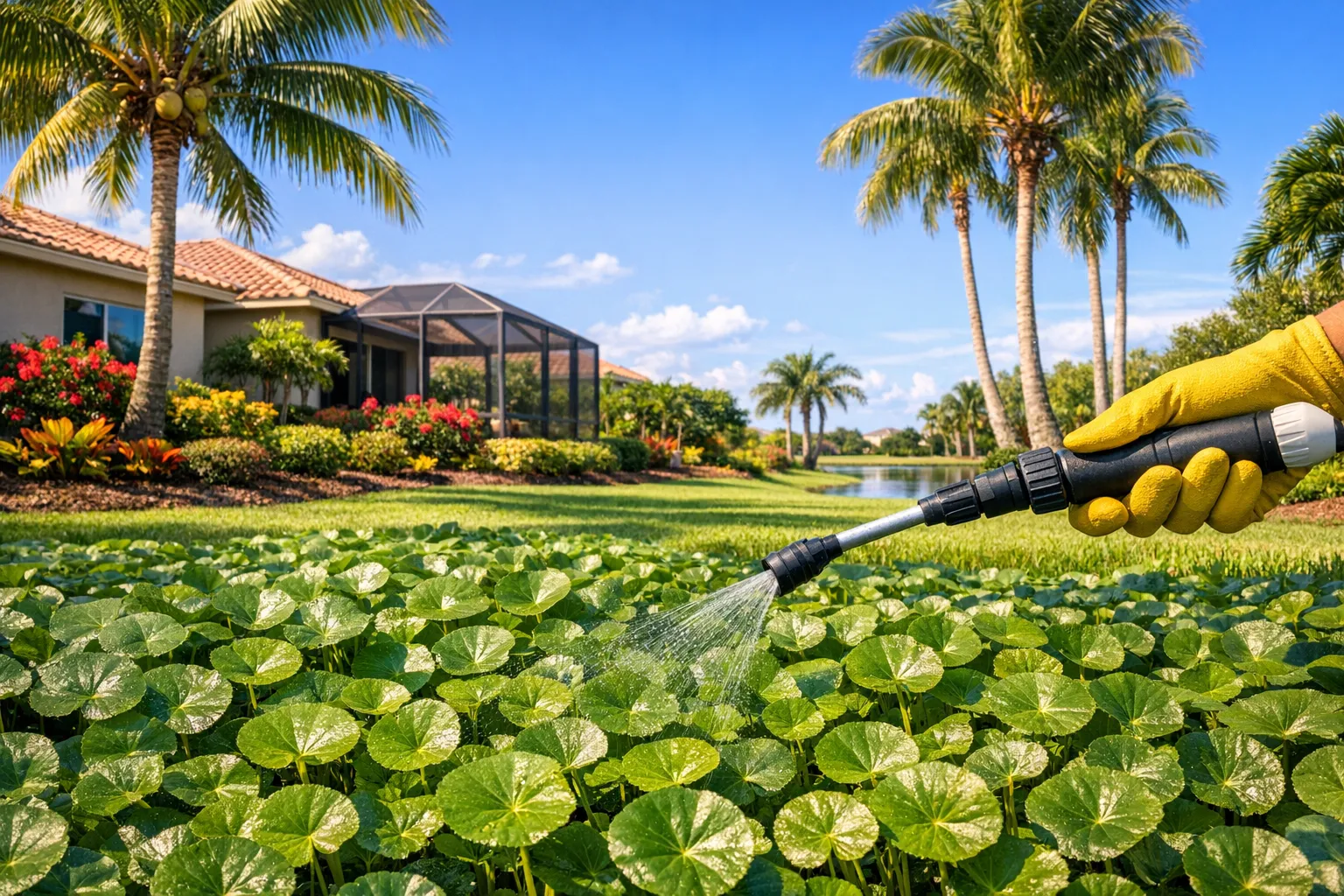
By August, that “weird thick grass” a Lakewood Ranch homeowner cannot quite name often turns out to be doveweed. It sneaks in looking like a slightly glossier, slightly ropier patch of St. Augustine, so most people walk past it for weeks until it has quietly claimed a corner near the sprinkler heads. It has earned a reputation, per UF/IFAS, as one of the tougher weeds to deal with in a Southwest Florida yard. Here I want to help you catch doveweed early and understand why it settles in so hard once our wet season gets going.
Doveweed germinates late in the year and gets moving once the daily afternoon storms arrive. It blends into St. Augustine almost perfectly, since botanically it’s a grass-like monocot in the dayflower family. That camouflage buys it months of cover, and by the time you notice, you’re up against one of the tougher turf weeds in Lakewood Ranch and across the region.
If you’ve got a patch you can’t name and you’d rather not guess at it, you can request a quote and have a licensed tech take a look.
Why you don’t spot doveweed until August
Most summer weeds show up on schedule in spring, right when your pre-emergent is still doing its job. Doveweed runs on a later clock. According to UF/IFAS Extension, doveweed germination begins with the onset of warm, wet weather, generally around April or May in Florida, once soil temperatures climb into the mid-60s to around 70°F, and it keeps germinating through the summer. That timing is the whole trick. Seedlings tend to emerge right as a typical early-spring pre-emergent is wearing off, so they come up into bare, unprotected soil.
Then there’s the disguise. Young doveweed grows in a low rosette of narrow, pointed leaves that read like thin St. Augustine runners from standing height, so your eye files it under “grass.” You usually don’t register it as a weed until it has matted out and started flowering, which lands you in late summer wondering how a whole patch appeared overnight.
How to tell doveweed apart from St. Augustine
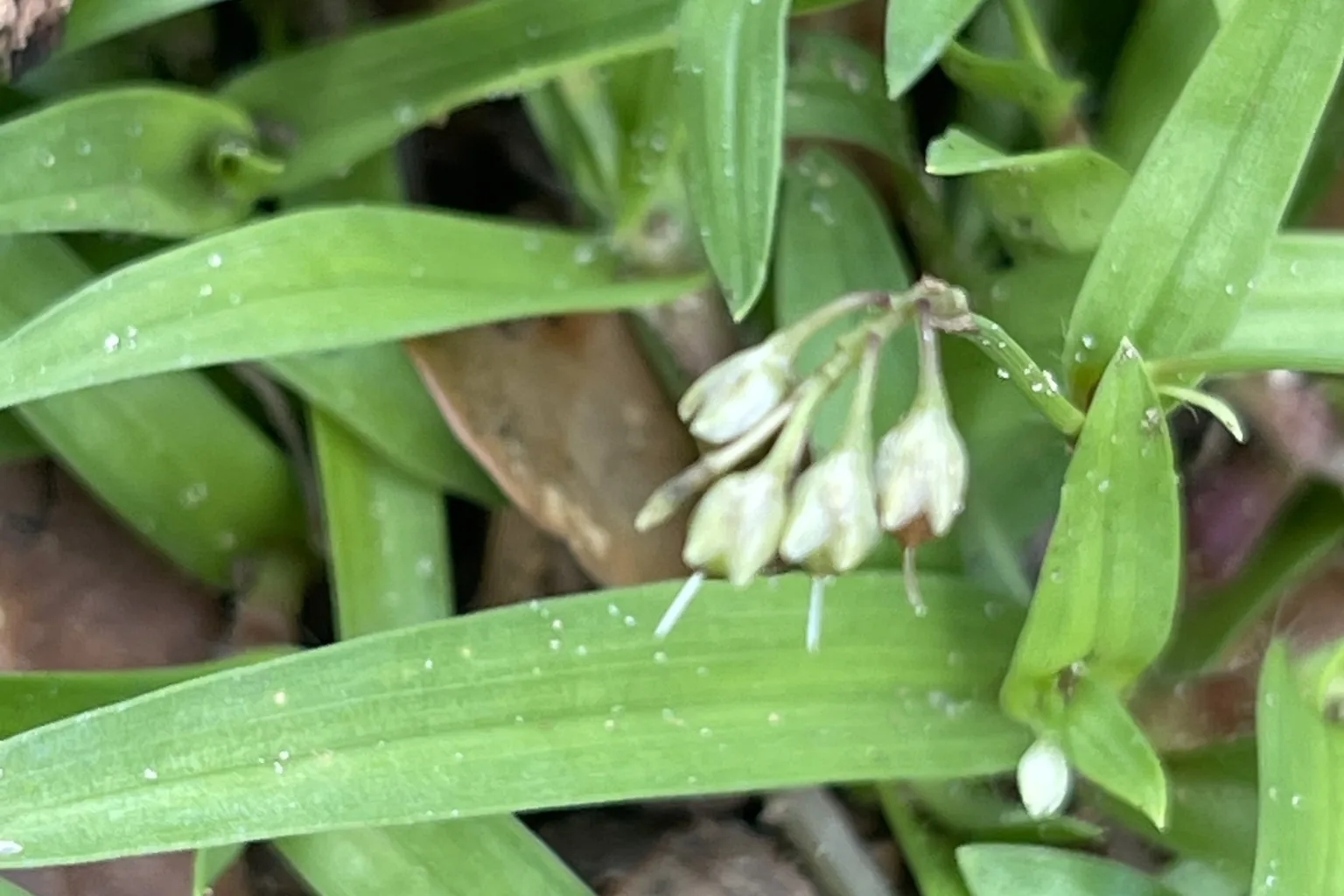
Once you know the tells, doveweed gets easier to pick out. Per UF/IFAS, the leaves are thick and shiny, almost rubbery, with parallel veins running the length of the blade. They run about 2 to 5 inches long and a quarter to half an inch wide, taper to a point, and clasp the stem where they attach before spiraling up it. The stems give it away. They’re succulent and smooth, round rather than flat, and they creep along the ground, rooting down at the nodes wherever they touch soil. Those stems often carry a purplish to reddish tint. When doveweed flowers, it sends up small three-petaled blooms in purple to violet-blue.
Here is the short checklist, with the traits summarized from UF/IFAS Extension:
- Thick, shiny leaves. Almost rubbery, with parallel veins; about 2 to 5 inches long and up to roughly half an inch wide.
- Clasping, spiral leaves. Blades wrap the stem where they attach and spiral up it as they climb.
- Creeping, rooting stems. Succulent and smooth, often purplish-red, rooting at every node that touches soil.
- Three-petaled bloom. Small purple to violet-blue flowers, usually the moment you finally notice it.
- Wet, low ground. Shows up first where drainage is poor or a zone runs long.
A couple of look-alikes trip people up. UF/IFAS notes doveweed can be confused with Asiatic dewflower and common dayflower, though those relatives carry noticeably wider leaves and larger flowers. One more reason to confirm your ID before anyone starts yanking at it: UF/IFAS Gardening Solutions points out that doveweed can cause contact dermatitis in dogs, so it’s worth keeping curious pets off a heavy patch.
Doveweed is basically a map of your water problems
If you want to know where your irrigation runs too long or your yard doesn’t drain, let doveweed tell you. UF/IFAS points out that it favors wet ground, so it turns up first in the low, poorly drained, or over-watered parts of a lawn. In a lot of Lakewood Ranch yards, and plenty of Bradenton ones too, that means the turf strip along a retention pond, the shady low corner that never quite dries after an afternoon storm, or the zone where a sprinkler head throws long every cycle. Our sandy soils drain fast in most spots, which makes the few chronically soggy areas stand out even more, and those are exactly the spots doveweed colonizes first. Treat a doveweed outbreak as a signal about the water before you treat it as a weed on its own.
Why doveweed is so hard to knock out
A few things stack up to make doveweed a grind. Those thick, waxy leaves and the plant’s succulent habit help it shrug off products that would flatten a softer weed. It also regrows from stem pieces, so mowing over a patch can chop and scatter fragments that happily re-root in moist soil. That same trait is why hand-pulling tends to backfire, since any node you leave behind can sprout a fresh plant. And the seed bank is patient: UF/IFAS notes doveweed seed can survive in the soil for several years, so one clean summer doesn’t close the book.
St. Augustine makes it harder still. The grass is sensitive to several of the herbicides that actually touch doveweed, which narrows your options right when you want more of them. UF/IFAS doesn’t sugarcoat it either. Few herbicides effectively control doveweed, and the post-emergent products that do help tend to give only fair control and need repeat applications to get anywhere. This is a weed the extension folks tell you to plan against over two or three years.
The control calendar: what works now versus next spring
By August, the pre-emergent window is behind you, so anything you do now is post-emergent cleanup, and that’s the slow lane. If you go the DIY route on a small patch, start by confirming it’s actually doveweed, then pick a product whose label lists both doveweed and St. Augustinegrass. Read and follow that label every time, and don’t spray when the lawn is heat-stressed or bone dry, since that’s when you’ll scorch the turf along with the weed. Keep kids and pets off the treated area until it has dried and the label’s re-entry guidance says it’s fine, and store any concentrate out of reach of children and pets. Expect to repeat the application, because a single pass rarely finishes doveweed off.
Seasonal pressure
Doveweed through the SWFL year
- Winter Nov–FebLower
Mostly dormant through the cooler months.
- Early spring Mar–AprEmerging
Germination begins with the first stretches of warm, wet weather, generally around April or May, per UF/IFAS.
- Late spring MayBuilding
New seedlings keep coming as the rains pick up.
- Summer Jun–AugPeak
Storms and long irrigation push rapid growth; most patches get noticed now.
- Early fall Sep–OctActive
Still growing and adding to next year's seed bank.
Summer runs hottest. Doveweed timing generalized from UF/IFAS Extension germination guidance for Florida.
The window that actually gives you leverage is next spring. Because doveweed germinates so late, a single early pre-emergent aimed at crabgrass and goosegrass often fades before doveweed even wakes up, and UF/IFAS notes that pairing pre-emergent work timed to doveweed’s later schedule with spot post-emergent follow-up is what actually moves the needle. Dialing in those dates for a specific yard depends on soil temperature and shifts from year to year, which is exactly the kind of scheduling a licensed lawn pro tracks locally. It’s also why the honest timeline runs across seasons rather than days.
Pro tip: Flag the wet spot, not just the weed. If you can shorten a long-running irrigation zone or open up drainage in that low corner before next spring’s pre-emergent goes down, you take away the conditions doveweed likes best and give your St. Augustine a real shot at closing the gap.
Wondering what a professional program runs? Every yard is different, so instead of a one-size price list, our lawn care estimator can put a real number on your lawn in about a minute.
Fixing the conditions so it doesn’t come roaring back
Chemistry only buys you time. Whether doveweed stays gone comes down to the growing conditions, and that starts with irrigation, because most Lakewood Ranch systems run longer and more often than St. Augustine actually needs. Water deeply and only when the lawn tells you it’s thirsty, and give any zone that keeps a low spot soggy a hard look. Fix the grading or drainage in those chronic wet corners if you can, because as long as they stay wet, they’ll keep inviting doveweed back.
Density is your other lever. A thick stand of St. Augustine shades the soil surface and crowds out weed seedlings before they establish, and mowing on the higher end of the range for your grass helps that canopy do its job. Mowing too low does the opposite, stressing the turf and spreading those rooting stem fragments around the yard.
Feeding the lawn to thicken it is part of the long game, with one local catch you can’t skip. In Manatee and Sarasota Counties, which together cover all of Lakewood Ranch, you can’t apply fertilizer containing nitrogen or phosphorus from June 1 through September 30 — and on the Manatee County side, phosphorus stays prohibited year-round unless a soil analysis shows your lawn is actually deficient. So right now, density work means mowing height, smart watering, and drainage, while the nitrogen side of the fertility push waits until the restricted season ends. Our write-up on the summer fertilizer restriction has the details. When you’re ready to build a season-long plan for a specific yard, our Lakewood Ranch lawn care page is the place to start.
None of this promises doveweed is gone for good. Handled consistently, though, drier soil and denser turf make it far less likely to reclaim the same ground next summer.
Frequently Asked Questions
Is doveweed just a thicker kind of St. Augustine grass?
No. Doveweed is a separate weed in the dayflower family that happens to mimic St. Augustine, per UF/IFAS. The quickest tells are the thick, shiny, rubbery leaves and the creeping stems that root at the nodes; in summer it also puts up small three-petaled flowers in purple to violet-blue.
Can I just pull doveweed out by hand?
Usually not with any lasting result. Extension guidance notes that doveweed re-sprouts from stem and root fragments, so pieces left behind after pulling often grow into new plants. Plucking a stray seedling is fine, but trying to hand-weed an established mat tends to spread it.
When can I actually get ahead of doveweed?
Next spring. Doveweed germinates later than the weeds most spring pre-emergent programs are timed for, so per UF/IFAS the pre-emergent work and its follow-up have to be matched to that later schedule — and even then, plan on staying after it for two or three years. The right dates depend on soil temperature and shift from year to year, which is why a licensed lawn pro is the right person to set the calendar for your yard.
Not sure whether that glossy patch is doveweed or just healthy St. Augustine? Send us a photo and the particulars through our lawn assessment and we’ll help you sort it out, with a licensed tech ready to take it from there.