Jump to a section (8)
- 01What a rain gauge can show you, and what it can’t
- 02Where to put a rain gauge and how to read it
- 03Track rain apart from sprinkler water
- 04How UF/IFAS says to decide when to water
- 05Venice water rules as of November 2026
- 06What to bring to a lawn assessment
- 07How Waves Pest Control approaches lawn watering
- 08Frequently Asked Questions
A rain gauge answers one question about your Venice yard: how much rain landed in that spot since you last emptied it. That number is worth having before you touch the irrigation controller, and it is one input next to the grass, the soil, what the sprinklers already put down, and the watering rules in force this month. It won’t tell you why a patch of St. Augustine is fading. If you want a second set of eyes on the whole lawn, start with our lawn care in Venice page.
Already seeing thin or off-color turf and want it looked at? Request a lawn care quote and bring the notes this guide helps you keep.
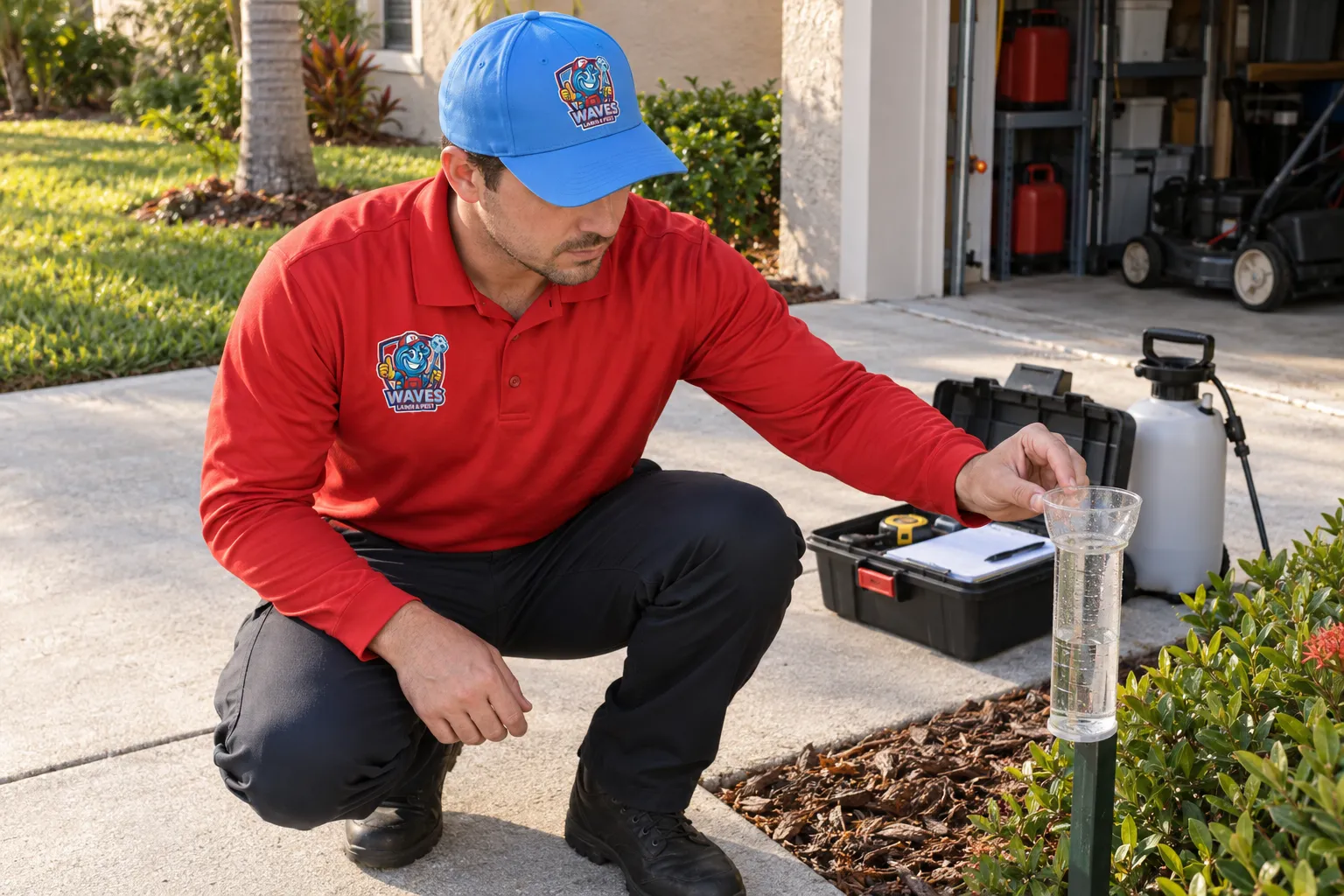
What a rain gauge can show you, and what it can’t
A gauge measures rainfall that fell into its opening, in inches. UF/IFAS describes a manual gauge as a tube that collects water “so you can see at a glance how much rainfall your garden received from that last storm,” and its rain gauges and rain sensors guide adds that irrigation “is only necessary when rainfall isn’t adequate.”
What the gauge can’t see is everything after the rain hits the ground. It has no way to tell you how much of that water soaked into the root zone of the sandy soil under your grass. Treat the reading as a record of what fell. How the lawn handled it is a separate observation, and the grass shows you that part.
Where to put a rain gauge and how to read it
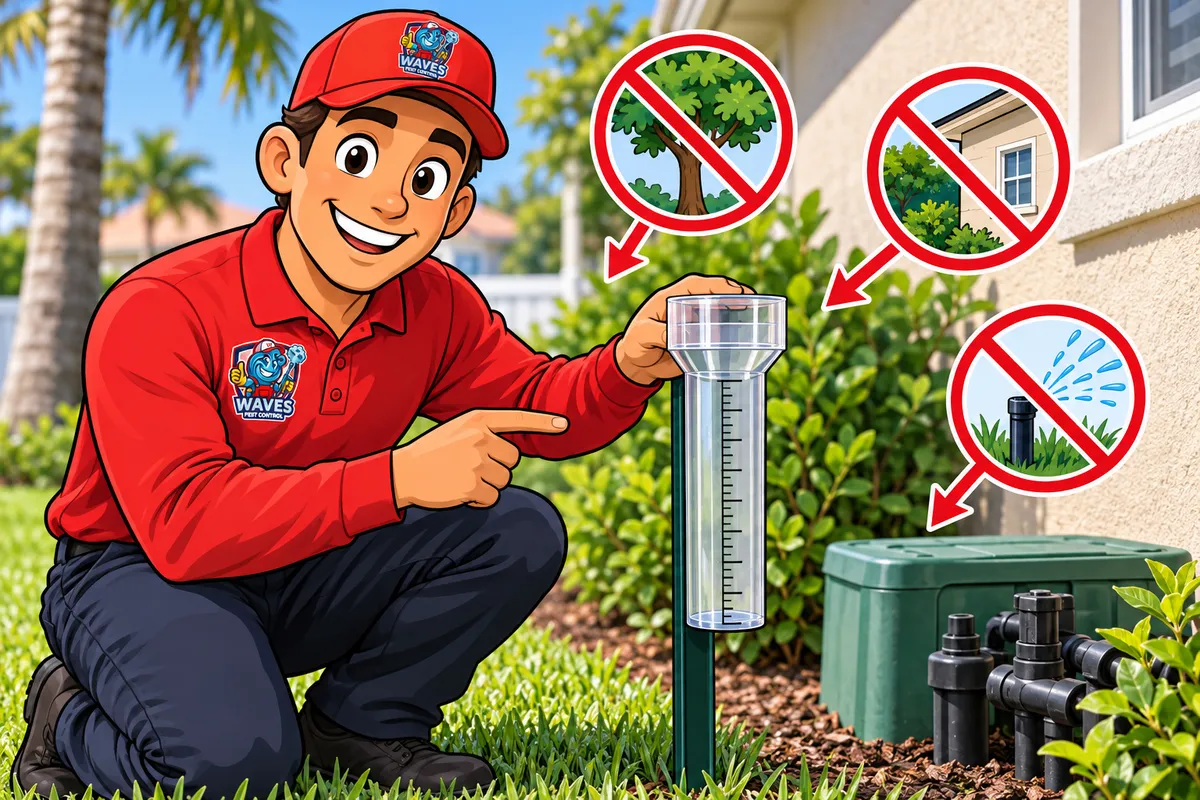
UF/IFAS gives a short set of siting rules. For an accurate measurement, its guide says to place the gauge “away from trees, the house, and irrigation systems,” and to empty it after it rains so each reading starts from zero. The UF/IFAS Extension office in Sarasota County, the county Venice sits in, says the same thing in plainer terms in its how to use your rain gauge post: pick “an open area that isn’t covered by trees or other structures,” read the water at the meniscus, “the bottom curve of your collected rainwater,” and write the numbers down over the week.
That’s the whole method:
- Set the gauge in the open, clear of the roof line, tree canopy and sprinkler spray.
- After each rain, read the level at the bottom of the curve.
- Write the date and the reading down.
- Empty the gauge.
If you don’t own one, a glass rain gaugeAffiliate link is one example of a manual gauge that does this job. View current price before you buy, and follow the instructions that come with your model for mounting it.
Track rain apart from sprinkler water
Keep two records side by side. One column holds the gauge reading for each rain. The other holds what the irrigation system did: the day it ran, which zones ran and for how many minutes. A gauge placed away from the sprinklers, the way UF/IFAS recommends, collects rain only, so the sprinkler side of the log has to come from the controller.
UF/IFAS’s better lawn on less water guide explains why that column stays in minutes. Controller settings “are in minutes, not inches of water,” and the only way to know how much water a zone delivers is to calibrate the system zone by zone. Keep the minutes as written. Don’t guess them into inches.
A weather app is still handy for a forecast. If you want its rainfall figure, give it its own column. The gauge column is the one taken at your house, and keeping the two apart means nobody has to argue later about which number the decision was based on.
Pro tip: UF/IFAS notes the irrigation controller usually hangs on the garage or utility room wall. Tape the log sheet right next to it, so every time someone turns the dial, the week’s rain readings are in front of them.
How UF/IFAS says to decide when to water
UF/IFAS turf guidance starts with the grass, not a calendar. The better lawn on less water guide says an automatic system “should not be operated on a fixed schedule.” It says to set the controller to “off” and water as needed, which it defines as waiting until 30 to 50 percent of the lawn shows at least one of three wilt signs:
- Folding leaf blades
- A blue-gray color
- Footprints that stay visible in the grass
When the lawn does need water, the same guide puts the target at 1/2 to 3/4 inch per zone, and says sandier soils may need the 3/4-inch rate. It also says too much water can “promote disease incidence” and shorten how long fertilizer lasts. The Sarasota extension post adds that too much water can lead to shorter roots and a higher risk of disease. If you need a refresher on switching a controller to off and running it by hand, our Hunter sprinkler timer guide walks through it.
Here is where the gauge fits. A wet week on the log and no wilt signs on the lawn both point toward leaving the controller off. A dry log and folding blades point toward a watering on your next allowed day. The gauge also helps you check a rain sensor. UF/IFAS says Florida law has required a rain sensor or soil-moisture shut-off device on irrigation systems installed since 1991, and suggests setting a rain sensor to stop irrigation after 1/2 to 3/4 inch of rain. When your log shows a storm past that mark and the sprinklers still came on soon after, the sensor deserves a look.
On every inspection
What each record can and can't show
- Rain gauge reading How much rain fell into the gauge since it was last emptied. Says nothing about how much water reached the root zone.
- Irrigation log Which zones ran, on which day, for how many minutes. Converting minutes to inches takes a zone-by-zone calibration, per UF/IFAS.
- Wilt signs Folding blades, blue-gray color, lingering footprints. UF/IFAS waits until 30 to 50 percent of the lawn shows one before watering.
- Photos of problem areas Where the patch is, sun or shade, and how it changed. This is the part a technician needs to see in person.
Observation categories drawn from UF/IFAS irrigation guidance. None of these records diagnoses a lawn problem on its own.
Venice water rules as of November 2026
Check the rules before you change a schedule, because the allowed watering day may be stricter than you remember. As of November 2026, the Southwest Florida water management district (SWFWMD) lists all of Sarasota County under its modified Phase III water shortage restrictions, which the district extended through March 31, 2027. Under that order, lawn and landscape watering is limited to once a week, on a day set by the last digit of your address, during narrower hours the district lists on that page. The restrictions apply whether the water comes from a utility, a well or a surface source, and new lawns get their own establishment schedule.
The district also says to “always refer to your city or county regulations first,” since a local rule can be tighter. Venice homeowners should check the Sarasota County and City of Venice utility pages for the current local version before resetting a controller. If a rule and UF/IFAS timing advice disagree, the rule wins. UF/IFAS itself tells readers to check with their water management district for allowed days and times.
What to bring to a lawn assessment
A gauge log makes a lawn visit faster. It won’t make a diagnosis, and neither will a single reading. UF/IFAS notes that chinch bug damage shows up as yellow to brown patches, often first in water-stressed grass or full sun, and that not all brown grass is chinch bugs. A rain number can’t sort those signs of trouble from a dry spell.
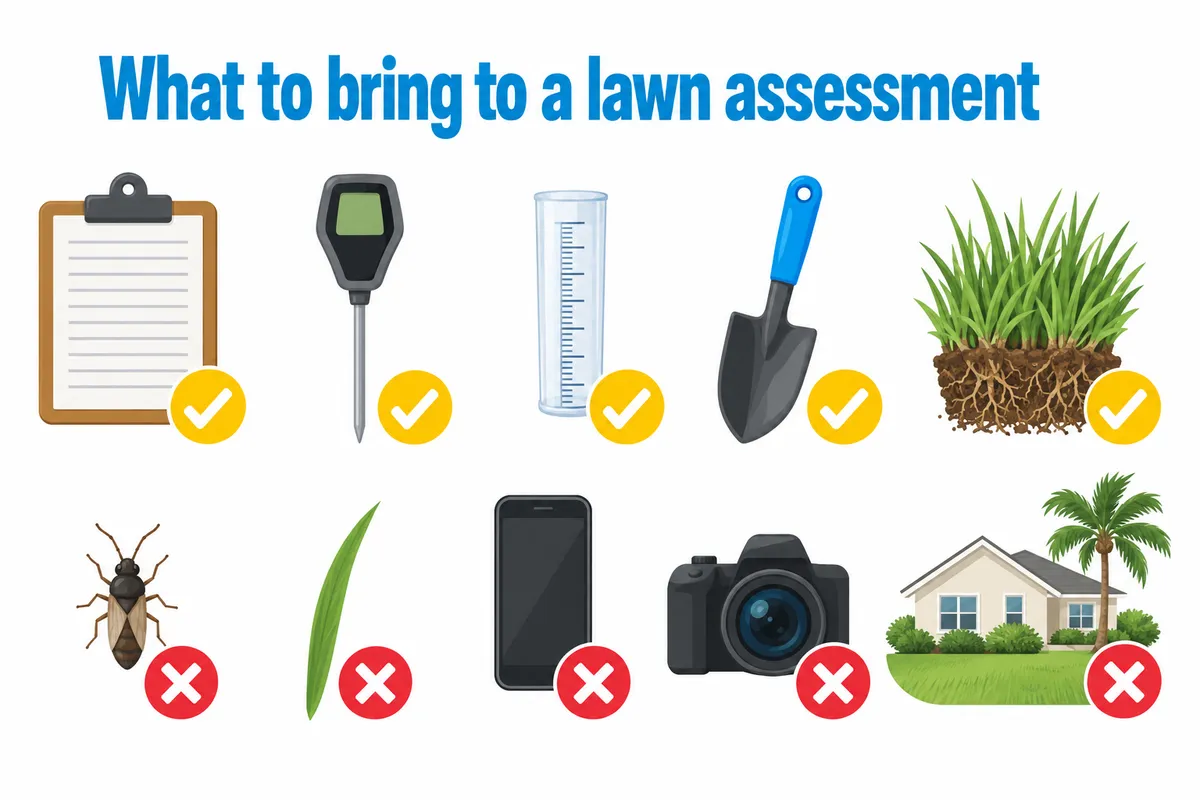
Bring these to the visit, or have them ready on your phone:
- Two to four weeks of the rain and irrigation log
- The controller’s current settings and your assigned watering day
- Whether a rain sensor is installed and when you last tested it
- Dated photos of any patch, with a note on sun, shade and nearby concrete
- Your grass type, if you know it
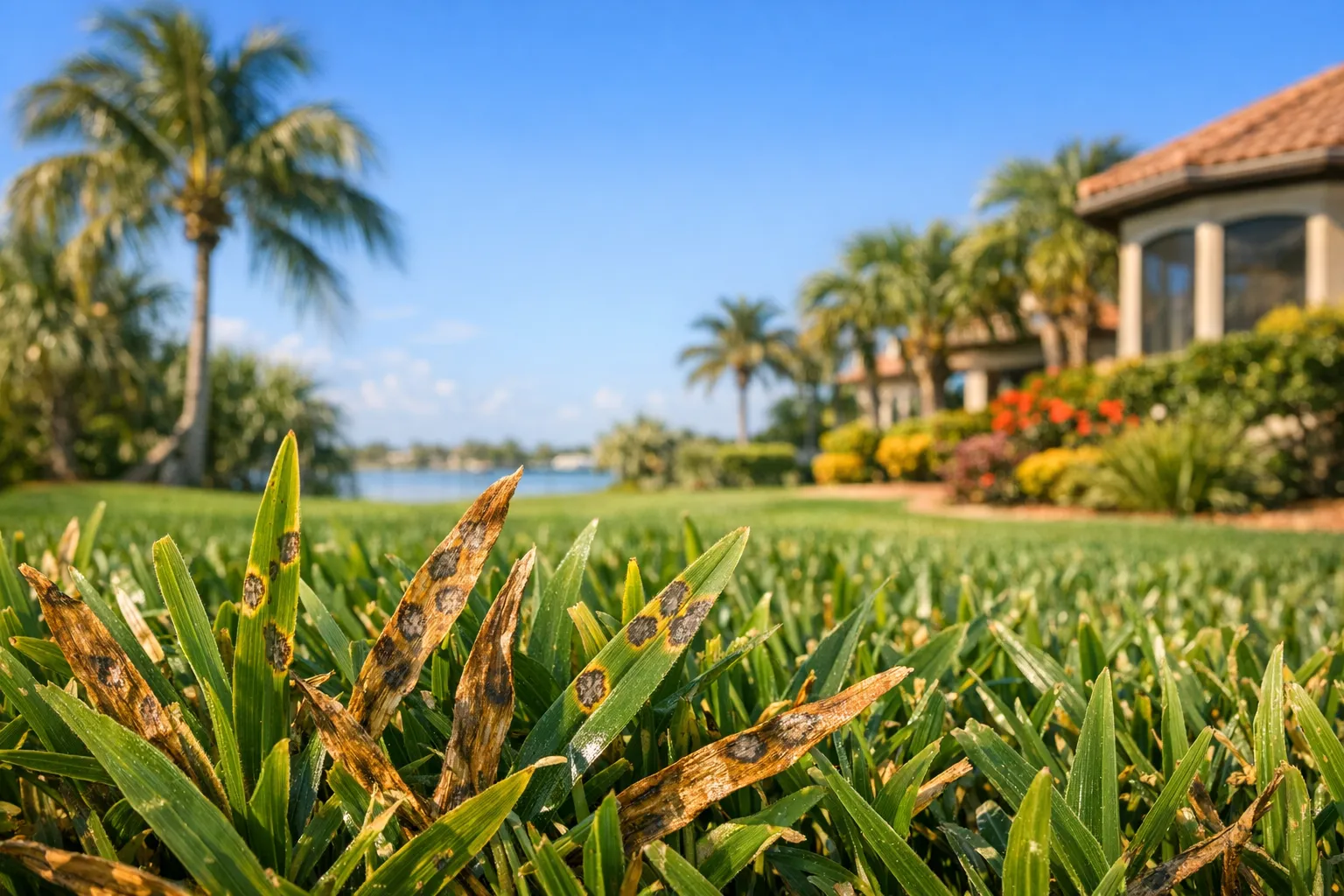
If you’ve had large patch or gray leaf spot before, mention it. Our posts on large patch and gray leaf spot show what each one looks like, and a professional inspection is how you confirm which one you have.
How Waves Pest Control approaches lawn watering
Waves Pest Control provides lawn care in Venice. On a first lawn visit, a Waves technician walks the property, checks root depth, soil compaction, thatch, weed pressure and active pests, notes the irrigation schedule and watering day, and takes photos for the service report. Your rain log fits right into that conversation. The lawn program does not include irrigation-system repair, so a broken sensor, valve or head goes to an irrigation contractor.
When you’re ready, see lawn care in Venice or request a lawn care quote for your yard. If you’re in North Port or Sarasota, the same log works there too.
Frequently Asked Questions
How much rain did my lawn get?
Only a gauge in your own yard answers that. Read it at the bottom of the water’s curve after the rain stops, write it down and empty it, as the UF/IFAS extension post for Sarasota County describes.
Does overwatering cause fungus in St. Augustine grass?
UF/IFAS says too much water can promote disease and shorten roots. A gauge or a log can’t tell you which disease is present, so have a patch inspected before you treat it.
Should I still water this week if it rained?
Your assigned day is when watering is allowed. UF/IFAS says to water only when 30 to 50 percent of the lawn shows wilt signs, so after a wet week you may not need that day at all.