Jump to a section (10)
- 011. Cutting below the recommended height
- 022. Taking off more than a third of the blade at once
- 033. Running a dull blade
- 044. Bagging clippings on a healthy lawn
- 055. Mowing the same direction every week
- 066. Scalping shady spots that need more height
- 077. Mowing a wet, fungus-prone lawn
- 08How we chose these
- 09What this means for your Venice lawn
- 10Frequently Asked Questions
Many of the lawn problems I get called about in Venice start at the mower. Cutting height, how often you mow, and the condition of your blade shape St. Augustine health more than any product you can buy. The fundamentals UF/IFAS lays out for Florida turf apply directly to a sandy Venice lot, and most of them cost nothing to fix. Our whole Venice lawn care program starts here, with the cut.
Seven mowing habits quietly wreck St. Augustine lawns in Venice: cutting below the recommended height, taking off more than a third of the blade at once, running a dull blade, bagging clippings on a healthy lawn, mowing the same direction every week, scalping shady spots that need more height, and mowing a wet, fungus-prone lawn that drags disease across the yard. Fix these before you buy anything.
Last updated: August 2026.
If your Venice lawn keeps thinning no matter what you do, you can request a quote and we’ll come take a look.
1. Cutting below the recommended height
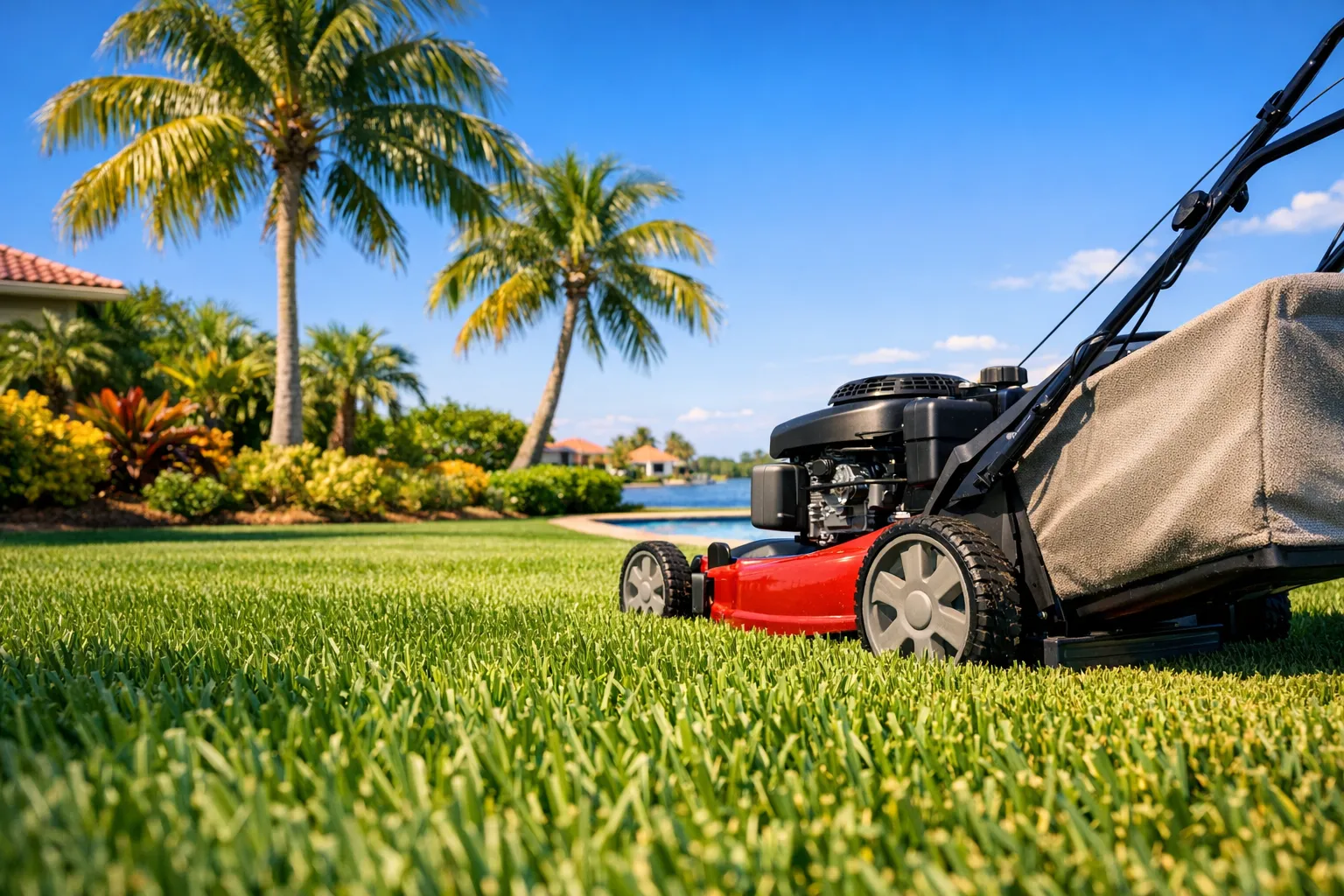
Here’s the number the whole post hangs on. UF/IFAS says standard St. Augustinegrass cultivars, mowed with a rotary mower, should be kept at 3.5 to 4 inches, and dwarf or semidwarf types should sit around 2 to 2.5 inches. That figure comes straight from UF/IFAS Gardening Solutions, Best Management Practices for Your Lawn. Floratam is the most common St. Augustine cultivar in Florida yards, and it’s a standard type, so 3.5 to 4 inches is your target on most Venice lawns. A couple of newer cultivars break the standard-versus-dwarf split, though: Palmetto sits at 3 to 4 inches and CitraBlue at 2 to 3, so identify what you’re actually growing before you set the deck. Our mowing height guide by grass type has the full cultivar table.
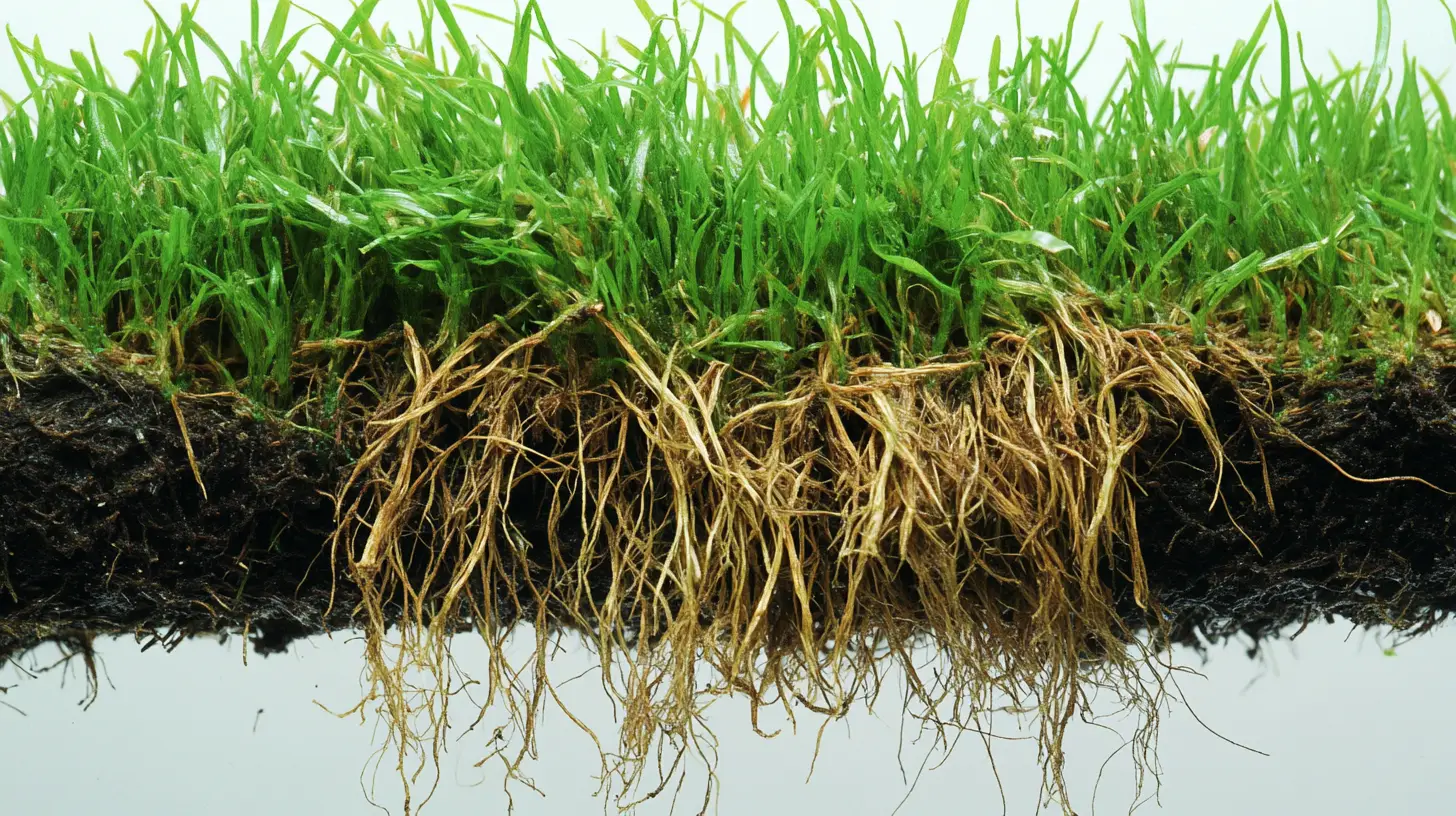
If you’re wondering how short to cut St. Augustine, the honest answer is taller than you think. UF/IFAS is blunt about what happens when you keep dropping below the range: more stress on the lawn, shallower roots, a bigger scalping risk if you miss a week because of weather, and more pest pressure. So the guidance they give is simple. Always mow at the highest recommended height for your grass.
| St. Augustine type | Common cultivars | UF/IFAS mowing height |
|---|---|---|
| Standard | Floratam, Bitterblue, Classic | 3.5 to 4 inches |
| Palmetto | Palmetto | 3 to 4 inches |
| CitraBlue | CitraBlue | 2 to 3 inches |
| Dwarf / semidwarf | Seville, Delmar, Captiva | 2 to 2.5 inches |
Mowing heights per UF/IFAS Gardening Solutions.
Pro tip from the crew: if you only change one thing this year, raise the deck. Set the mower on your driveway with the engine off, disconnect the spark plug wire (or pull the battery, or unplug the cord), wait for the blade to stop completely, and then measure from the ground to the blade edge with a ruler, the way UF/IFAS recommends. The number on the deck dial doesn’t always match the true blade height, so trust the ruler, not the setting.
2. Taking off more than a third of the blade at once
UF/IFAS gives one rule that beats every fancy trick: never remove more than a third of the leaf blade in a single mowing. If a standard St. Augustine lawn is sitting at 4 inches, mow it before it climbs past about 6. Scalp off half the plant in one pass and you shock the roots, thin out the canopy, and leave the turf open to insects, disease, drought, and sunburn.
This one bites people after vacation or a rainy stretch when the grass got away from them. If yours is badly overgrown, bring it down in stages instead of hacking it to the target in one go: take no more than a third, give the turf several days to recover, re-measure, and repeat until you’re back in range. Two immediate back-to-back passes remove just as much canopy as one scalping cut.
3. Running a dull blade
A sharp blade slices the leaf clean. Run a dull one and the tips come out frayed and whitish, almost shredded. UF/IFAS Gardening Solutions notes that torn grass makes the plant more vulnerable to disease, sun damage, and insects, which is why blade sharpness is one of the most overlooked pieces of lawn health. You can read their take in Lawn Mower Care and Safety.
The shredded-tip signature is easy to spot. Walk the lawn the morning after you mow and look at the cut ends up close. UF/IFAS suggests sharpening a rotary blade at least twice a year, and more often if you’ve got a big yard or you mow a lot, which most of us do through a SWFL summer.
4. Bagging clippings on a healthy lawn
Bagging feels tidy, and on a healthy lawn it’s throwing away free fertilizer. UF/IFAS says grass clippings should be left on the lawn, where they break down and recycle nutrients back into the soil. On a lawn mowed at the right height and frequency, they don’t build up thatch, and they can cut your fertilizer needs by as much as 25 percent. The one place to sweep them off is your driveway and sidewalk, so those nutrients don’t wash into a storm drain and end up in our waterways.
5. Mowing the same direction every week
Grooving the same lines every Saturday looks satisfying, and it slowly trains the grass to lean and packs down ruts. UF/IFAS recommends mowing in a different direction each time you cut. That evens out wear patterns, keeps the grass standing upright instead of developing a grain, and lowers your odds of scalping the same high spots over and over.
6. Scalping shady spots that need more height
The strip under your live oaks is the fastest area to lose. St. Augustine struggles once it drops under about six hours of sun a day, and cutting it at the same height as the sunny front yard thins it out quick. UF/IFAS says to raise the mowing height where the grass is growing in shade or under moisture stress, because taller blades capture more of the little light that gets through and drive a deeper root system. Keep shaded zones at the top of your cultivar’s recommended range — 4 inches for Floratam, 3 for CitraBlue — rather than pushing above it, and mow them on a separate higher pass if the sunny areas are set lower.
7. Mowing a wet, fungus-prone lawn
Venice hands you an afternoon storm most summer days, so the grass is wet a lot. UF/IFAS says to mow only when the turf is dry. Wet clippings clump and clog a rotary mower, and if the lawn already has active fungal patches, rolling a mower across it can move spores from a sick spot into a healthy one. Gray leaf spot loves the warm, humid, rainy stretch we get here in summer, and large patch takes over in the cooler months once temperatures drop, so a wet-mow habit can spread whatever’s already brewing in either season. Give it until the next morning when the dew burns off.
How we chose these
Every item on this list traces back to UF/IFAS turf guidance, mainly the Gardening Solutions pages on Mowing Your Florida Lawn and the university’s St. Augustinegrass recommendations. Where a habit made the list, the research ties it to real stress, scalping, or disease.
What this means for your Venice lawn
When mowing goes wrong, the damage usually shows up wearing a different mask. Thin patches that expand in rough circles are the classic large patch pattern, and that disease runs in the cooler months, roughly fall through spring. In summer, don’t diagnose from the patch shape — get down and look at individual blades: gray leaf spot confirms itself as oblong, dark-bordered lesions on the leaf itself. Irregular dead patches along hot, sunny edges, especially where the mower runs low, can mean chinch bugs moved into stressed turf. Here in Venice the sandy soil drains fast, the afternoon storms keep everything damp, and the humidity sits high for months, so a stressed St. Augustine lawn slides downhill in a hurry. Lawns from Nokomis down to North Port fight the same soil and storm cycle.
A couple of checks you can do yourself. Measure your real cut height with the driveway-and-ruler trick above rather than trusting the deck setting. To check the blade, shut the mower off first and make sure it can’t start on you: disconnect the spark plug wire on a gas mower, pull the battery on a battery model, or unplug a corded one, and wait until the blade has completely stopped. Only then run a fingernail along the cutting edge; if it slides across a rounded, worn edge instead of catching, it’s time to sharpen. Look at the cut tips for that frayed, whitish shredding.
What not to do: don’t scalp the lawn low to “buy time” between mows, and don’t reach for a bag of weed-and-feed as a summer rescue. Sarasota County, where Venice sits, restricts fertilizer that contains nitrogen and phosphorus from June 1 through September 30, so you can’t fertilize your way out of a mowing problem in summer anyway. There’s more on that in our guide to the Sarasota County summer fertilizer restriction.
If the patches keep spreading after you’ve fixed the mowing, that’s the point to get a professional to identify what’s actually attacking the grass before you treat anything. Our approach on a Venice lawn service visit starts with the cultural basics: we inspect the turf, confirm the real cut height, and put a name on the disease or insect before we treat anything. Dialing in the mowing reduces how often problems come back, though nothing makes a lawn bulletproof against a Florida summer. For what a lawn program runs, reach out through our contact page.
Frequently Asked Questions
What is the right mowing height for Floratam versus dwarf St. Augustine?
Floratam and the other standard cultivars belong at 3.5 to 4 inches, per UF/IFAS. Dwarf and semidwarf types like Seville, Delmar, and Captiva run lower, around 2 to 2.5 inches, and a few cultivars fall in between: Palmetto at 3 to 4 inches and CitraBlue at 2 to 3. Identify which cultivar you’re growing before you pick a number; if you can’t tell, that’s worth confirming with a pro before you commit to a height.
Can I mow my St. Augustine lawn when it’s wet?
Wait for it to dry. UF/IFAS says to mow only when the turf is dry, because wet clippings clump and clog a rotary mower, and rolling across a lawn with active fungal patches can carry spores into clean areas. After one of our Venice afternoon storms, give the grass until the next morning.
How often should I mow St. Augustine in the summer?
Often enough that you never take off more than a third of the blade at once. During the summer growth flush that usually lands around once a week. If a standard lawn is sitting at 4 inches, plan to mow before it passes 6, rather than mowing on a fixed calendar day no matter how much it grew.
Get the mowing dialed in first and you’ll be surprised how many problems quiet down on their own. If yours is already fighting something, you can request a quote or see how our Venice lawn care works.