Jump to a section (7)
- 01Where the salt in a coastal Venice lawn comes from
- 02What salt damage looks like next to drought, bugs and disease
- 03How UF/IFAS ranks Florida lawn grasses for salt
- 04Reclaimed water: what it does well and what to watch
- 05How to test the soil, leach the salt and set your expectations
- 06How to choose when to switch grass instead of fighting the site
- 07Frequently Asked Questions
If your lawn sits on Venice Island or anywhere the Gulf breeze reaches, it takes salt from more directions than a lawn on inland acreage. Salt blows in on the wind, it can turn up in coastal well water, and it comes out of the sprinkler heads when your irrigation runs on reclaimed water. UF/IFAS rates Florida lawn grasses very differently on how much of that they tolerate. For how a year-round program fits a yard here, see our page on lawn care in Venice.
If you would rather have someone read your lawn before you rip anything out, request a lawn care quote.
Where the salt in a coastal Venice lawn comes from
UF/IFAS names three sources. Its lawn grass selection guide, ENH04 (revised August 2025), says coastal turf takes salt stress from irrigation water, saltwater intrusion and ocean salt spray. A Venice yard close to the water can get all three.
- Salt spray. Venice Island sits between the Intracoastal and the Gulf, and St. Augustine, the grass on most Venice lawns, feels that exposure near the Gulf. The UF/IFAS coastal landscapes page says plants within about one-eighth of a mile of a saltwater coast should be at least somewhat salt-tolerant.
- Coastal well water. The UF/IFAS guide to soil salinity in the home landscape (SL 262) names well water in coastal regions and reclaimed water as irrigation sources worth testing for salt.
- Reclaimed water. The UF/IFAS Extension reclaimed water page for Sarasota County says more and more residents irrigate with it. UF/IFAS fact sheet SL385 (revised December 2025) says all reclaimed water carries dissolved mineral salts, sodium chloride among them.
What salt damage looks like next to drought, bugs and disease
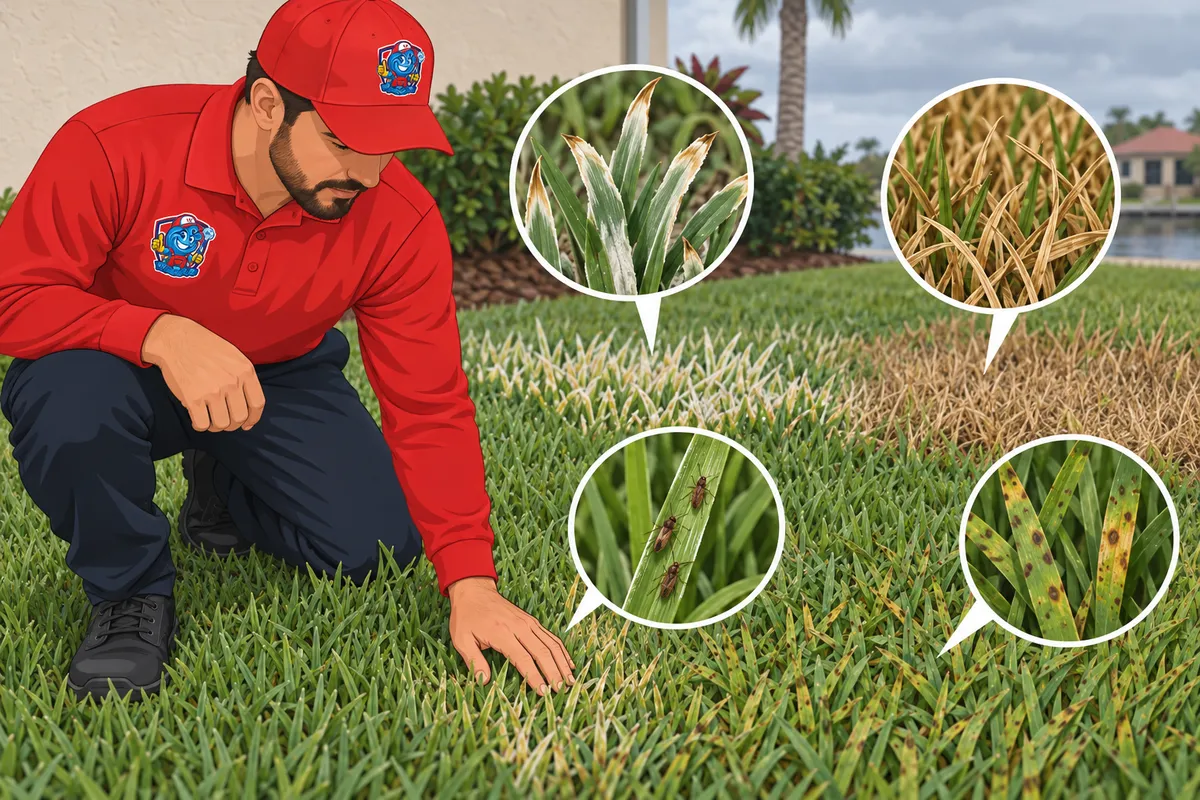
Salt-stressed grass can look thirsty when it isn’t. SL 262 says high soil salt can dry out roots, so plants wilt even when water is plentiful. It also lists leaf burn, leaves that turn bluish-green and darker than normal, stunted growth and yellowing as signs of a salinity problem.
Here is how to tell salt from the usual look-alikes on a St. Augustine lawn:
- Drought. The UF/IFAS St. Augustinegrass guide, ENH5, says a lawn needs water when blades fold, wilt or turn blue-gray, or when footprints stay visible. Salt stress looks much the same, so check the soil: dry sand under wilted grass points to water, and wilted grass over moist soil points somewhere else.
- Chinch bugs. Southern chinch bugs leave yellow to straw-colored patches that spread outward and don’t recover with watering, often first in full sun near sidewalks and driveways. Pull the turf apart at the edge of a patch and look for small black-and-white insects at the thatch line.
- Fungal disease. Large patch shows up as roughly circular yellow-to-brown patches from fall through spring, and gray leaf spot is the summer disease on St. Augustine. See our posts on large patch and gray leaf spot. ENH5 adds that when either disease keeps coming back, too much water and nitrogen may be to blame.
Only a soil test confirms salt.
Pro tip: check the soil before you add water. The morning after the sprinklers run, push a trowel in next to a wilted spot. If the sand is damp a few inches down and the blades still look folded and blue-gray, a lack of water is an unlikely cause, and a salinity test is the next step.
How UF/IFAS ranks Florida lawn grasses for salt
ENH04’s comparison table rates seashore paspalum “excellent” for salt tolerance. Zoysiagrass, St. Augustinegrass and bermudagrass rate “good,” centipedegrass “poor,” and bahiagrass sits at the bottom with “very poor.”
| What UF/IFAS rates (ENH04, Table 1) | Seashore paspalum | Zoysiagrass | St. Augustinegrass | Bahiagrass |
|---|---|---|---|---|
| Salt tolerance | Excellent | Good | Good | Very poor |
| Drought tolerance | Good | Excellent | Good | Excellent |
| Shade tolerance | Poor | Good to excellent, by cultivar | Good to excellent, by cultivar | Fair |
| Maintenance level | Medium | Medium | Medium | Low |
| Mowing height | 1 to 2 inches | 0.25 to 2.5 inches, by cultivar | 2 to 4 inches, by cultivar | 3 to 4 inches |
Ratings from UF/IFAS EDIS publication ENH04, Table 1 (revised August 2025). Your own site, water and care still decide how a lawn holds up.
The UF/IFAS homeowner site adds a catch on paspalum. Its salt-tolerant lawngrasses page says seashore paspalum needs so much maintenance that it isn’t recommended for home lawns, and it points homeowners to St. Augustinegrass and zoysia. Even those two can’t be irrigated with saltwater, though they handle some salt spray.
In Venice, St. Augustine covers most lawns, zoysia turns up in some newer higher-end communities, and bahia sits mostly on inland acreage. If a bahia lawn gets salt spray or salty irrigation water, keep its “very poor” salt rating in mind. For a wider look at local grasses, see our guide to types of grass in Sarasota.
Reclaimed water: what it does well and what to watch
Reclaimed water is usually fine for turf. SL385 says many Florida turfgrasses show moderate to high tolerance to saline soils, so reclaimed irrigation should not hurt their growth. It adds that salt may not be the main concern in Florida, because our heavy rains can wash soluble salts out of the soil before they build to harmful levels. On sandy soil, those summer afternoon storms do that job for free.
The upside: SL385 says reclaimed water carries nitrogen, phosphorus and potassium, and it can supply part of the nitrogen and all of the phosphorus turfgrass needs. Irrigating with it also cuts demand on drinking water supplies.
What to watch:
- Overwatering. SL385 calls it a common problem with reclaimed water, since the water is cheap and plentiful. Extra water carries nutrients down through the soil or off the yard, so keep the spray off driveways and sidewalks too.
- Salt-sensitive shrubs. The UF/IFAS Extension page for Sarasota County names azaleas and crape myrtles as plants that tend to react poorly to the salt.
- Fertilizer math. The same county page says nitrogen levels differ from one reclamation plant to the next, and it offers a bay-friendly fertilizer calculator for reclaimed water customers. SL385 says your utility must test its reclaimed water for nutrients and can give you the results. The county page also tells residents to skip fertilizer with phosphorus, and Sarasota County’s summer rule restricts nitrogen and phosphorus fertilizer from June 1 through September 30.
How to test the soil, leach the salt and set your expectations
Start with a test, because salt is hard to judge by eye.
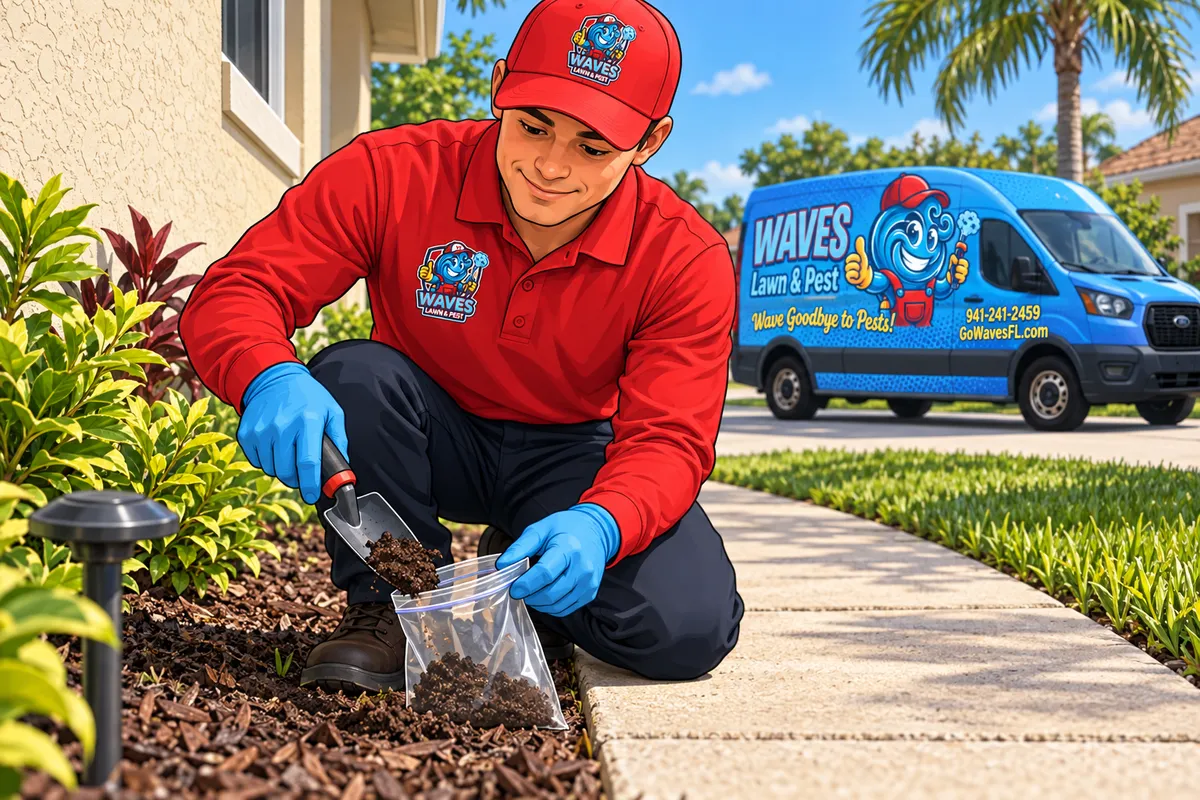
- Test the soil. Ask for an electrical conductivity (EC) test, which measures how much salt a sample holds. SL 262 points homeowners to the UF/IFAS Extension soil testing lab.
- Test the water if you irrigate from a well or a reclaimed line. SL 262 rates irrigation water by EC: below 0.75 dS/m is good or excellent, 0.75 to 2.00 dS/m is permissible, 2.00 to 3.00 dS/m is doubtful, and above 3 dS/m is unsuitable.
- Leach the salt. Per SL 262, the one fix for salty soil is to wash the salt below the root zone, with heavy irrigation or plentiful rain, and watering restrictions can rule out the irrigation route. Check the current rules for your water source. SL385 says about half of Florida’s rain falls from June to September.
- Fix the water before the grass. If the irrigation water causes the problem, SL 262 says the best move is a different water source.
- Go easy on fertilizer. SL 262 lists excess fertilizer as one way salts build up in soil, so an extra feeding is no cure for salt-burned grass.
What not to do: never irrigate St. Augustine or zoysia with saltwater, and don’t leave reclaimed water on a daily timer just because it is cheap.
Keep expectations honest. ENH04 says most grasses will not grow well on a salt-affected site, so a lawn on the Gulf side of Venice may never look like one on inland acreage, even with good care.
How to choose when to switch grass instead of fighting the site
Switching grass pays off when the grass is the weak link and the water is not.
- If a soil test still shows high salt after the rainy season and your lawn is bahia, choose St. Augustine or zoysia, which ENH04 rates “good” for salt against bahia’s “very poor.”
- If your irrigation water tests doubtful or unsuitable, change the water source first, then choose the grass.
- If the burned strip faces open water and takes steady spray, use salt-tolerant groundcovers or shrubs there; the UF/IFAS coastal page gives sea oats and wax myrtle as examples.
- If paspalum’s “excellent” salt rating tempts you, choose it only if you can keep up with the maintenance UF/IFAS warns about.
- If soil and water tests come back normal, call a pro to check for chinch bugs, disease or root problems before you replace any sod.
Waves Pest Control’s lawn program covers turf fertility, weed, insect and disease control, and diagnosing what is wrong with a lawn. On a first visit, the technician identifies your grass type and notes your irrigation schedule. Mowing and irrigation repair go to a landscaper or irrigation contractor. If you can’t tell whether salt, bugs or disease is thinning your yard, ask about a lawn care quote, or start with our lawn care in Venice page.
Frequently Asked Questions
Which grass can take the most salt in Florida?
Seashore paspalum, which UF/IFAS ENH04 rates “excellent,” with zoysia, St. Augustine and bermuda at “good.” The UF/IFAS homeowner site still doesn’t recommend paspalum for home lawns because of its upkeep.
Will reclaimed water hurt my St. Augustine lawn?
Usually not. UF/IFAS SL385 says many Florida turfgrasses tolerate saline soils well enough that reclaimed water should not hurt their growth. Overwatering is the bigger risk, and salt-sensitive shrubs such as azaleas can react poorly to it.
How do I know if salt is hurting my lawn?
Look for grass that wilts while the soil is still moist, darker bluish-green blades and leaf burn. Those signs overlap with drought, chinch bugs and disease, so confirm with a soil EC test through the UF/IFAS Extension office before you change your grass or your water.