Jump to a section (9)
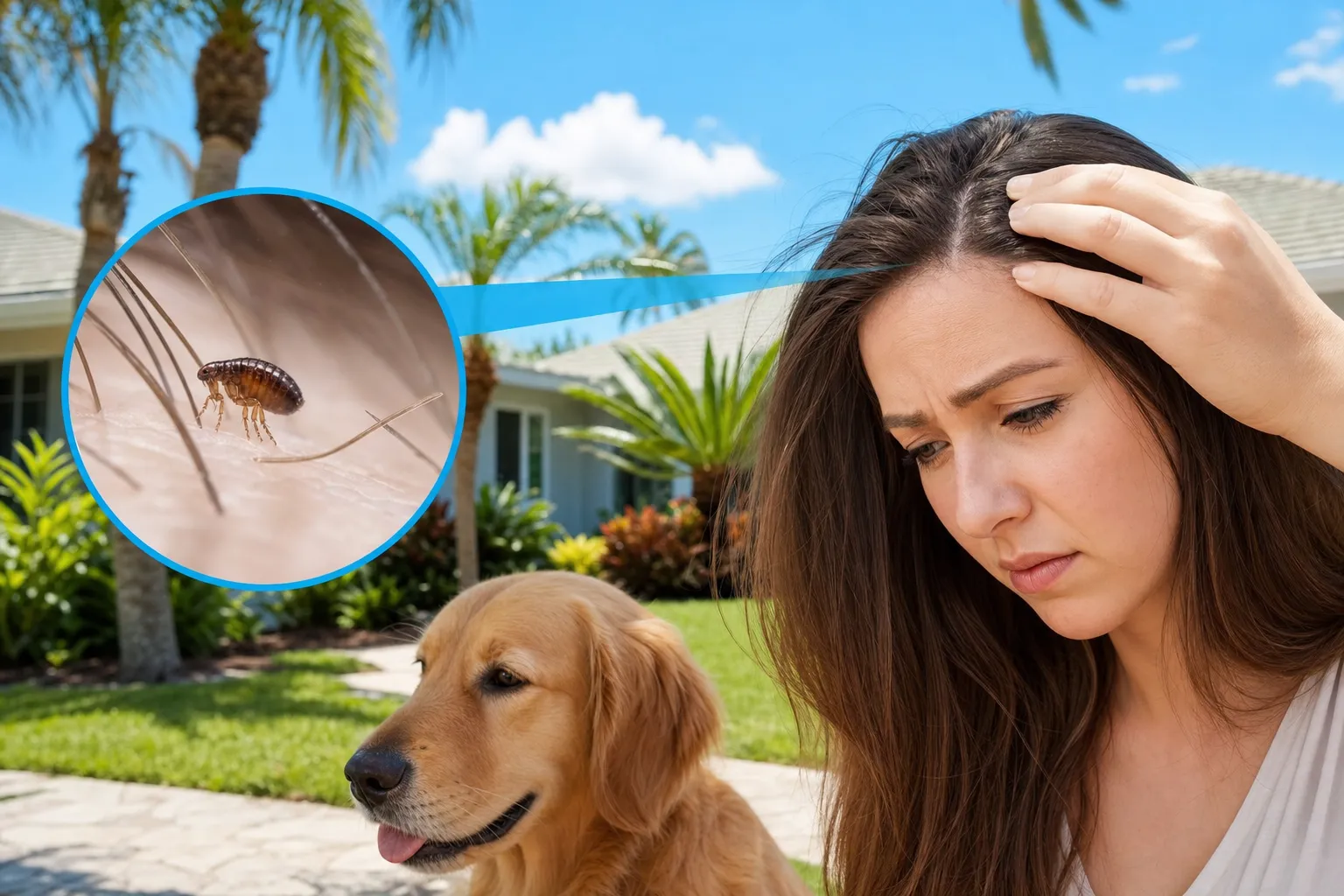
Fleas are mostly a nuisance, but they can carry a few diseases that affect people as well as pets. The CDC lists plague, flea-borne (murine) typhus, cat scratch disease and tapeworms as illnesses linked to fleas. This guide covers the three that matter most to pet owners: cat scratch disease, flea-borne typhus and flea tapeworm. It explains what the sources say about risk in Florida, and what to do about fleas at home.
What fleas can carry, and how likely each is in Bradenton
UF/IFAS says cat fleas can transmit plague and murine typhus to people, “though such reports are rare,” and that most of the time fleas are simply a nuisance. The CDC’s flea disease overview lists the same illnesses plus cat scratch disease and tapeworms. The table below sticks to what those sources say.
| Illness | How it spreads | Where it occurs | What to do |
|---|---|---|---|
| Flea-borne (murine) typhus | Bacteria in flea dirt (flea feces) can be rubbed into a bite wound or other wounds. Rats, cats and opossums can carry the bacteria, per the CDC. | The CDC says southern California, Hawaii and southern Texas report most U.S. cases, although cases likely occur in other states. | See a healthcare provider if you have symptoms, and mention contact with fleas, rodents, stray animals or opossums. |
| Cat scratch disease | Spread by the scratch of a cat that has fleas, according to the CDC. The bacteria are passed between cats by fleas. | The CDC says it is more common in the Southeast, which includes Florida, and more common in children under 15. | See a healthcare provider for fever, swollen tender lymph nodes 1 to 3 weeks after a scratch, or a pustule at the scratch site. |
| Flea tapeworm (Dipylidium caninum) | People and pets can get it by accidentally swallowing an infected flea. The CDC says small children are at higher risk. | No Florida case counts in the sources reviewed. The CDC says most infections cause no symptoms. | Check pets for fleas and ask your veterinarian about prevention. Ask a doctor about worm segments seen in stool or diapers. |
| Plague | Usually the bite of an infected rodent flea, or handling an infected animal, per the CDC. | The CDC says U.S. plague is found in rural areas of the western states, not Florida. | Nothing specific to Bradenton. It is listed here so the table matches the CDC overview. |
| Flea bite allergy | Not an infection. UF/IFAS says allergic responses to flea bites vary with how sensitive the person or pet is. | Possible anywhere fleas are present. | Ask your doctor about severe itching or skin that looks infected. Ask your vet about a pet that scratches constantly. |
Sources: CDC: About Fleas, CDC: Flea-borne typhus, CDC: Cat scratch disease, CDC: About Plague, UF/IFAS: Cat Flea.
Flea-borne typhus
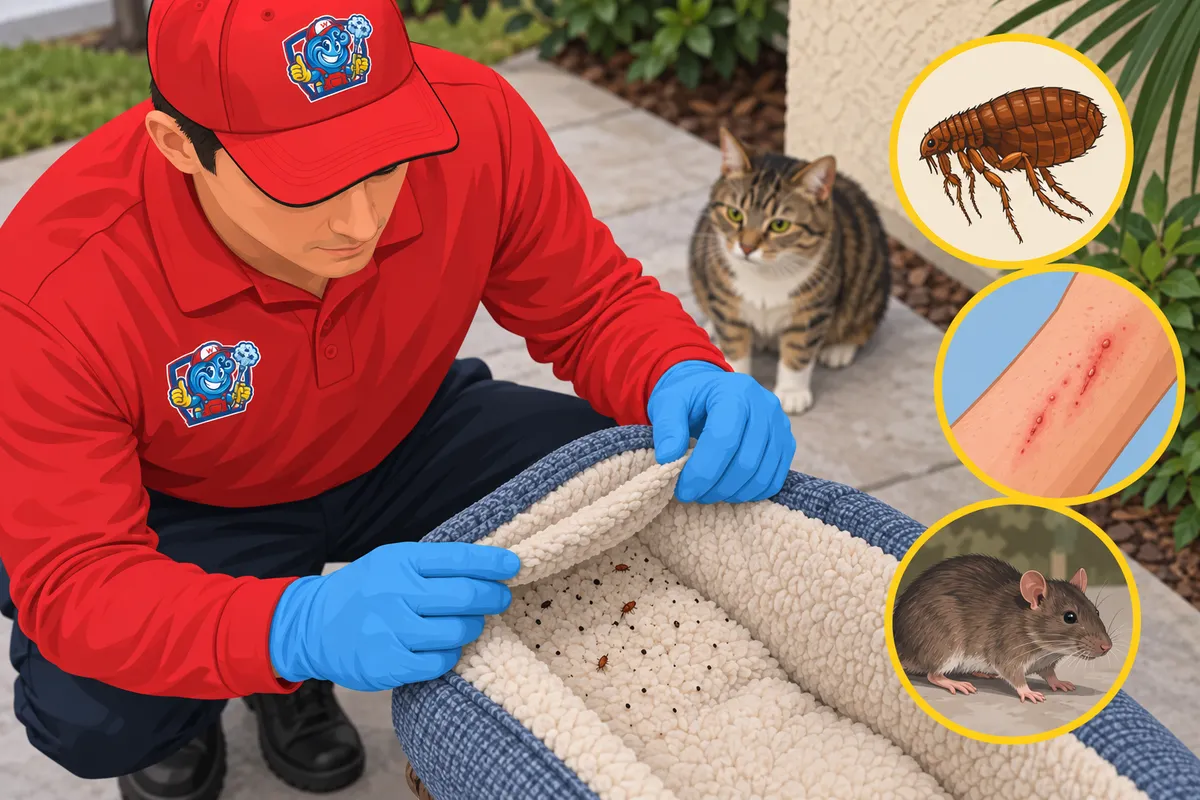
The CDC explains that fleas pass the bacteria in their droppings when they feed, and the droppings can be rubbed into the bite wound or other wounds. Symptoms start 3 to 14 days after contact and include fever, chills and headache, with a rash in some people. Early on the illness looks like many other illnesses, so a doctor may need specific tests to tell. The CDC says there is no vaccine.
The CDC’s prevention advice is to keep fleas off pets with veterinary products, remove places where rodents can shelter, and use an EPA-registered insect repellent outdoors. Follow the repellent label.
Cat scratch disease
According to the CDC, the usual signs are a low-grade fever and enlarged, tender lymph nodes that show up 1 to 3 weeks after a scratch from a cat. The CDC says most cases clear up without antibiotics, but it recommends antibiotics for people with weakened immune systems. A doctor decides on treatment. The CDC’s prevention steps:
- Avoid scratches, bites and licks, especially from kittens and stray cats.
- Clean scratch wounds with soap and water, and wash your hands after handling cats.
- Ask your veterinarian about flea prevention for your cat.
Flea tapeworm
The CDC says tapeworms can spread to people if they accidentally swallow an infected flea, and that small children are at higher risk because of time spent on floors and carpet. Most infected people have no symptoms. The sign people notice is small worm segments in stool or in a diaper. A doctor handles treatment for people, and your veterinarian handles treatment for pets.
When to see a doctor, and when to get emergency care
See a doctor if you or a family member develops fever, chills or headache within about two weeks of flea exposure. Say that you have been around fleas, rodents, stray cats or opossums. Also see a doctor for a cat scratch that looks infected or comes with swollen, tender lymph nodes. People with weakened immune systems should call a doctor early. This guide is not a diagnosis, and symptoms alone cannot tell you which illness it is.
Get emergency care right away for trouble breathing, swelling of the throat or face, fainting, or chest pain. Call your veterinarian if a pet seems sick.
Why fleas do well in Southwest Florida
UF/IFAS says flea larvae develop where they are protected from rain, irrigation and sunlight, with relative humidity of at least 75% and temperatures of 70 to 90 degrees Fahrenheit. Shaded, humid spots under shrubs and decks, and in carpet and bedding, can meet those conditions. The CDC advises treating pets for fleas year-round.
UF/IFAS also notes that feral animals such as opossums, raccoons, skunks and cats bring new fleas into a yard. The CDC says not to feed or pet stray or wild animals. A yard that wildlife visits can see repeat flea pressure even after the pets are treated.
How to lower your risk
These steps come from the CDC and UF/IFAS. They lower the odds of a flea problem. They do not guarantee one will not start.
- Pets: Check pets for fleas often, bathe and brush them, and ask your veterinarian which flea product fits your pet. UF/IFAS says flea combs remove only part of the fleas on a pet, so combing alone is not enough. Treating the pet alone is not enough either, because young fleas that develop off the pet jump back on.
- Home: Vacuum carpets, rugs and cushions often, empty the vacuum bag outside, and wash bedding, especially pet bedding, with soap and water.
- Yard: The CDC says mowing exposes soil to sun, which fleas avoid, and that a drier yard is less inviting. Keep wildlife and stray animals out of the yard where you can.
- Repellents and home remedies: UF/IFAS says evidence shows dietary supplements such as vitamin B, brewer’s yeast or garlic are of little value, ultrasonic and insecticidal flea collars are not very effective, and wax myrtle or cedar have not been scientifically proven. Skip them.
- Products: Use pet and home products only as the label directs. Any pesticide used in the home or yard should be EPA-registered.
How to Choose Your Flea Game Plan
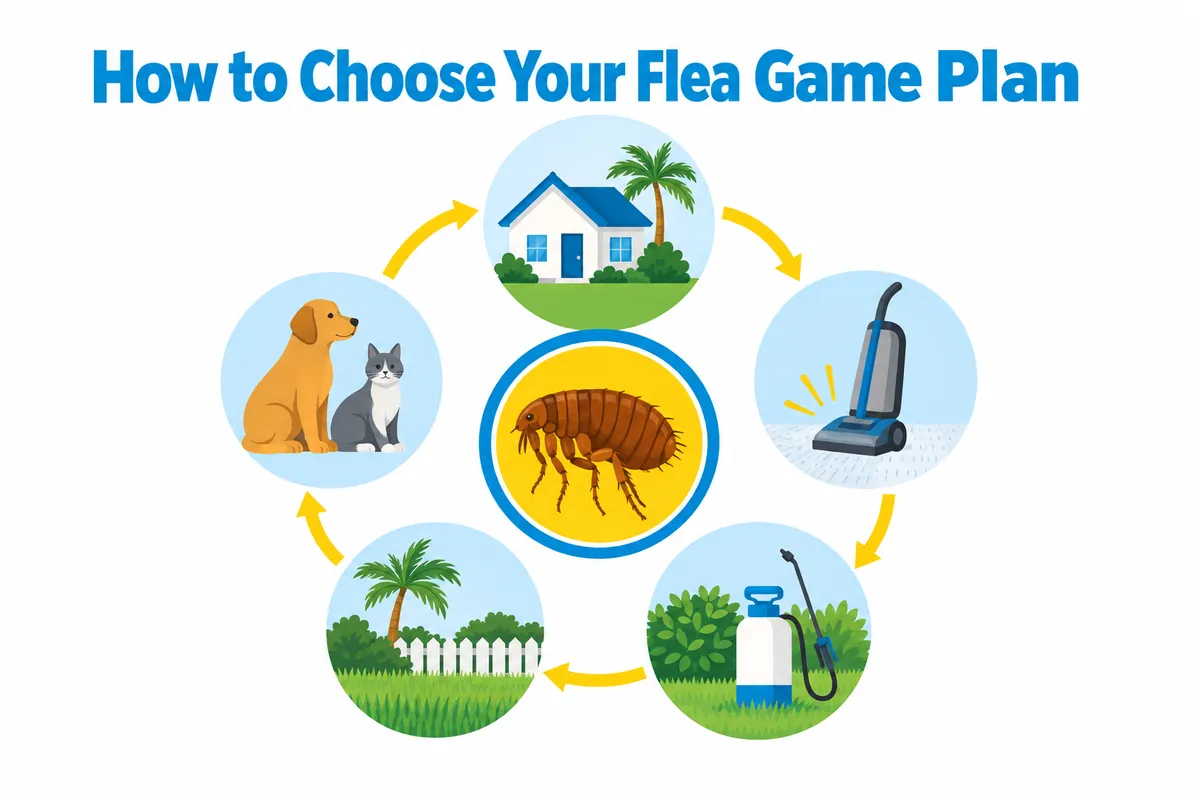
UF/IFAS says removing fleas from the animal alone is futile, so the plan has to cover the pet, the home and the yard. Match what you see to the next step.
- A few fleas on one pet, no bites on people: Talk to your veterinarian about a flea product and start the home cleaning steps above.
- Fleas keep showing up on a treated pet, or people get bitten on the ankles: The fleas are probably developing in carpet, bedding or shaded yard spots. Keep up the vacuuming and bedding washes, and treat the home and yard together with the pet.
- Still finding fleas after repeated cleaning and treatment: The CDC says fleas at different life stages respond differently, so follow-up treatments are needed. It also suggests hiring a licensed commercial pest control applicator. A company can inspect and pick products. See flea treatment in Bradenton or the flea identification page.
- Wildlife or stray cats visit the yard: Fleas can keep coming back. A pest control inspection can look at the yard as well as the house.
- Someone at home has a weakened immune system, is very young, or reacts badly to bites: Ask your doctor what to watch for. Ask your veterinarian about pet prevention.
For a general walkthrough of home steps, see our guide to getting rid of fleas. To size up a plan, use the pest control calculator.
Frequently Asked Questions
Are flea-borne diseases common in Bradenton?
The sources reviewed give no Florida or Manatee County case counts for flea-borne illness. UF/IFAS describes reports of disease from cat fleas as rare, and the CDC says cat scratch disease is more common in the Southeast. For most households the everyday problem is itching and flea bites.
Can I get sick from flea dirt?
The CDC says flea dirt from infected fleas can carry the bacteria that cause flea-borne typhus, and it can be rubbed into bite wounds or other wounds. Vacuum often, empty the vacuum bag outside, and wash your hands after cleaning flea-infested areas. See a doctor for symptoms.
Do natural flea repellents work?
UF/IFAS says there is little scientific support for garlic, brewer’s yeast or vitamin B supplements, and that wax myrtle and cedar have not been scientifically proven. Ask your veterinarian about products for pets. Follow the label on any home or yard product.
Are the “sand fleas” at the beach the same as house fleas?
Not necessarily. “Sand flea” is a common name for several different small animals. See our guide to sand fleas in Southwest Florida for what is biting at the beach.
When should I get emergency care after a flea bite or cat scratch?
Get emergency care right away for trouble breathing, swelling of the throat or face, fainting, or chest pain. For fever, chills, headache, swollen tender lymph nodes or an infected-looking scratch, see a doctor.