Jump to a section (9)
- 01How long do bed bugs live?
- 02How long can bed bugs live without feeding?
- 03How fast bed bugs grow and breed
- 04Signs of bed bugs and where they hide
- 05Can bed bugs live on clothes?
- 06What this means for a Southwest Florida home
- 07What not to do
- 08When to call a professional
- 09How Waves Pest Control can help
You found a small brown bug on the sheets, and now you want to know how long it can hang around. The short answer is longer than most people hope. This guide covers what UF/IFAS, the EPA and the CDC say about bed bug lifespan, how long bed bugs survive without feeding, and how fast they grow and breed. For what a visit covers, see our pest control services page, and the Waves pest library has the other household pests you might be comparing.
Already finding bites or spots on the mattress? Get a pest control estimate for your home.
How long do bed bugs live?
An adult usually lives several months to about a year, depending on how often it feeds and how warm it is. A bed bug biology guide from Virginia Tech, which the EPA links from its life-cycle page, puts the adult life span at nearly one year with regular blood meals and favorable temperatures. In the lab, well-fed adults held at room temperature, above 70°F, lived between 99 and 300 days.
The same guide is upfront about the limits. Researchers do not know exactly how long a bed bug lives in a home, but they expect at least several months. A real home is harder on bed bugs than a lab: food is harder to reach, temperature and humidity change, and bugs get crushed or meet insecticides.
How long can bed bugs live without feeding?
Months, in most cases, so an empty room is not a reliable fix. The sources differ on the exact number:
- UF/IFAS: The UF/IFAS bed bug guide (ENY-227, reviewed February 2025) says adults can survive six to seven months without a blood meal and have been known to live in abandoned houses for one year. In some cases they get by without people by feeding on birds and rodents.
- CDC: The CDC says bed bugs can live several months without a blood meal.
- Virginia Tech: Starved bed bugs at any life stage, held at room temperature, died within 70 days on average. Those bugs came from homes in Virginia and were resistant to some insecticides, which lab studies link to shorter life spans.
- Older studies: European research from the 1930s and 1940s found bed bugs surviving more than a year without food. The Virginia Tech guide ties that to very cold homes, below 40°F, with no central heating.
The guide says starved bed bugs most likely die from drying out, not hunger, because blood is their only source of water. That is one reason they pack into tight cracks: it helps them hold onto warmth and humidity.
The takeaway: plan on months, not weeks. A long trip away from home, or a guest room left empty, is not a treatment.
How fast bed bugs grow and breed
A bed bug starts as an egg, grows through five nymph stages and then becomes an adult. The EPA’s life-cycle page gives the sizes: eggs are about 1 mm long, and nymphs grow from about 1.5 mm to 4.5 mm.
- Eggs: UF/IFAS says eggs hatch in one to three weeks. The Virginia Tech guide found that at room temperature, 60 percent hatch by day 6 and more than 90 percent by day 9. A cool room, around 50°F, adds several days.
- Nymphs: Each nymph must take a blood meal before it can molt to the next stage. A nymph with no host stays at its stage until it feeds or dies. UF/IFAS says the five nymph stages usually take 35 to 48 days.
- Egg to adult: About 37 days at temperatures above 72°F, per the Virginia Tech guide.
- Eggs per female: UF/IFAS gives 200 to 500 eggs in a female’s lifetime, while the Virginia Tech lab average was about 113. More blood meals mean more eggs.
Under good conditions, 70°F to 90°F with a person to feed on, the Virginia Tech guide says a bed bug population can double every 16 days. UF/IFAS adds that a single pregnant female carried to a new place can start a new infestation. The CDC says early detection makes an infestation easier to control.
Signs of bed bugs and where they hide
The EPA says adult bed bugs are about the size of an apple seed, 5 to 7 mm (3/16 to 1/4 inch) long. They are brown, flat and oval when they have not fed recently, and reddish-brown and balloon-like after a meal. Young nymphs that have not fed can be nearly invisible.
The CDC says to look for:
- shed skins, which bed bugs leave behind as they molt
- live bugs in the folds of mattresses and sheets
- rusty-colored blood spots on mattresses or nearby furniture
- a sweet, musty odor
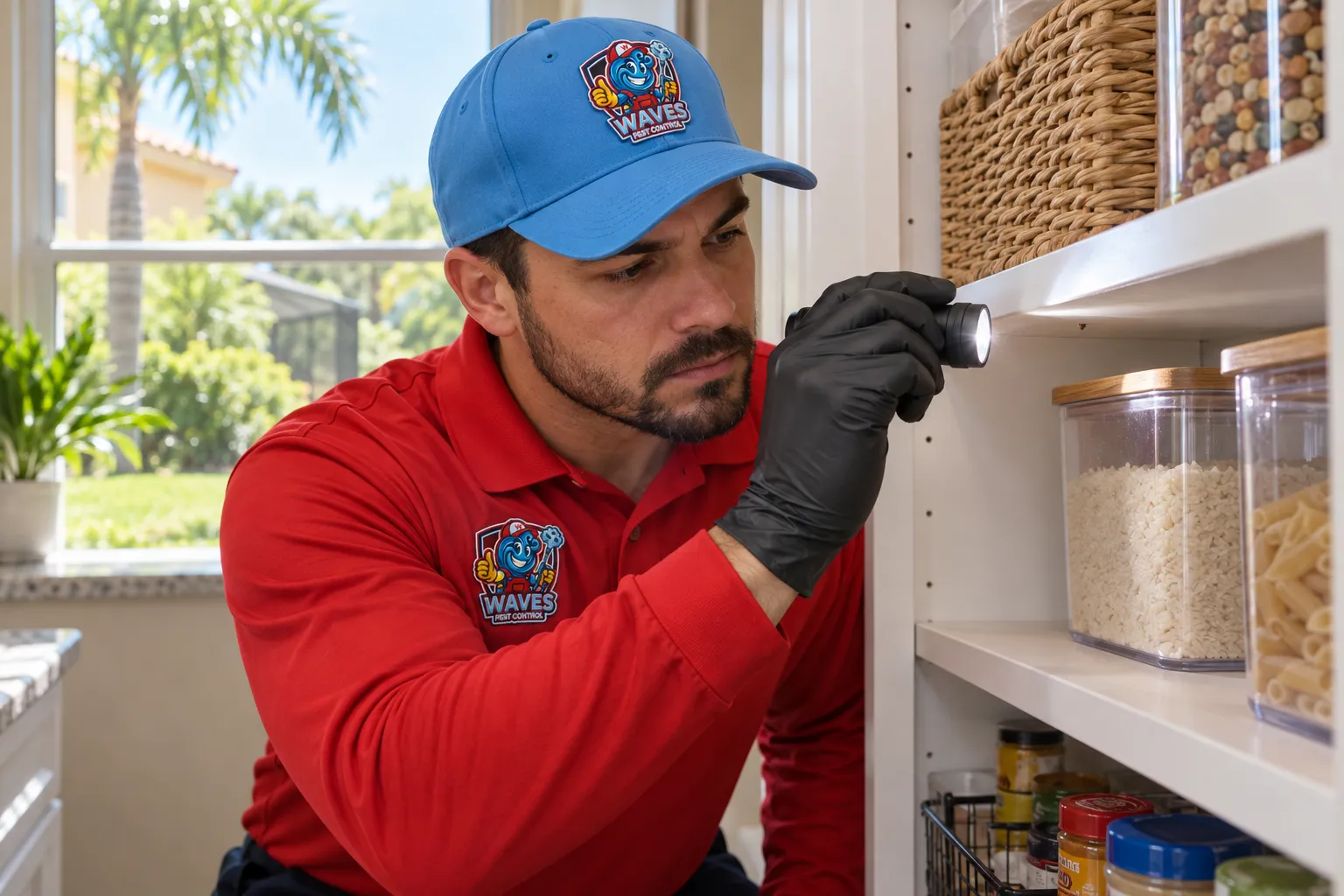
Check the places where the CDC says bed bugs hide during the day: mattress seams, box springs, bed frames and headboards, dressers, cracks and crevices, and behind wallpaper. They tend to stay within 8 feet of where people sleep, so start at the bed and work outward.
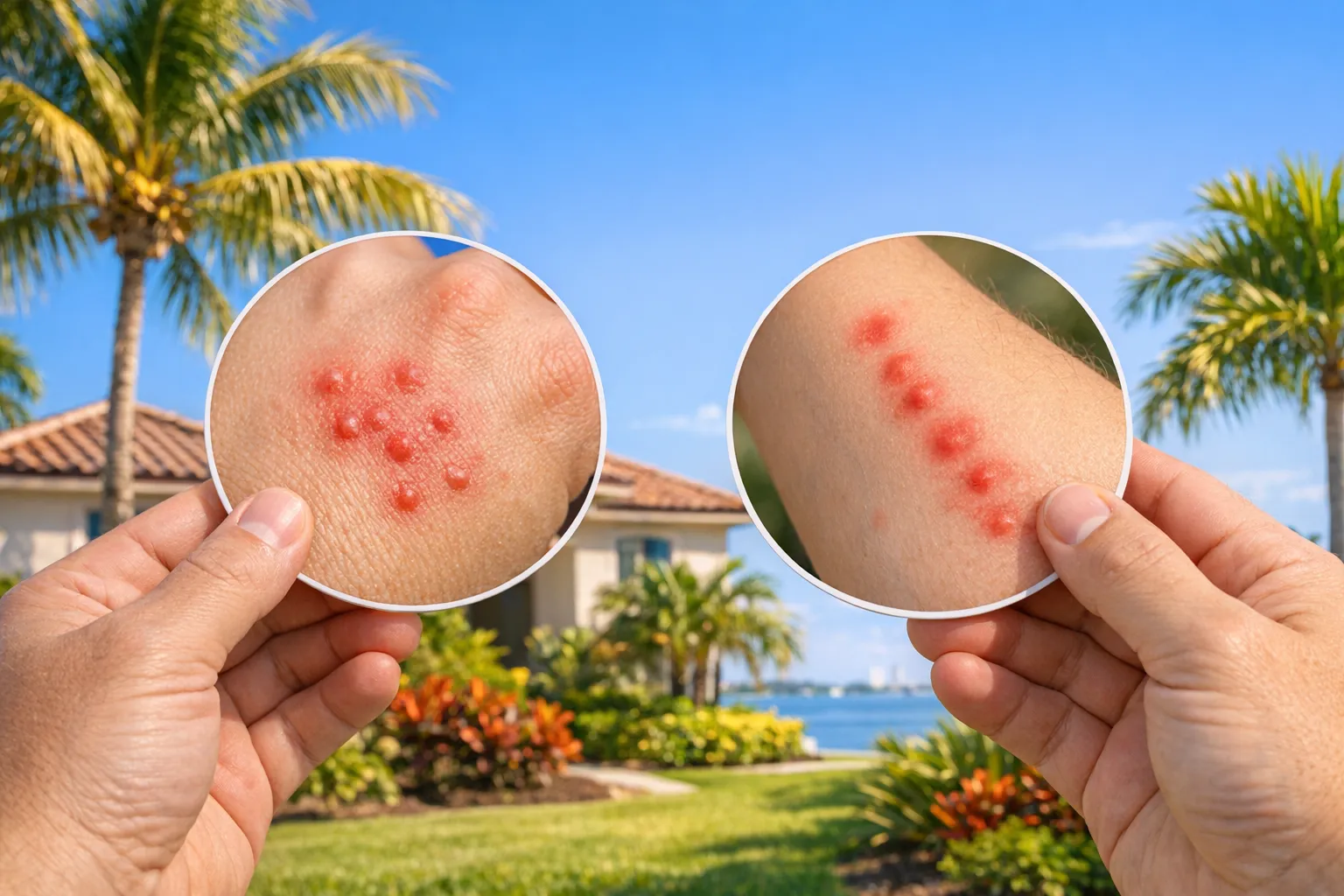
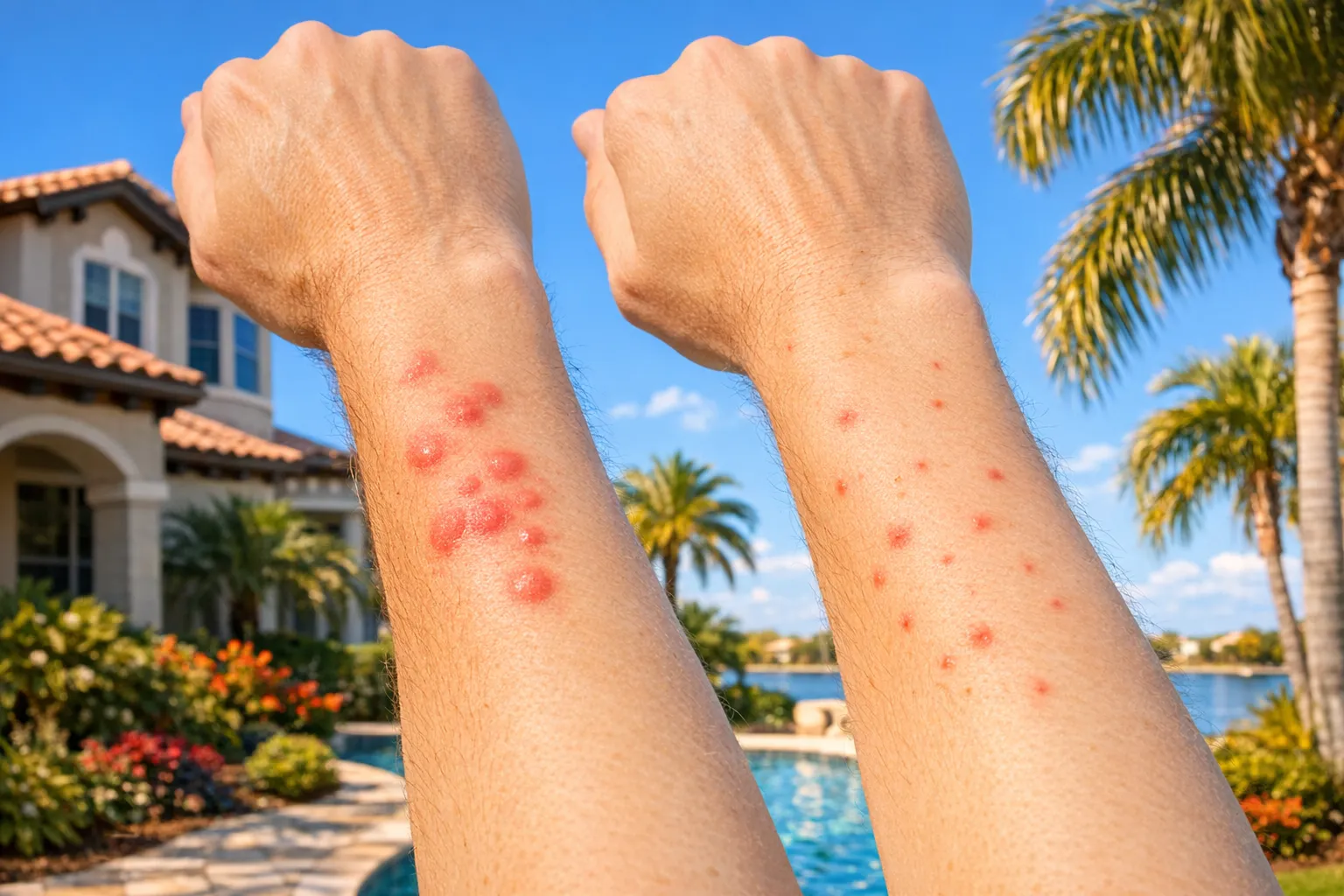
Bites alone do not confirm bed bugs. The CDC says bite marks can take as long as 14 days to show up, and UF/IFAS says some people do not react to the bites at all. The EPA warns that many bugs look like bed bugs and points readers to a comparison of bed bugs, cockroaches and carpet beetles. Our guide to beetle-type insects covers carpet beetles, and our cockroach types guide covers the roaches Southwest Florida homeowners find.
Pro tip: Take a sharp, close photo of any bug or shed skin you find, and write down the room and the exact spot. The EPA calls accurate identification a critical first step, because it keeps you from paying to treat the wrong bug.
Can bed bugs live on clothes?
They ride in clothes more than they live on people. UF/IFAS says in its bed bug profile (EENY140) that bed bugs lack the body parts to cling to hair or fur, so they are rarely found on people or animals. They do travel in clothing, luggage, bedding and furniture. UF/IFAS lists second-hand beds and furniture among the belongings they hitchhike on, and the CDC says people who travel often or share sleeping spaces face a higher risk.
For bedding, UF/IFAS says to launder it and dry it at a high temperature. Its guide lists temperatures above 113°F to 115°F as deadly to every bed bug stage.
What this means for a Southwest Florida home
Bed bugs live indoors, close to the bed, so the heat, humidity and afternoon storms outside are not what sets their clock. The temperature inside your home is. The lab figures above come from bugs held above 70°F, and the Virginia Tech guide says populations grow fastest between 70°F and 90°F with a host nearby.
Whether your home is in Sarasota, Venice or Bradenton, the bigger risk is what comes through the door: guests, a vacation rental turnover, luggage from a trip or a used couch. After each one, check mattress seams, headboards and furniture joints.
What not to do
- Do not try to starve them out. UF/IFAS says adults can go six to seven months without a blood meal.
- Do not just move to the couch. UF/IFAS notes bed bugs can feed and live in couches and recliners, and the CDC says they can travel more than 100 feet in a night.
- Do not set off a bug bomb. UF/IFAS cites a study that found over-the-counter foggers are not effective against bed bugs.
- Do not soak the mattress. UF/IFAS warns against soaking mattresses and upholstery with pesticides, and our guide on whether bleach can kill bed bugs explains why household cleaners are not a treatment. If you use any product labeled for bed bugs, read and follow the label, keep it off food-preparation and food-contact surfaces, and place it out of sight and reach of children and pets.
- Do not scratch the bites. The CDC says heavy scratching may lead to a skin infection.
When to call a professional
Call a pro when you find a live bug, a shed skin or blood spots, or when bites keep showing up and you cannot find the cause. For a suspected infestation, the CDC says to contact a professional pest control company experienced with bed bugs. UF/IFAS says small, early infestations are especially hard to find. It also says eggs may not be affected by a spray, so a spray treatment needs a follow-up to reach newly hatched nymphs.
For the bites, the CDC says most do not need medical treatment. If bites swell up or turn painful, or you think you are having an allergic reaction, talk with your healthcare provider. If a bite is followed by trouble breathing, swelling of the face or mouth, trouble swallowing, chest pain, or fainting, get emergency care right away. MedlinePlus lists those among the signs of a severe allergic reaction to insect bites.
How Waves Pest Control can help
Waves Pest Control offers both heat treatment and chemical treatment for bed bugs. Have your photos and notes ready when you ask for an estimate: which rooms are affected and what you found, such as live bugs, shed skins or spots.
For recurring service on general household pests, look at our WaveGuard memberships. For local details, see bed bug control in Sarasota or bed bug control in Bradenton. Ready for a number? Get a bed bug control estimate for your home.