Jump to a section (11)
- 011. The reddish-brown drain roach (Periplaneta americana)
- 022. Florida woods cockroach (Eurycotis floridana)
- 033. Smokybrown cockroach (Periplaneta fuliginosa)
- 044. Australian cockroach (Periplaneta australasiae)
- 055. Asian cockroach (Blattella asahinai)
- 066. German cockroach (Blattella germanica)
- 077. Brownbanded cockroach (Supella longipalpa)
- 088. Surinam cockroach (Pycnoscelus surinamensis)
- 09What to do about any roach you find
- 10When to call a professional
- 11How Waves Pest Control handles roach calls
Last updated: October 2026.
A big roach on the lanai at night and a small one under the kitchen sink are usually two different species, and each one calls for a different fix. Size, wings and the spot where you found it narrow the field fast. If you already know you want help, our pest control services page explains what a visit covers, and you can get a pest control estimate online. Photos and quick facts on other household bugs live in our pest library.
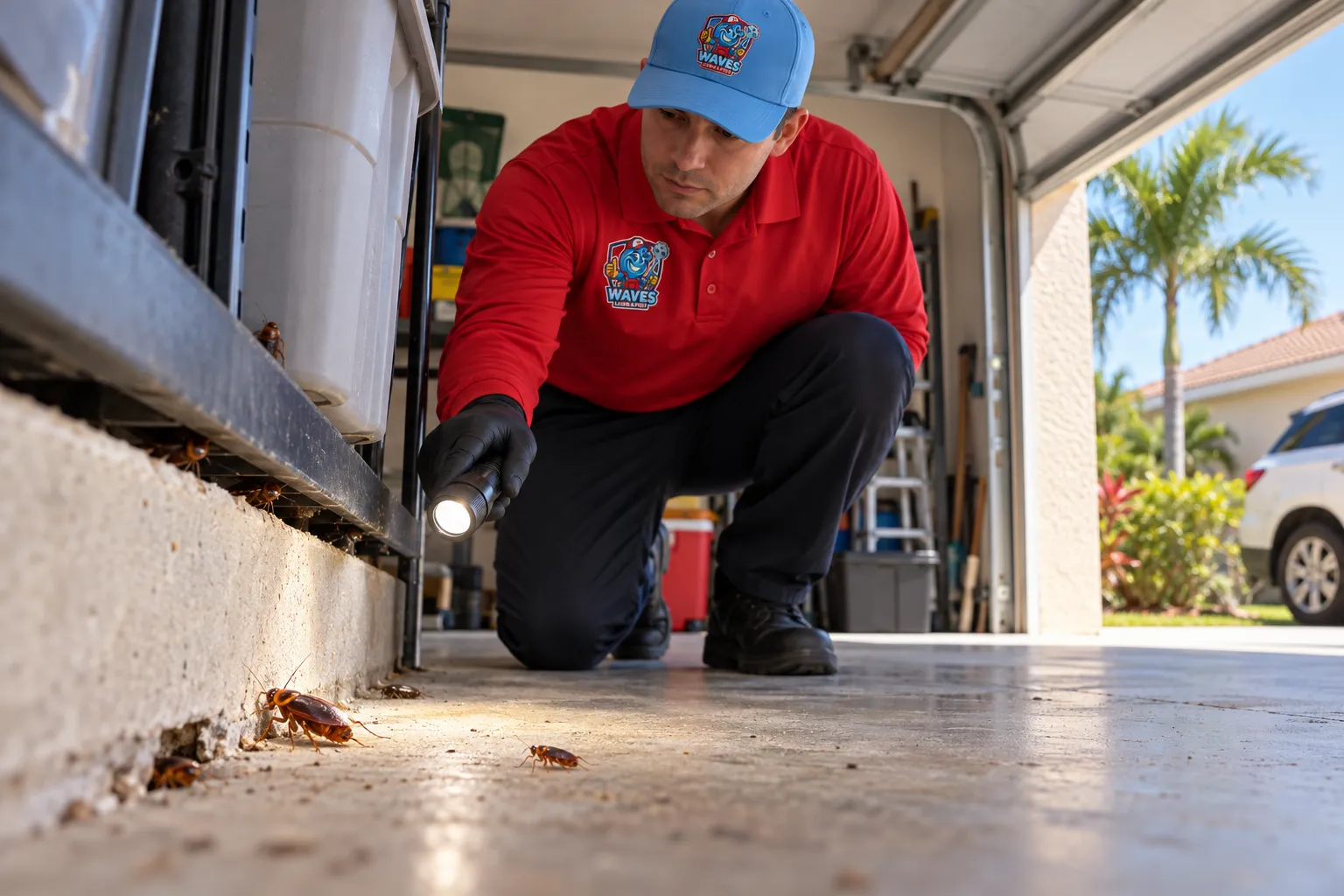
The species facts below come from the UF/IFAS cockroach photo gallery run by the University of Florida entomology department, unless another source is named.
1. The reddish-brown drain roach (Periplaneta americana)
The American cockroach is a reddish-brown roach about 1 3/8 to 2 1/8 inches long, with light markings on the shield behind its head. UF calls it a poor to average flier and notes that plenty of people call it a palmetto bug.
Why it matters in Southwest Florida: UF/IFAS entomologist William Kern wrote in 2023 that American cockroaches usually live in sewers and septic systems and get into homes by coming up through unscreened drains, sink and tub overflow drains included. That makes your bathroom and kitchen drains the first place to look.
What to do: Keep stoppers or drain covers in place overnight in the room where you see them, and fix any leaks. Kern says most infestations stay limited, while severe ones can trace back to broken drainpipes or plumbing left uncapped inside wall voids. Big roaches coming up the same drain week after week deserve a professional look.
2. Florida woods cockroach (Eurycotis floridana)
The Florida woods cockroach is a dark reddish-brown to black roach, 1 1/8 to 1 9/16 inches long, with short wing pads and no ability to fly. UF says it gives off a foul-smelling fluid when threatened, which earned it the name “stinking cockroach.” It is native to Florida and the nearby Gulf coast states, and homeowners call it a palmetto bug too.
Why it matters in Southwest Florida: UF says this roach lives outdoors in leaf mulch, wood piles and under rotting logs, and it does not live long inside a house. Those stubby wing pads can make it look like a beetle, a mix-up our beetle or cockroach guide sorts out.
What to do: Treat one indoors as a stray. Scoop it outside with a cup and a sheet of paper, since a crushed or startled one can release that smell. Pulling mulch and stacked firewood back from the foundation lowers the odds of more strays.
3. Smokybrown cockroach (Periplaneta fuliginosa)
The smokybrown cockroach is a dark brown to black roach about 1 to 1 1/4 inches long, with one even color over its whole body. UF lists it across the southern U.S. and notes it often goes by palmetto bug as well.
Why it matters in Southwest Florida: UF’s smokybrown profile says it lives outdoors in tree holes and wood piles and readily enters buildings through lit openings. A lanai door left open with the light on is an easy way in.
What to do: Check your outdoor lighting before anything else.
Pro tip: Swap the bulbs closest to your front door, lanai slider and garage for yellow “bug light” LEDs. UF/IFAS Extension Sarasota County says they are effective at decreasing the insects that gather at exterior lights in the evening.
4. Australian cockroach (Periplaneta australasiae)
The Australian cockroach is a reddish to dark-brown roach about 1 1/4 to 1 3/8 inches long, with a light-yellow band along the front edge of each forewing. Both males and females have full wings and can fly.
Why it matters in Southwest Florida: UF says it is abundant outdoors and in greenhouses, where it can damage plants, and in the southern states it often lives in homes. The yellow wing edge is a useful clue when you are deciding between it and the larger American cockroach.
What to do: Look at the wing edge to confirm what you have. Then check potted plants, plant benches and any greenhouse or screened plant area close to the house.
5. Asian cockroach (Blattella asahinai)
The Asian cockroach is a small roach, 1/2 to 5/8 inch long, with two dark stripes on the shield behind its head. It looks almost identical to the German cockroach, but it flies readily and heads for lights.
Why it matters in Southwest Florida: UF says it lives outdoors in lawns and leaf litter, came into Florida in the early 1980s, and can top 250,000 roaches per acre in some damp areas of the state. Infestations often show up after flower beds get fresh mulch in spring, and thousands can gather at porches and windows in some seasons.
What to do: Watch whether it flies. A small striped roach flying to a lit window points to the Asian cockroach, while a German cockroach does not fly. Confirm which one you have before you treat anything indoors, since the two need different plans.
6. German cockroach (Blattella germanica)
The German cockroach is a small roach, 1/2 to 5/8 inch long, with two dark stripes behind its head and wings it does not use to fly. UF says it lives in kitchens and bathrooms and anywhere people eat and drink.
Why it matters in Southwest Florida: Kern says German cockroaches never occur outside man-made structures and arrive in boxes, backpacks and purses from places that already have them. He calls it the most serious structure-invading cockroach of apartments, condominiums and single-family homes. UF’s German cockroach profile says a female produces four to eight egg cases with 30 to 40 eggs each, and three to four generations a year are typical.
What to do: Shine a flashlight under the sink, behind the refrigerator and stove, and inside the cabinets. Check moving boxes and bags that come from another home before you unpack them. A German cockroach indoors is the clearest call-a-pro case on this list. If you wonder whether any of these roaches bite, our cockroach bite guide covers it.
7. Brownbanded cockroach (Supella longipalpa)
The brownbanded cockroach is about 1/2 inch long, with two pale-brown bands across its wings. Males can fly and females cannot.
Why it matters in Southwest Florida: UF says this species prefers bedrooms, furniture and closets, high shelves and the space behind picture frames, and the female glues her egg cases to surfaces. Because it lives away from the kitchen, a check of the kitchen alone can miss it.
What to do: Check the undersides of furniture, the tops of closet shelves and the backs of frames for small glued egg cases. Finding them indoors is a reason to call a professional.
8. Surinam cockroach (Pycnoscelus surinamensis)
The Surinam cockroach is a shiny brown to black roach about 3/4 to 1 inch long that burrows in soil. UF says it lives outdoors and often infests potted plants.
Why it matters in Southwest Florida: UF lists it as common in the Gulf states, and it gets into homes when an infested houseplant comes inside. Plants that move between the lanai and the living room give it a ride.
What to do: Check the soil of any outdoor pot before you bring it in. Keep a pot with burrowing roaches outside.
What to do about any roach you find
Start with identification, then take away what roaches need. UF/IFAS Extension in Charlotte County explains that roaches need food, moisture and shelter, and lists these steps:
- Empty indoor trash often and close the bags.
- Wash dishes right after meals.
- Keep the toaster, oven, microwave and refrigerator free of crumbs.
- Store pet food in resealable containers.
- Fix leaky pipes and dripping faucets, and clear standing water from condensation, pet dishes and glasses.
- Caulk cracks and gaps that lead inside.
The EPA lists cockroaches among common asthma triggers. If anyone in your home has asthma, the CDC’s asthma control page advises avoiding sprays and foggers, which can cause asthma attacks. Also avoid treating an indoor German or brownbanded problem like an outdoor palmetto bug problem. If you use a store-bought roach bait, read and follow the product label, keep it off food-preparation and food-contact surfaces, and place it out of sight and reach of children and pets.
When to call a professional
Call a pest control company when any of these show up:
- Small roaches that do not fly turn up in the kitchen or bathroom.
- You find egg cases on shelves, furniture or the backs of frames.
- Big roaches keep coming up through the same drain.
- Roaches keep appearing after you have fixed leaks and food sources.
How Waves Pest Control handles roach calls
Our approach starts with identification, because a palmetto bug wandering in from the mulch and a German cockroach breeding under the sink need different plans. A first visit from Waves Pest Control includes a walk around the property to find active pest pressure, a look at the soffits, eaves and slab line, a perimeter treatment, and interior spot treatment where pests are active. Products go on according to their EPA labels.
Ongoing coverage runs through WaveGuard memberships. WaveGuard plans include unlimited callbacks between scheduled visits at no extra charge, so if covered pests come back between visits, Waves comes back free.
If you live in Sarasota or Bradenton, our Sarasota pest control page and Bradenton pest control page cover local service. Anywhere else in Southwest Florida, get your pest control quote online.