The short answer: a house mouse lives about one year. That does not mean an indoor mouse problem will disappear after a year. Mice can begin breeding at about six weeks old, and several generations can overlap inside a home. If you already have clear signs of activity, review our rodent-control service options or get a rodent control estimate.
How long do mice live?
The UF/IFAS guide to rat and mouse control gives the practical figure homeowners need: house mice live about one year. An individual mouse may die sooner, but a warm structure with food, water, and nesting material can support a continuing population. The useful question is therefore not how long one mouse has left. It is whether mice are entering, feeding, and reproducing in the building.
Why a short life still means a big problem
UF/IFAS reports that house mice reach sexual maturity at about six weeks, average five or six young per litter, and can produce up to eight litters in a year. Those figures explain why waiting for an adult mouse to reach the end of its lifespan is not a control plan. New mice can be born long before the original animal dies.

Will mice just leave on their own?
Do not count on it. A home can provide shelter, food, water, and nesting material, while an unsealed opening lets other mice enter. Removing food and clutter makes the space less attractive, but those steps work best alongside trapping and exclusion. Repellents alone do not tell you whether the mice are gone or whether an entry point remains open.
How to tell whether it is a mouse
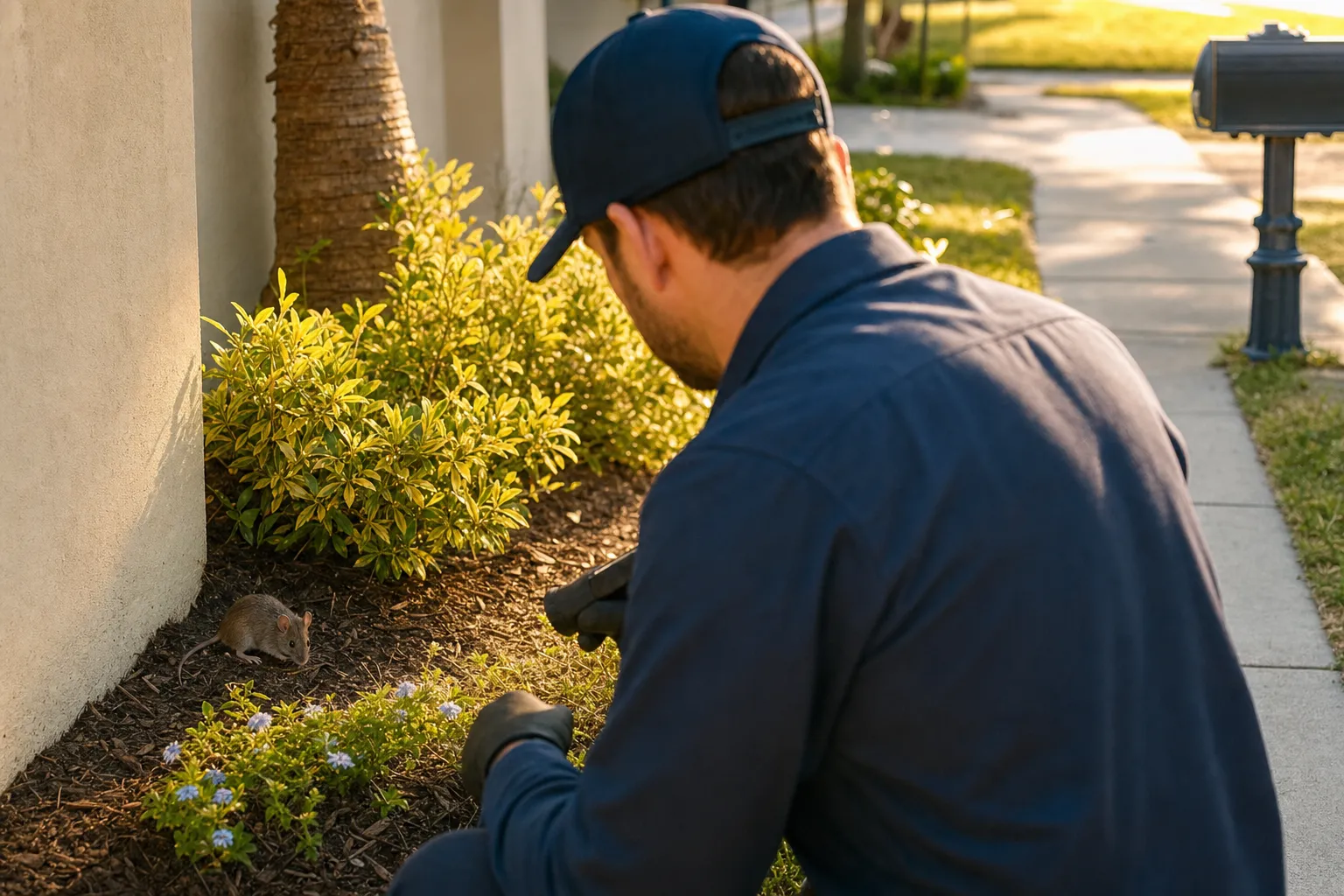
Southwest Florida homes can have mice or rats, and the treatment plan depends on the species. UF/IFAS describes an adult house mouse as a small brown-to-gray rodent weighing about half an ounce, with a tail about as long as its body. Its droppings are small, rod-shaped pellets about one-eighth inch long. Roof rats are much larger and often use elevated routes into attics. A photo of the animal, droppings beside a ruler, and the exact room or building level where signs appear can make identification easier.
On every inspection
Evidence that helps identify a mouse problem
- Droppings Record their size, shape, and location before cleanup; these details help separate mice from rats.
- Gnaw marks Check food packaging, cabinet corners, door sweeps, and material around utility openings.
- Nesting material Shredded paper, fabric, or insulation in a protected cavity can mark a nest site.
- Tracks and rub marks Dusty shelves, wall edges, and repeated travel routes may preserve footprints or smudges.
- Food damage Small openings in bags or boxes and scattered crumbs can point to an active feeding area.
- Entry gaps A mouse can fit through an opening about one-quarter inch wide, roughly the width of a pencil.
Photograph signs before cleaning them, then follow safe cleanup guidance for droppings and nesting material.
What this means in Southwest Florida
Rodent activity can occur throughout the year in Southwest Florida. Roof rats are common in the state, so scratching overhead should not automatically be labeled a mouse problem. Around any home, dropped fruit, bird seed, accessible pet food, open garbage, dense clutter, and gaps around doors or utility lines can support rodent activity. Inspect what is actually present before choosing traps or closing openings.
Check both inside and outside: foundation and wall joints; worn door sweeps and garage corners; plumbing, electrical, cable, and A/C penetrations; vents and soffits; spaces behind kitchen appliances; lower cabinets; attics; and protected storage areas. These are examples from CDC inspection guidance, not proof of where a rodent entered a particular home.
Safe homeowner checks and pest-control practices
- Confirm the identification. Photograph droppings, gnawing, tracks, and nesting material before cleanup. Note where you found each sign.
- Remove food and water access. Store pantry goods and pet food in containers with tight lids, clean spills promptly, and put pet bowls away overnight.
- Check for openings. The CDC’s rodent seal-up guidance says mice can fit through a hole about one-quarter inch wide. Look around cabinets, pipes, vents, doors, appliances, eaves, soffits, and utility lines.
- Use rodent-resistant repairs. For small openings, the CDC recommends steel wool held in place with caulk or spray foam. Larger holes may require metal, cement, lath screen, or hardware cloth. Foam alone is not the primary barrier.
- Use appropriately sized snap traps at confirmed travel routes. Place them where children and pets cannot reach them, and check them regularly. Continue monitoring while entry points are repaired.
Pro tip: measure an opening instead of comparing it with a coin. One-quarter inch, or about 6 millimeters, is the exclusion threshold the CDC gives for mice.
What not to do
Do not sweep or vacuum dry droppings or nesting material. The CDC’s rodent-cleanup instructions say to ventilate the space, wear rubber or plastic gloves, soak the material with an EPA-registered disinfectant, wait five minutes or the label-specified time, and wipe it up with paper towels. Heavy infestations require additional precautions.
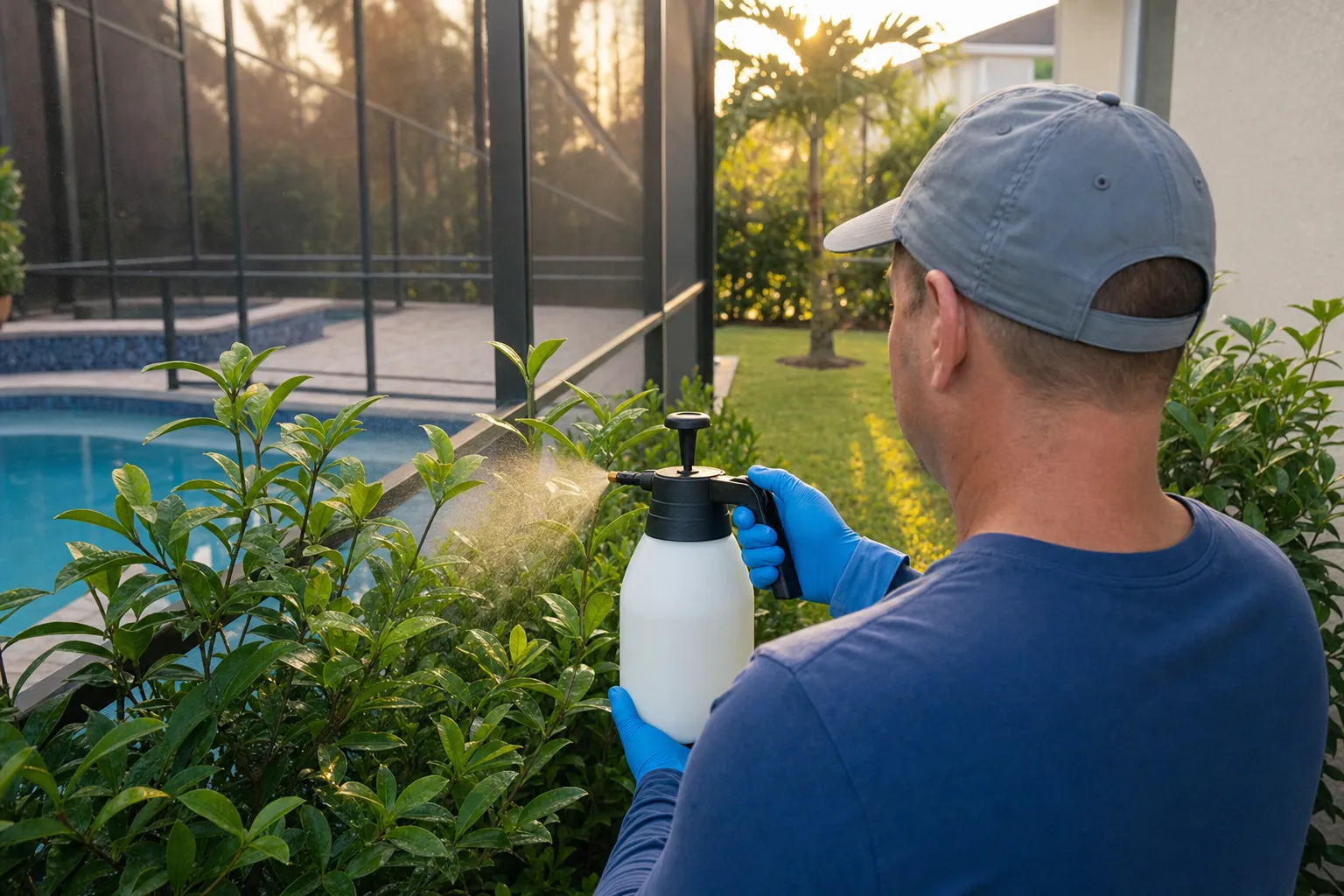
Do not scatter loose rodenticide or place traps where children or pets can reach them. The EPA’s current rodent-control guidance says poison bait should be used only in tamper-resistant bait stations and according to all label directions. Avoid broad pesticide spraying for a mouse problem; it does not remove rodents or close their entry points.

When to call a professional
Call a pest-control professional when you cannot identify the rodent, activity continues after trapping, signs appear in several rooms, contamination is extensive, or rodents have entered an inaccessible space or an HVAC system. Those conditions make it harder to locate every entry point and clean the affected area safely.
The Waves Pest Control approach
Our approach starts with identification and an inspection of the structure. We look for activity and potential entry points, use interior trapping where appropriate, recommend rodent-resistant exclusion materials, and follow up to check for new signs and confirm repairs are holding. Exterior rodenticide, when included in a plan, belongs in tamper-resistant stations and is applied according to the product label. Exclusion greatly reduces access, but no responsible company can promise that a building will remain permanently rodent-proof.
You can review more signs in the pest library, see what a pest inspection covers, or request a rodent control quote when you are ready for help.