That hedge of ixora pressed against the stucco looks tidy from the street. To an ant colony or a roof rat, it is a ramp. Shrubs and branches that touch your walls or roof give pests a way across, a place to hide right at the slab line and a damp spot against the wall. This guide covers which pests take advantage, how far back your plants should sit, a walk-around check you can do yourself and when to bring someone in. For the full list of what a visit covers, start with our pest control services page.
Want a number before you start trimming? Get a pest control estimate online.
Why shrubs touching the house invite pests
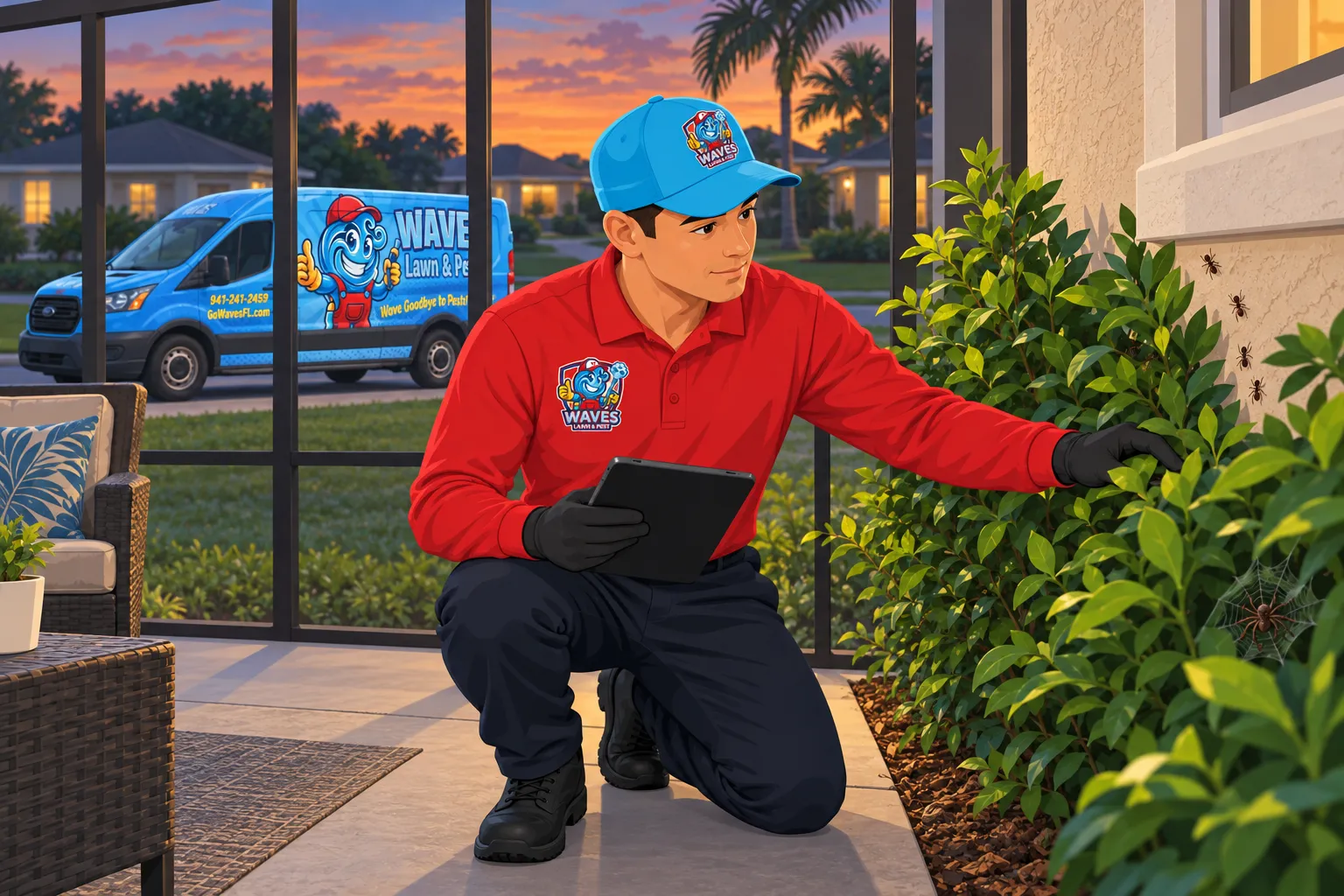
Plants against the wall connect the yard to the house and hide what is happening at the foundation. UF/IFAS Extension in Leon County puts it plainly in its 2026 article Termite Prevention Tips: keep landscape plants at least two feet off the structure so you can monitor for termites. The article adds that the gap also keeps other pests from hiding in the plants or using them as a bridge into the house.
Moisture is the other half of the problem. The same article tells homeowners to make sure water runs away from the home, including the AC drain and gutter downspouts, and that sprinklers are not aimed at the house. Shrubs crowded against the wall make that hard to see. In Southwest Florida, between summer afternoon storms and sprinklers the rest of the year, foundation beds get plenty of water, so it pays to know where that water goes.
Which pests use the shrub line
Different pests use the same shrubs in different ways. These are the ones to keep in mind:
- Ants. UF/IFAS Gardening Solutions notes in its integrated pest management guide that ants feed on honeydew and often protect the insects that produce it. Aphids are one of those insects, and the Gardening Solutions page on aphids, mites and thrips says black sooty mold growing on their honeydew is a tell-tale sign. An ant trail feeding on a shrub that touches the wall is one short step from the house.
- Outdoor cockroaches. In Southwest Florida, “palmetto bug” usually means the American cockroach or the smokybrown cockroach. The smokybrown lives outdoors in mulch, woodpiles, soffits and tree holes and wanders indoors at night. A thick bed of shrubs and mulch at the wall gives it cover right next to your doors.
- Roof rats. Roof rats travel tree canopy, fences and utility lines and come in through gaps at the roofline and soffits. UF/IFAS Extension in Sarasota County says in its 2026 article Wondering About Wildlife: What to Do About Rodents that because roof rats climb trees easily, you should make sure limbs are not overhanging the roof.
- Subterranean termites. The danger here is what you cannot see. Mud tubes on the foundation or slab are a sign of eastern subterranean termites, and a shrub pressed against the wall hides that stretch of slab. Mulch or soil banked against the stucco above the slab line, wood touching soil and chronic moisture from a leaking AC condensate line or irrigation at the foundation are all conditions that invite subterranean termites.
Not sure what you are looking at? Compare photos in the Waves pest library to identify it.
How far should shrubs be from the house?
At least two feet. That is the distance the UF/IFAS Extension article from Leon County gives for landscape plants around the home. Measure from the wall to the outer edge of the plant, not to the trunk, because the branches are what touch.
The same article adds rules for what sits between the plants and the wall:
- Keep mulch at least one foot off the foundation, with only a shallow layer, less than two inches, near the foundation.
- Leave an inspection space between the mulch and any wood, such as siding.
- Keep wood from touching the ground.
- Keep compost piles, rain barrels and anything else that keeps the soil wet at least two feet from the structure.
Plant for the size the shrub will reach, not the size it is in the nursery pot. A hedge planted a foot off the wall keeps growing toward it.
A walk-around check you can do yourself
Walk the outside of the house once and look at every bed that meets the wall. Here is what to check:
- The gap. Can you see daylight between the shrub and the wall all the way down to the ground? If not, that stretch is a bridge.
- The roofline. Look for limbs, palm fronds or vines touching or hanging over the roof and eaves.
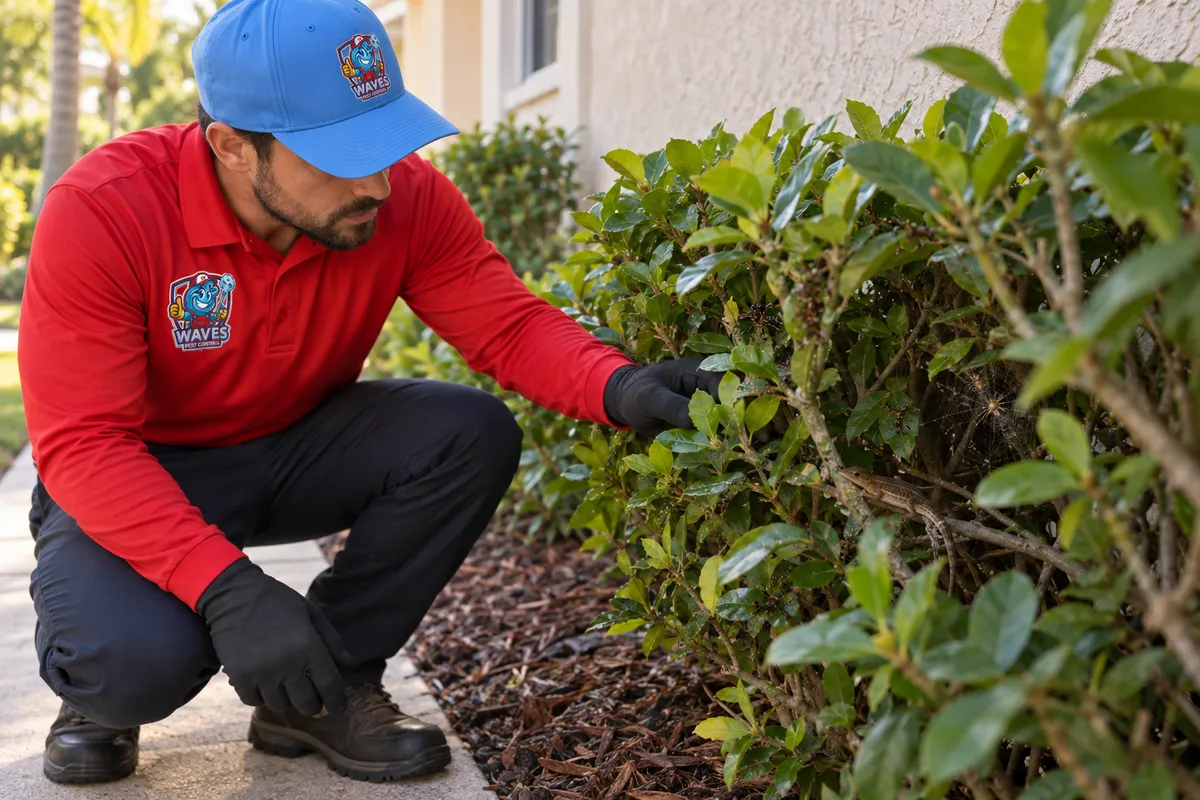
- The slab line. Push the mulch back with a gloved hand and look at the foundation behind each shrub. Look for mud tubes and for mulch or soil piled up against the stucco.
- The water. Run each sprinkler zone and watch where it lands. Check that the AC condensate line and downspouts drain away from the house.
- The leaves. Flip a few leaves on shrubs near the wall. Black sooty mold or a busy ant trail on the stems points to honeydew-producing insects.
- The debris. UF/IFAS Extension in Charlotte County, in Managing Cockroaches Without Pesticides, says to remove dead palm branches and all palm debris.
Pro tip: Take photos of the slab line behind every shrub before you trim. Those spots are hard to see once the plants grow back, and the photos give whoever inspects the house a starting point.
What not to do
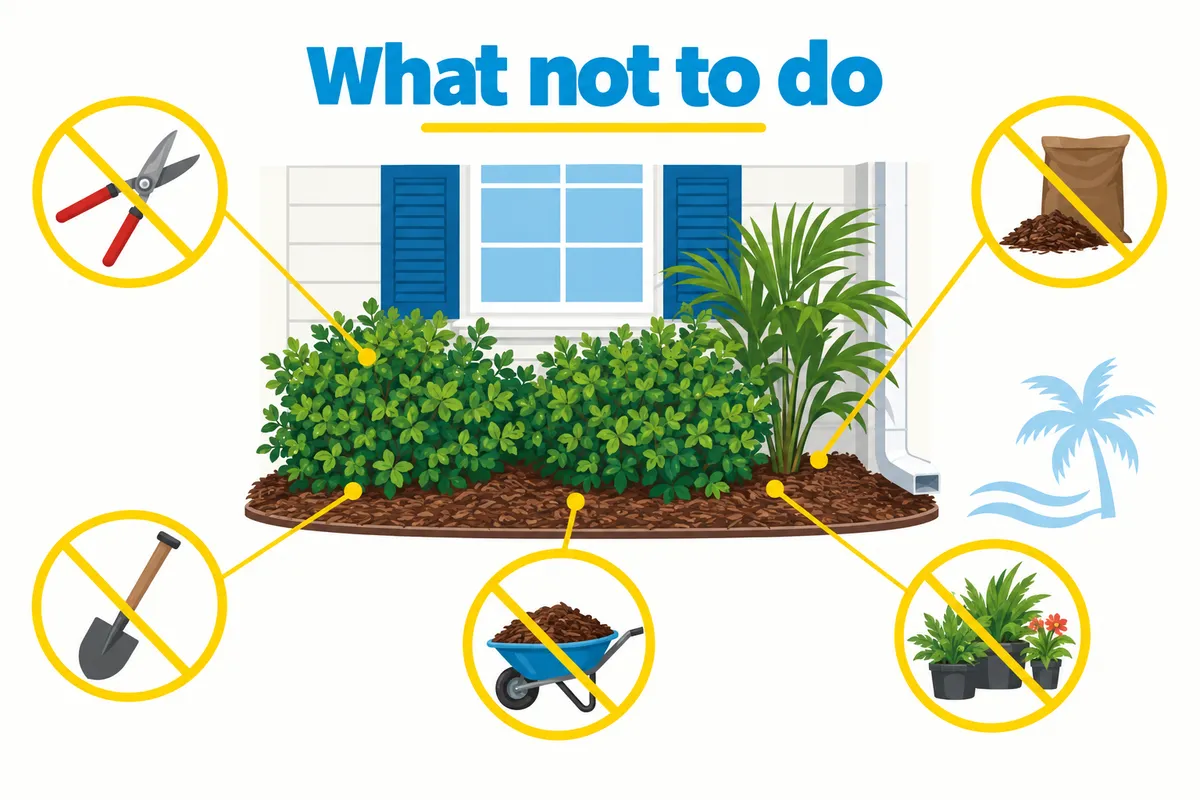
- Do not scalp the hedge to get it off the wall. UF/IFAS Gardening Solutions, in its guide to pruning shrubs, says cutting an overgrown shrub down to a few inches above the soil is a fairly aggressive practice that won’t work with all shrubs, especially certain evergreens. Its gentler option is to remove one-third of the plant each year for three years. Prune selectively, and replace a shrub that cannot survive being cut back two feet.
- Do not pile fresh mulch against the foundation. It hides the slab line and holds moisture against the wall.
- Do not aim sprinklers at the house. Adjust or swap heads that hit the wall.
- Avoid treating the shrubs as the whole problem. The Charlotte County article also recommends caulking cracks and gaps to help keep roaches from coming indoors, and it notes that some adult cockroaches need only one sixteenth of an inch to fit through. Trimming the shrubs does nothing for a gap like that.
If that is you, book a termite inspection before you touch the beds.
How Waves Pest Control handles the shrub line
Our approach starts outside. On an initial visit, a Waves Pest Control technician walks the property, identifies active pressure, inspects the soffits, eaves and slab line, clears webs from entry points and treats the full exterior perimeter. Interior spot treatment goes only where there is active pressure, and rodent stations get placed if the inspection calls for them. On termite inspections, mulch or soil banked against the stucco, wood-to-soil contact and moisture at the foundation are flagged as conditions to correct.
Recurring visits stay exterior-focused: the perimeter, de-webbing and station checks, with interior work on request or when there is active pressure. If you want that on a schedule, WaveGuard memberships include unlimited callbacks between scheduled visits at no extra charge. If covered pests come back between visits, Waves comes back free.
Seeing ants on the shrubs or roaches at the back door? Start with pest control in Sarasota or pest control in Bradenton, or get a pest control estimate for your home.
Frequently Asked Questions
How far away from a house should shrubs be?
UF/IFAS Extension in Leon County recommends keeping landscape plants at least two feet off the structure, and keeping mulch at least one foot off the foundation. Measure to the outer edge of the branches.
Do any bushes repel insects?
The UF/IFAS guidance cited here is about distance, pruning and moisture, and it names no shrub that keeps pests off a house. Focus on where you plant.
Should I tear out shrubs that touch the house?
Not always. Trim selectively to open a two-foot gap, and replace only the plants that cannot take that much pruning without being weakened.