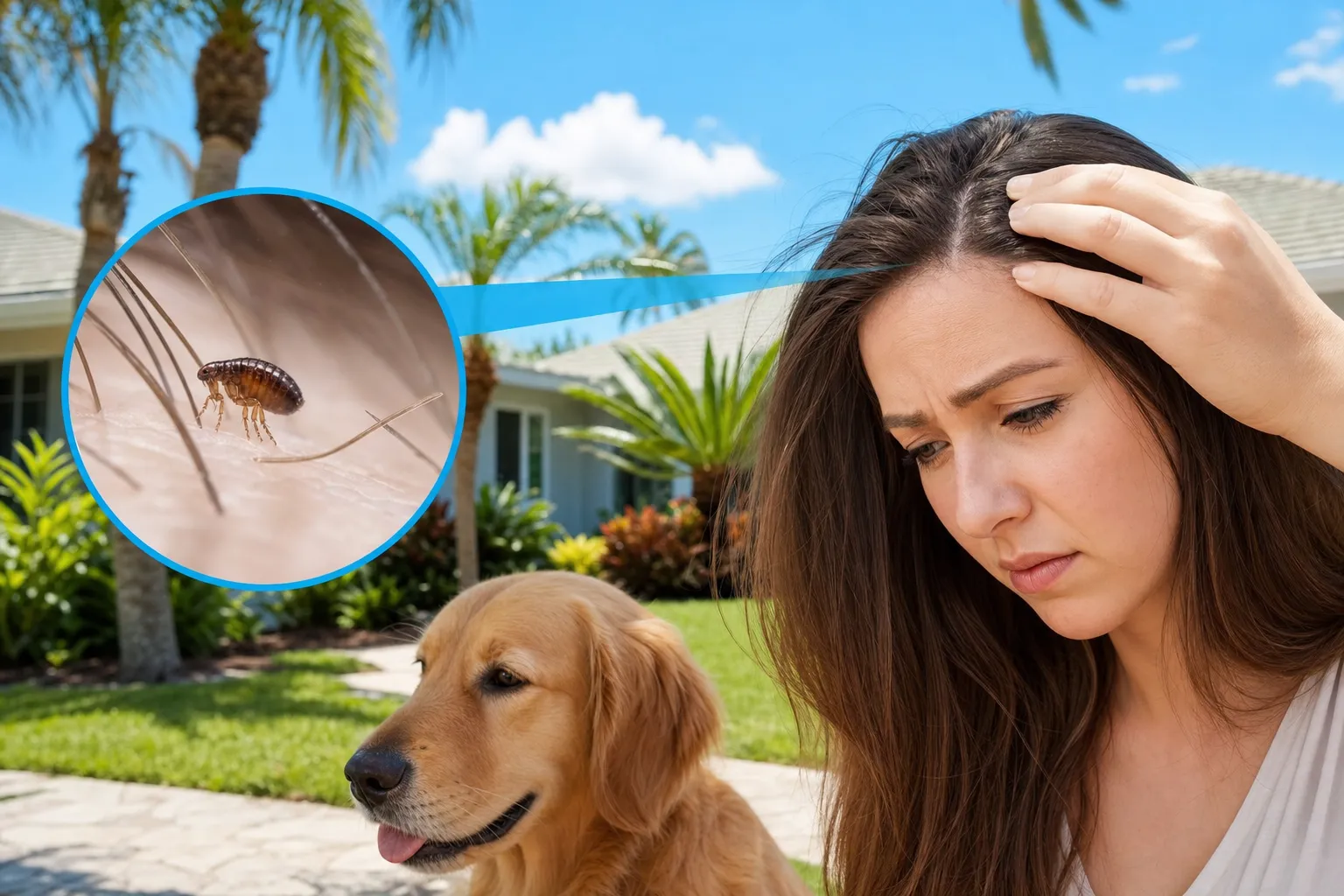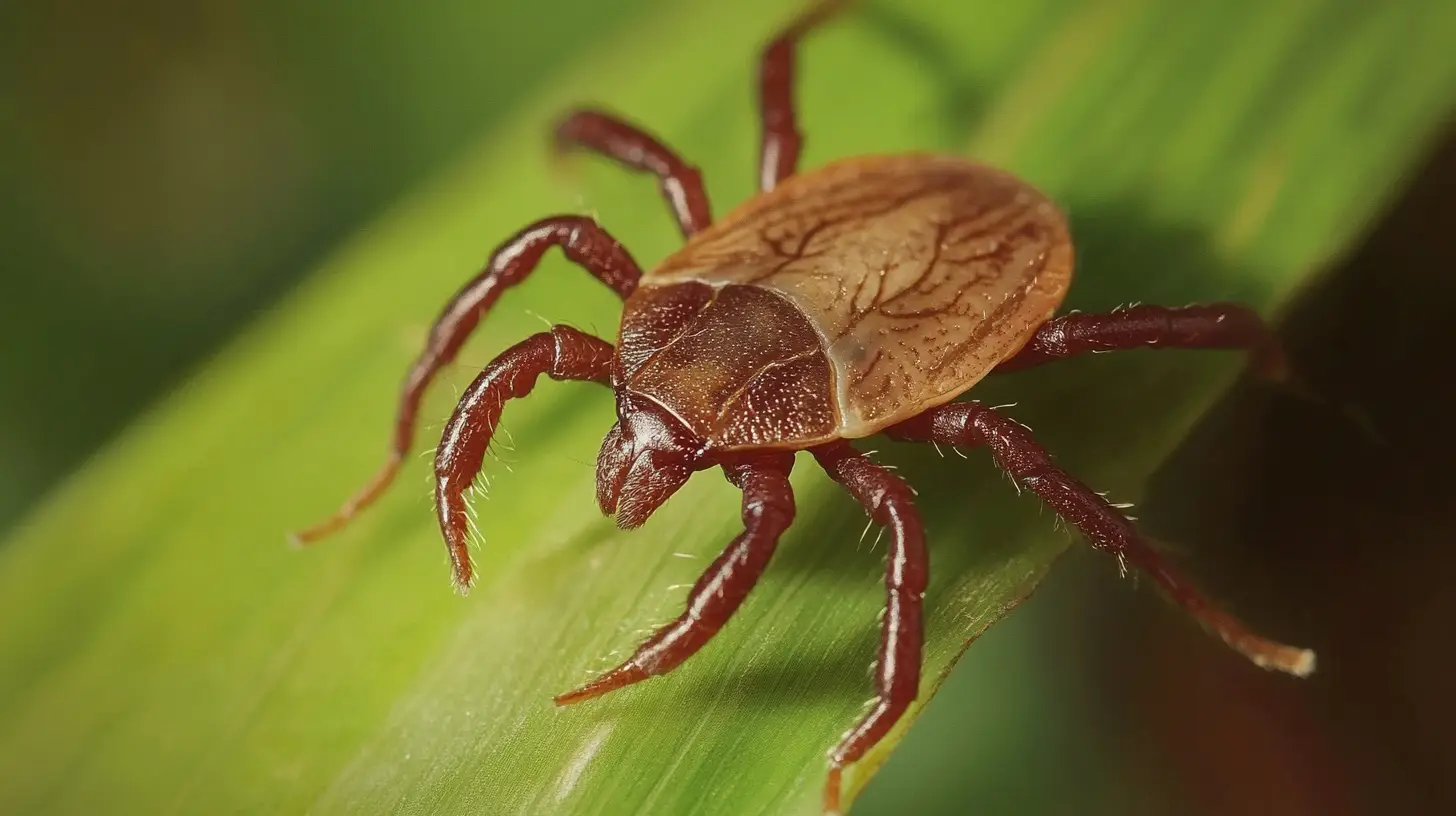
If you just found a tick on your skin, stay calm and take it off the right way. Grab it with clean, fine-tipped tweezers as close to the skin as you can and pull straight out with steady pressure. Then clean the bite and your hands and keep an eye on how you feel over the next few weeks.
Here is what the CDC and the University of Florida say to do, which ticks live in Florida, which symptoms mean a call to your doctor, and what cuts down ticks around a Southwest Florida yard.
What to do right after a tick bite
The CDC’s steps are short (CDC):
- Use clean, fine-tipped tweezers. Grasp the tick as close to the skin’s surface as possible.
- Pull straight away from the skin with steady, even pressure. Don’t twist or jerk it.
- Clean the bite area and your hands with soap and water, rubbing alcohol, or hand sanitizer.
- Get rid of the tick. Put it in a sealed container, wrap it tightly in tape, drop it in alcohol, or flush it down the toilet.
The CDC also says not to use petroleum jelly, heat, nail polish, or other substances to make the tick let go. Those are the folk remedies people reach for first, and they are not the recommended method.
You don’t need to send the tick off for testing. The CDC says tick test results shouldn’t be used to make treatment decisions. If you do see a doctor, tell them about the bite, when it happened, and where you likely picked up the tick.
Which ticks bite in Southwest Florida
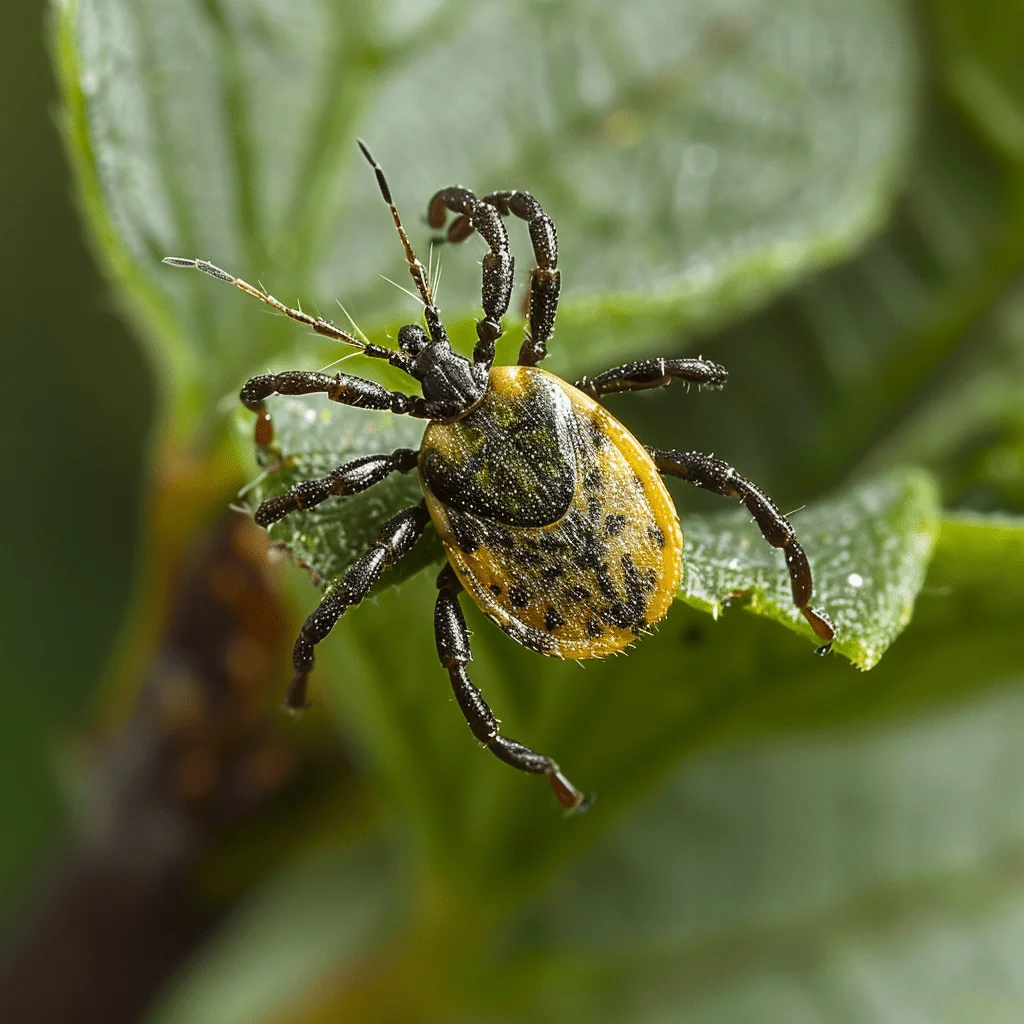
UF/IFAS lists five hard ticks in Florida (UF/IFAS):
- Lone star tick. UF/IFAS calls it the most common human-biting tick in the state. Nymphs are active from about February to October and adults from April to August, according to UF/IFAS (UF/IFAS).
- American dog tick. Typically found outdoors rather than in the house. UF/IFAS puts adult activity at March through September.
- Blacklegged (deer) tick. UF/IFAS says adults are common through the winter and nymphs show up from April to August.
- Gulf Coast tick. Nymphs appear in early spring and adults from March through September.
- Brown dog tick. Mainly a dog tick. UF/IFAS says it will bite people if dogs aren’t available, and it can complete its whole life cycle indoors (UF/IFAS).
One thing worth knowing: University of Florida researchers mapping three medically important ticks (lone star, deer, and American dog) found that “south and east of Tampa, their presence declines dramatically” (UF). That doesn’t mean zero ticks in Manatee, Sarasota, or Charlotte County. UF/IFAS says the brown dog tick is present throughout Florida, and UF researchers note that ticks stay active year-round in the state (UF). The study covered three species, so it says less about the brown dog tick.
Symptoms that mean call your doctor
The CDC’s guidance is simple: if you develop a rash or fever within several weeks of removing a tick, see your doctor. Tell them about the tick bite. Also watch the bite itself: the Gulf Coast tick can carry Rickettsia parkeri, and the CDC says that infection often starts with a dark scab or sore at the bite site, called an eschar, before fever or a rash appears (CDC). A dark scab or sore where a tick was attached is also a reason to see your doctor. More broadly, the CDC says to see a healthcare provider if you become ill after a tick bite, and not to wait it out: Rocky Mountain spotted fever can be deadly if it isn’t treated early (CDC).
UF/IFAS lists the diseases tied to Florida’s ticks (UF/IFAS). The lone star tick is linked to ehrlichiosis and southern tick-associated rash illness, the American dog tick to Rocky Mountain spotted fever, and the blacklegged tick to Lyme disease, babesiosis, and anaplasmosis. A tick-borne illness needs a doctor to sort out. Don’t try to work out which one it is yourself.
In the US, the lone star tick is the one most often associated with alpha-gal syndrome, a red-meat allergy. The CDC calls it a serious, potentially life-threatening allergy and says it should be managed by an allergist or other healthcare provider (CDC). If you react after eating red meat and you’ve had a tick bite, tell a doctor. If a reaction is severe, such as trouble breathing, throat swelling, or dizziness or fainting, the CDC says to seek immediate emergency care (CDC).
How long a tick has to stay attached before it can pass on an infection depends on the disease. Some take a day or more, but others, including Rocky Mountain spotted fever, can be passed in as little as 2 to 20 hours, according to the CDC (CDC). Removing a tick soon after you find it lowers the risk but does not rule infection out, which is why the CDC says to watch for a rash or fever in the weeks afterward (CDC).
Cutting down on tick bites
- Check yourself, your kids, and your pets after being outdoors, “including in your own backyard,” according to the CDC. Look under the arms, in and around the ears, in the belly button, behind the knees, in the hair, between the legs, and around the waist (CDC).
- Shower soon. The CDC says showering within two hours of coming indoors has been shown to reduce the risk of Lyme disease.
- Use an EPA-registered repellent with DEET, picaridin, IR3535, oil of lemon eucalyptus, PMD, or 2-undecanone, and follow the label. The CDC says not to use products containing oil of lemon eucalyptus or PMD on children under 3. The CDC says permethrin can be used to treat boots, clothing, and gear.
- Dress for it in light-colored clothing with pants tucked in, as UF/IFAS suggests, when you’re walking through brush.
- Don’t forget the dog. The CDC says to check pets daily and to ask your vet about the best tick preventive for a dog. It warns that cats are very sensitive to many chemicals, so don’t put any tick product on a cat without asking your vet first (CDC).
Reducing ticks around a Southwest Florida yard
For yard work, start with the CDC’s landscaping tips (CDC, CDC Lyme prevention). The CDC wrote them with blacklegged ticks in mind, so treat them as habitat steps that help, not a guarantee against every species:
- Keep the grass mowed, remove leaf litter, and clear tall grass and brush.
- Put a 3-foot-wide barrier of wood chips or gravel between lawn and wooded areas.
- Trim tree branches and shrubs to let in more sunlight. Ticks are less likely to be found in bright, sunny areas.
- Stack wood neatly in a dry spot, and use fencing to keep wildlife out where you can.
If you have a dog, UF/IFAS says the best way to prevent brown dog tick trouble in a home is to inspect dogs when they come in, check them regularly, seal cracks, and ask a veterinarian about treatment. Dogs are needed for a large brown dog tick population to build up indoors.
Our guide to getting rid of ticks covers yard steps in more detail, and how long a tick can live without a host covers how long ticks survive between hosts. For a Sarasota-focused look at pets, see fleas and ticks in Sarasota. For general home pest service, see pest control in Lakewood Ranch.
Frequently Asked Questions
What should I do right after a tick bite?
Grasp the tick with clean, fine-tipped tweezers as close to the skin as you can and pull straight out with steady pressure. Clean the bite and your hands with soap and water, rubbing alcohol, or hand sanitizer, then dispose of the tick in a sealed container, tape, alcohol, or the toilet.
Should I use petroleum jelly, a hot match, or nail polish to make a tick let go?
No. The CDC says not to use petroleum jelly, heat, nail polish, or other substances to try to make the tick detach.
When should I see a doctor after a tick bite?
The CDC says to see your doctor if you develop a rash or fever within several weeks of removing a tick, and a dark scab or sore at the bite site is another reason to go. Don’t wait if you feel sick after a bite, because some tick-borne illnesses, including Rocky Mountain spotted fever, can be deadly without early treatment. Mention the bite, when it happened, and where you think you got it.
What kind of tick is most likely to bite me in Florida?
The lone star tick, according to UF/IFAS, which calls it the most common human-biting tick in Florida. The American dog tick and the blacklegged tick also bite people, and the brown dog tick will if dogs aren’t available.
Are ticks common in Southwest Florida?
Some species are less common here. UF researchers mapping three of them, the lone star, deer, and American dog ticks, found their presence declines dramatically south and east of Tampa. That study didn’t cover the Gulf Coast or brown dog tick. UF researchers also note ticks stay active year-round in Florida, and UF/IFAS says the brown dog tick is present throughout the state.
Do I need to save the tick for testing?
No. The CDC says tick test results shouldn’t be used for treatment decisions. Tell your doctor about the bite instead.