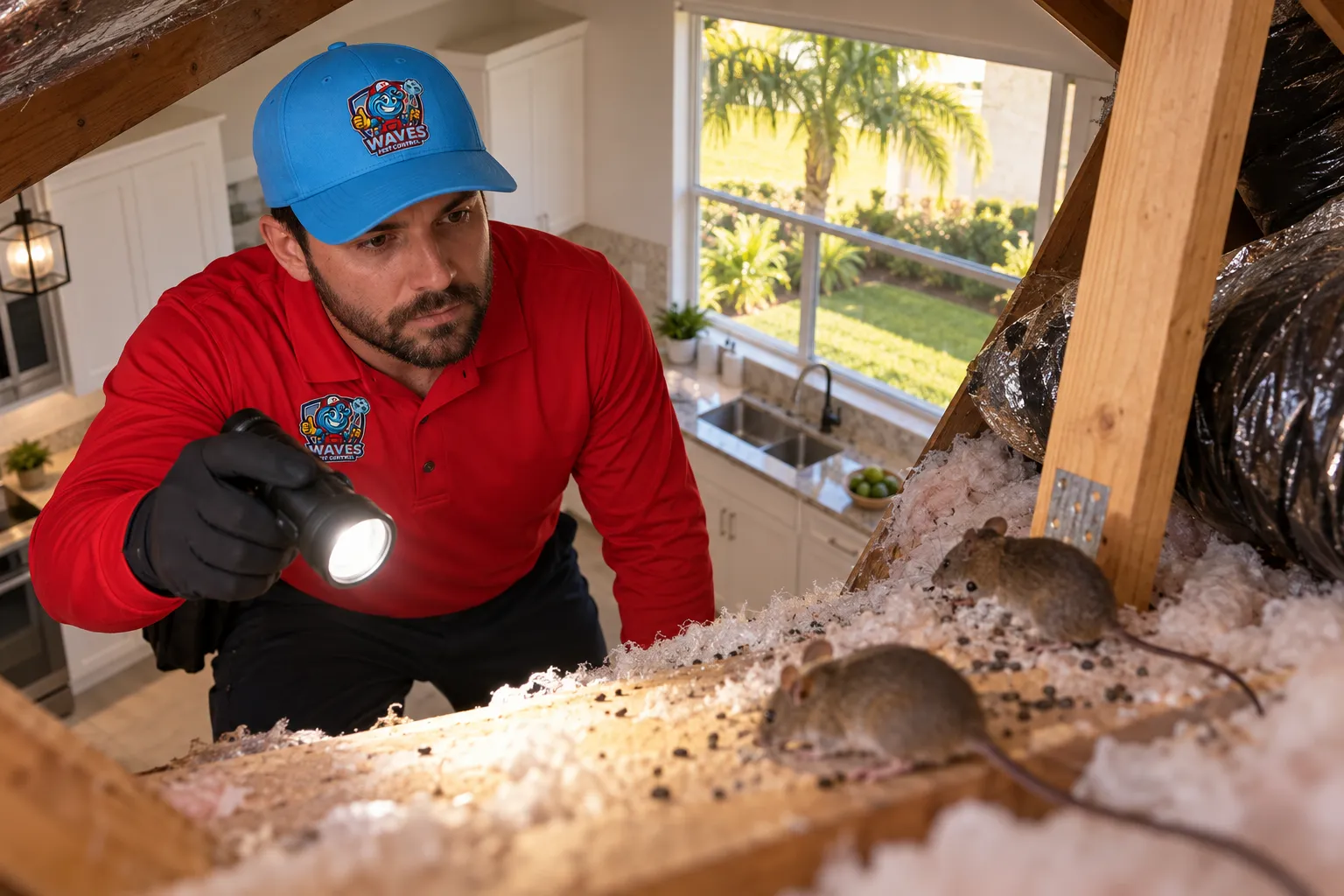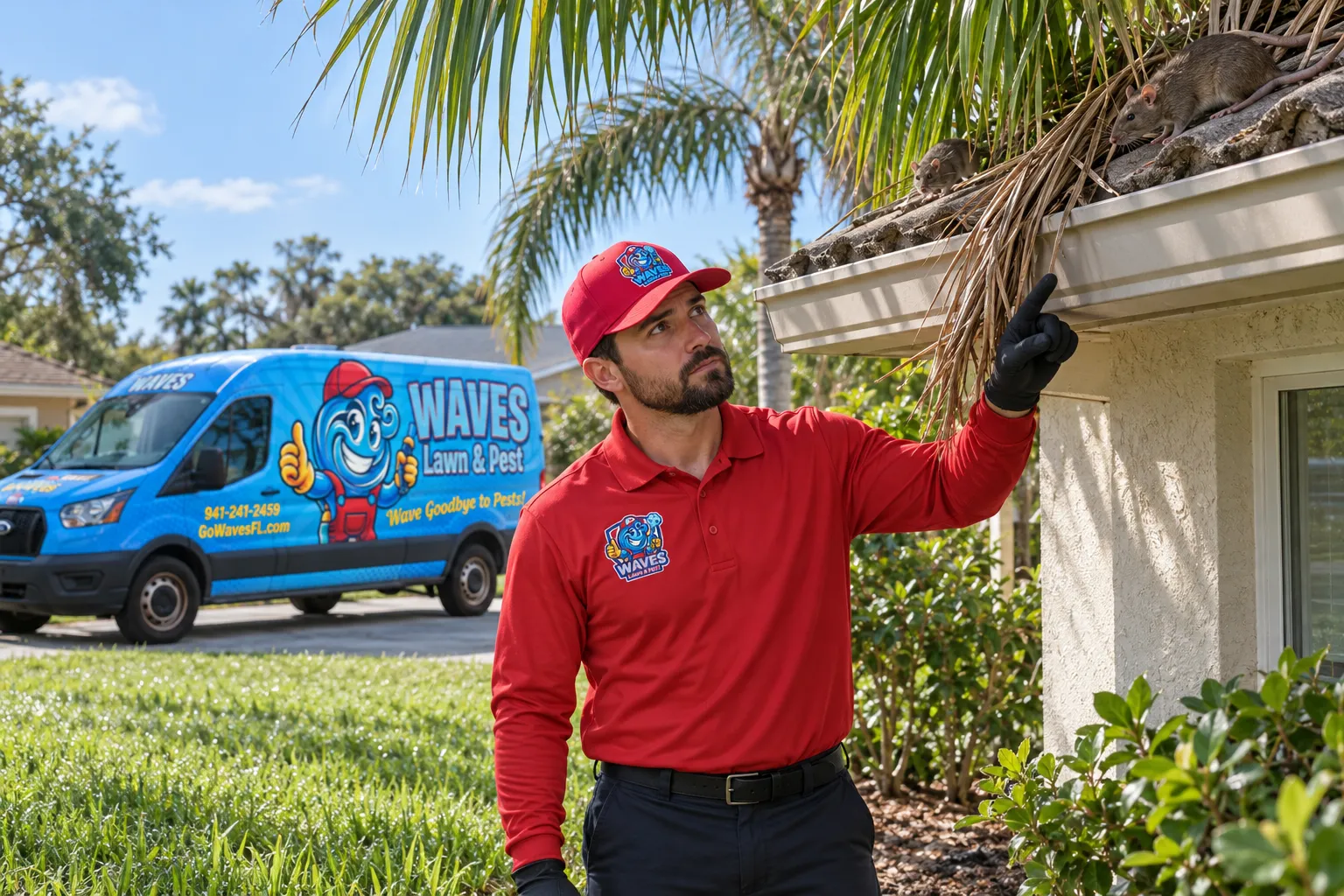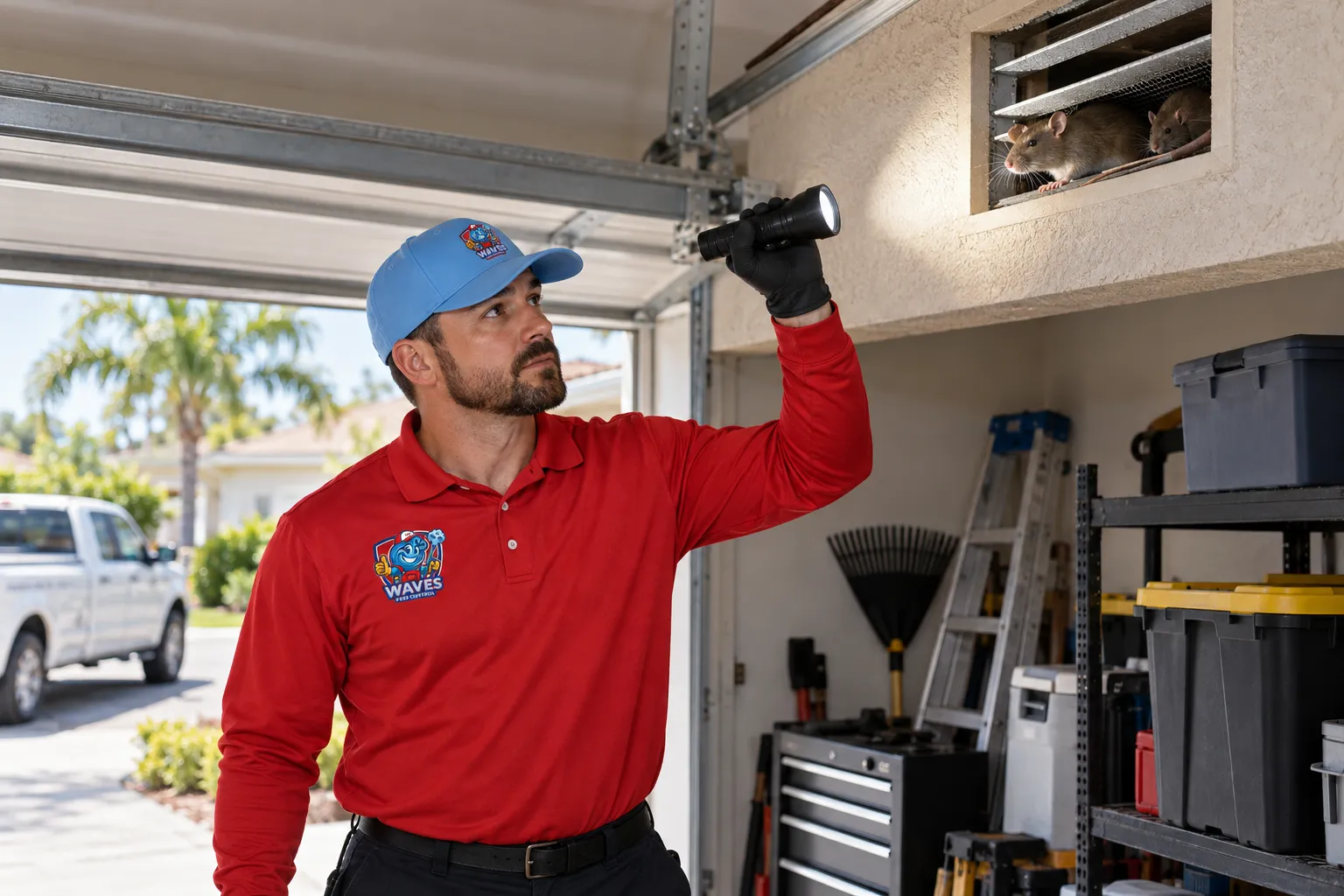
Search for smells mice hate and you tend to get the same short list: peppermint oil, mothballs, a cat in the house. Lab research does point to one odor mice avoid, and it comes from predators. The home remedies have little evidence behind them, and mothballs used against mice break the label law. Below is what the research and the regulators say, plus what lowers the odds of mice in a Southwest Florida home. For everything a visit can cover, see our pest control services page.
Already hearing scratching in the walls or finding droppings in the pantry? Get a rodent control estimate and have the entry points checked.
What odor do mice hate?
The best-documented answer is the smell of a predator. A 2011 study in PNAS, free to read on the NIH website, found that mice and rats avoid 2-phenylethylamine, a chemical the researchers first purified from bobcat urine. They measured it across 38 mammal species and found it enriched in many carnivores, with some putting out more than 3,000 times as much as the herbivores they tested.
In the lab, rats stayed away from corners that held lion or coyote urine, and from corners that held 2-phenylethylamine alone. Mice spent less time in a test chamber once the chemical was sprayed into it. Every one of those tests ran in a lab arena. The paper does not test the chemical as a repellent in a home.
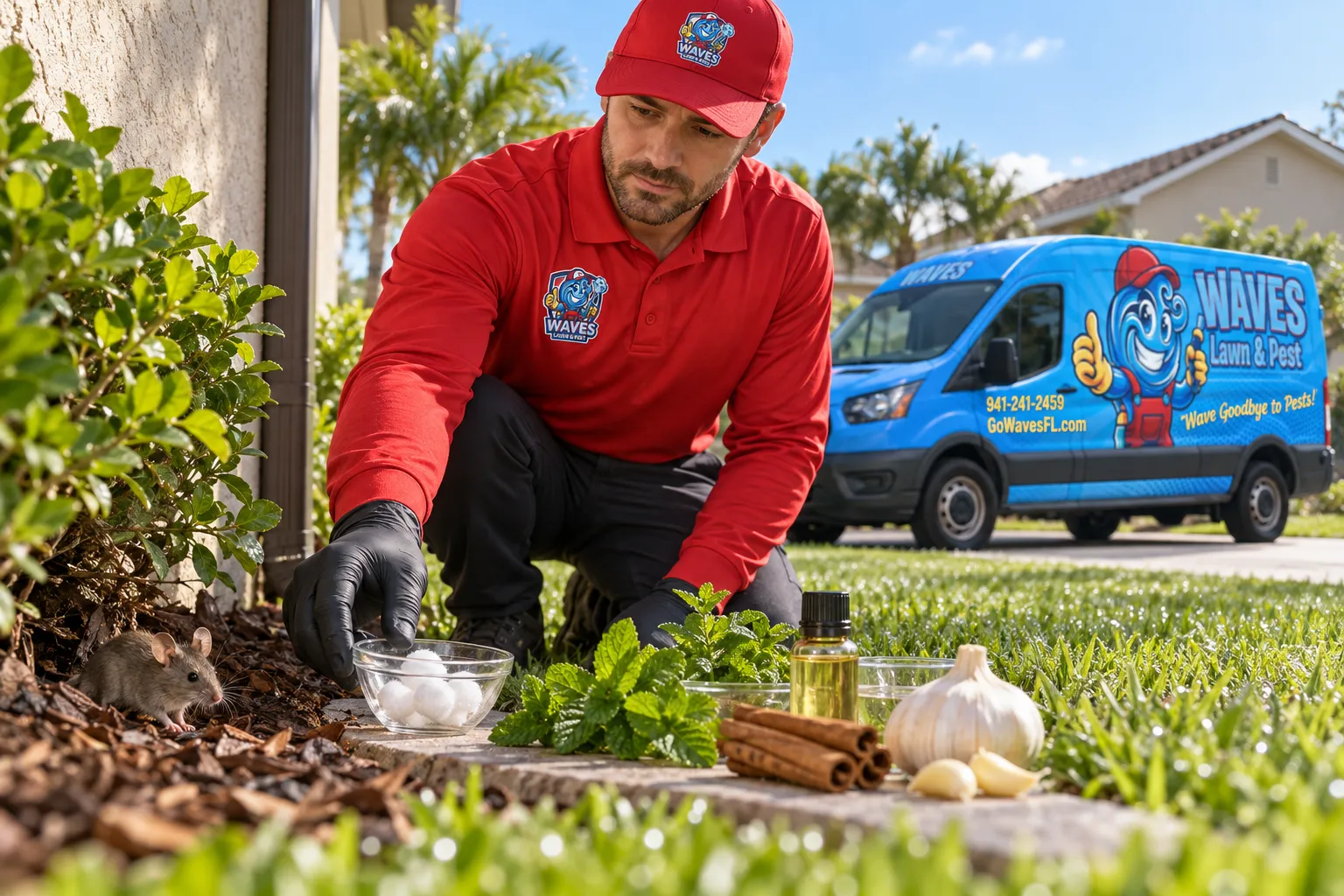
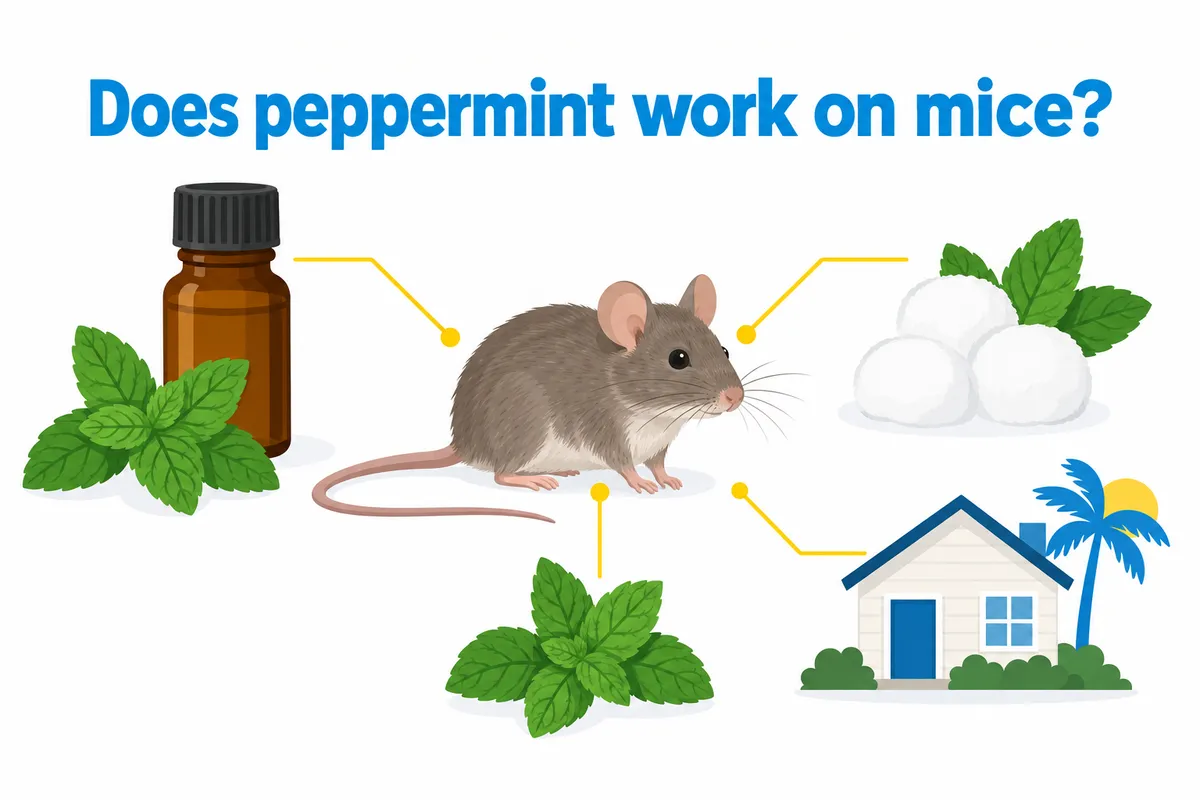
Does peppermint work on mice?
Peppermint is the most repeated answer online, and the evidence for it is thin. ICWDM, a research-based wildlife damage information site, says natural oils, including mint oil and balsam fir oil, are sold as repellents for mice, and that little information is available on how well these products work against mice. Its broader verdict on scent and taste products is blunt: rodents find some tastes and odors objectionable, but chemical repellents are seldom practical for resolving a mouse infestation.
The EPA label rules add one more caution. The agency names peppermint and peppermint oil among the ingredients used in unregistered minimum risk repellents, and its minimum risk rules page says the agency does not review exempted products. A peppermint mouse spray on the hardware store shelf has not had its claims checked by the EPA.
Pro tip: Hold a pencil up to every gap you find around the garage door, the A/C line and the pipes under the kitchen sink. The CDC says a mouse can fit through a hole that wide, about 1/4 inch, so any gap a pencil slides into needs sealing.
Why mothballs are a bad idea for mice
Mothballs are a pesticide made and labeled for clothes moths. A UF/IFAS publication on mothballs says many people wrongly think they repel all kinds of pests, rodents included. It also says the label is the law: using mothballs in a way the label does not specify is illegal and can harm people, pets or the environment, and FDACS investigates complaints of misuse.
The health risk is the bigger problem in a house with kids. UF/IFAS says mothballs can harm people, pets and wildlife that touch them or breathe the vapors. Small children and pets may eat them because they look like candy, and one mothball can cause serious harm if a child eats it.
What are mice afraid of?
The lab answer is predator odor. A pet cat is a weaker fix than people hope. A University of Nebraska extension guide on house mice says cats, dogs, owls and other predators may kill mice but rarely provide effective mouse control. It adds that house mice are secretive and often live where predators cannot get to them. The University of California’s pest management program adds that predators can make rodents more secretive, which gives the false impression that the population has dropped.
Noise works the same way. Both guides say mice are easily frightened by strange or unfamiliar noises and then quickly get used to sounds that repeat. They also say there is little evidence that sound, magnetic or vibrating devices, ultrasonic ones included, drive established mice out of buildings.
How to get mice out of the house
Remove what draws them in, trap the mice already inside, and seal the gaps they use. The CDC’s steps for trapping rodents and sealing up a home give the order:
- Take away food, water and shelter. The CDC says the best way to prevent an infestation is to remove food sources, water and items that give rodents shelter.
- Use snap traps. The CDC recommends traditional snap traps and says not to use glue traps or live traps, which can scare rodents into urinating and raise your chance of getting sick.
- Bait and place them where mice travel. Put a small amount of chunky peanut butter on the bait pan. Set the trap on the floor against the wall with the baited end toward the wall, in spots where you have seen droppings, nesting material or gnaw marks. Keep traps and bait out of reach of children and pets, and check the traps daily.
- Seal the gaps. The CDC says to fill small holes with steel wool and put caulk around it to hold it in place. For larger holes it lists lath screen or metal, cement, hardware cloth or metal sheeting. The University of California guide warns that plastic, rubber, vinyl, wood and other gnawable materials do not work for plugging mouse holes.
The CDC saves poison and bait stations for infestations that persist. If anyone in your house uses a bait product, read and follow the product label, keep it off food-preparation surfaces, and place it out of sight and reach of children and pets.
Signs of mice to check first
Before you buy anything, identify what you have. The usual signs of house mice are small rice-shaped droppings near food, gnawed food packaging and a musky odor in enclosed spaces. Larger droppings, scratching overhead at night or gnawed soffit vents point toward roof rats instead, and rats call for a different plan at the roofline.
When mice come inside in Florida
Indoor rodent pressure in Southwest Florida peaks in the cooler months, roughly October through February, as rats and mice move into attics and wall voids for warmth and shelter. Florida’s mild climate keeps them active the rest of the year too. House mice nest in kitchens, pantries, garages and wall voids, and the 1/4-inch gap they need to get in is easy to miss around a slab, a garage door seal or a pipe under the sink.
Check the garage first. Look for a worn door sweep, a gap at the weather seal and boxes stacked on the floor where a mouse could nest unseen. After an afternoon storm, walk the outside of the slab where the sandy soil and St. Augustine meet the foundation, and look for gaps where pipes and lines go through the wall.
When to call a professional, and how Waves Pest Control approaches it
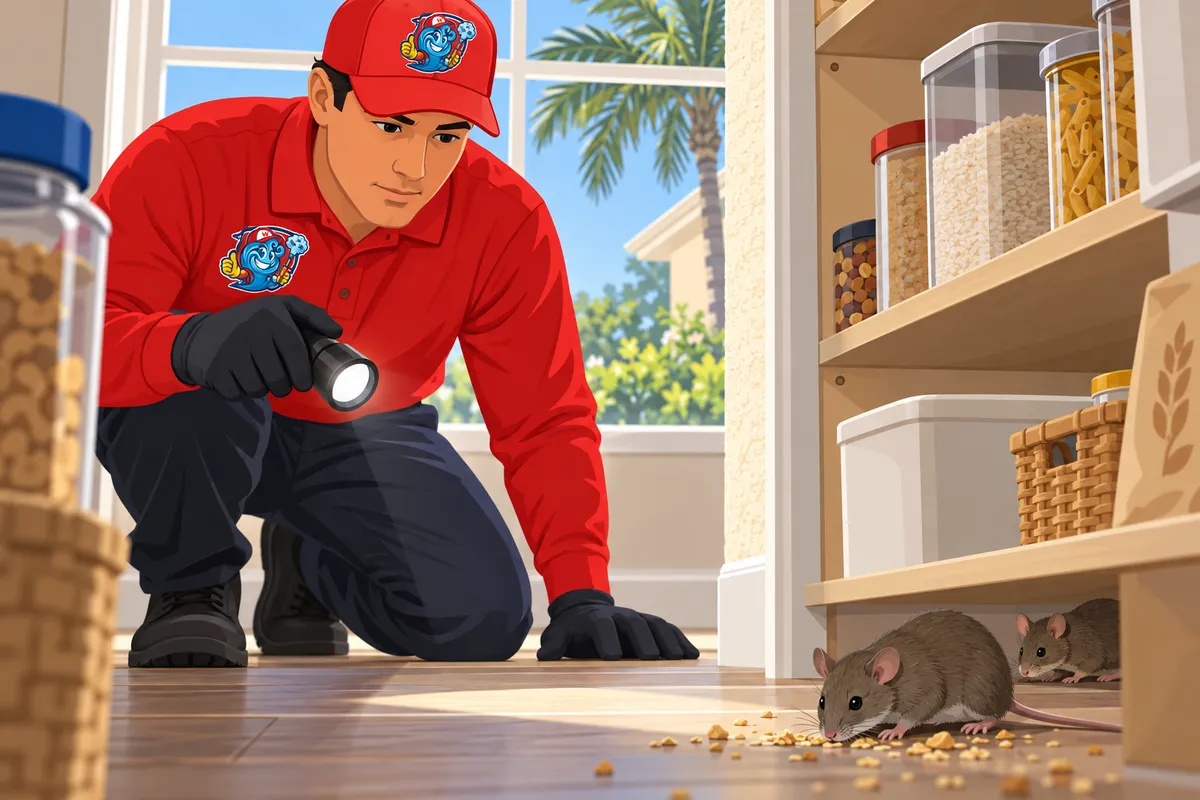
Call a professional when traps keep catching mice, droppings come back after a cleanup, or you hear activity in the walls or attic and cannot find the way in. Those signs point to an entry point that is still open.
Here is our approach. Waves Pest Control starts a rodent job with an inspection: a full walk of the roofline, soffits, gable, dryer and plumbing vents, A/C line penetrations, the garage and the door sweeps, plus the attic for runways, droppings and nesting. We photograph what we find, and that drives the plan. Exclusion is the core of the work. We seal entry points with rodent-proof materials like hardware cloth, sealant, vent covers and door sweeps, because mice need only about 1/4 inch to get in. Mice already inside are removed with interior traps, not loose bait near your living space, and the outside of the house gets tamper-resistant bait stations to monitor pressure. Sealing the gaps lowers the odds of the next mouse following the last one in, though no one can promise it never happens again.
If mice are getting into your Sarasota home, see our rodent control in Sarasota page. In Manatee County, start with rodent control in Bradenton. Want a number before anyone visits? Get a rodent control estimate online, or browse the pest library to compare house mice and rats.