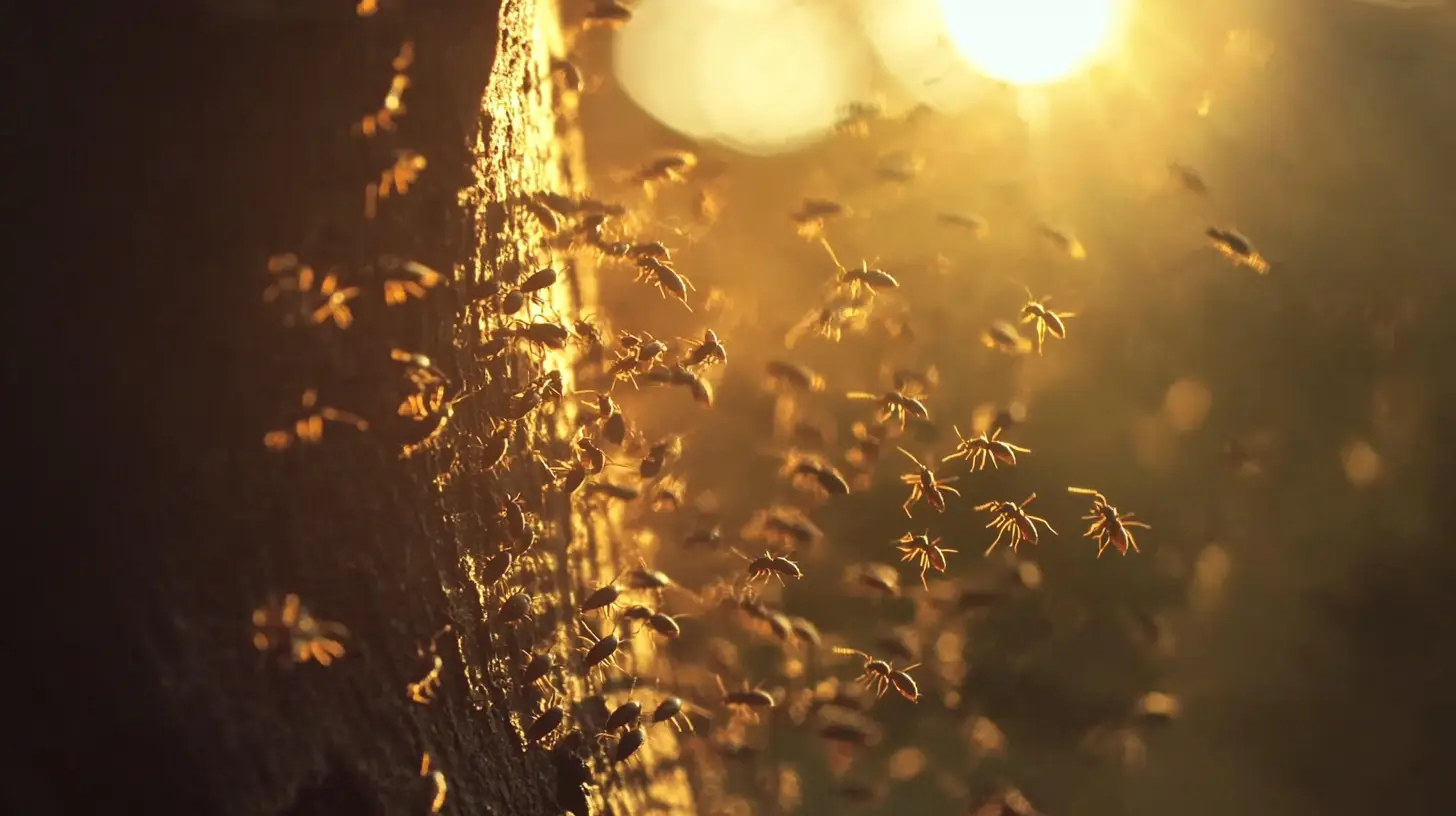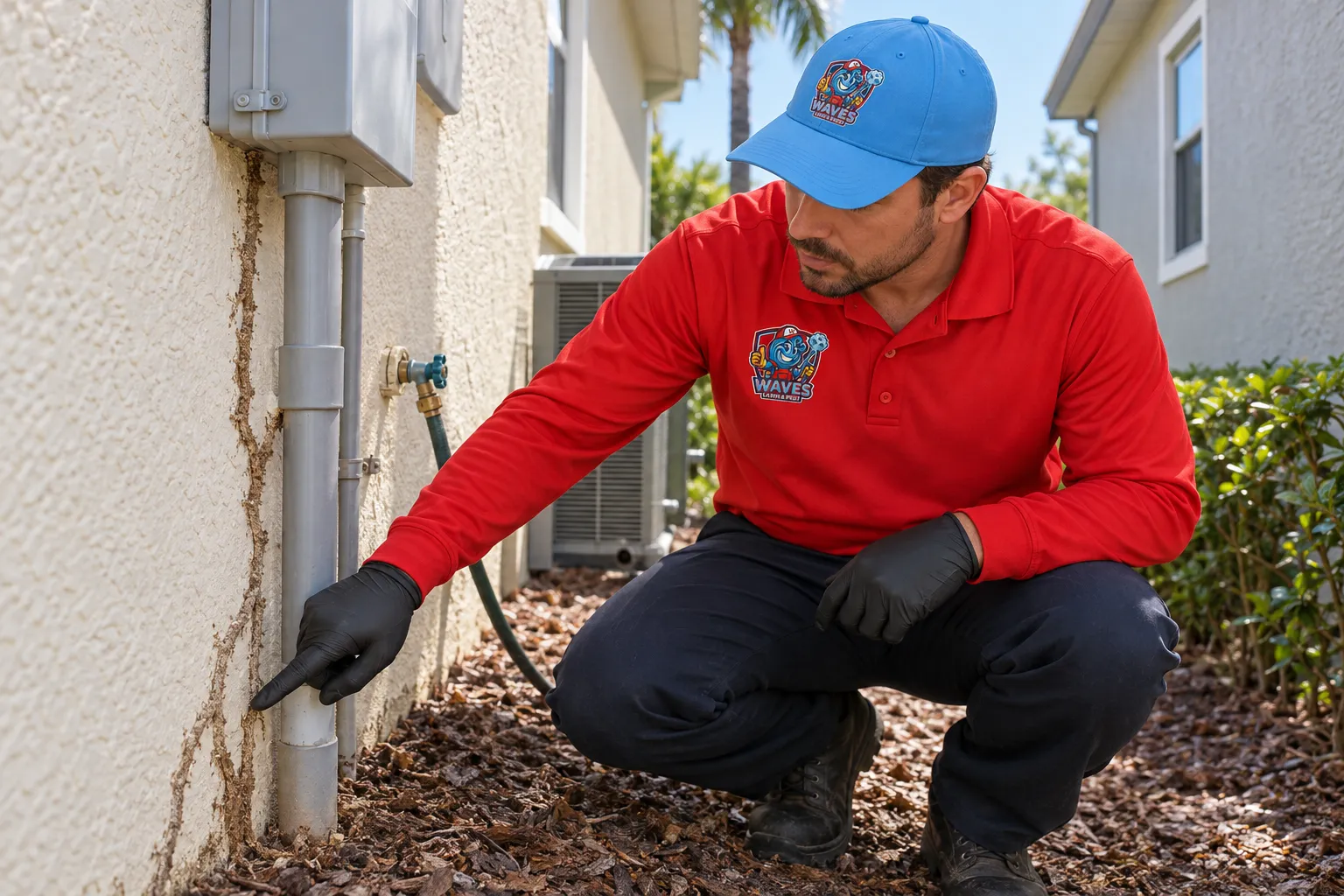
You found a winged insect on the windowsill or a little pile of dust under a door frame, and the first word that comes to mind is termites. Several other insects in a Southwest Florida house fit that first impression. This guide covers four common look-alikes, the clue that separates each one from a termite, and how to get a sample confirmed. For the wider list of household pests we handle, start with our pest control services page.
Already looking at damaged wood? Get a termite estimate online, and keep your sample for the visit.
What termites look like, for comparison
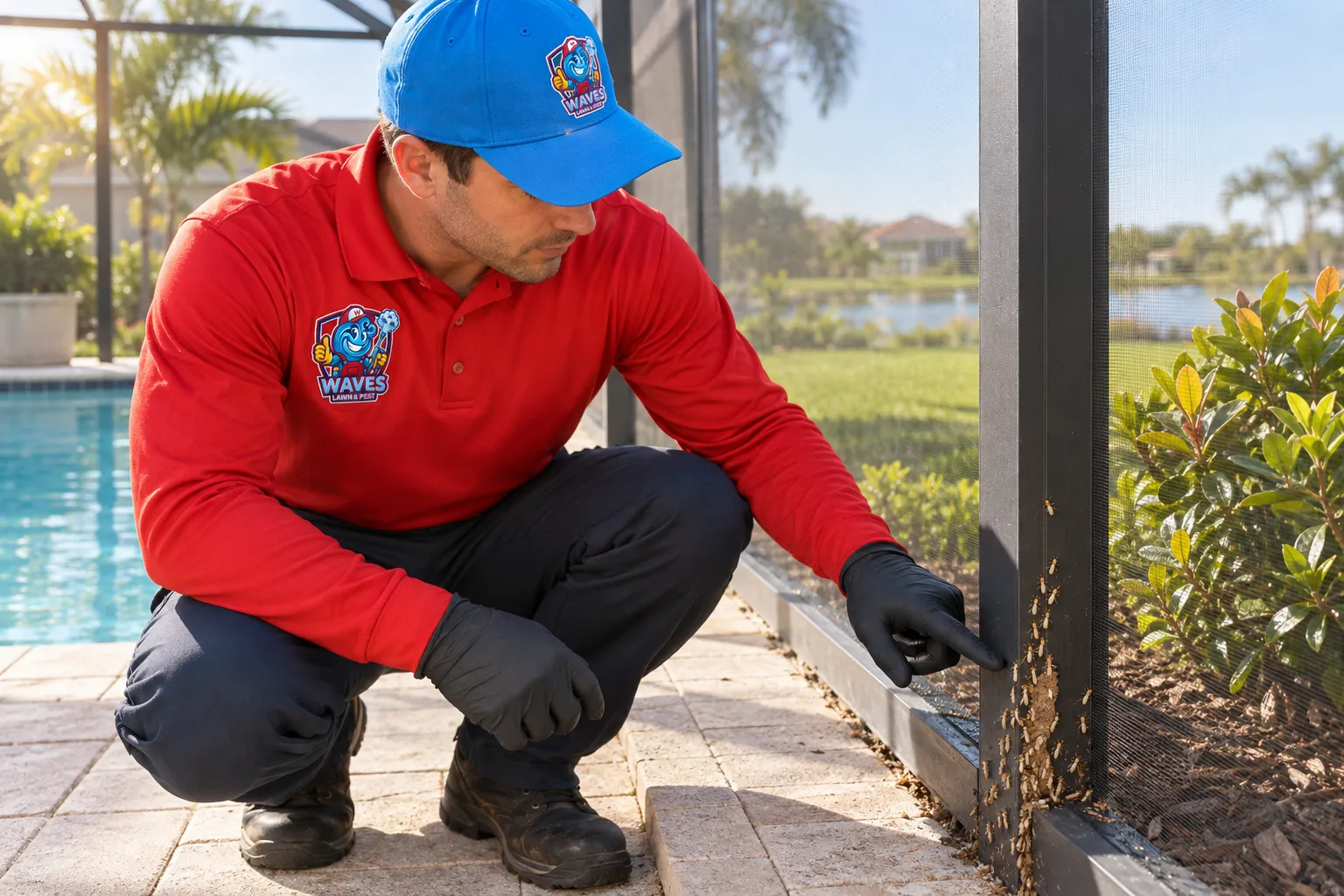
Start with the termite itself so you have something to measure against. The UF/IFAS fact sheet on termite prevention and control (ENY-2044, revised December 2023) says workers are cream colored and about 1/8 inch long, and have been called “white ants” because of that color. Soldiers are about the same size with darkened heads. Swarmers, the winged reproductives, run about 1/4 to 3/8 inch long with their wings.
A termite swarmer has a broad waist, beaded antennae and front and hind wings of equal size, per UF/IFAS. Our guide to what termites look like goes through each Florida species, so this post sticks to the insects that get mistaken for them.
Winged ants at the window
Winged ants are the first look-alike to rule out. UF/IFAS says in its profile of the Florida carpenter ant (EENY-272, revised October 2024) that it is common to mistake winged ants for winged termites. Complaints about this ant pile up during its spring swarm season, usually between April and June, when the winged reproductives turn up along window ledges and near sliding glass doors.
Use the same three body checks from the termite section. The ant has elbowed antennae, a pinched waist, and front wings larger than its hind wings. Size helps too. The profile puts winged Florida carpenter ant females at up to 20 mm (3/4 inch), while UF/IFAS gives the eastern subterranean termite swarmer as approximately 0.4 inch long including the wings in its profile of native subterranean termites.
Carpenter ants inside walls and frames
Carpenter ant workers have no wings, but they nest in wood, so it helps to know what they can and cannot chew. UF/IFAS says Florida carpenter ants nest in existing voids or excavate only soft materials such as rotten or pithy wood and Styrofoam, and that they will not excavate nesting galleries in sound wood. That sets them apart from the wood-damaging black carpenter ant found in the Florida Panhandle.
How to tell a worker from a termite worker, per EENY-272:
- Size and color. Workers range from 5.5 to 11 mm (0.2 to 0.4 inch). The head and thorax are ash brown to rusty orange and the abdomen is black. A termite worker is cream all over.
- Night traffic. Florida carpenter ants tend to forage at night, with peak hours from just before sunset until two hours after.
- What they push out. Debris, called frass, is often ejected from nest sites. It is made of bits of excavated material and pieces of dead insects, including carpenter ants.
Where they nest is a moisture clue. The profile lists wall voids with moisture seepage and the area under windows and door frames that take on water from rain or sprinklers, so a frame that leaks in afternoon storms fits. Outdoors it lists rotting stumps, old wooden fences and decks, and spaces under old palm leaf bases. UF/IFAS says this ant is widely distributed throughout Florida, and that it bites but does not sting.
Booklice on damp books and papers
Booklice are the tiny pale specks that show up on old books, papers and damp stored items. Texas A&M AgriLife Extension describes them as 1 to 2 mm long and pale, with a superficial resemblance to termites under high magnification.
UF/IFAS covers them in its fact sheet on booklice and silverfish (ENY-225, revised July 2022). Booklice are small, soft-bodied insects, translucent white to gray to light brown, and usually less than 1/16 inch (1.5 mm) long. That is under half the length of a termite worker. Most species found in buildings are wingless, and they have long, threadlike antennae.
The bigger clue is what they eat. UF/IFAS lists fungi, cereals, pollen and fragments of dead insects as their main food, and says they prefer warm areas with high humidity. Indoors they eat the starch sizing in book bindings and along the edges of pages, and they can contaminate stored food. Texas A&M AgriLife says they are most common in buildings with excess moisture or no air conditioning to hold humidity down.
UF/IFAS says to discard infested food, keep food in tightly sealed containers, and reduce humidity to less than 50% to slow mold growth. It adds that chemical control is not usually necessary once moisture has been reduced.
Powderpost beetles and the dust under wood
A pile of fine dust under a door frame, a floor or a piece of furniture can come from powderpost beetles. UF/IFAS says in its profile of the southern lyctus beetle (EENY-283, revised October 2023) that lyctine beetles are second only to termites in their destruction of structural wood.
The damage can look like drywood termite work. UF/IFAS explains that, just like drywood termites, the beetle larvae may tunnel to the surface of the wood without breaking it, leaving a paper-like outer layer. When the adults emerge, powdery frass spills out of the holes and collects below in little piles that homeowners sometimes mistake for sawdust.
Clues that point to lyctine beetles, from EENY-283:
- The dust. Rubbed between your fingers, lyctine frass feels like talc or flour.
- The holes. Adults leave circular holes 0.8 to 1.5 mm across. Emergence occurs most often from April to July.
- The adults. They are 2 to 7.5 mm long, brown or reddish brown and sometimes black, and they fly to lights at night.
- The wood. Lyctines prefer new wood and rarely infest wood more than five years old. Most infestations show up in paneling, door and window frames, hardwood floors and furniture, in most cases in wood that was already infested when it was bought.
Other powderpost beetles leave different signs. The UF/IFAS guide to powderpost beetles and other wood-infesting insects (ENY-266, revised July 2022) says anobiine beetles leave round holes 1/16 to 1/8 inch across and frass that is powderlike but feels gritty, and that they most often infest softwood structural timbers. A larger, clean hole about 1/2 inch across that looks drilled points to carpenter bees, per the same guide. For the beetle side of the house, our guide to beetle-type insects in Southwest Florida has more.
Drywood termites leave pellets. UF/IFAS says in its profile of the drywood termite Cryptotermes brevis (EENY-79, revised December 2025) that fecal pellets come out of kick-out holes about 1 to 2 mm across, and that the pellets are hexagonal in cross section and can be cream, red or black.
On every inspection
Wood clues and what usually leaves them
- Six-sided pellets in a pile Drywood termites push these out of kick-out holes about 1 to 2 mm across (UF/IFAS EENY-79).
- Dust that feels like talc or flour Lyctine powderpost beetles. It spills from round holes 0.8 to 1.5 mm across (UF/IFAS EENY-283).
- Powdery frass that feels gritty Anobiine powderpost beetles, from round holes 1/16 to 1/8 inch across (UF/IFAS ENY-266).
- Debris mixed with insect parts Florida carpenter ants eject excavated bits and pieces of dead insects from nest sites (UF/IFAS EENY-272).
- A clean, round hole about 1/2 inch across Carpenter bees. The hole looks as if it was drilled (UF/IFAS ENY-266).
Clues from UF/IFAS fact sheets. A clue narrows the list. A sample or an inspection confirms it.
How to confirm what you found
A sample and a trained eye confirm it. UF/IFAS says in its publication on termite species distribution and UF identification services (ENY-2079) that Florida has 20 established termite species, and that identification usually requires a microscope or high-resolution camera, even for an experienced termite identifier.
- Collect the insects. ENY-2044 says to put as many as you can collect in a small, tightly sealed container of hand sanitizer or rubbing alcohol (70% isopropyl alcohol). Winged swarmers and soldiers are the best for identification.
- Bag the evidence. Scoop a pinch of the dust or pellets into a zip bag, and photograph the spot before you clean up.
- Skip the envelope. UF/IFAS says samples mailed in envelopes, even padded ones, often arrive crushed.
- Get it identified. ENY-2079 says any termite sample found in Florida can be sent to the UF termite identification team at no cost, following the sample instructions from UF/IFAS. A licensed pest professional can also identify it during an inspection.
Pro tip: Rub a little of the dust between two fingers before you bag the rest. UF/IFAS says lyctine beetle frass feels like talc or flour and anobiine frass feels gritty, and drywood termite pellets are six-sided under a hand lens.
What not to do
A few quick reactions make the job harder.
- Do not spray the insects and throw them away. The insects are the sample an identifier needs.
- Do not vacuum up every pellet or pile of dust before someone has looked at it.
- Do not treat the wood before the insect is known. ENY-2044 says treatments for different species are drastically different, and most of them are costly.
- Do not assume old holes mean an active problem. Per EENY-283, emergence holes do not necessarily signify an active infestation, since an infestation sometimes dies out on its own.
When to call a professional
Call when you find damaged wood, pellets or dust that reappear after you clean them up, or winged insects indoors that you cannot identify. A Waves Pest Control termite inspection covers the foundation, framing, attic, crawl spaces, perimeter, moisture areas and garage, identifies the species, and documents what it finds with photos before you get a written quote. In Florida, a wood-destroying organism (WDO) inspection documents visible evidence of termites and other wood-destroying organisms in accessible areas. It is a point-in-time visual inspection of accessible areas, not a guarantee that no termites are present.
Homeowners in Sarasota, Bradenton and Venice can request a termite estimate or read what our termite inspection covers. If the culprit turns out to be ants, compare our WaveGuard memberships for ongoing pest service, and use the Waves pest library to look up other household pests. For local service, start from our page on pest control in Sarasota.